
Chapter 6
Threat and Error Management
Employing this defense becomes necessary after experiencing an undesired aircraft state that cannot be remedied with other defenses alone. Ability to take full control of the aircraft and return to safe flying parameters is of critical importance.
Pilots should always train, remain current, remain proficient, improve knowledge, employ risk management, and be ready to handle any situation that could occur. Effective risk management and threat and error management usually prevent occurrences of an undesired aircraft state that may require a pilot to rely solely on flying skills as a defense.
Proficiency
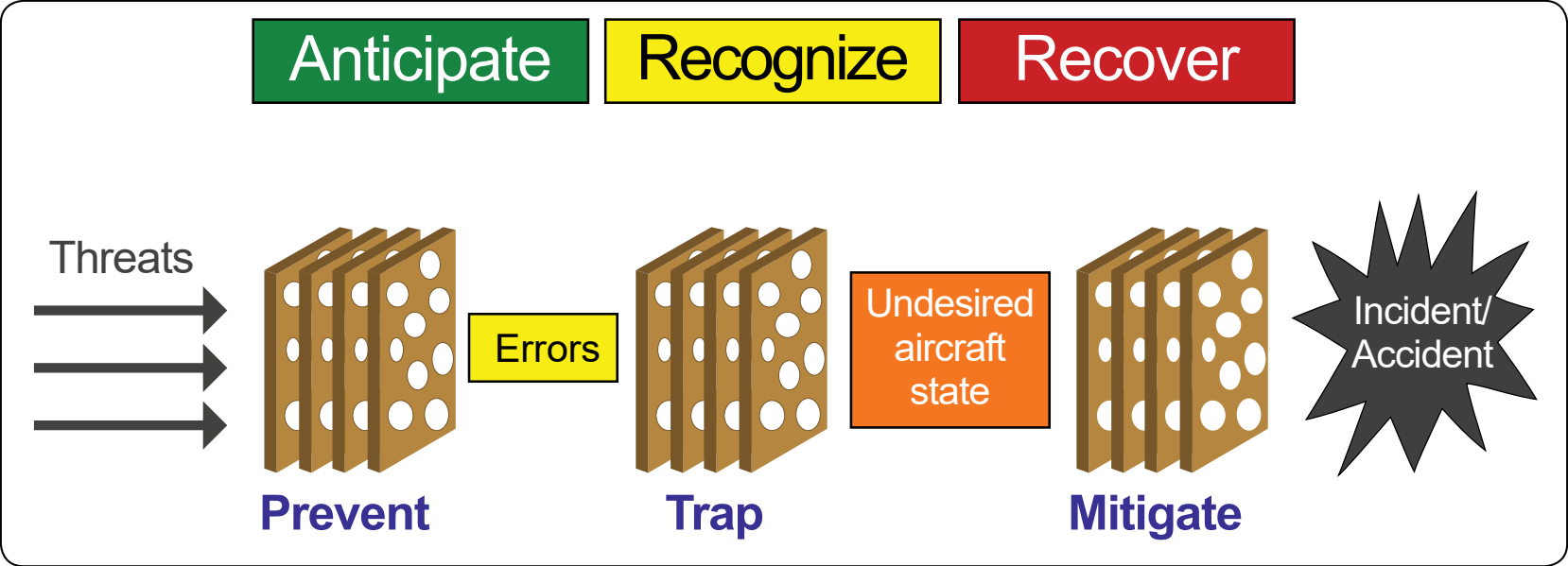
A pilot who remains proficient is better prepared to defend against threats, errors, and undesired aircraft states. This can be depicted in the context of a Swiss cheese model. Each piece of Swiss cheese is a component of the defense against threats, errors, and undesired aircraft states. [Figure 6-1] Each of the holes in the cheese is a weakness in those defenses. A greater level of proficiency reduces the likelihood the holes will align.
Discipline
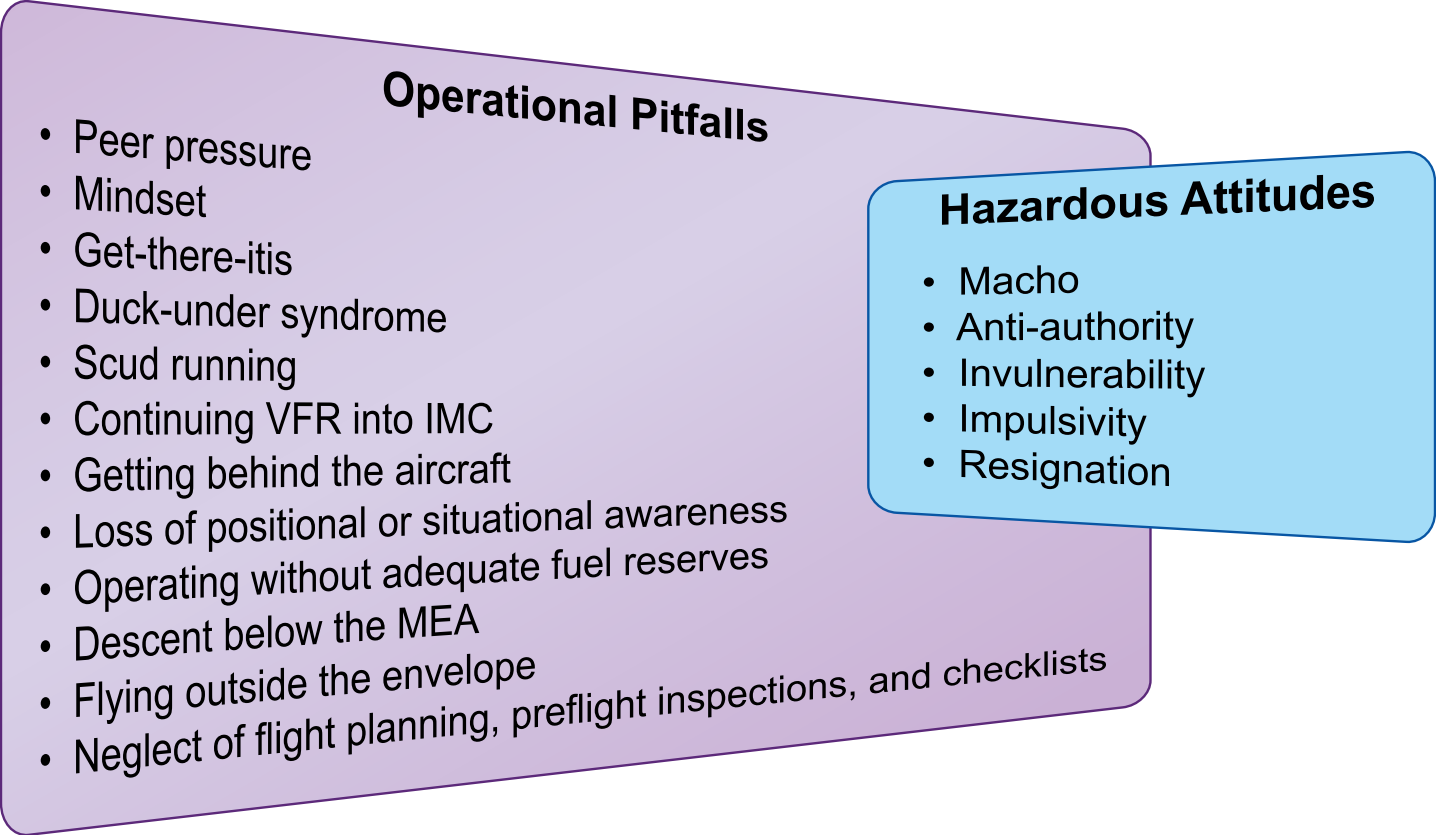
Discipline stems from good training and habit patterns. A disciplined pilot will perform a task in a similar manner each time regardless of proficiency. For example, completing the preflight inspection of the aircraft by using and following the approved checklist every time is a mark of discipline. Discipline also affects aeronautical decision-making. A disciplined pilot will be guarded and inoculated against hazardous attitudes and operational pitfalls, as shown in Figure 6-2. In general, a disciplined pilot will always do the right thing. Just like proficiency, discipline will lessen the likelihood that a threat or error will find a path through the pilot defenses.
Chapter Summary
Defenses against threats and errors are either provided to the pilot or provided by the pilot. Pilots should perceive threats and errors and respond appropriately. The response may require the use of an appropriate checklist or may require more complex decision-making. A trained, proficient, and disciplined pilot uses appropriate threat and error management strategies to prevent or recover from an undesired aircraft state.