
Chapter 8
Aeronautical Decision-Making in Flight
Introduction
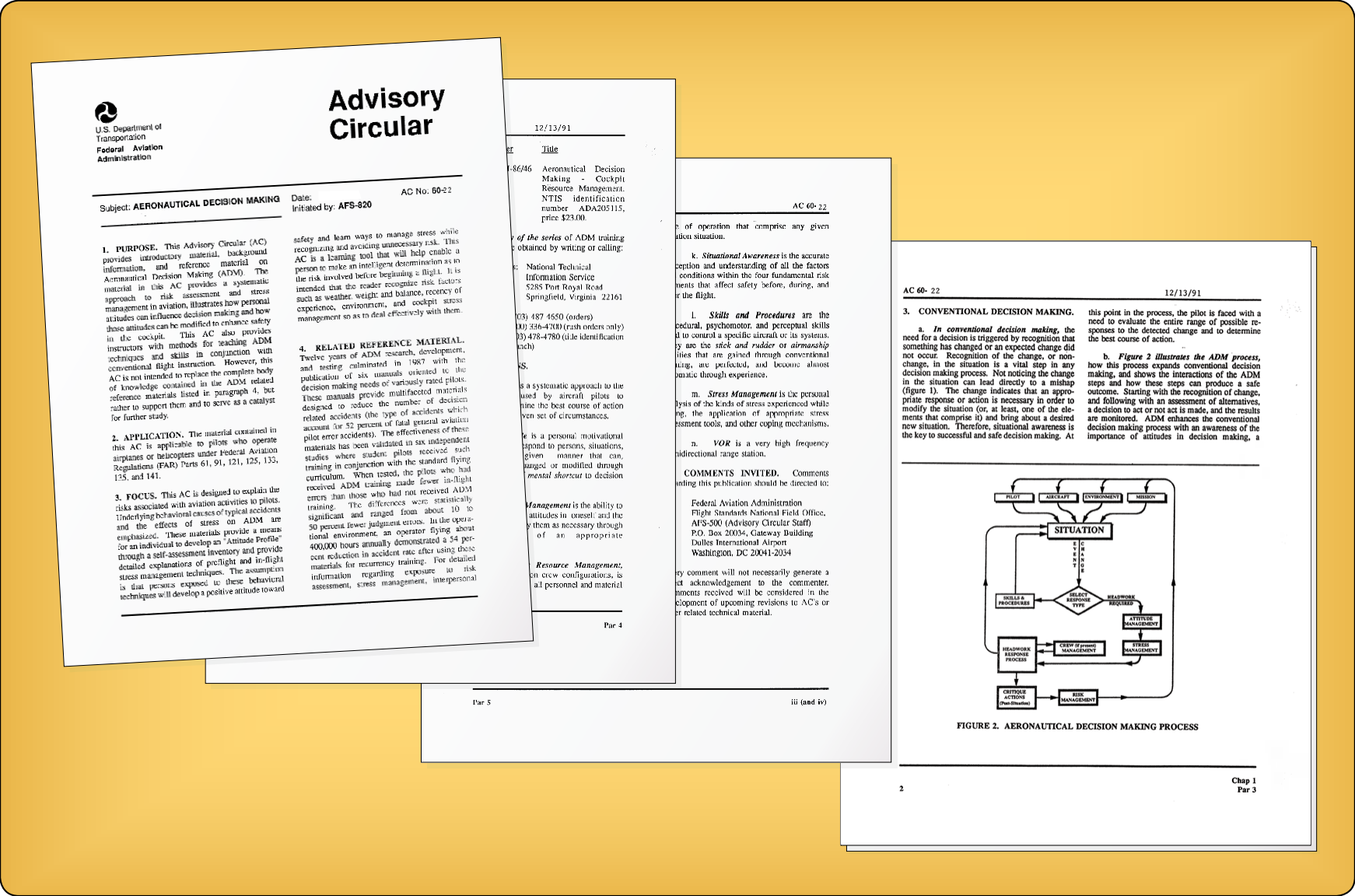
This chapter focuses on the pilot aeronautical decision-making (ADM) skills used to mitigate risk factors while in flight. Advisory Circular (AC) 60-22, Aeronautical Decision-Making [Figure 8-1], provides additional information, background references, definitions, and other pertinent information about ADM training in the general aviation environment and is available [here](http://www.faa.gov/documentLibrary/media/Advisory_Circular/AC_60-22.pdf).
Accidents still occur despite advances in training methods, aircraft technology, and services available to pilots. Despite improvements in training and technology, human error remains an issue. ADM provides a foundation, which should help pilots avoid making errors in judgment.
Aeronautical decision-making (ADM) provides pilots with a structured framework of processes and procedures, which have a positive effect on managing hazards. ADM does not eliminate hazards, but helps the pilot address hazards and associated risks that threaten the safety of flight. ADM describes the ongoing process used by pilots to determine the best course of action when facing a given set of circumstances.
ADM Background
Before the development of ADM training, consensus held that good judgment resulted from experience gained during hours of accident-free flying. However, research done during the 1980s indicated that including ADM in training significantly reduced judgment errors among student pilots. In addition, an operator flying about 400,000 hours annually demonstrated a 54 percent reduction in the accident rate after adding ADM to recurrent training. Since ADM enhances safety, the Federal Aviation Administration (FAA) requires ADM training and testing.
Analytical Decision-Making
Several closed-loop models describe steps pilots should take when making decisions. For example, AC 60-22 contains information on the DECIDE Model, which pilots may wish to study and consider using. The following discussion describes the simpler 3P model, which stands for Perceive, Process, and Perform. [Figure 8-2] Using this model in flight continues the risk management activity taken before flight, and allows the pilot to address additional hazards while dealing with a higher workload.
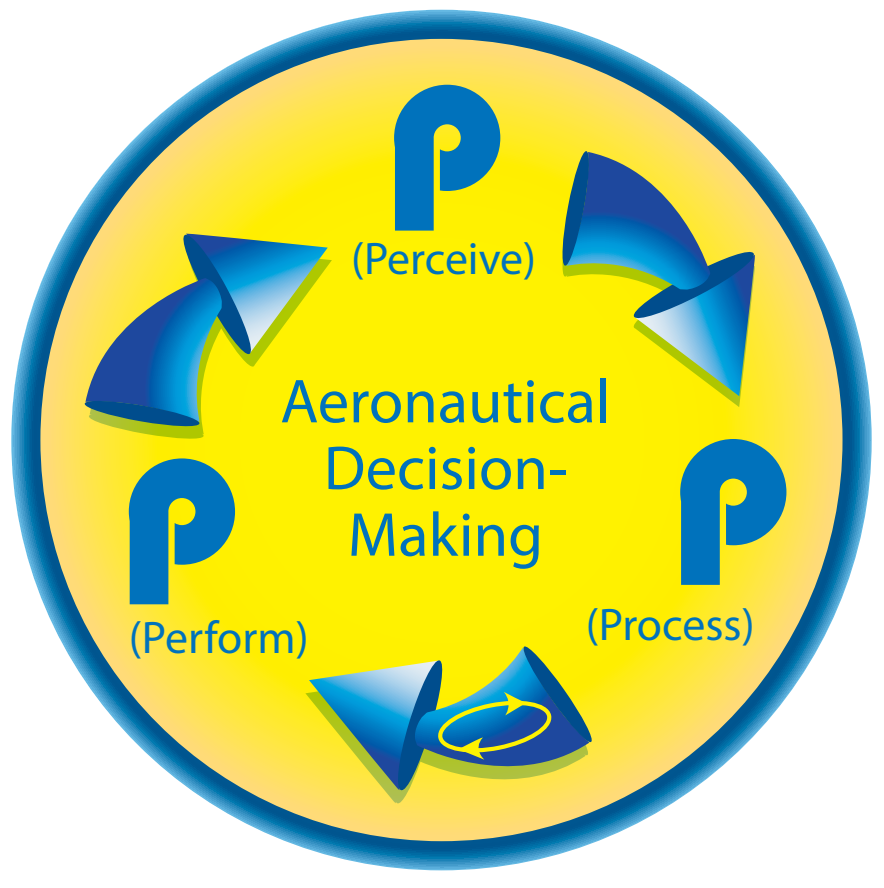
Perceive: While en route, for example, a pilot checks data-link weather on an electronic flight bag and sees thunderstorms developing ahead. The pilot perceives this as a significant hazard since the likelihood of a thunderstorm affecting the aircraft could be high and the consequences could be severe.
Process: The pilot considers the options available to mitigate the threat. Choices may include:
- Diverting to a nearby airport
- Turning back, if conditions allow
- Rerouting the flight to avoid the thunderstorms
- Flying above the weather.
During analytical decision-making, the pilot evaluates the pros and cons associated with each option and chooses one that should adequately reduce the level of risk. For example, the aircraft may not have the equipment or capability to fly above the weather or there might not be enough fuel on board for a significant reroute. In that case, the pilot excludes those two options. What the pilot decides depends on the available choices, training, experience, conditions, equipment, and pilot ability.
Analytical decision-making leads to an option likely to result in a safe outcome. Pilots should consider the following items less important than safety:
- Being on time
- Inconveniencing passengers
- Inconveniencing persons waiting at the destination
- Continuing to the original destination
Perform: After choosing a viable option, the pilot executes the changes. The choice made should lead to a safe outcome.
Effective risk management models utilize a closed-loop process. The closed-loop nature of the 3P model requires a periodic check to verify successful mitigation of the risk. If the pilot perceives insufficient mitigation of that risk or detects a new hazard, the process and analysis resumes.
Naturalistic Decision-Making
Experienced pilots use naturalistic decision-making when the time available precludes a more formal analytical process. In this type of scenario, pilots first assess whether the given situation strikes them as familiar. Rather than analyze the pros and cons of different actions, a pilot might start with a course of action that seems workable based on previously encountered patterns.