
Appendix D: Risk Management Exercises
Four Scenarios
This appendix includes four hypothetical scenarios to illustrate the cycle of risk management including risk identification, assessment, and mitigation. While similar to the accident scenarios in Appendix C, the following case studies do not include a risk analysis. Instead, the reader may conduct a risk analysis and consider some “what-ifs.” In this situation, there are no right or wrong answers and numerous solutions exist to mitigate risks to lower levels of likelihood and severity.
For each case study, the reader may consider the following items:
- What are the potential hazards in the scenario?
- What is the risk associated with each hazard?
- What is the likelihood (probability) of each risk?
- What is the severity (consequences) of each risk?
- What is the overall risk level of each risk (red, yellow, green, white)?
- What mitigations reduce the likelihood and severity?
- What is the remaining level of risk after mitigation?
- How does a pilot decide if sufficient risk mitigation has occurred or if further mitigation is needed?
Scenario 1: Recreational Aviation
A pilot is planning an annual flight to EAA Airventure in Oshkosh, WI (OSH) using a single-engine piston airplane. [Figure D-1]. It is a direct, non-stop (390 NM) from Chan Gurney Municipal (YKN) in Yankton, SD. Passengers include two friends who have never flown in a small aircraft. The planning began several days before the scheduled departure.
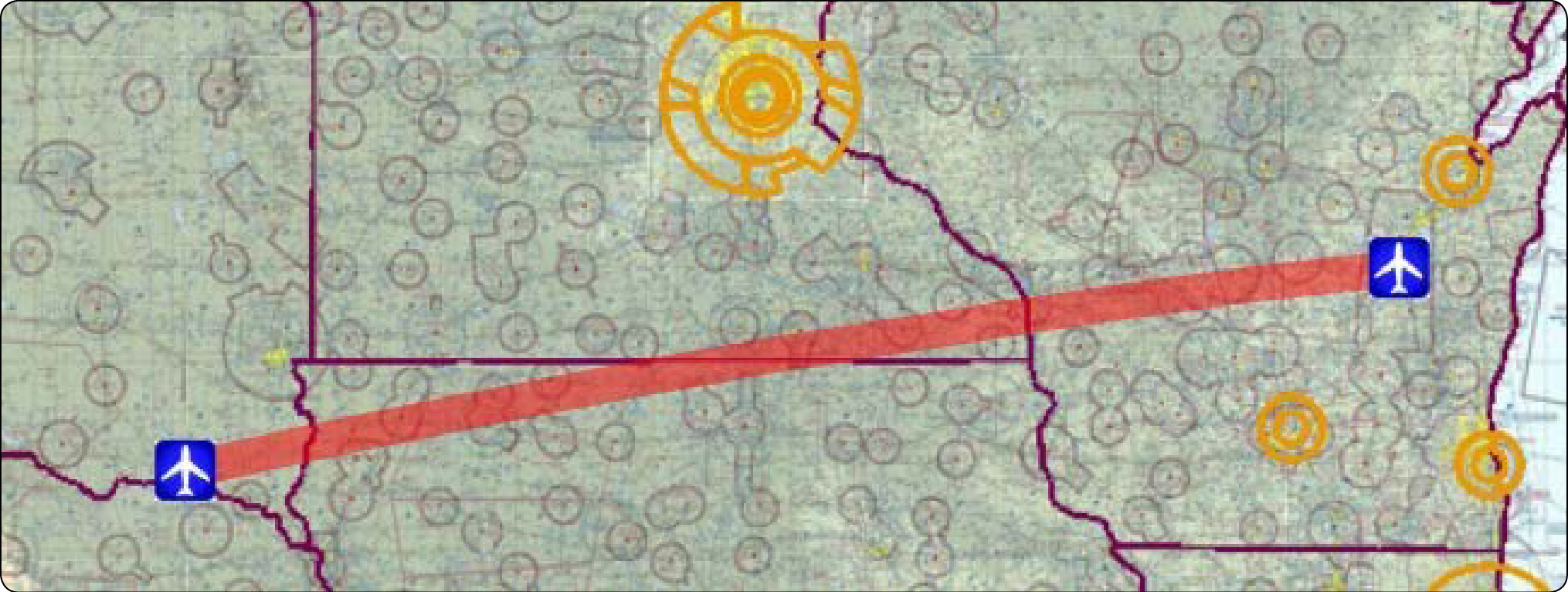
AirVenture starts on Monday, and the plan is to make the flight to OSH on Sunday. The prognostic weather charts for the next several days show that a large weather system will arrive in YKN late Saturday night from the west. It will generate a line of severe thunderstorms that move rapidly east and pass OSH late Sunday evening. Behind the front, there will be low ceilings of 300-500 feet and light to moderate rain. On Saturday, Visual Meteorological Conditions (VMC) will exist in both YKN and OSH, with the potential for isolated thunderstorms.
The pilot has logged 300 hours and has an instrument rating but has not flown in actual or simulated instrument conditions in five months. The airplane is also technically legal for IFR, although the number 2 radio is out for repair. The non-stop flight to OSH will take about 3:30, and the aircraft has 4:30 endurance with full fuel.
Scenario 2: Turboprop-Powered, Personal Transportation
The pilot owns a small specialized manufacturing firm, with production facilities in St. Petersburg, FL and a second facility in Pittsfield, MA. The pilot also has a summer home in the Berkshires. To facilitate efficient travel between these locations, the pilot owns and operates a single-engine turboprop airplane and flies as a single pilot.
It is now 10:00 am on a Friday in August after a hectic but successful new product launch in Florida. The pilot just finished a press conference and wishes to head north to enjoy the weekend in the Berkshires before meetings at the Massachusetts facility on Monday. The pilot plans to fly the PA-46 nonstop (984 NM) from St. Petersburg Clearwater (PIE) to the Pittsfield, MA airport (PSF) at FL270. [Figure D-2]
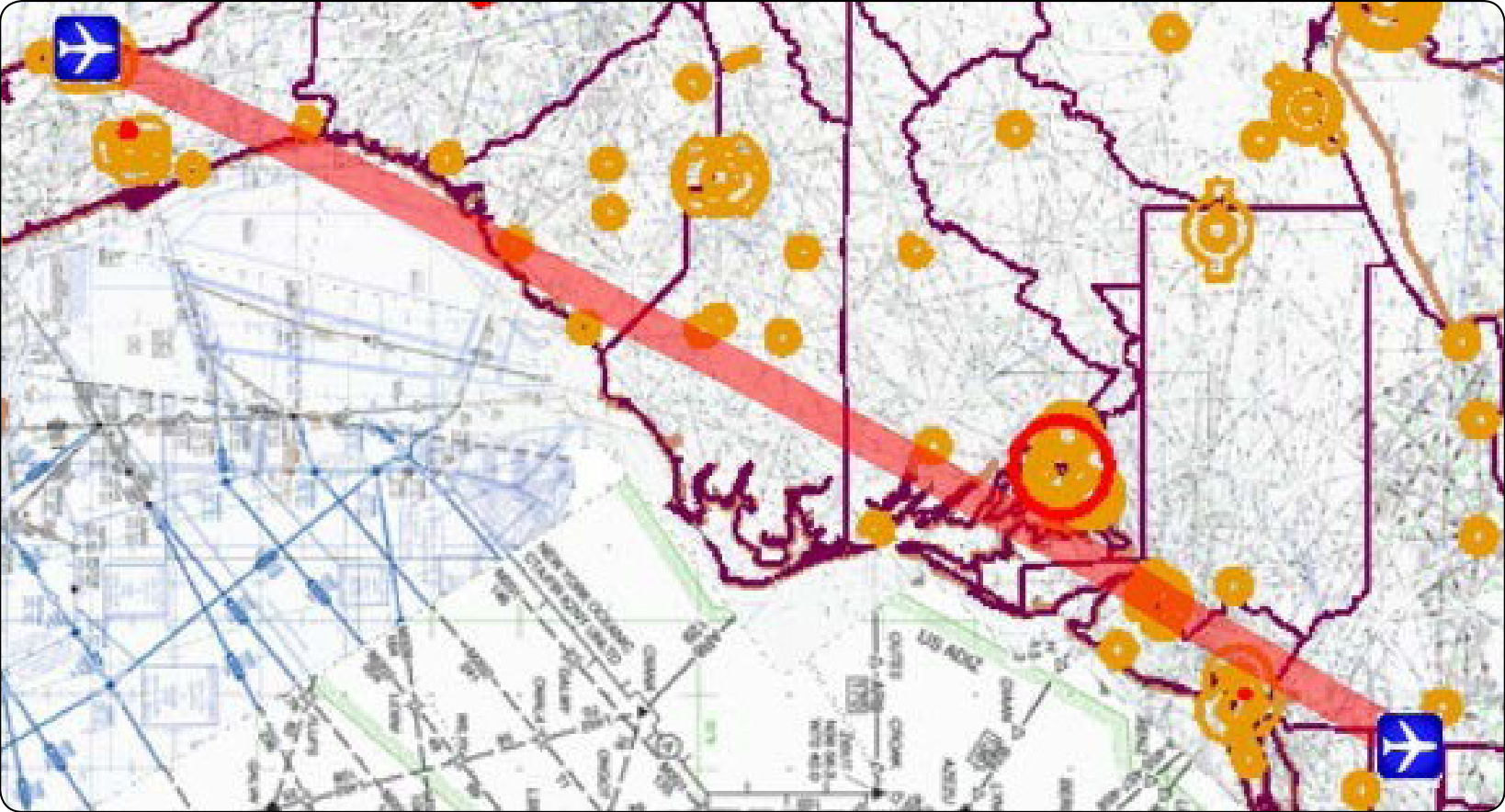
While a family member/passenger drives the pilot to the airport for an 11:00 AM takeoff, the pilot reviews the flight planning. The flight should take 3:45, and the fuel on board provides endurance of 4:45. The weather is good at PSF and en route, with isolated to scattered air mass thunderstorms. However, the pilot contemplates the air traffic in the Washington, DC and New York metro areas. In the past, reroutes occurred, and the pilot was assigned a lower altitude where the PA-46 loses fuel efficiency. The plan includes an arrival at PSF at about 3:00 PM, so the pilot and passenger may attend a party with investors at 5:00 PM.
Scenario 3: Turbine Helicopter
The pilot owns a large wholesale business with multiple warehouses throughout the Los Angeles basin in California. All these facilities are within a mile of a general aviation airport. To travel between these locations and avoid the congested freeways, the pilot flies a turbine-engine helicopter.
It is 6:00 AM Monday morning, and the pilot needs to visit four facilities. The plan includes a departure from the Santa Monica airport (SMO) and flights to Van Nuys (VNY), San Gabriel Valley (EMT), Brackett Field (POC) in Pomona, and Fullerton (FUL). The pilot plans to make the return flight to SMO in the early evening, to arrive just before sunset. Figure D-3 shows the route of flight.
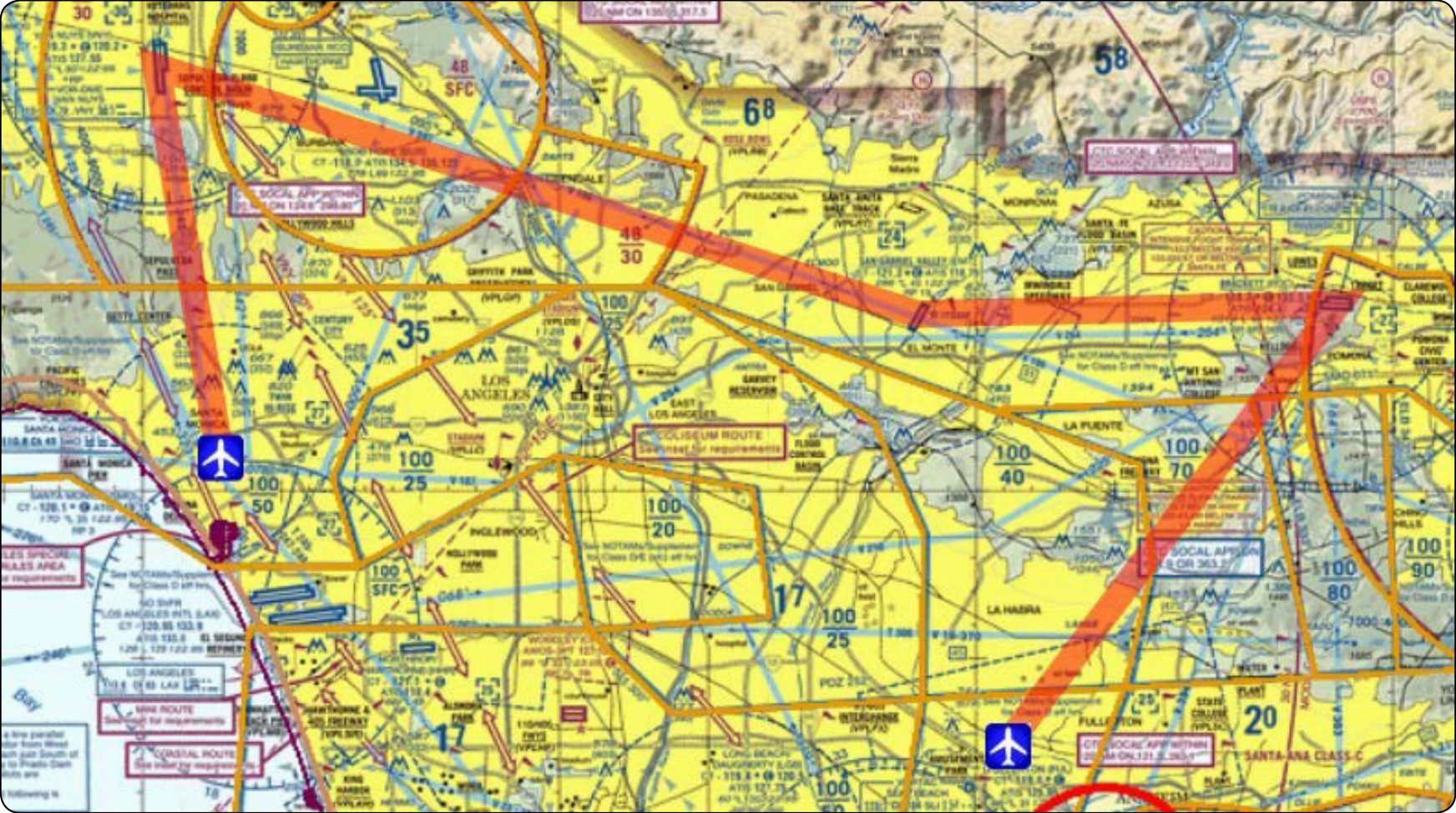
The weather throughout the basin is marginal VFR, with visibility of 3-5 miles and ceilings varying from 1,700 feet at FUL to 800 feet at POC. Clear skies are forecast after 2:00 PM. The pilot has an instrument rating, and the helicopter has IFR instrumentation, but it is not approved for IFR flight. The pilot is not instrument current. High terrain exists on the leg from SMO to VNY, although the pilot could divert to the east and fly through a pass in VMC to get to VNY.