
Chapter 19
Rotorcraft Flight Manual (Gyroplane)
Sample Problem
For this example, a gyroplane at its maximum gross weight (1,800 lbs.) needs to perform a short field takeoff due to obstructions in the takeoff path. Present weather conditions are standard temperature at a pressure altitude of 2,000 feet, and the wind is calm.
Referring to the appropriate performance chart [Figure 19-5], the takeoff distance to clear a 50-foot obstacle is determined by entering the chart from the left at the pressure altitude of 2,000 feet. You then proceed horizontally to the right until intersecting the appropriate temperature reference line, which in this case is the dashed standard temperature line. From this point, descend vertically to find the total takeoff distance to clear a 50-foot obstacle. For the conditions given, this particular gyroplane would require a distance of 940 feet for ground roll and the distance needed to climb 50 feet above the surface. Notice that the data presented in this chart is predicated on certain conditions, such as a running takeoff to 30 m.p.h., a 50 m.p.h. climb speed, a rotor prerotation speed of 370 r.p.m., and no wind.
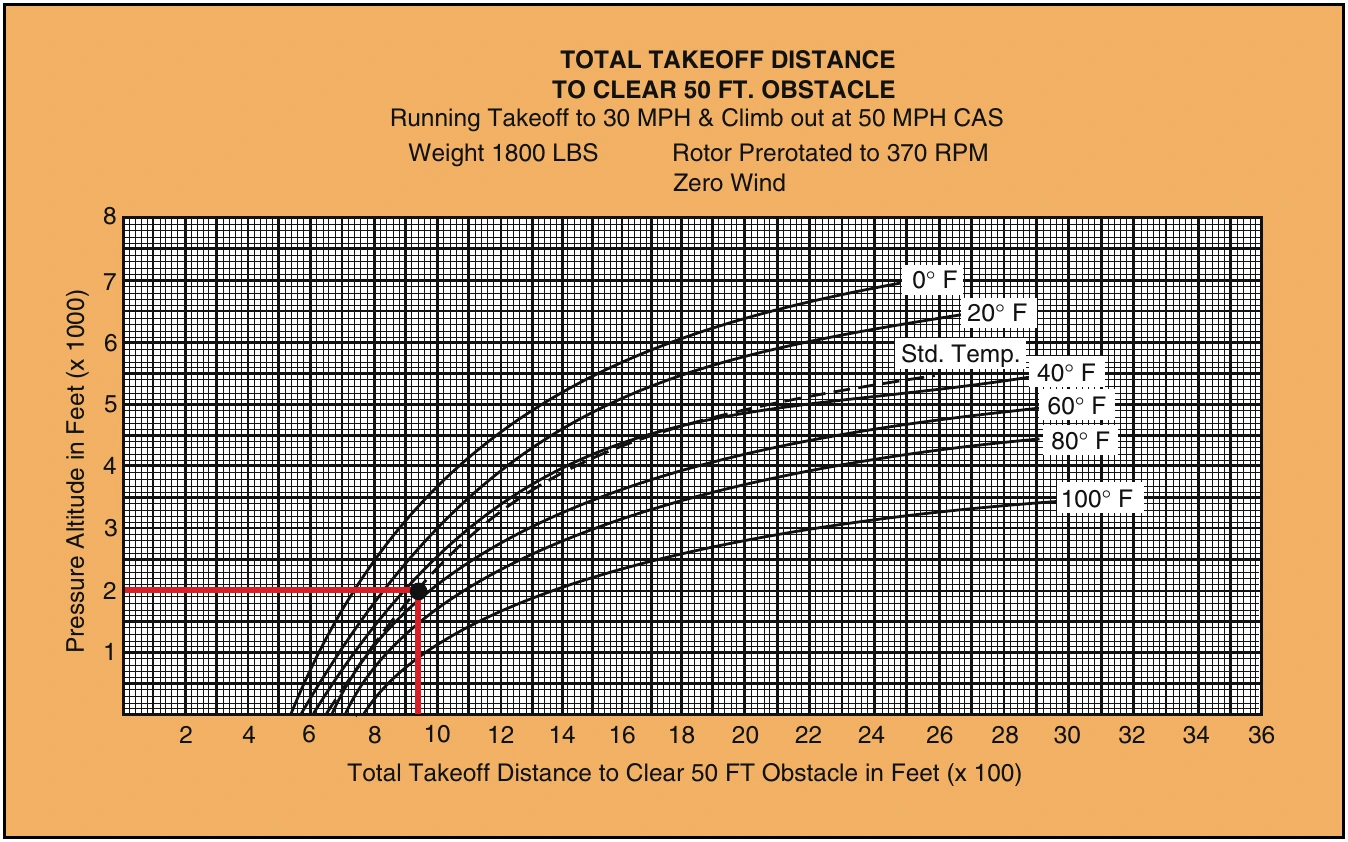
Variations from these conditions alter performance, possibly to the point of jeopardizing the successful outcome of the maneuver.
Height/Velocity Diagram
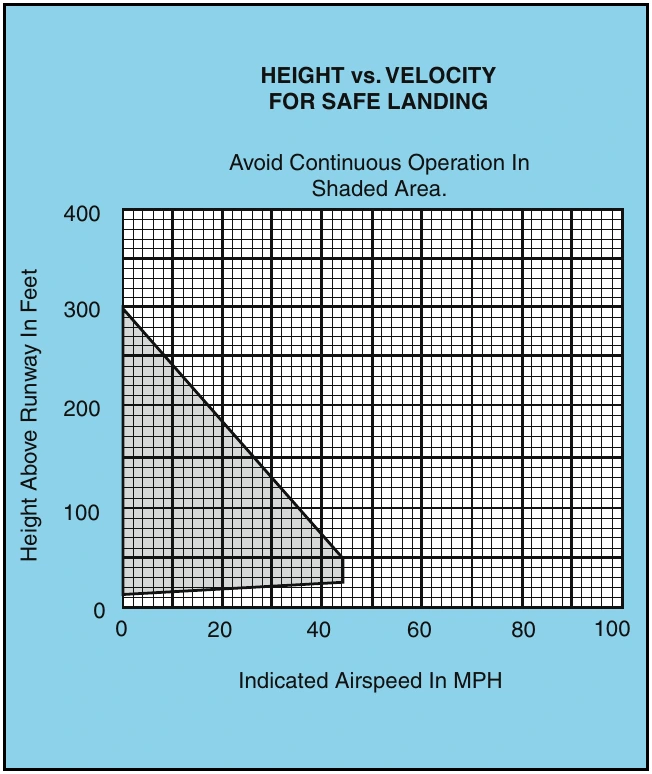
Like helicopters, gyroplanes have a height/velocity diagram that defines what speed and altitude combinations allow for a safe landing in the event of an engine failure. [Figure 19-6]
During an engine-out landing, the cyclic flare is used to arrest the vertical velocity of the aircraft and most of the forward velocity. On gyroplanes with a manual collective control, increasing blade pitch just prior to touchdown can further reduce ground roll. Typically, a gyroplane has a lower rotor disc loading than a helicopter, which provides a slower rate of descent in autorotation. The power required to turn the main transmission, tail rotor transmission, and tail rotor also add to the higher descent rate of a helicopter in autorotation as compared with that of a gyroplane.
Emergency Section
Because in-flight emergencies may not allow enough time to reference the flight manual, the emergency section should be reviewed periodically to maintain familiarity with these procedures. Many aircraft also use placards and instrument markings in the cockpit, which provide important information that may not be committed to memory.
Hang Test
The proper weight and balance of a gyroplane without a flight manual is normally determined by conducting a hang test of the aircraft. This is achieved by removing the rotor blades and suspending the aircraft by its teeter bolt, free from contact with the ground. A measurement is then taken, either at the keel or the rotor mast, to determine how many degrees from level the gyroplane hangs. This number must be within the range specified by the manufacturer. For the test to reflect the true balance of the aircraft, it is important that it be conducted using the actual weight of the pilot and all gear normally carried in flight. Additionally, the measurement should be taken both with the fuel tank full and with it empty to ensure that fuel burn does not affect the loading.