
Chapter 6
Rotorcraft Flight Manual (Helicopter)
Manufacturers also are encouraged to include an optional area titled “Abnormal Procedures,” which describes recommended procedures for handling malfunctions that are not considered to be emergencies. This information would most likely be found in larger helicopters.
Normal Procedures
The Normal Procedures is the section you will probably use the most. It usually begins with a listing of the airspeeds, which may enhance the safety of normal operations. It is a good idea to memorize the airspeeds that are used for normal flight operations. The next part of the section includes several checklists, which take you through the preflight inspection, before starting procedure, how to start the engine, rotor engagement, ground checks, takeoff, approach, landing, and shutdown. Some manufacturers also include the procedures for practice autorotations. To avoid skipping an important step, you should always use a checklist when one is available. (More information on maneuvers can be found in Chapter 9—Basic Maneuvers, Chapter 10— Advanced Maneuvers, and Chapter 20—Gyroplane Flight Operations.)
Performance
The Performance Section contains all the information required by the regulations, and any additional performance information the manufacturer feels may enhance your ability to safely operate the rotorcraft.
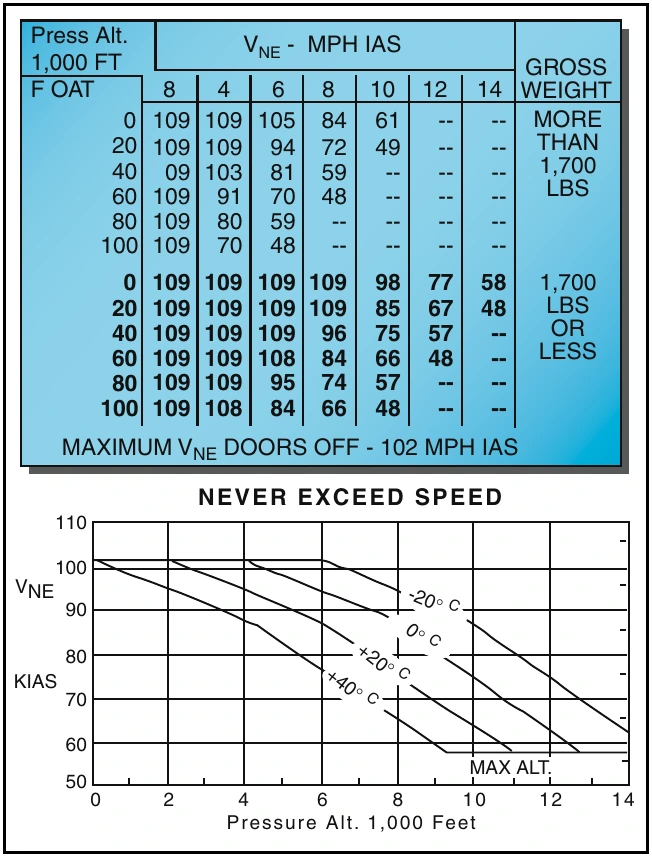
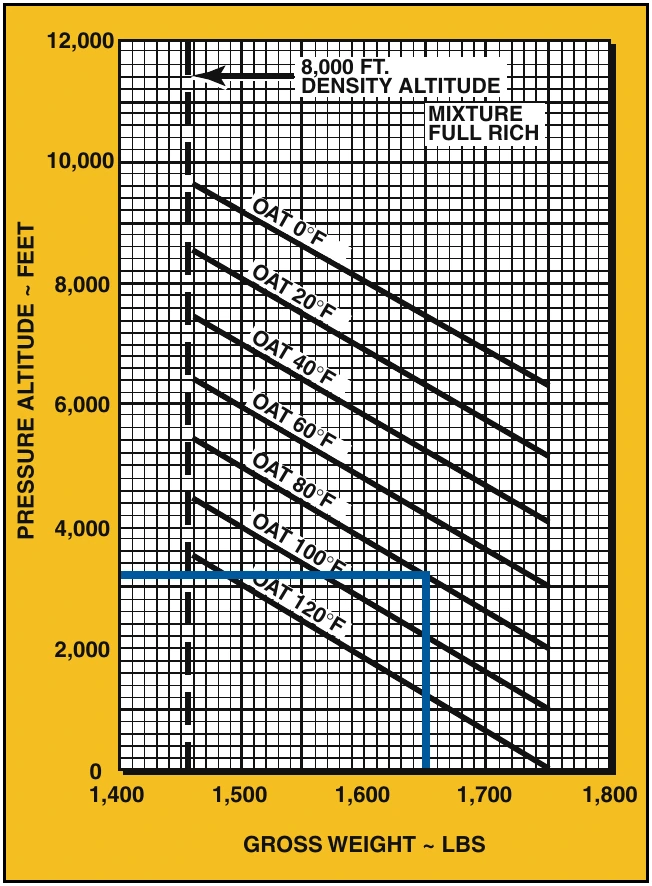
These charts, graphs, and tables vary in style but all contain the same basic information. Some examples of the performance information that can be found in most flight manuals include a calibrated versus indicated airspeed conversion graph, hovering ceiling versus gross weight charts, and a height-velocity diagram. [Figure 6-7] For information on how to use the charts, graphs, and tables, refer to Chapter 8— Performance.
Weight and Balance
The Weight and Balance section should contain all the information required by the FAA that is necessary to calculate weight and balance. To help you correctly compute the proper data, most manufacturers include sample problems. (Weight and balance is further discussed in Chapter 7—Weight and Balance.)
Aircraft and Systems Description
The Aircraft and Systems Description section is an excellent place to study and familiarize yourself with all the systems found on your aircraft. The manufacturers should describe the systems in a manner that is understandable to most pilots. For larger, more complex rotorcraft, the manufacturer may assume a higher degree of knowledge. (For more information on rotorcraft systems, refer to Chapter 5—Helicopter Systems and Chapter 18—Gyroplane Systems.)
Handling, Servicing, and Maintenance
The Handling, Servicing, and Maintenance section describes the maintenance and inspections recommended by the manufacturer, as well as those required by the regulations, and Airworthiness Directive (AD) compliance procedures. There are also suggestions on how the pilot/operator can ensure that the work is done properly.
This section also describes preventative maintenance that may be accomplished by certificated pilots, as well as the manufacturer’s recommended ground handling procedures, including considerations for hangaring, tie down, and general storage procedures for the rotorcraft.
Supplements
The Supplements Section describes pertinent information necessary to operate optional equipment installed on the rotorcraft that would not be installed on a standard aircraft. Some of this information may be supplied by the aircraft manufacturer, or by the maker of the optional equipment. The information is then inserted into the flight manual at the time the equipment is installed.
Safety and Operational Tips
The Safety and Operational Tips is an optional section that contains a review of information that could enhance the safety of the operation. Some examples of the information that might be covered include: physiological factors, general weather information, fuel conservation procedures, external load warnings, low rotor r.p.m. considerations, and recommendations that if not adhered to could lead to an emergency.
Airworthiness Directive (AD)— A regulatory notice that is sent out by the FAA to the registered owners of aircraft informing them of the discovery of a condition that keeps their aircraft from continuing to meet its conditions for airworthiness. Airworthiness Directives must be complied with within the required time limit, and the fact of compliance, the date of compliance, and the method of compliance must be recorded in the aircraft maintenance records.