
Chapter 1
Introduction to Flight Training
Flight Standards Service
The FAA’s Flight Standards Service (FS) sets aviation standards for airmen and aircraft operations in the United States and for American airmen and aircraft around the world. Flight Standards is organized into four functional offices: Office of Safety Standards, Air Carrier Safety Assurance, General Aviation Safety Assurance, and Foundational Business.
The primary interface between FS and the general aviation community/general public is the local Flight Standards District Office (FSDO). The FSDOs are responsible for the certification and surveillance of certain air carriers, air operators, flight schools/training centers, airmen (pilots, flight instructors, mechanics and other certificate holders). FSDO inspectors also handle general aviation accident investigation at the request of, or in cooperation with, the National Transportation Safety Board.
Each FSDO is staffed by Aviation Safety Inspectors (ASIs) whose specialties include operations, maintenance, and avionics. General Aviation ASIs are highly qualified and experienced aviators. Once accepted for the position, an inspector will satisfactorily complete indoctrination training conducted at the FAA Academy. The indoctrination training coursework for a General Aviation Operations Inspector, which is oriented to the tasks to be performed by an ASI in the general aviation environment, includes classroom and flight training on pilot certification activities. Thereafter, the inspector will complete recurrent training on a regular basis. Among other duties, the ASI is responsible for administering FAA practical tests for pilot and flight instructor certificates and associated ratings. Questions concerning pilot certification and/or requests for other aviation information or services should be directed to the FSDO. For specific FSDO locations and telephone numbers, refer to www.faa.gov.
Role of the Pilot Examiner
Pilot and flight instructor certificates are issued by the FAA upon satisfactory completion of required knowledge and practical tests. The administration of practical tests is an FAA responsibility that may occur at the FSDO level. However, in order to satisfy the public need for pilot testing and certification services, the FAA delegates certain responsibilities, as the need arises, to private individuals who are not FAA employees. A Designated Pilot Examiner (DPE) is a private citizen who is designated as a representative of the FAA Administrator to perform specific (but limited) pilot certification tasks on behalf of the FAA and may charge a reasonable fee for doing so. Generally, a DPE’s authority is limited to accepting applications and conducting practical tests leading to the issuance of specific pilot certificates and/or ratings. A DPE operates under the direct supervision of the FSDO that holds the examiner’s designation file. A FSDO inspector is assigned to monitor the DPE’s certification activities.
The FAA selects highly qualified individuals to be DPEs. These individuals have good industry reputations for professionalism, high integrity, a demonstrated willingness to serve the public, and adhere to FAA policies and procedures in certification matters. A DPE is expected to administer practical tests with the same degree of professionalism, using the same methods, procedures, and standards as an FAA ASI. Note that a DPE is not an FAA ASI. A DPE cannot initiate enforcement action, investigate accidents, or perform surveillance activities on behalf of the FAA. However, the majority of FAA practical tests at the recreational, private, and commercial pilot level are administered by DPEs.
Role of the Flight Instructor
The flight instructor is the cornerstone of aviation safety. The FAA has adopted an operational training concept that places the full responsibility for pilot training on the flight instructor. In this role, the instructor assumes the total responsibility for providing training in all the knowledge areas and skills necessary for pilots to operate safely and competently in the National Airspace System (NAS). This training includes airmanship skills, pilot judgment and decision-making, hazard identification, risk analysis, and good operating practices. (See Risk Management Handbook, FAA-H-8083-2). [Figure 1-6]
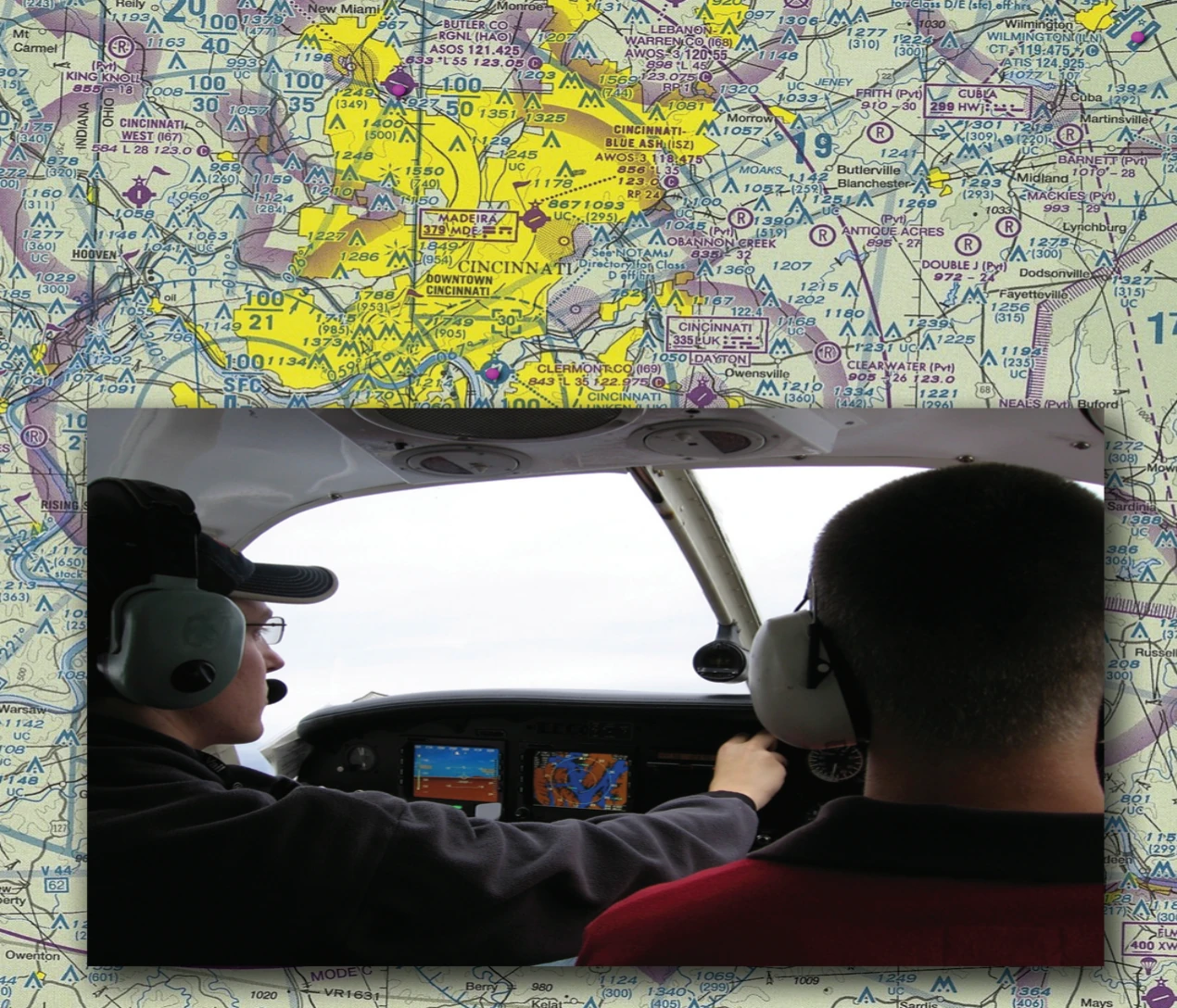
A flight instructor normally meets broad flying experience requirements, passes rigid knowledge and practical tests, and demonstrates the ability to apply recommended teaching techniques before being certificated.
A pilot training program is dependent on the quality of the ground and flight instruction given. A good flight instructor has a thorough understanding of the learning process, knowledge of the fundamentals of instruction, and the ability to communicate effectively with the learner.
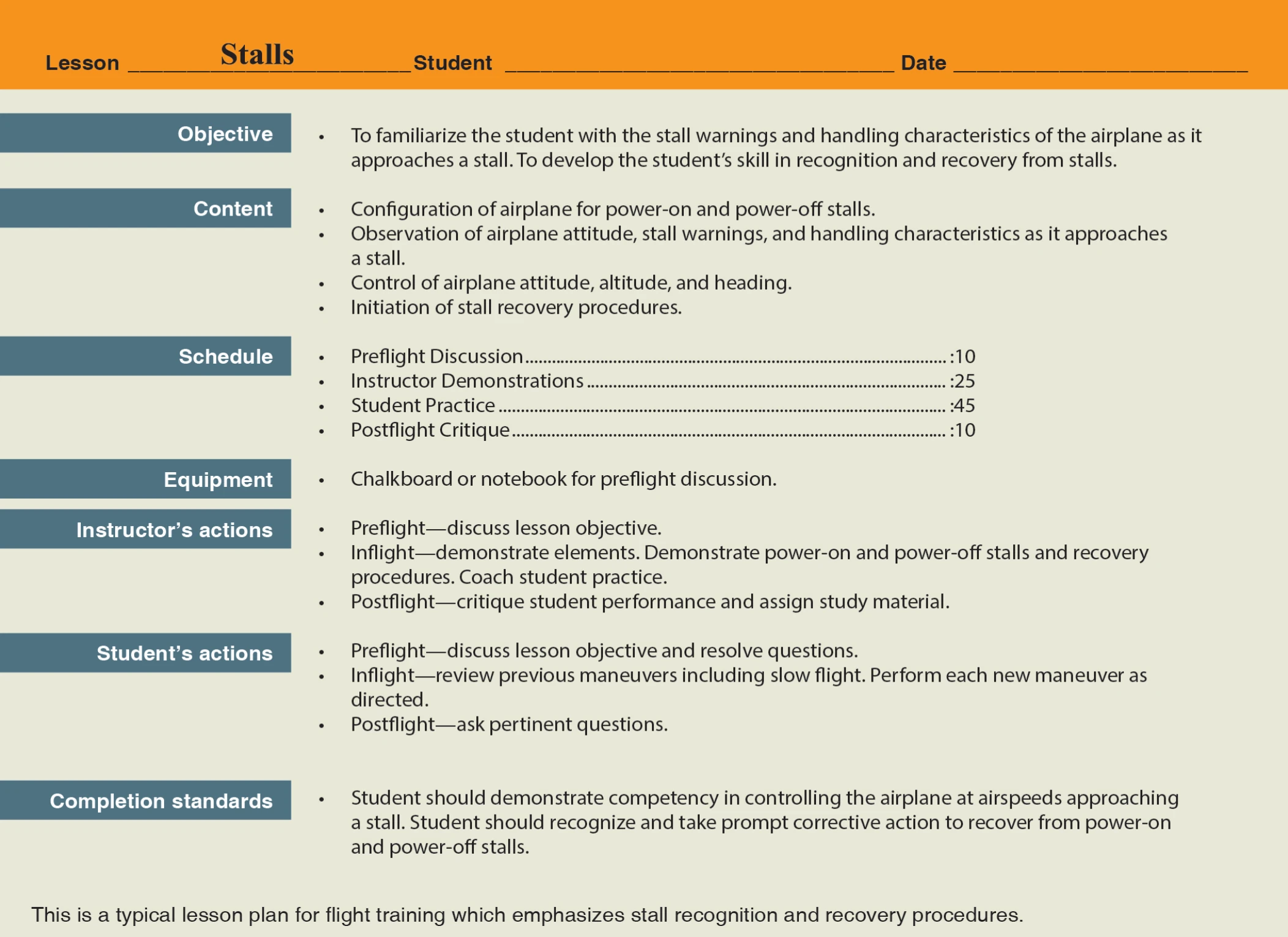
A good flight instructor uses a syllabus and insists on correct techniques and procedures from the beginning of training so that the learner will develop proper habit patterns. The syllabus should embody the “building block” method of instruction in which the learner systematically progresses from the known to the unknown. The course of instruction should be laid out so that each new maneuver embodies the principles involved in the performance of those previously undertaken. Consequently, through each new subject introduced, the learner not only learns a new principle or technique, but also broadens their application of those previously learned and has their deficiencies in the previous maneuvers emphasized and made obvious. [Figure 1-7]
The flying habits of the flight instructor, both during flight instruction and as observed by learners when conducting other pilot operations, have a vital effect on safety. Learners consider their flight instructor to be a paragon of flying proficiency whose flying habits they, consciously or unconsciously, attempt to imitate. For this reason, a good flight instructor meticulously observes the safety practices taught to the learners. Additionally, a good flight instructor carefully observes all regulations and recognized safety practices during all flight operations.
A prospective pilot should know that there are other differences among flight instructors. Certain instructors who have performed at a high level have earned a Gold Seal Flight Instructor Certificate. This is not a requirement when looking for an instructor, but it is indication of an active and successful instructor. Top notch instructors also participate in the Pilot Proficiency Awards Wings Program (Wings program) to improve their proficiency and to serve as an example to learners who also benefit from program participation.
Generally, an individual who enrolls in a pilot training program is prepared to commit considerable time, effort, and expense in pursuit of a pilot certificate. A trainee may judge the effectiveness of the flight instructor and the overall success of the pilot training program solely in terms of being able to pass the requisite FAA practical test. A good flight instructor is able to communicate that evaluation through practical tests is a mere sampling of pilot ability that is compressed into a short period of time. The flight instructor’s role is to train the “total” pilot.
Sources of Flight Training
The major sources of flight training in the United States include FAA-approved pilot schools and training centers, non-certificated (14 CFR part 61) flying schools, and independent flight instructors. FAA-approved schools are those flight schools certificated by the FAA as pilot schools under 14 CFR part 141. [Figure 1-8]