
Chapter 1
Introduction to Flight Training
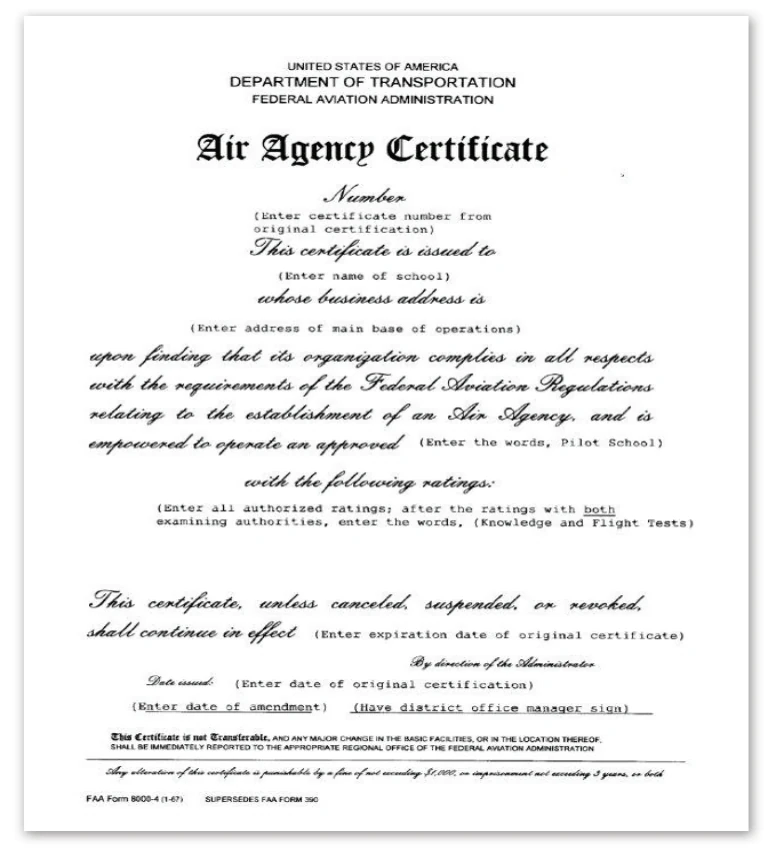
Application for part 141 certification is voluntary, and the school needs to meet specific requirements for personnel, equipment, maintenance, and facilities. The school operates each course offering in accordance with an established curriculum that includes a training course outline (TCO) approved by the FAA. Each TCO contains enrollment prerequisites, a detailed description of each lesson including standards and objectives, expected accomplishments and standards for each stage of training, and a description of the checks and tests used to measure each training course enrollee's accomplishments. An FAA-approved pilot school Air Agency certificate expires and needs to be renewed every 2 years.
Renewal is contingent upon proof of continued high quality instruction and a minimum level of instructional activity. Training at an FAA-certificated pilot school is structured and because of this structured environment, the graduates of these pilot schools are allowed to meet the certification experience requirements of 14 CFR part 61 with less flight time. Many FAA-certificated pilot schools have DPEs on staff to administer FAA practical tests. Some schools have been granted examining authority by the FAA. A school with examining authority for a particular course(s) has the authority to recommend its graduates for pilot certificates or ratings without further testing by the FAA. A list of FAA-certificated pilot schools and their training courses can be found at https://av-info.faa.gov/pilotschool.asp.
FAA-approved training centers are certificated under 14 CFR part 142. Training centers, like certificated pilot schools, operate in a structured environment with approved courses and curricula and stringent standards for personnel, equipment, facilities, operating procedures, and record keeping. Training centers certificated under 14 CFR part 142, however, specialize in the use of flight simulation (full flight simulators and flight training devices) in their training courses.
There are a number of flying schools in the United States that are not certificated by the FAA. These schools operate under the provisions of 14 CFR part 61. Many of these non-certificated flying schools offer excellent training and meet or exceed the standards required of FAA-approved pilot schools. Flight instructors employed by non-certificated flying schools, as well as independent flight instructors, meet the same basic 14 CFR part 61 flight instructor requirements for certification and renewal as those flight instructors employed by FAA-certificated pilot schools. In the end, any training program is dependent upon the quality of the ground and flight instruction a learner receives.
Airman Certification Standards (ACS) and Practical Test Standards (PTS)
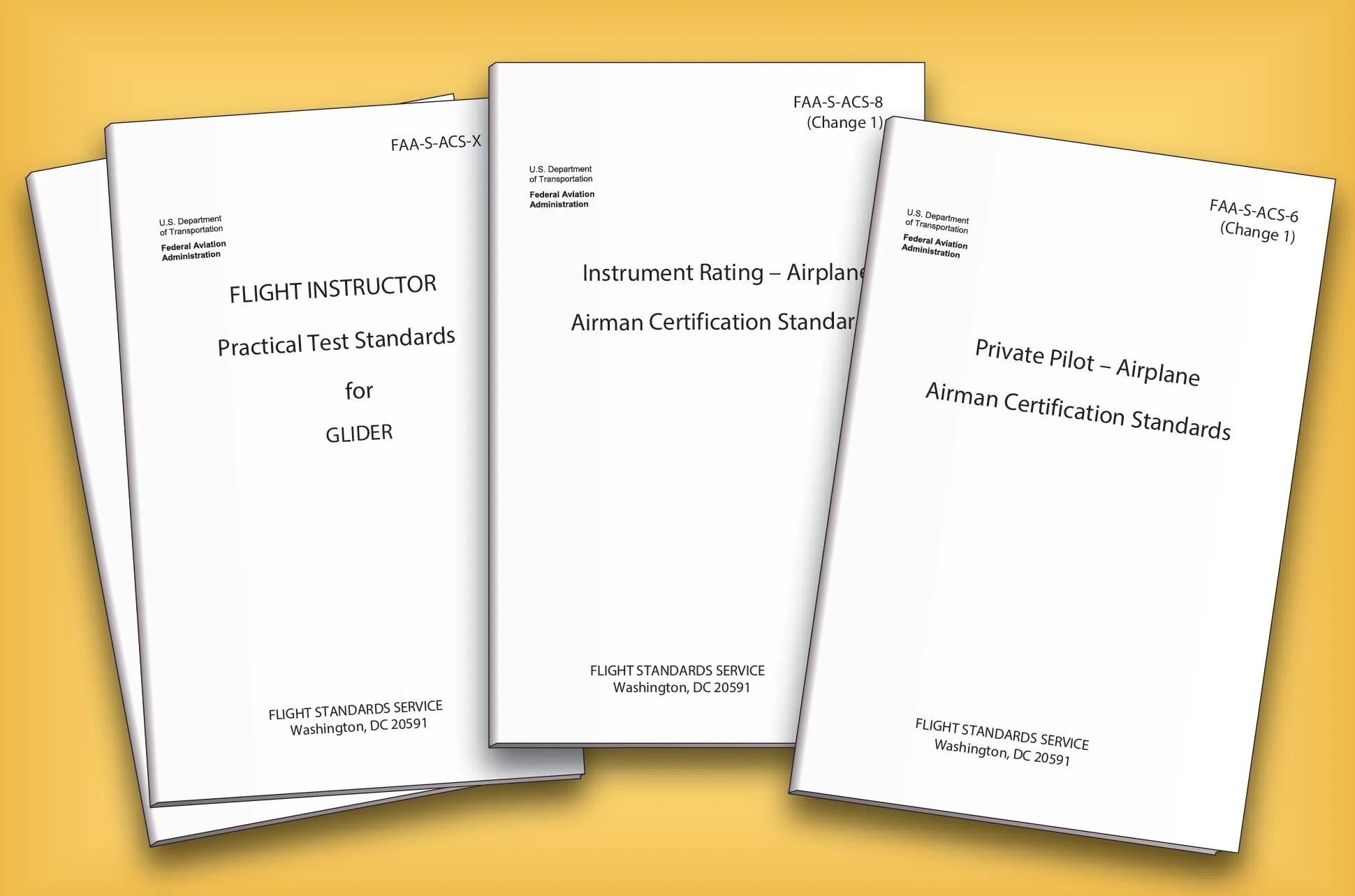
Practical tests for FAA pilot certificates and associated ratings are administered by FAA inspectors and DPEs using FAA Airman Certification Standards (ACS) and Practical Test Standards (PTS), which contain structured areas of operation, tasks, and standards. [Figure 1-9] 14 CFR part 61, section 61.43 specifies that the practical test consists of the tasks specified in the areas of operation for the airman certificate or rating sought. To pass the test, the applicant demonstrates mastery of the aircraft performing each task successfully, proficiency and competency within the approved standards, and sound judgment.
It should be emphasized that the ACS and PTS are testing documents rather than teaching documents. Although the pilot applicant should be familiar with these books and refer to the standards they contain during training, the ACS and PTS are not intended to be used as a training syllabus. They contain the standards to which maneuvers/procedures on FAA practical tests should be performed and the FAA policies governing the administration of practical tests. An appropriately rated flight instructor is responsible for training a pilot applicant to acceptable standards in all subject matter areas, procedures, and maneuvers included in, and encompassed by, the tasks within each area of operation in the appropriate ACS and PTS. Flight instructors and pilot applicants should always remember that safe, competent piloting requires a commitment to learning, planning, and risk management that goes beyond rote performance of maneuvers. Descriptions of tasks and information on how to perform maneuvers and procedures are contained in reference and teaching documents, such as this handbook. A list of reference documents is contained in the appendices of each ACS and PTS. It is necessary that the latest version of the PTS and ACS, with all recent changes, be referenced for training. All recent versions and changes to the FAA ACS and PTS may be viewed or downloaded at www.faa.gov.
Safety Considerations
In the interest of safety and good habit pattern formation, there are certain basic flight safety practices and procedures that should be emphasized by the flight instructor, and adhered to by both instructor and learner, beginning with the very first dual instruction flight. These include, but are not limited to, collision avoidance procedures including proper scanning techniques and clearing procedures, runway incursion avoidance, stall awareness, positive transfer of controls, and flight deck workload management.
Collision Avoidance
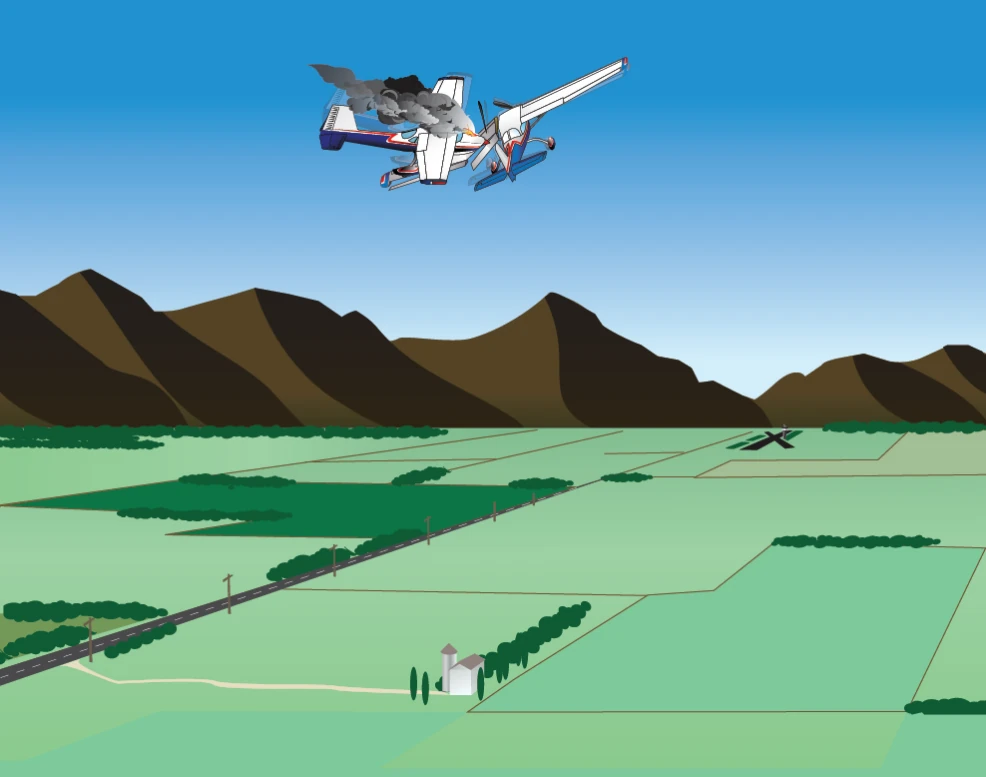
All pilots should be alert to the potential for midair collision and impending loss of separation. The general operating and flight rules in 14 CFR part 91 set forth the concept of “see and avoid.” This concept requires that vigilance shall be maintained at all times by each person operating an aircraft regardless of whether the operation is conducted under IFR or VFR. Pilots should also keep in mind their responsibility for continuously maintaining a vigilant lookout regardless of the type of aircraft being flown and the purpose of the flight. Most midair collision accidents and reported near midair collision incidents occur in good VFR weather conditions and during the hours of daylight. Most of these accident/incidents occur within 5 miles of an airport and/or near navigation aids. [Figure 1-10]
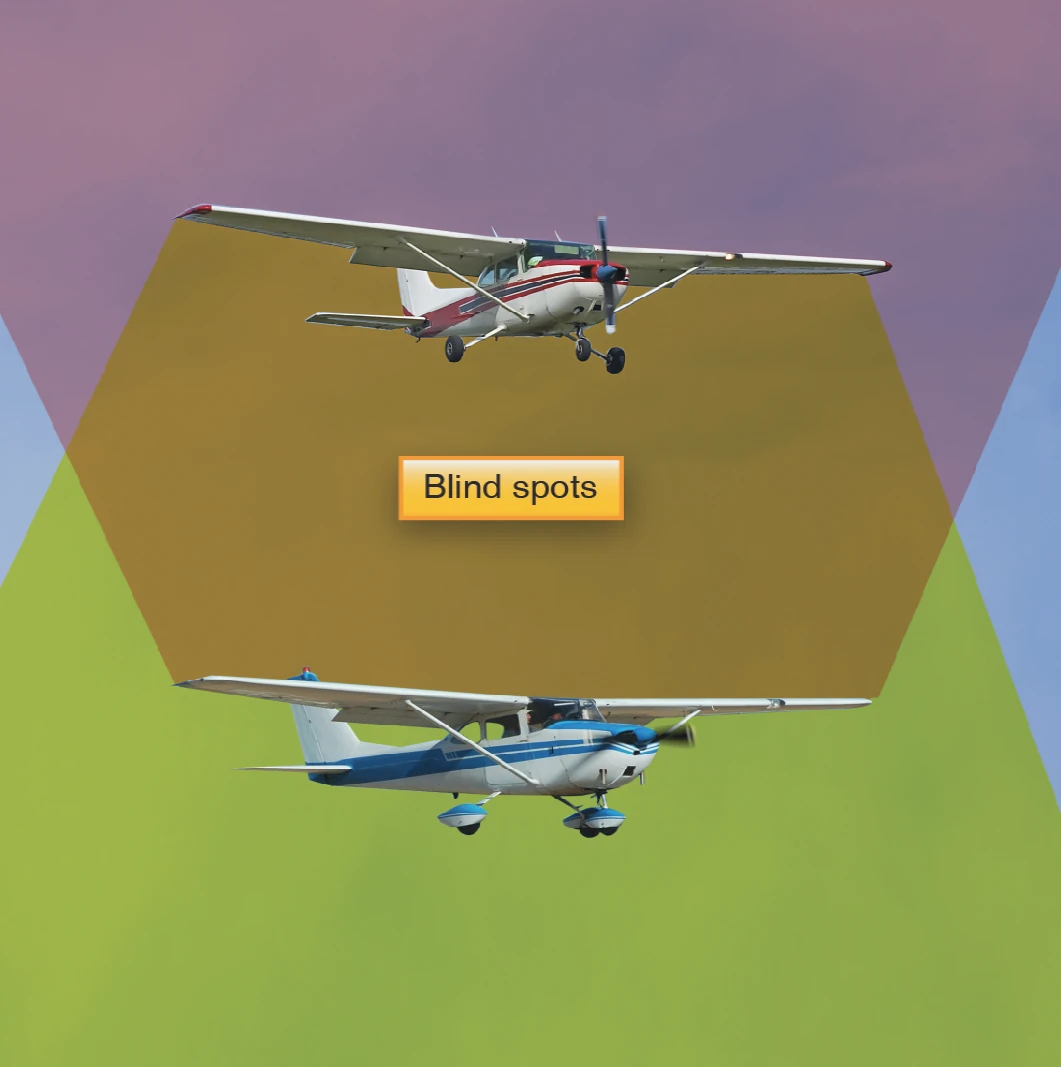
The “see and avoid” concept relies on knowledge of the limitations of the human eye and the use of proper visual scanning techniques to help compensate for these limitations. Pilots should remain constantly alert to all traffic movement within their field of vision, as well as periodically scanning the entire visual field outside of their aircraft to ensure detection of conflicting traffic. Remember that the performance capabilities of many aircraft, in both speed and rates of climb/descent, result in high closure rates limiting the time available for detection, decision, and evasive action. [Figure 1-11]
The probability of spotting a potential collision threat increases with the time spent looking outside, but certain techniques may be used to increase the effectiveness of the scan time. The human eyes tend to focus somewhere, even in a featureless sky. In order to be most effective, the pilot should shift glances and refocus at intervals. Most pilots do this in the process of scanning the instrument panel, but it is also important to focus outside to set up the visual system for effective target acquisition. Pilots should also realize that their eyes may require several seconds to refocus when switching views between items on the instrument panel and distant objects.
Proper scanning requires the constant sharing of attention with other piloting tasks, thus it is easily degraded by psychological and physiological conditions such as fatigue, boredom, illness, anxiety, or preoccupation.
Effective scanning is accomplished with a series of short, regularly-spaced eye movements that bring successive areas of the sky into the central visual field. Each movement should not exceed 10 degrees, and each area should be observed for at least 1 second to enable detection. Although horizontal back-and-forth eye movements seem preferred by most pilots, each pilot should develop a scanning pattern that is comfortable and adhere to it to assure optimum scanning.
Peripheral vision can be most useful in spotting collision threats from other aircraft. Each time a scan is stopped and the eyes are refocused, the peripheral vision takes on more importance because it is through this element that movement is detected. Apparent movement is usually the first perception of a collision threat and probably the most important because it is the discovery of a threat that triggers the events leading to proper evasive action. It is essential to remember that if another aircraft appears to have no relative motion, it is likely to be on a collision course. If the other aircraft shows no lateral or vertical motion, but is increasing in size, the observing pilot needs to take immediate evasive action to avoid a collision.