
Chapter 18
Emergency Procedures
When experiencing a loss of up-elevator control, the pilot can retain pitch control by:
- Applying considerable nose-up trim
- Pushing the control yoke forward to attain and maintain desired attitude
- Increasing forward pressure to lower the nose and relaxing forward pressure to raise the nose
- Releasing forward pressure to flare for landing
When experiencing a loss of down-elevator control, the pilot can retain pitch control by:
- Applying considerable nose-down trim
- Pulling the control yoke aft to attain and maintain attitude
- Releasing back pressure to lower the nose and increasing back pressure to raise the nose
- Increasing back pressure to flare for landing
Trim mechanisms can be useful in the event of an in-flight primary control failure. For example, if the linkage between the cabin and the elevator fails in flight, leaving the elevator free to weathervane in the wind, the trim tab can be used to raise or lower the elevator within limits. The trim tabs are not as effective as normal linkage control in conditions such as low airspeed, but they do have some positive effect—usually enough to bring about a safe landing.
If an elevator becomes jammed, resulting in a total loss of elevator control movement, various combinations of power and flap extension offer a limited amount of pitch control. A successful landing under these conditions, however, can be problematic.
Landing Gear Malfunction
Once the pilot has confirmed that the landing gear has in fact malfunctioned and that one or more gear legs refuses to respond to the conventional or alternate methods of gear extension contained in the AFM/POH, a gear-up landing is considered inevitable. The pilot should select an airport with crash and rescue facilities, if possible. The pilot should not hesitate to request that emergency equipment is standing by.
When selecting a landing surface, the pilot should consider that a smooth, hard-surface runway usually causes less damage than a rough, unimproved grass strip. A hard surface does, however, create sparks that can ignite fuel. If the airport is so equipped, the pilot can request that the runway surface be foamed. The pilot should consider burning off excess fuel. This reduces landing speed and fire potential.
If the landing gear malfunction is limited to one main landing gear leg, the pilot should consume as much fuel from that side of the airplane as practicable, thereby reducing the weight of the wing on that side. The reduced weight makes it possible to delay the unsupported wing from contacting the surface during the landing roll until the last possible moment. Reduced impact speeds result in less damage.
If only one landing gear leg fails to extend, the pilot has the option of landing on the available gear legs or landing with all the gear legs retracted. Landing on only one main gear usually causes the airplane to veer strongly in the direction of the faulty gear leg after touchdown. If the landing runway is narrow and/or ditches and obstacles line the runway edge, maximum directional control after touchdown is a necessity. In this situation, a landing with all three gear retracted may be the safest course of action.
If the pilot elects to land with one main gear retracted (and the other main gear and nose gear down and locked), the landing should be made in a nose-high attitude with the wings level. As airspeed decays, the pilot should apply whatever aileron control is necessary to keep the unsupported wing airborne as long as possible. [Figure 18-7] Once the wing contacts the surface, the pilot can anticipate a strong yaw in that direction. The pilot should be prepared to use full opposite rudder and aggressive braking to maintain some degree of directional control.
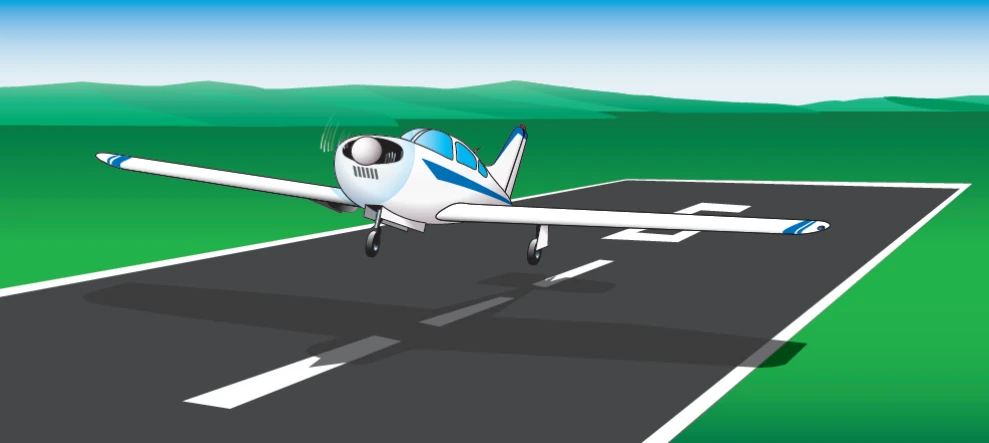
When landing with a retracted nose-wheel (and the main gear extended and locked), the pilot should hold the nose off the ground until almost full up-elevator has been applied. [Figure 18-8] The pilot should then release back pressure in such a manner that the nose settles slowly to the surface. Applying and holding full up-elevator results in the nose abruptly dropping to the surface as airspeed decays, possibly resulting in burrowing and/or additional damage. Brake pressure should not be applied during the landing roll unless absolutely necessary to avoid a collision with obstacles.
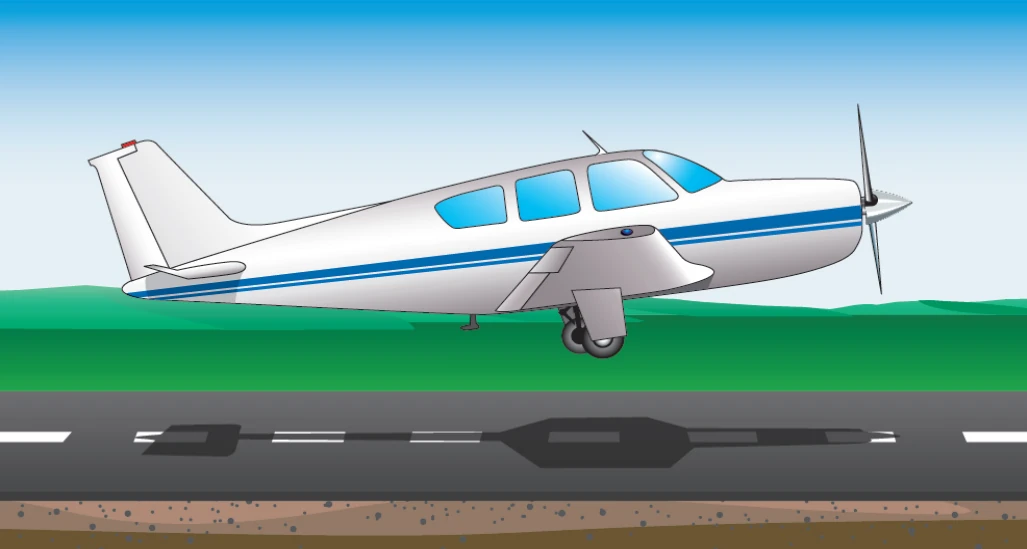
If the landing occurs with only the nose gear extended, the initial contact should be made on the aft fuselage structure with a nose-high attitude. This procedure helps prevent porpoising and/or wheelbarrowing. The pilot should then allow the nose-wheel to gradually touchdown, using nose-wheel steering as necessary for directional control.
System Malfunctions
Electrical System
The loss of electrical power can deprive the pilot of numerous critical systems, and therefore should not be taken lightly even in day/visual flight rules (VFR) conditions. Most in-flight failures of the electrical system are located in the generator or alternator. Once the generator or alternator system goes off line, the electrical source in a typical light airplane is a battery. If a warning light or ammeter indicates the probability of an alternator or generator failure in an airplane with only one generating system, however, the pilot may have very little time available from the battery.
The rating of the airplane battery provides a clue as to how long it may last. With batteries, the higher the amperage load, the faster any available stored energy gets consumed. Thus, a 25-amp hour battery could produce 5 amps per hour for 5 hours, but if the load were increased to 10 amps, it might last only 2 hours. A 40-amp load might discharge the battery fully in about 10 or 15 minutes. Much depends on the battery condition at the time of the system failure. If the battery has been in service for a few years, its power may be reduced substantially because of internal resistance. Or if the system failure was not detected immediately, much of the stored energy may have already been used. It is essential, therefore, that the pilot immediately shed non-essential loads when the generating source fails. [Figure 18-9] The pilot should then plan to land at the nearest suitable airport.