Chapter 3
Basic Flight Maneuvers
- Attempting to use improper pitch and bank refeequent flights.
- Forgetting the location of preselected reference points on subsequent flights.
- Attempting to establish or correct airplane attitude using flight instruments rather than the natural horizon.
- “Chasing” the flight instruments rather than adhering to the principles of attitude flying.
- Mechanically pushing or pulling on the flight controls rather than exerting accurate and smooth pressure.
- Not scanning outside the aircraft for other traffic and weather and terrain influences.
- A tight palm grip on the flight controls resulting in a desensitized feeling of the hand and fingers.
- Overcontrolling the airplane.
- Habitually flying with one wing low or maintaining directional control using only the rudder control.
- Failure to make timely and measured control inputs after a deviation from straight-and-level. 11. Inadequate attention to sensory inputs in developing feel for trence points on the airplane to establish attitude.
Trim Control
Trim control surfaces are required to offset any constant flight control pressure inputs provided by the pilot. For example, elevator trim is a typical trim in light GA airplanes and is used to null the pressure exerted by the pilot in order to maintain a particular pitch attitude. [Figure 3-9] This provides an opportunity for the pilot to divert attention to other tasks
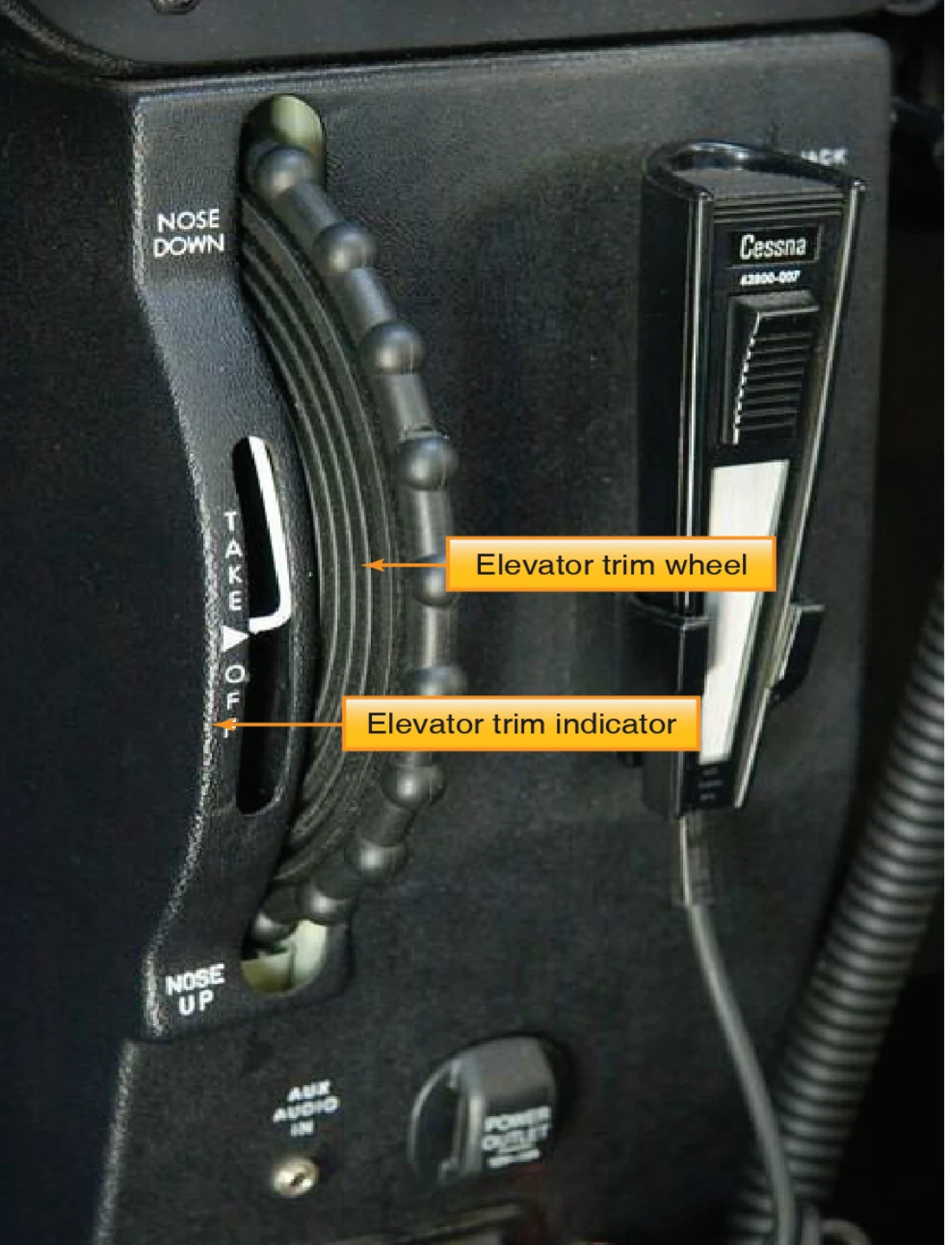
Because of their relatively low power, speed, and cost constraints, not all light airplanes have a complete set (elevator, rudder, and aileron) of trim controls that are adjustable from inside the flight deck. Nearly all light airplanes are equipped with at least adjustable elevator trim. As airplanes increase in power, weight, and complexity, flight deck adjustable trim systems for the rudder and aileron may be available.
In airplanes where multiple trim axes are available, the rudder should be trimmed first. Rudder, elevator, and then aileron should be trimmed next in sequence. However, if the airspeed is varying, continuous attempts to trim the rudder and aileron produce unnecessary pilot workload and distraction. Attempts to trim the rudder at varying airspeeds are impractical in many propeller airplanes because of the built-in compensation for the effect of a propeller’s left turning tendencies. The correct procedure is when the pilot has established a constant airspeed and pitch attitude, the pilot should then hold the wings level with aileron flight control pressure while rudder control pressure is trimmed out. Finally, aileron trim should be adjusted to relieve any aileron flight control pressure.
A properly trimmed airplane is an indication of good piloting skills. Any control forces that the pilot feels should be a result of deliberate flight control pressure inputs during a planned change in airplane attitude, not a result of forces being applied by the airplane. A common trim control error is the tendency for the pilot to overcontrol the airplane with trim adjustments. Attempting to fly the airplane with the trim is a common fault in basic flying technique even among experienced pilots. The airplane attitude should be established first and held with the appropriate flight control pressures, and then the flight control pressures trimmed out so that the airplane maintains the desired attitude without the pilot exerting flight control pressure.
Level Turns
A turn is initiated by banking the wings in the desired direction of the turn through the pilot’s use of the aileron flight controls. Left aileron flight control pressure causes the left wing to lower in relation to the pilot. Right aileron flight control pressure causes the right wing to lower in relation to the pilot. In other words, to turn left, the pilot lowers the left wing with aileron by left stick. To turn right, the pilot lowers the right wing with right stick. Depending on bank angle and airplane engineering, at many bank angles, the airplane will continue to turn with ailerons neutralized. The sequence could be as follows:
- Bank the airplane, adding either enough power or pitching up to compensate for the loss of vertical lift.
- Neutralize controls as necessary to stop bank from increasing and hold desired bank angle.
- Use the opposite stick (aileron) to return airplane to level.
- Neutralize the ailerons (along with either power or pitch reduction) for level flight. [Figure 3-10]
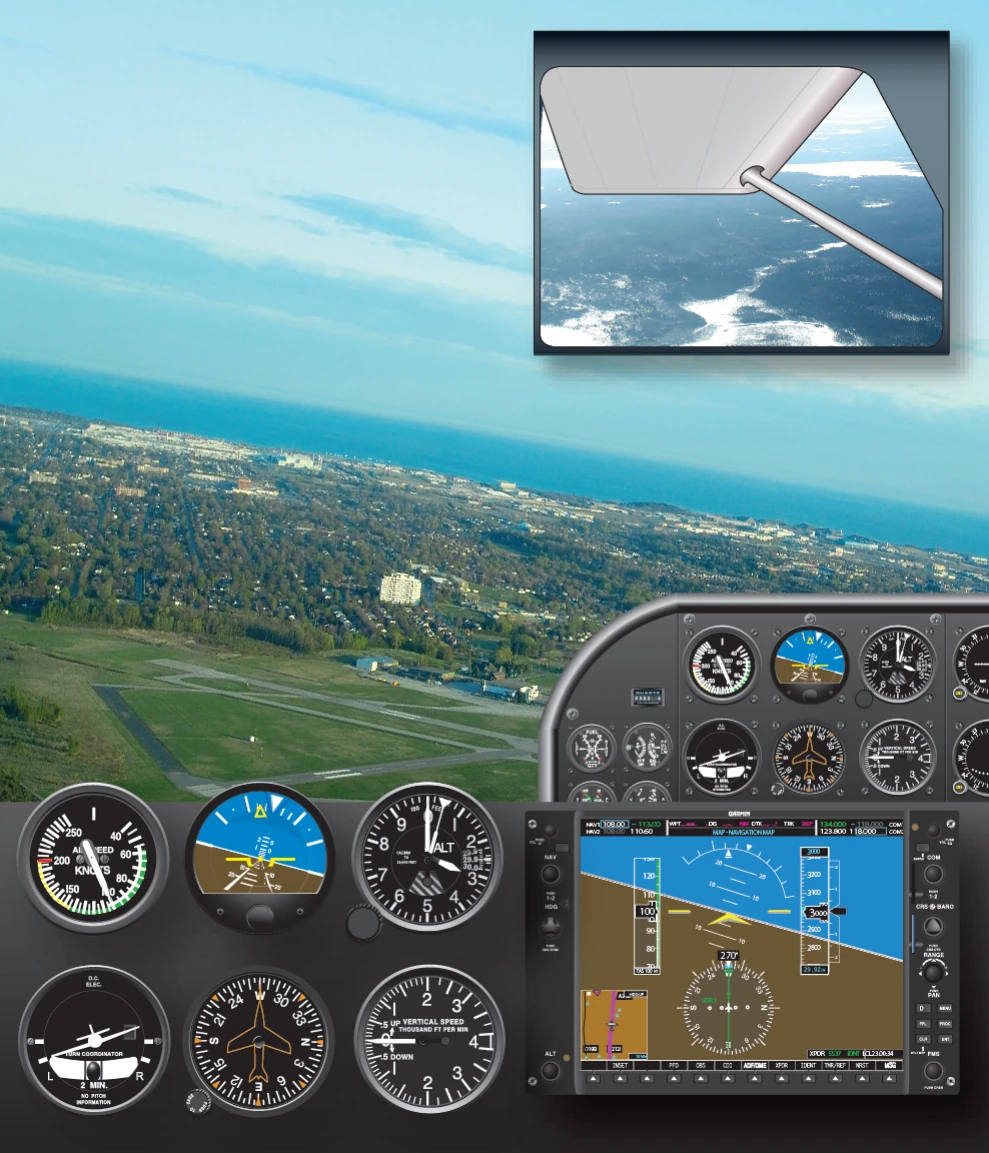
A turn is the result of the following:
- The ailerons bank the wings and determine the rate of turn for a given airspeed. Lift is divided into both vertical and horizontal lift components as a result of the bank. The horizontal component of lift moves the airplane toward the banked direction.
- The elevator pitches the nose of the airplane up or down in relation to the pilot and perpendicular to the wings. If the pilot does not add power, and there is sufficient airspeed margin, the pilot needs to slightly increase the pitch to increase wing lift enough to replace the wing lift being diverted into turning force so as to maintain the current altitude.
- The vertical fin on an airplane does not produce lift. Rather the vertical fin on an airplane is a stabilizing surface and produces no lift if the airplane is flying straight ahead. The vertical fin’s purpose is to keep the aft end of the airplane behind the front end.
- The throttle provides thrust, which may be used for airspeed control and to vary the radius of the turn.
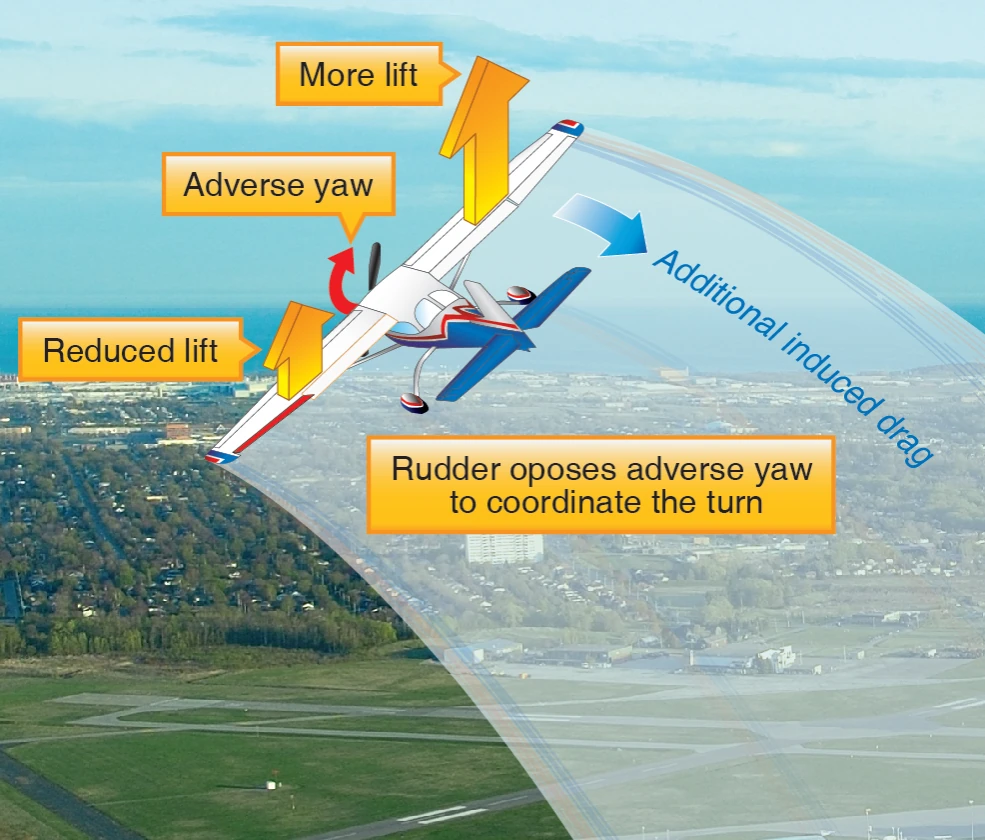
- The pilot uses the rudder to offset any adverse yaw developed by wing’s differential lift and the engine/propeller. The rudder does not turn the airplane. The rudder is used to maintain coordinated flight.
For purposes of this discussion, turns are divided into three classes: shallow, medium, and steep.
- Shallow turns—bank angle is approximately 20° or less. This shallow bank is such that the inherent lateral stability of the airplane slowly levels the wings unless aileron pressure in the desired direction of bank is held by the pilot to maintain the bank angle.
- Medium turns—result from a degree of bank between approximately 20° and 45°. At medium bank angles, the airplane’s inherent lateral stability does not return the wings to level flight. As a result, the airplane tends to remain at a constant bank angle without any flight control pressure held by the pilot. The pilot neutralizes the aileron flight control pressure to maintain the bank.
- Steep turns—result from a degree of bank of approximately 45° or more. The airplane continues in the direction of the bank even with neutral flight controls unless the pilot provides opposite flight control aileron pressure to prevent the airplane from overbanking. The actual amount of opposite flight control pressure used depends on various factors, such as bank angle and airspeed.
When an airplane is flying straight and level, the total lift is acting perpendicular to the wings and to the earth. As the airplane is banked into a turn, total lift is the resultant of two components: vertical and horizontal. [Figure 3-11] The vertical lift component continues to act perpendicular to the earth and opposes gravity. The horizontal lift component acts parallel to the earth’s surface opposing centrifugal force. These two lift components act at right angles to each other, causing the resultant total lifting force to act perpendicular to the banked wing of the airplane. It is the horizontal lift component that begins to turn the airplane and not the rudder.
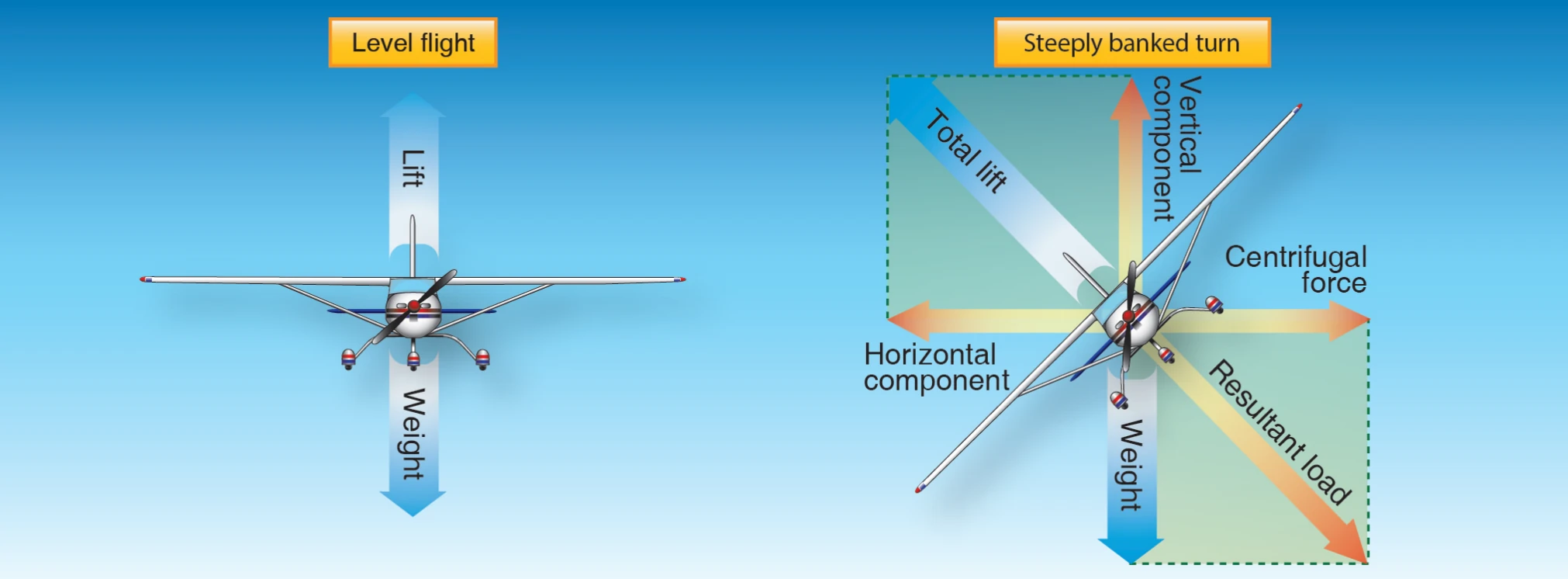
In constant altitude, constant airspeed turns, it is necessary to increase the AOA of the wing when rolling into the turn by increasing back pressure on the elevator, as well to add power countering the loss of speed due to increased drag. This is required because total lift has divided into vertical and horizontal components of lift. In order to maintain altitude, the total lift (since total lift acts perpendicular to the wing) needs to be increased to meet the vertical component of lift requirements (to balance weight and load factor) for level flight.
The purpose of the rudder in a turn is to coordinate the turn. As lift increases, so does drag. When the pilot deflects the ailerons to bank the airplane, both lift and drag are increased on the rising wing and, simultaneously, lift and drag are decreased on the lowering wing. [Figure 3-12] This increased drag on the rising wing and decreased drag on the lowering wing results in the airplane yawing opposite to the direction of turn. To counteract this adverse yaw, rudder pressure is applied simultaneously with the aileron deflection in the desired direction of turn. This action is required to produce a coordinated turn. Coordinated flight is an important part of airplane control. Situations can develop when a pilot maintains certain uncoordinated flight control deflections, which create the potential for a spin. This is especially hazardous when operating at low altitudes, such as when operating in the airport traffic pattern.