
Chapter 2
Human Behavior
- Praising incremental successes during training.
- Relating daily accomplishments to lesson objectives.
- Commenting favorably on learner progress and level ability.
For example, as the learner progresses through training, remark on the milestones. When a learner first performs a task alone, congratulate him or her on having learned it.
When that same skill reaches an intermediate level, point out that the learner’s performance is almost consistent with the requirements of the Airman Certification Standards (ACS), the set of standards detailing the knowledge and skills an airman needs to possess and demonstrate to obtain a pilot certificate. When performance is equal to the ACS requirements, comment favorably on the skill acquisition. When learner performance exceeds ACS requirements, point out what a benefit this will be when the learner performs under pressure during a practical test or on the job.
Presenting New Challenges
With each declaration of success, be sure to present learners with the next challenge. For example, when a learner begins to perform a skill consistently to ACS or PTS requirements, challenge him or her to continue to improve it such that the skill can be performed under pressure or when distracted. Instructors can also add new problems or situations to create a learning scenario.
Drops in Motivation
Instructors should be prepared to deal with a number of circumstances in which motivation levels drop. It is natural for motivation to wane somewhat after the initial excitement of the learner’s first days of training, or between major training events such as solo, evaluations, or practical tests. Drops in motivation appear in several different ways. Learners may come to lessons unprepared or give the general sense that aviation training is no longer a priority. During these times, it is often helpful to remind learners of their own stated goals for seeking aviation training.
Learning plateaus are a common source of frustration, discouragement, and decreased learner motivation. A first line of defense against this situation is to explain that learning seldom proceeds at a constant pace—no one climbs the ladder of success by exactly one rung per day. Learners should be encouraged to continue to work hard and be reassured that results will follow.
Summary of Instructor Actions
To ensure that learners continue to work hard, the instructor should:
- Ask new learners about their aviation training goals.
- Reward incremental successes in learning.
- Present new challenges.
- Occasionally remind learners about their own stated goals for aviation training.
- Assure learners that learning plateaus are normal and that improvement will resume with continued effort.
Human Needs and Motivation
Human needs are things all humans require for normal growth and development. These needs have been studied by psychologists and categorized in a number of ways. Henry A. Murray, one of the founders of personality psychology who was active in developing a theory of motivation, identified a list of core psychological needs in 1938. He described these needs as being either primary (based on biological needs, such as the need for food) or secondary (generally psychological, such as the need for independence). Murray believed the interplay of these needs produce distinct personality types and are internal influences on behavior.
Murray’s research underpins the work of psychologist Abraham Maslow who also studied human needs, motivation, and personality. While working with monkeys during his early years of research, he noticed that some needs take precedence over others. For example, thirst is relieved before hunger because the need for water is a stronger need than the need for food. In 1954, Maslow published what has become known as Maslow’s Hierarchy of Needs. [Figure 2-3] According to Maslow, human needs go beyond the obvious physical needs of food and shelter to include psychological needs, safety and security, love and belongingness, self-esteem, and self-actualization to achieve one’s goals. Human needs are satisfied in order of importance. Once a need is satisfied, humans work to satisfy the next level of need. Need satisfaction is an ongoing behavior that determines everyday actions.
Since Maslow's findings, multiple psychological studies have proven that humans can experience higher levels of motivation while not having lower basic needs met. In a study from 2011, researchers at the University of Illinois found that Maslow’s hierarchy was not universal and the order in which these needs were met did not have much impact on the satisfaction or happiness of an individual. Maslow’s theory has little to no empirical data to support his findings on the five-need hierarchy (Whaba and Bridgewell, 1976).
Maslow’s hierarchy states that each level has to be meet 100 percent before moving on to the next level of need. However, a person can still achieve what they were “born to do” while still being hungry.
What was apparent in multiple studies, however, was that humans have needs that affect their ability to focus on the task at hand. Learners tend to show little to no motivation or attention if most of their needs are not met. If a learner is hungry (physiological), their focus of perceptions (attention) will not be on the instructor and the subject being presented. Rather, it will be on satisfying the physiological need as soon as possible. The same can be said about an anxious learner attempting a fully-developed stall for the first time. If the learner feels unsafe (safety and security), their focus of perception is on their “flee” response and not the skill that the learner it trying to acquire. However, what is important here is the focus of perceptions, and the ability of the instructor to concentrate the learner’s senses on the subject being presented.
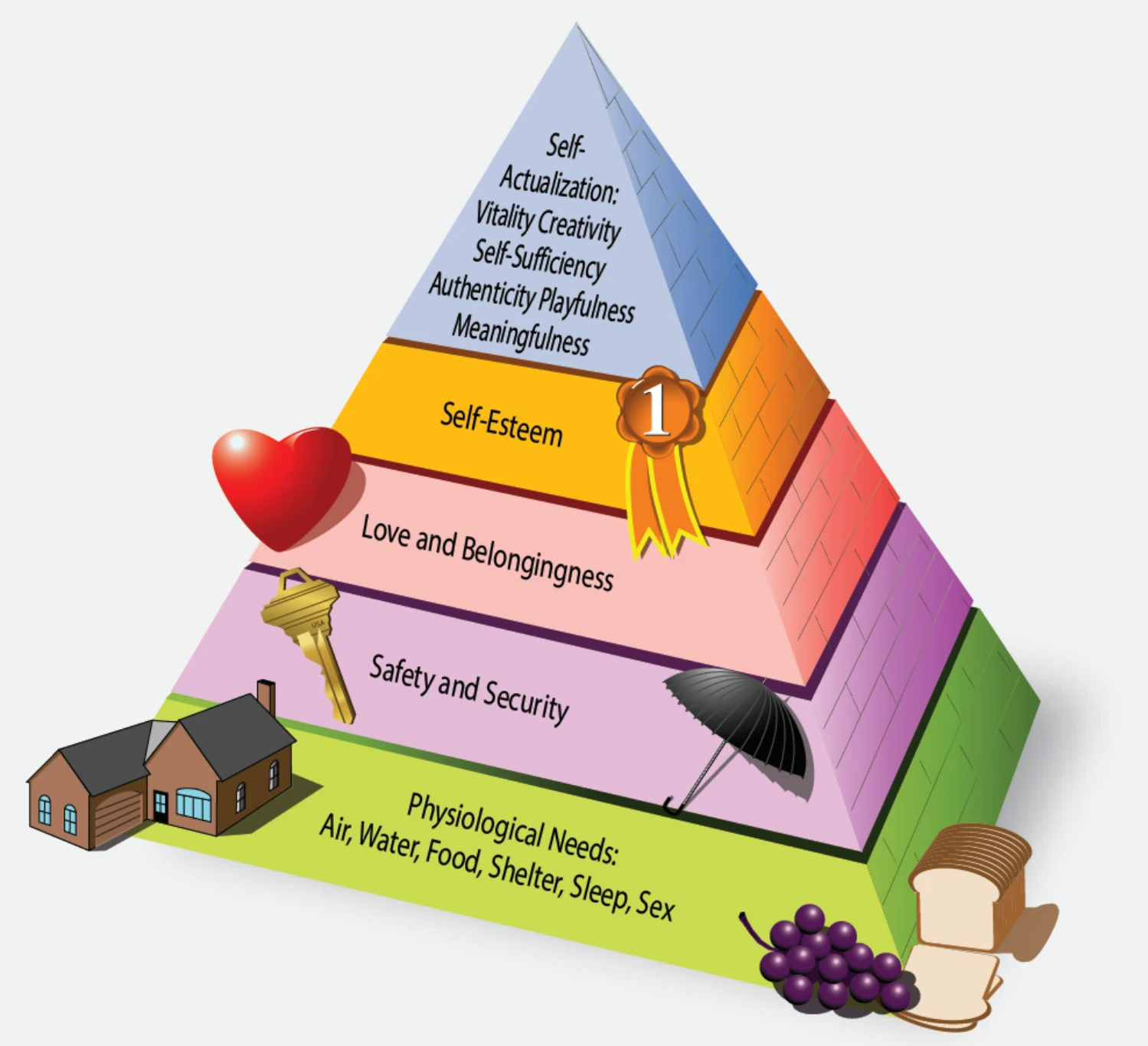
Many learners are able to complete a maneuver or demonstrate knowledge while being hungry or thirsty, which means that for the most part, the entire need does not have to be fulfilled to 100 percent. What needs to be addressed is whether parts of each level have been met, which allows the focus of perception to be concentrated on the instruction given. It does not matter which order the needs are met, the order has little to no effect on the learner’s learning ability. What matters is that the instructor verifies that most of the needs has been met (law of readiness) and is then able to focus the learner’s senses (perception) on the lesson.
One of the main responsibilities of an aviation instructor is to help learners learn, which encompasses the law of readiness. To satisfy the law of readiness, an instructor can verify that a learner’s needs have been met by conducting a thorough pre-assessment prior to beginning the lesson. The pre-assessment should verify whether the learner is physically and mentally ready to learn.