
Chapter 3
The Learning Process
The affective domain addresses a learner’s emotions toward the educational experience. It includes feelings, values, enthusiasms, motivations, and attitudes. [Figure 3-11] For the aviation instructor, this may mean how the individual approaches learning. Is he or she motivated to learn? Does he or she exhibit confidence in learning? Does the learner display a positive attitude towards safety and risk mitigation?
The affective domain provides a framework for teaching in five levels: awareness, response, value, organizing, and integration. In this taxonomy, the learner begins on the awareness level and is open to learning, willing to listen to the instructor. As the learner traverses the taxonomy, he or she responds by participating actively in the training, decides the value of the training, organizes the training into his or her personal belief system, and finally internalizes it.
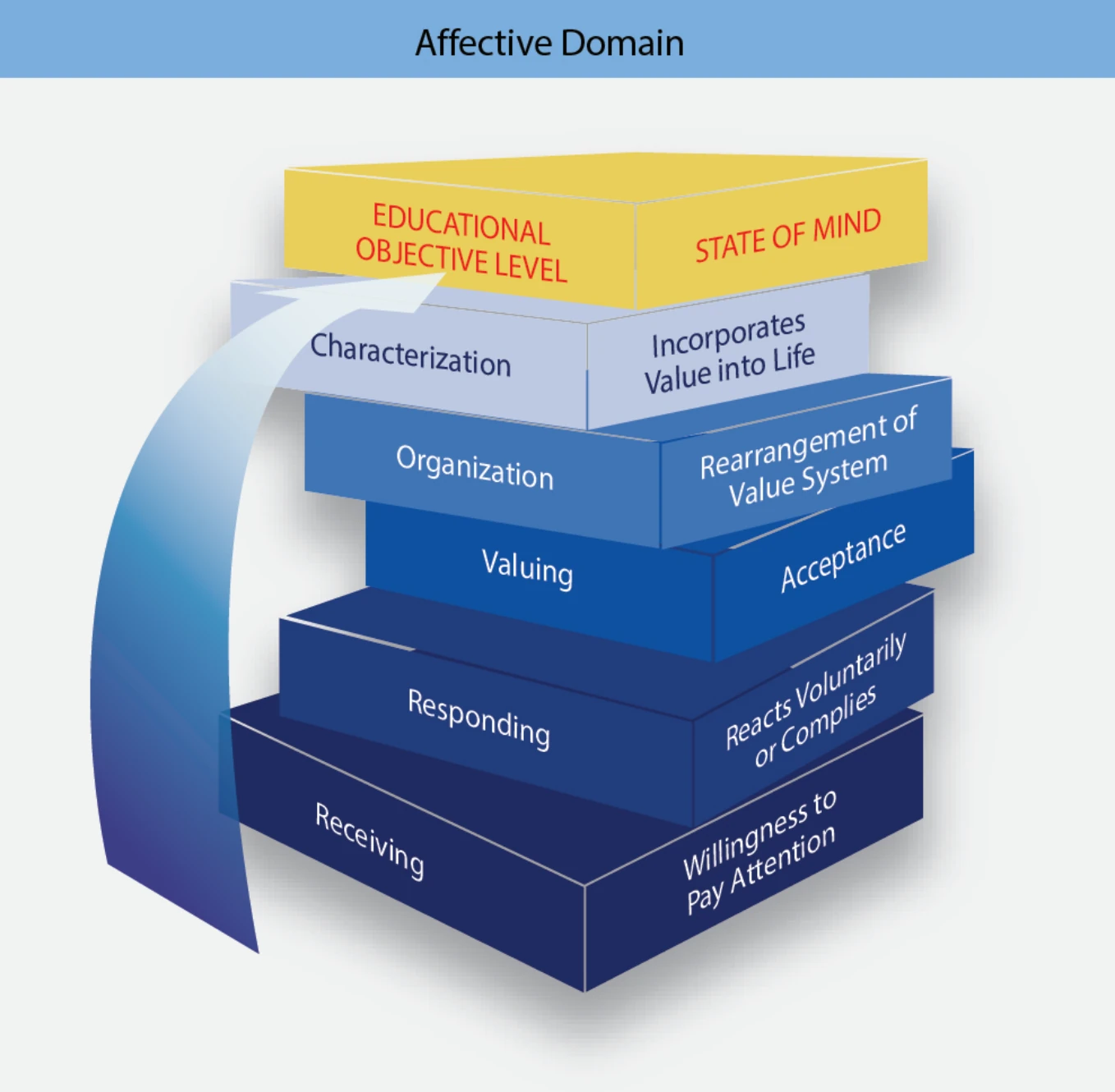
The affective domain is more difficult to measure, but motivation and enthusiasm are important components of any learning. Therefore, the aviation instructor should be acquainted with this facet of learning. Motivation is discussed in depth later in the chapter.
Psychomotor Domain
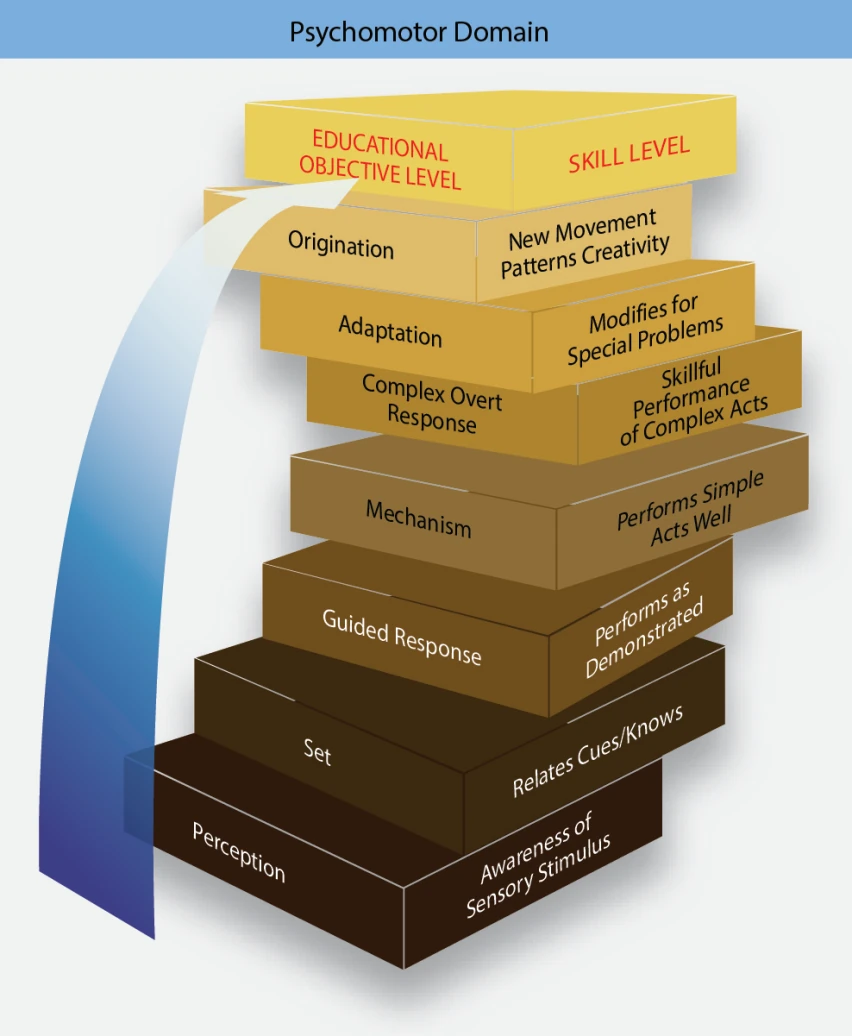
The psychomotor domain is skill based and includes physical movement, coordination, and use of the motor-skill areas. [Figure 3-12] Development of these skills utilizes repetitive practice and is measured in terms of speed, precision, distance, and techniques. While various examples of the psychomotor domain exist, the practical instructional levels for aviation training purposes include the following:
- Observation
- Imitation
- Practice
- Habit
These basic levels make up the broad instructional process, independent of the specific domain chosen and are important components of instruction when aviation instructors prepare learners for the practical test.
At the first level, the learner observes a more experienced person perform the skill. The instructor has the learner observe sequences and relationships that lead to the finished product. Observation may be supplemented by reading, watching a DVD, or computer-based training. The second level is imitation in which the learner attempts to copy the skill under the watchful eye of the instructor.
The practice level is a proficiency building experience in which the learner tries a specific activity over and over. It may be conducted by the learner without direct oversight of the instructor, such as touch-and-go landings for the flight learner who has flown a successful solo flight. The habit level is reached when the learner can perform the skill in twice the time that it takes the instructor or an expert to perform. The evaluation of ability is a performance or skill test. If a person continues to perfect a skill, it eventually becomes a skill performed at the expert level.
Skills involving the psychomotor domain include learning to fly a precision instrument approach procedure, programming a global positioning system (GPS) receiver, or using sophisticated maintenance equipment. As physical tasks and equipment become more complex, the requirement for integration of cognitive and physical skills increases.
Summary of Instructor Actions
To help learners acquire knowledge, the instructor should:
- Ask learners to recite or practice newly acquired knowledge.
- Ask questions that probe learner understanding and prompt them to think about what they have learned in different ways.
- Present opportunities for learners to apply what they know to solving problems or making decisions.
- Present learners with problems and decisions that test the limits of their knowledge.
- Demonstrate the benefits of understanding and being able to apply knowledge.
- Introduce new topics as they support the objectives of the lesson, whenever possible.
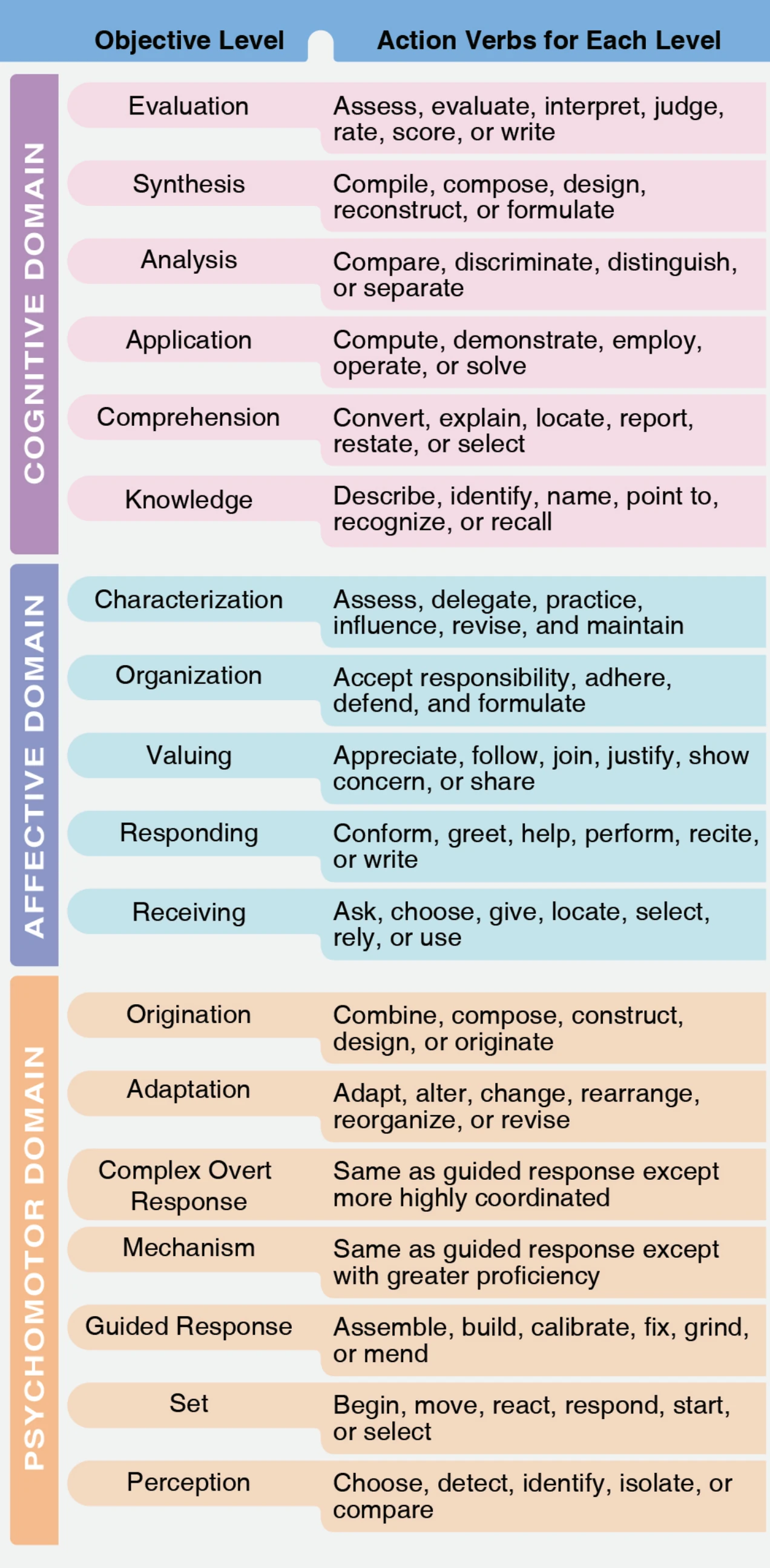
These additional levels of learning are the basis of the knowledge, attitude, and skill learning objectives commonly used in advanced qualification programs for airline training. They also can be tied to the ACS to show the level of knowledge or skill required for a particular task. A list of action verbs for the three domains shows appropriate behavioral objectives at each level. [Figure 3-13] Instructors who are familiar with curriculum development recognize that the action verbs are examples of performance-based objectives.
Characteristics of Learning
The ability to learn is one of the most outstanding human characteristics. Learning occurs continuously throughout a person’s lifetime. To understand how people learn, it is necessary to understand what happens to the individual during the process. In spite of numerous theories and contrasting views, psychologists generally agree there are many characteristics of learning.