
Chapter 5
The Teaching Process
Discussion
The instructor opens the discussion by asking one of the prepared lead-off questions. Discussion questions should be easy for learners to understand and put forth decisively. While the instructor should have the answer in mind before asking the question, the learners need to think about the question before answering. It takes time for learners to recall data, determine how to answer, or to think of an example.
The more difficult the question, the more time the learners need to answer. If the instructor sees puzzled expressions, denoting that the learners do not understand the question, it should be rephrased in a slightly different form. The nature of the questions should be determined by the lesson objective and desired learning outcomes.
Once the discussion is underway, the instructor should listen attentively to the ideas, experiences, and examples contributed by the learners during the discussion. Remember that during the preparation, the instructor listed some of the anticipated responses that would, if discussed by the learners, indicate that they had a firm grasp of the subject. By using “how” and “why” follow- up questions, the instructor should be able to guide the discussion toward the objective of helping learners understand the subject.
After the learners discuss the ideas that support this particular part of the lesson, the instructor should summarize what they have accomplished using an interim summary. This usually occurs after the discussion of each learning outcome to bring ideas together and help in transition, showing how the discussion by the group related to and supported the objective. An interim summary reinforces learning in relation to a specific learning outcome. The interim summary may also be used to keep the group on the subject or to divert the discussion to another member.
Conclusion
A guided discussion closes by summarizing the material covered. The instructor ties together the various points or topics discussed, and shows the relationships between the facts brought forth and the practical application of these facts. For example, while concluding a discussion on density altitude, an instructor might describe an accident, which occurred due to a pilot attempting to take off at a high-altitude airport with a fully loaded aircraft on a hot day.
The summary should be succinct, but not incomplete. If the discussion has revealed that certain areas are not understood by one or more members of the group, the instructor should clarify or cover this material again.
Advantages
Training methods involving discussion encourage learners to listen to and learn from their instructor and each other. Open-ended questions during guided discussion leads to concepts of risk management and ADM. The use of “What If?” during the discussion calls for high order thinking skills and exposes the learner to the decision-making process.
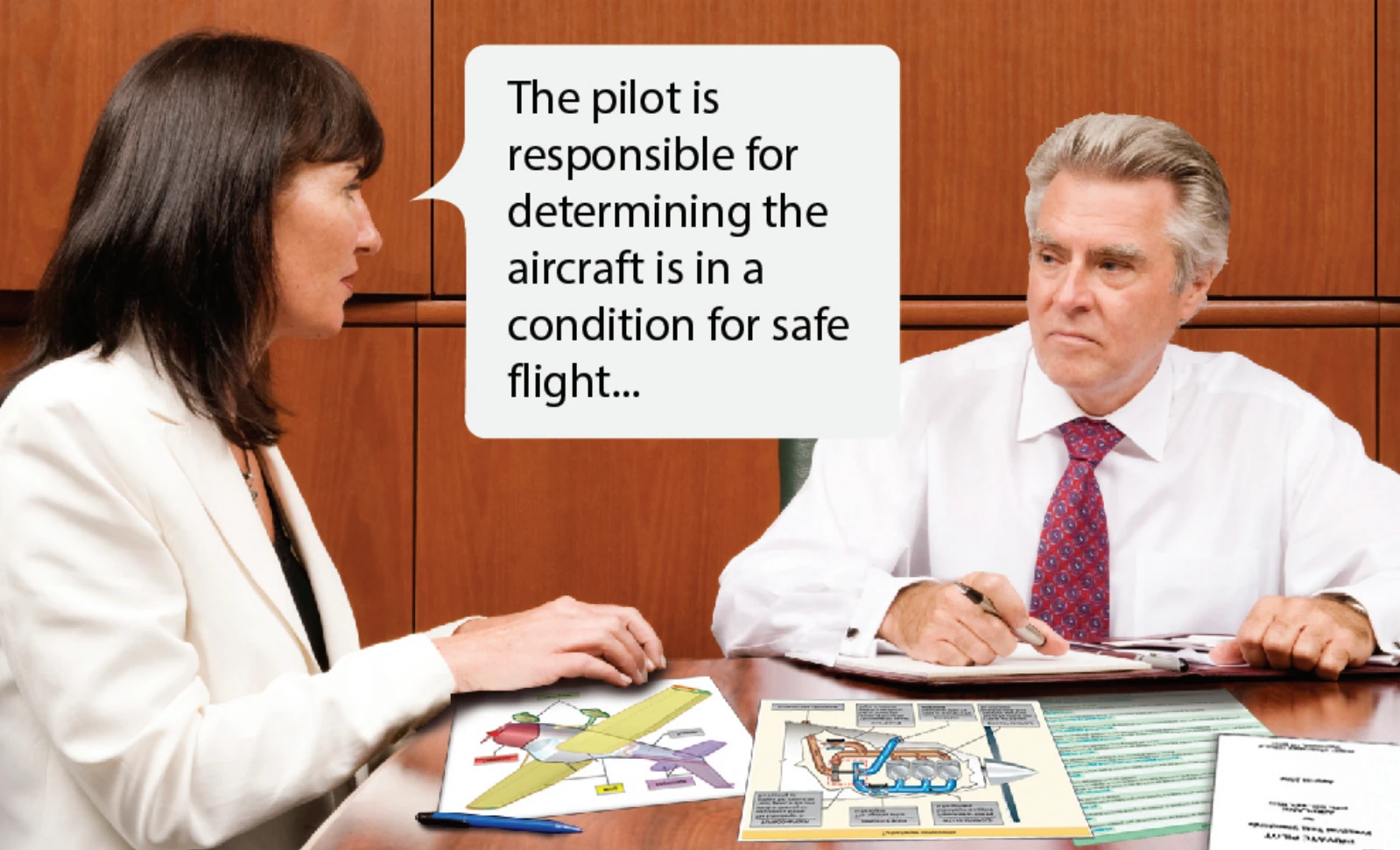
From the description of guided discussion, it is obvious this method works well in a group situation, but it can be modified for an interactive one-on-one learning situation. [Figure 5-11]
Problem-Based Learning
In 1966, the McMaster University School of Medicine in Canada pioneered a new approach to teaching and curriculum design called problem-based learning (PBL). In the intervening years, PBL has helped shift the focus of learning from an instructor-centered approach to a learner-centered approach. There are many definitions for PBL, but this handbook defines it as a learning environment where lessons involve learners with problems encountered in real life and that ask them to find real-world solutions.
PBL starts with a carefully constructed problem to which there is no single solution. The benefit of PBL lies in helping the learner gain a deeper understanding of the information and in improving his or her ability to recall the information.
When presenting material as an authentic problem in a situated environment, the learner may “make meaning” of the information based on past experience and personal interpretation. This problem type encourages the development of HOTS, which include cognitive processes such as problem solving and decision-making, as well as the cognitive skills of analysis, synthesis and evaluation.
Developing good problems that motivate, focus, and initiate learning are an important component of PBL. Effective problems:
- Relate to the real-world so learners want to solve them.
- Require learners to make decisions.
- Are open-ended and not limited to one correct answer.
- Are connected to previously learned knowledge as well as new knowledge.
- Reflect lesson objective(s).
- Challenge learners to think critically.
Teaching Higher Order Thinking Skills (HOTS)
To teach the cognitive skills needed in making decisions and judgments effectively, an instructor should incorporate analysis, synthesis, and evaluation into lessons using PBL. HOTS should be taught throughout the curriculum from simple to complex and from concrete to abstract.