
Chapter 8
Aviation Instructor Responsibilities and Professionalism
The safety practices aviation instructors emphasize have a long-lasting effect on learners. Generally, learners consider their instructor to be a role model whose habits they attempt to imitate, whether consciously or unconsciously. The instructor’s advocacy and description of safety practices mean little to a learner if the instructor does not demonstrate them consistently. For example, if a maintenance learner observes the instructor violating safety practices by not wearing safety glasses around hazardous equipment, the learner probably will not be conscientious about using safety equipment when the instructor is not around. One of the best actions a flight or maintenance instructor can take to enhance aviation safety is to emphasize safety by example.
Another way for the instructor to advocate safety is to partner with the FAA Safety Team (FAASTeam). The FAASTeam is dedicated to improving the aviation safety record by conveying safety principles and practices through training, outreach, and education. More information is available at FAASafety.gov. ([source link](https://www.FAASafety.gov))
Flight Instructor Qualifications
A flight instructor needs to be thoroughly familiar with the functions, characteristics, and proper use of all flight instruments, avionics, and other aircraft systems being used for training. This is especially important due to the wide variety in global positioning systems (GPS) and glass panel displays.
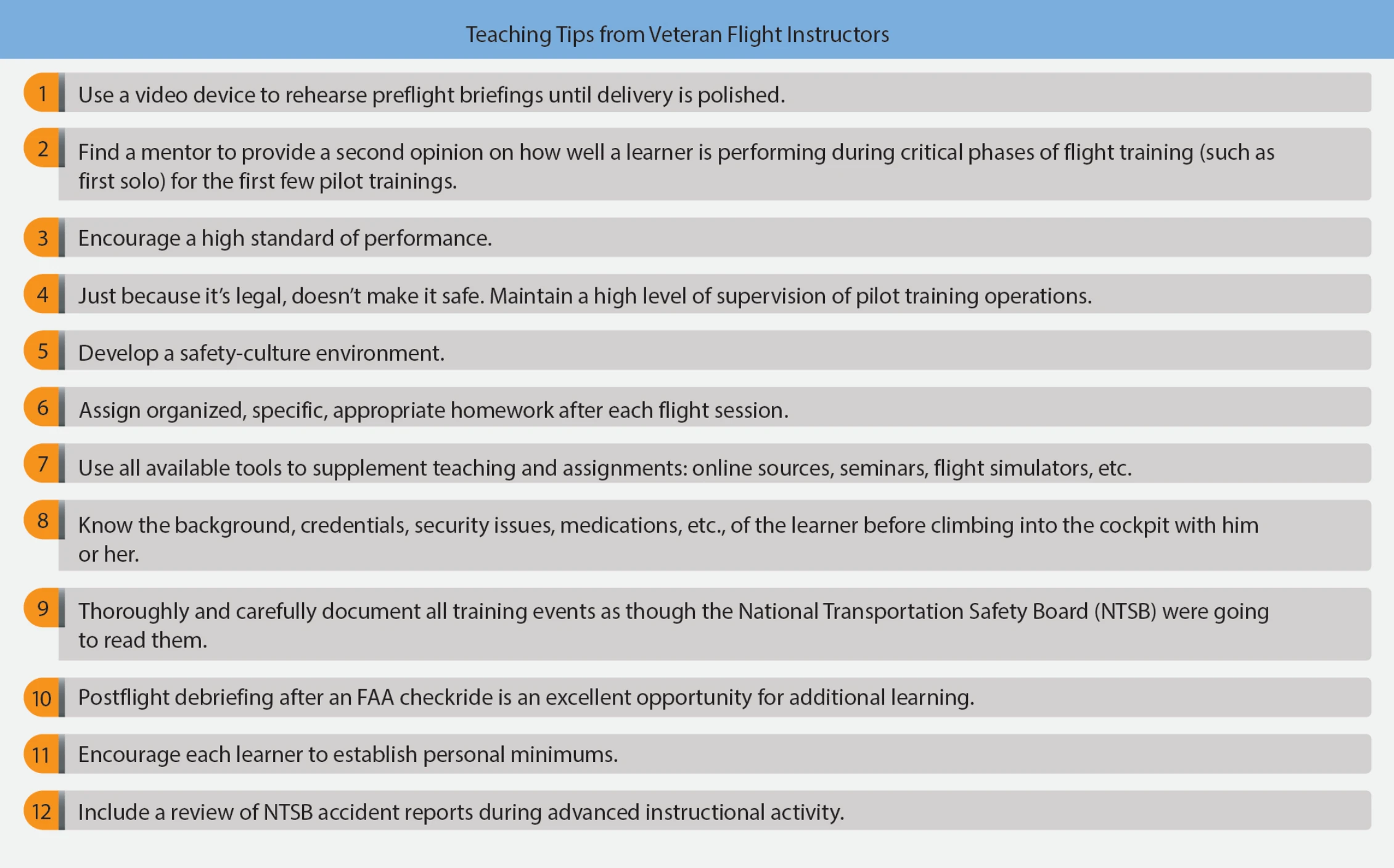
Each flight instructor should maintain familiarity with current pilot training techniques and certification requirements. Frequent review of new periodicals and technical publications, personal contacts with FAA inspectors and designated pilot examiners (DPE), and participation in pilot and flight instructor clinics such as the FAASTeam/SAFE quarterly series of Flight Instructor Open Forums facilitate awareness of current requirements. Additional information can be obtained from veteran flight instructors. [Figure 8-6] The continued use of outmoded instructional procedures or the preparation of learners using obsolete certification requirements usually involves rationalization.
Professionalism
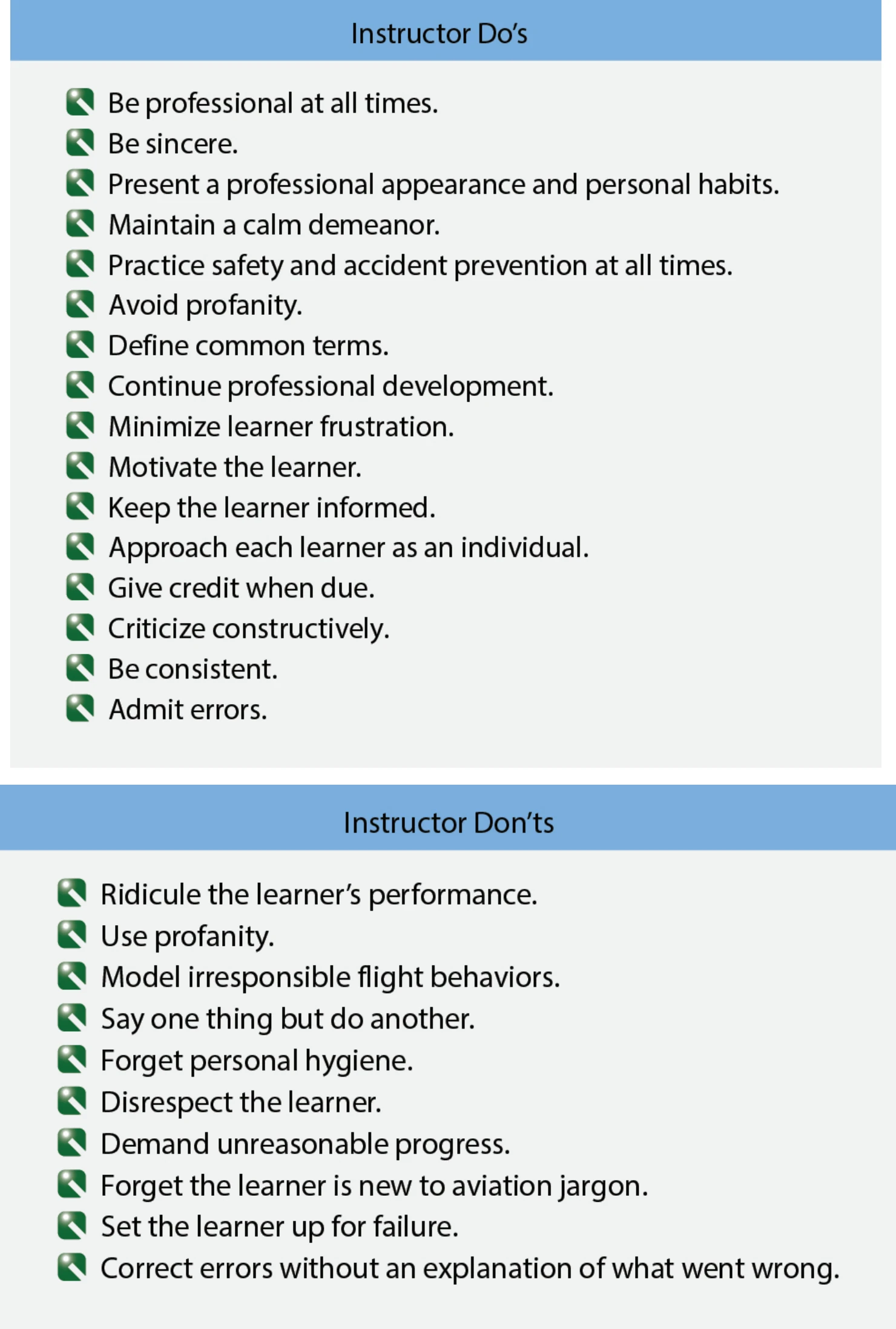
The aviation instructor is the central figure in aviation training and bears responsibility for all phases of required training. The instructor, either pilot or aircraft maintenance technician, needs to be a professional. As professionals, aviation instructors strive to maintain the highest level of knowledge, training, and currency in the field of aviation. To achieve this goal, instructors need to commit themselves to continuous, lifelong learning and professional development through study, service, and membership in professional organizations such as the Society of Aviation and Flight Educators (SAFE), the National Association of Flight Instructors (NAFI) and Professional Aviation Mechanics Association (PAMA). Professionals build a library of resources that keeps them informed of the most current procedures, publications, and educational opportunities. Being a professional also means behaving in a professional manner. [Figure 8-7] An aviation instructor should strive to practice the characteristics on the Instructor Do’s list when teaching a learner.
Sincerity
An aviation learner normally accepts a competent instructor as a teacher. However, the aviation instructor should be straightforward and honest at all times. Attempting to hide inadequacy behind a smokescreen of unrelated instruction makes it impossible for the instructor to command the respect and full attention of a learner. Any facade of instructor pretentiousness, whether it is real or mistakenly presumed, causes the learner to lose confidence in the instructor and adversely affects learning.
Acceptance of the Learner
The instructor needs to accept learners as they are, including all their faults and problems. The learner is a person who wants to learn, and the instructor is a person who is available to help in the learning process. The professional relationship between the instructor and learner should be based on a mutual acknowledgement that the learner and the instructor are important to each other, and that both are working toward the same objective.
Under no circumstance should the instructor do anything which implies degrading the learner. Acceptance (rather than ridicule) and support (rather than reproof) encourage learning. Learners need to be treated with respect, regardless of whether they are quick to learn or require more time to absorb certain concepts. Criticizing a learner who does not learn rapidly is similar to a doctor reprimanding a patient who does not get well as rapidly as predicted.
Personal Appearance and Habits
Personal appearance has an important effect on the professional image of the instructor. Today’s aviation customer expects an instructor to be neat, clean, and appropriately dressed. Since the instructor is engaged in a learning situation, the attire worn should be appropriate to professional status. [Figure 8-8]
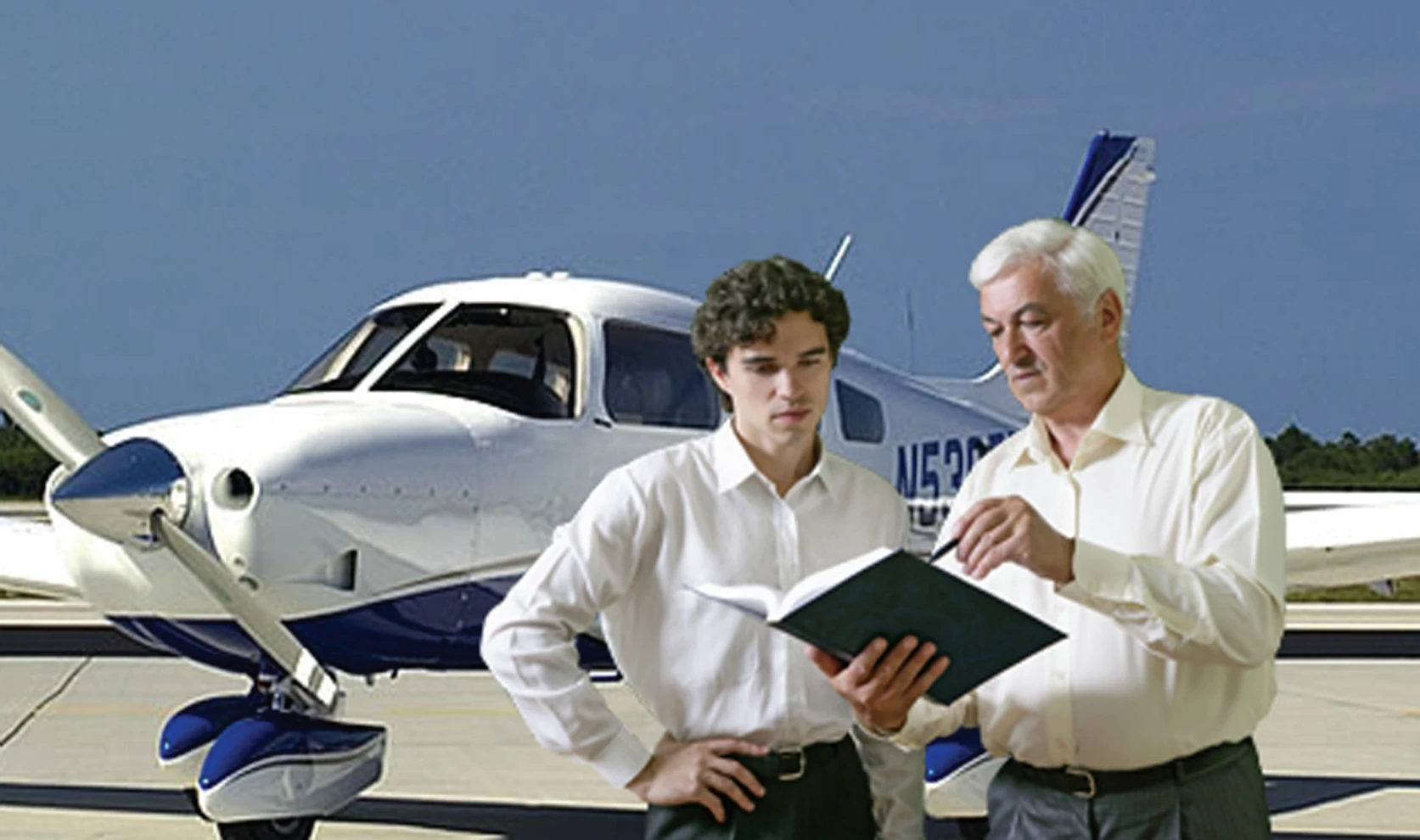
Personal habits have a significant effect on the professional image. The exercise of common courtesy is perhaps the most important of these. An instructor who is rude, thoughtless, and inattentive cannot hold the respect of a learner, regardless of the instructor’s ability as a pilot or aviation maintenance technician. Personal cleanliness is important to aviation instruction. Frequently, an instructor and a learner work in close proximity, and even little annoyances such as body odor or bad breath can cause serious distractions from learning the tasks at hand.
Demeanor
The attitude and behavior of the instructor can contribute much to a professional image. The instructor should avoid erratic movements, distracting speech habits, and capricious changes in mood. The professional image requires development of a calm, thoughtful, and disciplined demeanor.