Chapter 13
Aircraft Landing Gear Systems
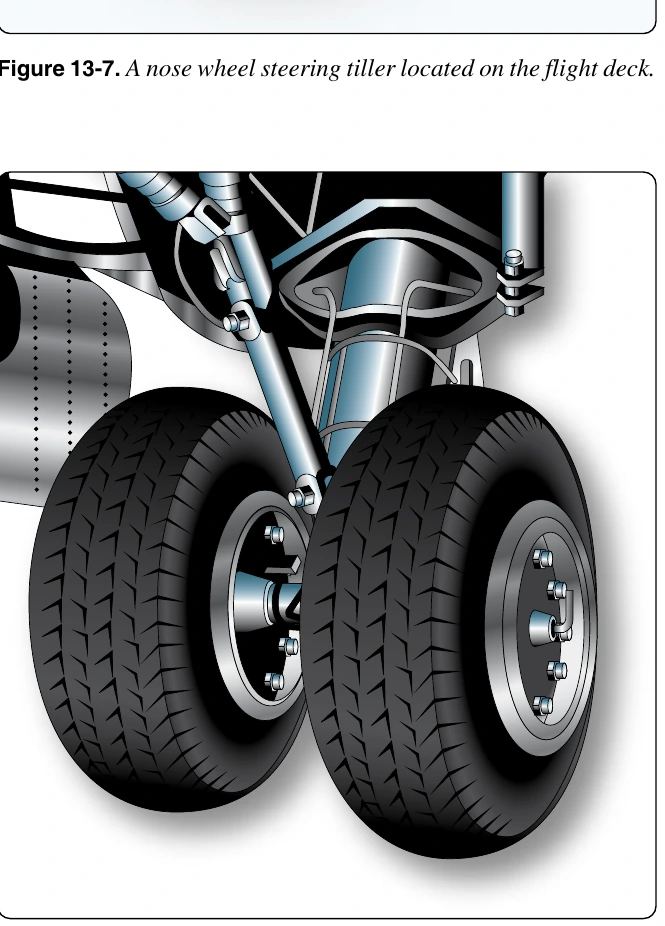
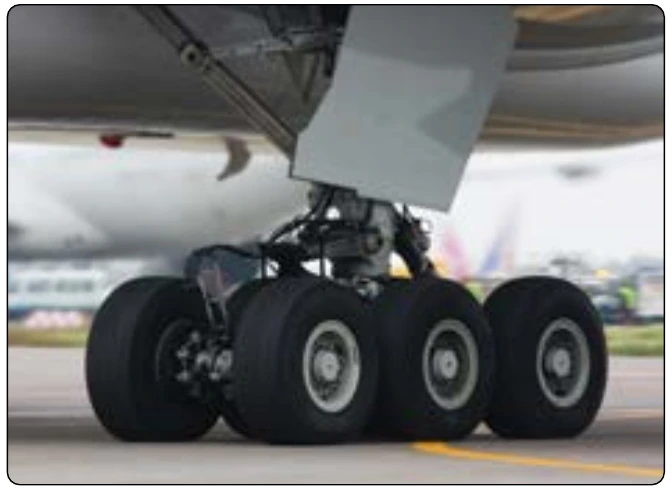
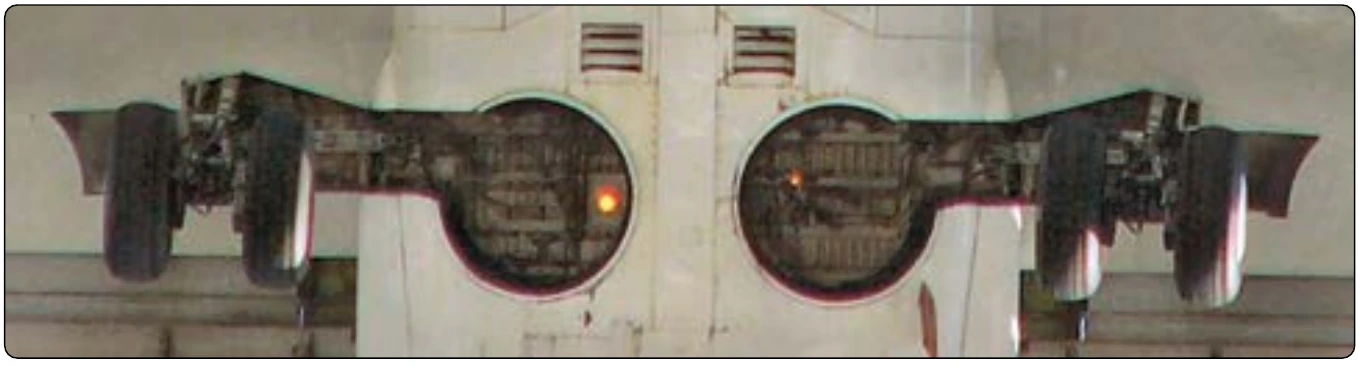
The main gear on a tricycle-type landing gear arrangement is attached to reinforced wing structure or fuselage structure. The number and location of wheels on the main gear vary. Many main gear have two or more wheels. [Figure 13-8] Multiple wheels spread the weight of the aircraft over a larger area. They also provide a safety margin should one tire fail. Heavy aircraft may use four or more wheel assemblies on each main gear. When more than two wheels are attached to a landing gear strut, the attaching mechanism is known as a bogie. The number of wheels included in the bogie is a function of the gross design weight of the aircraft and the surface type on which the loaded aircraft is required to land. Figure 13-9 illustrates the triple bogie main gear of a Boeing 777.
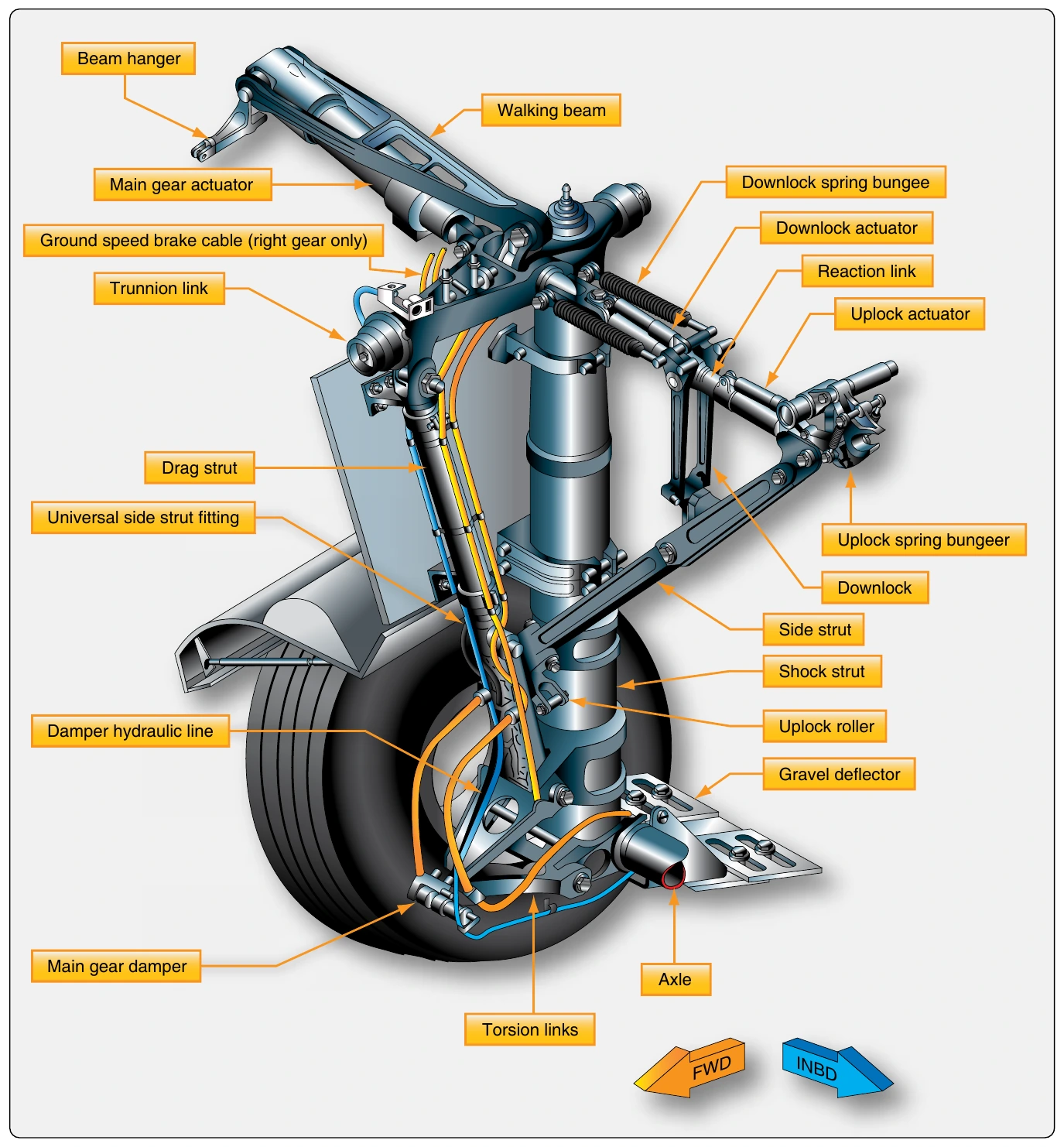
The tricycle-type landing gear arrangement consists of many parts and assemblies. These include air/oil shock struts, gear alignment units, support units, retraction and safety devices, steering systems, wheel and brake assemblies, etc. A main landing gear of a transport category aircraft is illustrated in Figure 13-10 with many of the parts identified as an introduction to landing gear nomenclature.
Fixed & Retractable Landing Gear
Further classification of aircraft landing gear can be made into two categories: fixed and retractable. Many small, single-engine light aircraft have fixed landing gear, as do a few light twins. This means the gear is attached to the airframe and remains exposed to the slipstream as the aircraft is flown. As discussed in Chapter 2 of this handbook, as the speed of an aircraft increases, so does parasite drag. Mechanisms to retract and stow the landing gear to eliminate parasite drag add weight to the aircraft. On slow aircraft, the penalty of this added weight is not overcome by the reduction of drag, so fixed gear is used. As the speed of the aircraft increases, the drag caused by the landing gear becomes greater and a means to retract the gear to eliminate parasite drag is required, despite the weight of the mechanism.
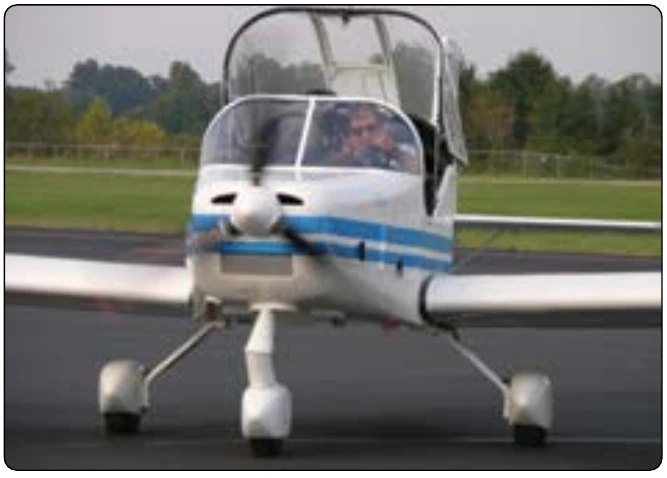
A great deal of the parasite drag caused by light aircraft landing gear can be reduced by building gear as aerodynamically as possible and by adding fairings or wheel pants to streamline the airflow past the protruding assemblies. A small, smooth profile to the oncoming wind greatly reduces landing gear parasite drag. Figure 13-11 illustrates a Cessna aircraft landing gear used on many of the manufacturer’s light planes.
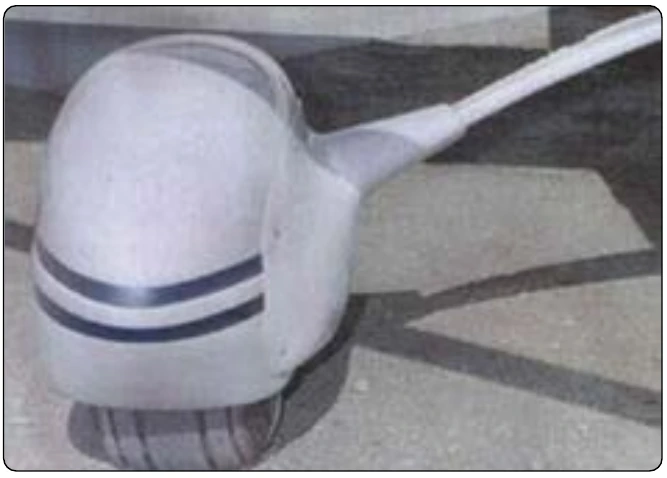
The thin cross section of the spring steel struts combine with the fairings over the wheel and brake assemblies to raise performance of the fixed landing gear by keeping parasite drag to a minimum.
Retractable landing gear stow in fuselage or wing compartments while in flight. Once in these wheel wells, gear are out of the slipstream and do not cause parasite drag. Most retractable gear have a close-fitting panel attached to them that fairs with the aircraft skin when the gear is fully retracted. [Figure 13-12] Other aircraft have separate doors that open, allowing the gear to enter or leave, and then close again.
Shock Absorbing & Non-Shock Absorbing Landing Gear
In addition to supporting the aircraft for taxi, the forces of impact on an aircraft during landing must be controlled by the landing gear. This is done in two ways: 1) the shock energy is altered and transferred throughout the airframe at a different rate and time than the single strong pulse of impact, and 2) the shock is absorbed by converting the energy into heat energy.
Leaf-Type Spring Gear
Many aircraft utilize flexible spring steel, aluminum, or composite struts that receive the impact of landing and return it to the airframe to dissipate at a rate that is not harmful. The gear flexes initially and forces are transferred as it returns to its original position. [Figure 13-13] The most common example of this type of non-shock absorbing landing gear are the thousands of single-engine Cessna aircraft that use it. Landing gear struts of this type made from composite materials are lighter in weight with greater flexibility and do not corrode.