Chapter 13
Aircraft Landing Gear Systems
Takeoffs & Landings
Aircraft tires are under severe strain during takeoff and landing. Under normal conditions, with proper control and maintenance of the tires, they are able to withstand these stresses and perform as designed.
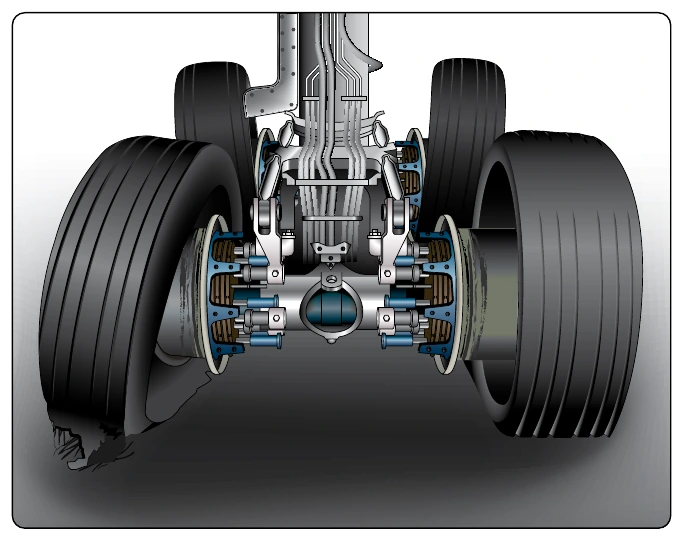
Most tire failures occur during takeoff which can be extremely dangerous. Tire damage on takeoff is often the result of running over some foreign object. Thorough preflight inspection of the tires and wheels, as well as maintenance of hangar and ramp surfaces free of foreign objects, are keys to prevention of takeoff tire failure. A flat spot caused on the way to the runway may lead to tire failure during takeoff. Heavy braking during aborted takeoffs is also a common cause of takeoff tire failure. [Figure 13-161]
Tire failure upon landing can have several causes. Landing with the brakes on is one. This is mitigated on aircraft with anti-skid systems but can occur on other aircraft. Other errors in judgment, such as landing too far down the runway and having to apply the brakes heavily, can cause overheating or skidding. This can lead to flat-spotting the tires or blow out.
Hydroplaning
Skidding on a wet, icy, or dry runway is accompanied by the threat of tire failure due to heat build-up and rapid tire wear damage. Hydroplaning on a wet runway may be overlooked as a damaging condition for a tire. Water building up in front of the tire provides a surface for the tire to run on and contact with the runway surface is lost. This is known as dynamic hydroplaning. Steering ability and braking action is also lost. A skid results if the brakes are applied and held.
Viscous hydroplaning occurs on runways with a thin film of water that mixes with contaminants to cause an extremely slick condition. This can also happen on a very smooth runway surface. A tire with a locked brake during viscous hydroplaning can form an area of reverted rubber or skid burn in the tread. While the tire may continue in service if the damage is not too severe, it can be cause for removal if the reinforcing tread or protector ply is penetrated. The same damage can occur while skidding on ice.
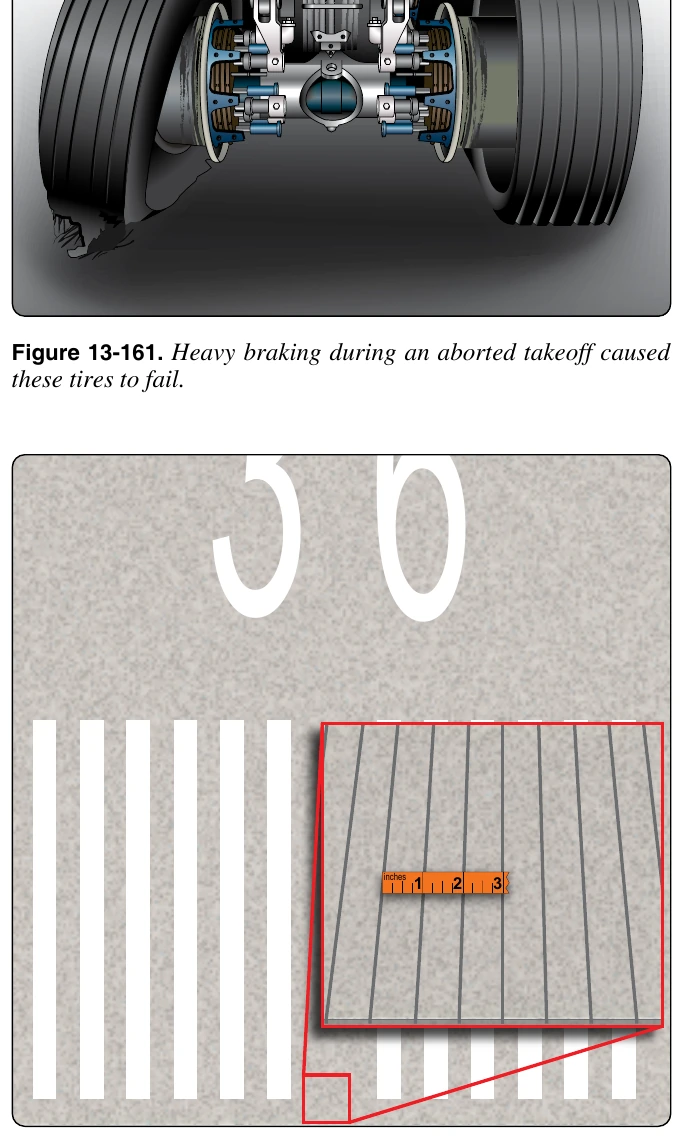
Modern runways are designed to drain water rapidly and provide good traction for tires in wet conditions. A compromise exists in that crosscut runways and textured runway surfaces cause tires to wear at a greater rate than a smooth runway. [Figure 13-162] A smooth landing is of great benefit to any tire. For the most part, aircraft tire handling and care is the responsibility of the pilot; however, the technician benefits from knowing the causes of tire failure and communicating this knowledge to the flight crew so that operating procedures can be modified to avoid those causes.