Chapter 7
Advanced Composite Materials
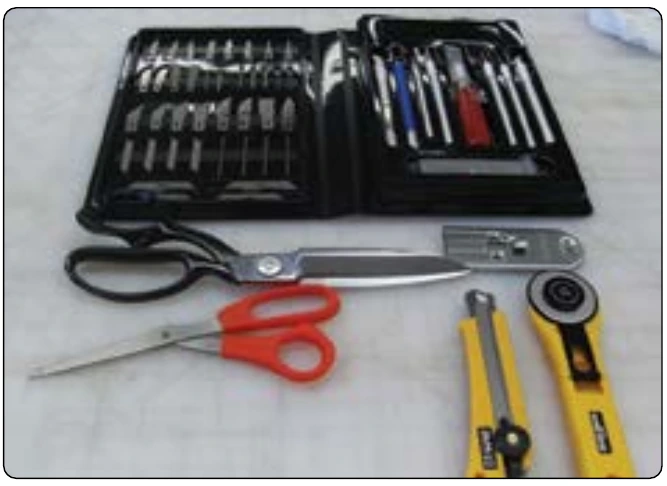
Prepreg and dry fabrics can be cut with hand tools, such as scissors, pizza cutters, and knives. Materials made from Kevlar® are more difficult to cut than fiberglass or carbon and tools wear quicker. A squeegee and a brush are used to impregnate dry fibers with resin for wet layup. Markers, rulers, and circle templates are used to make a repair layout. [Figure 7-31]
Air Tools
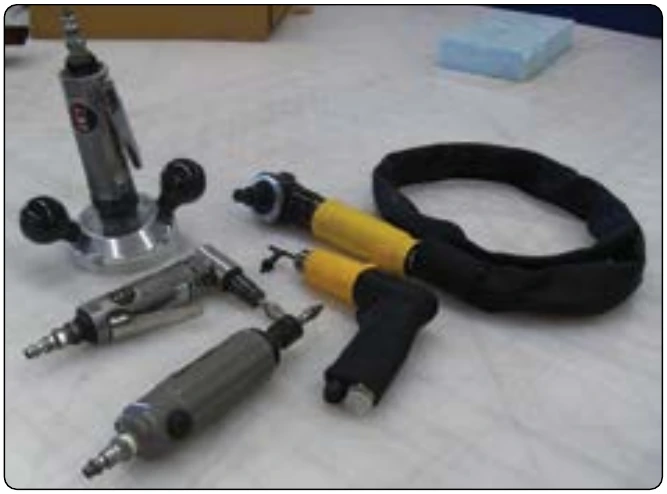
Air-driven power tools, such as drill motors, routers, and grinders, are used for composite materials. Electric motors are not recommended, because carbon is a conductive material that can cause an electrical short circuit. If electric tools are used, they need to be of the totally enclosed type. [Figure 7-32]
Caul Plate
A caul plate made from aluminum is often used to support the part during the cure cycle. A mold release agent, or parting film, is applied to the caul plate so that the part does not attach to the caul plate. A thin caul plate is also used on top of the repair when a heat bonder is used. The caul plate provides a more uniform heated area and it leaves a smoother finish of the composite laminate.
Support Tooling & Molds
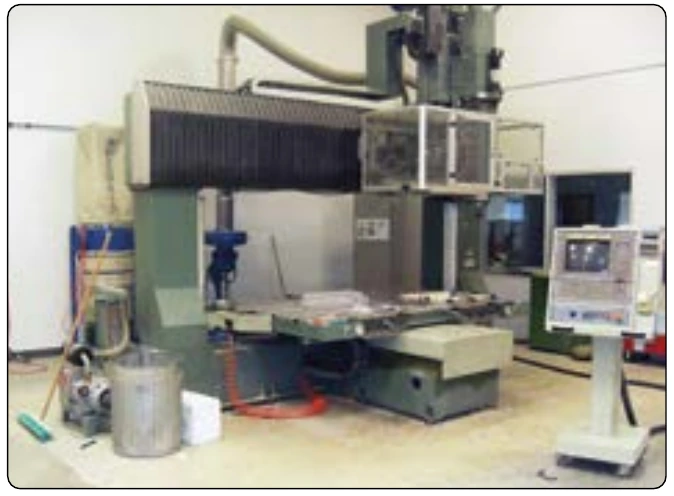
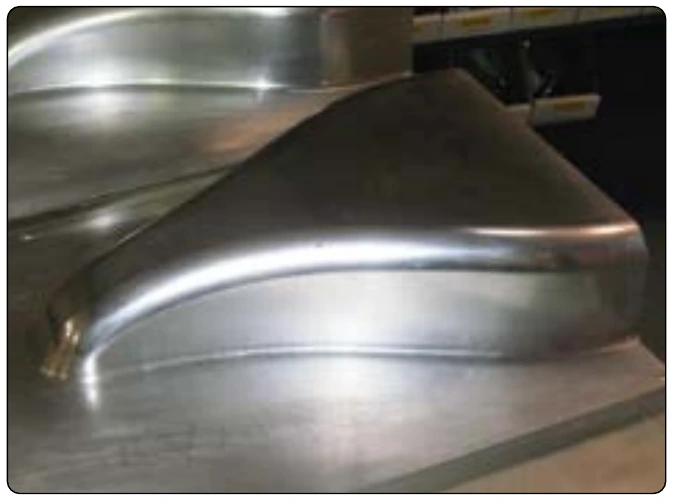
Certain repairs require tools to support the part and/or maintain surface contour during cure. A variety of materials can be used to manufacture these tools. The type of material depends on the type of repair, cure temperature, and whether it is a temporary or permanent tool. Support tooling is necessary for oven and autoclave cure due to the high cure temperature. The parts deform if support tooling is not used. There are many types of tooling material available. Some are molded to a specific part contour and others are used as rigid supports to maintain the contour during cure. Plaster is an inexpensive and easy material for contour tooling. It can be filled with fiberglass, hemp, or other material. Plaster is not very durable, but can be used for temporary tools. Often, a layer of fiberglass-reinforced epoxy is placed on the tool side surface to improve the finish quality. Tooling resins are used to impregnate fiberglass, carbon fiber, or other reinforcements to make permanent tools. Complex parts are made from metal or high-temperature tooling boards that are machined with 5-axis CNC equipment to make master tools that can be used to fabricate aircraft parts. [Figures 7-33 and 7-34]
Vacuum Bag Materials
Repairs of composite aircraft components are often performed with a technique known as vacuum bagging. A plastic bag is sealed around the repair area. Air is then removed from the bag, which allows repair plies to be drawn together with no air trapped in between. Atmospheric pressure bears on the repair and a strong, secure bond is created.
Several processing materials are used for vacuum bagging a part. These materials do not become part of the repair and are discarded after the repair process.
Release Agents
Release agents, also called mold release agents, are used so that the part comes off the tool or caul plate easily after curing.
Bleeder Ply
The bleeder ply creates a path for the air and volatiles to escape from the repair. Excess resin is collected in the bleeder. Bleeder material could be made of a layer of fiberglass, nonwoven polyester, or it could be a perforated Teflon® coated material. The structural repair manual (SRM) indicates what type and how many plies of bleeder are required. As a general rule, the thicker the laminate, the more bleeder plies are required.