
Chapter 7
Advanced Composite Materials
Peel plies are often used to create a clean surface for bonding purposes. A thin layer of fiberglass is cured with the repair part. Just before the part is bonded to another structure, the peel ply is removed. The peel ply is easy to remove and leaves a clean surface for bonding. Peel plies are manufactured from polyester, nylon, flouronated ethylene propylene (FEP), or coated fiberglass. They can be difficult to remove if overheated. Some coated peel plies can leave an undesirable contamination on the surface. The preferred peel ply material is polyester that has been heat-set to eliminate shrinkage.
Layup Tapes
Vacuum bag sealing tape, also called sticky tape, is used to seal the vacuum bag to the part or tool. Always check the temperature rating of the tape before use to ensure that you use appropriately rated tape.
Perforated Release Film
Perforated parting film is used to allow air and volatiles out of the repair, and it prevents the bleeder ply from sticking to the part or repair. It is available with different size holes and hole spacing depending on the amount of bleeding required.
Solid Release Film
Solid release films are used so that the prepreg or wet layup plies do not stick to the working surface or caul plate. Solid release film is also used to prevent the resins from bleeding through and damaging the heat blanket or caul plate if they are used.
Breather Material
The breather material is used to provide a path for air to get out of the vacuum bag. The breather must contact the bleeder. Typically, polyester is used in either 4-ounce or 10-ounce weights. Four ounces is used for applications below 50 pounds per square inch (psi) and 10 ounces is used for 50–100 psi.
Vacuum Bag
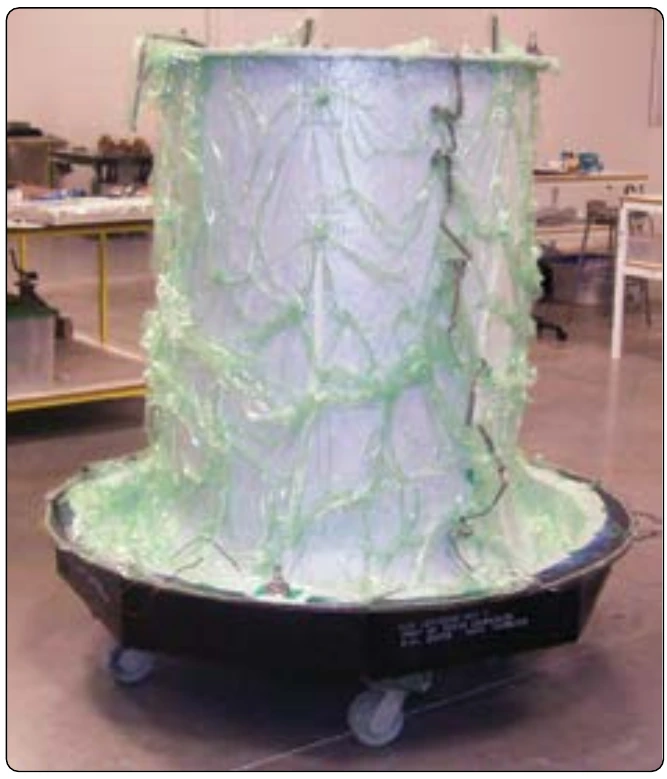
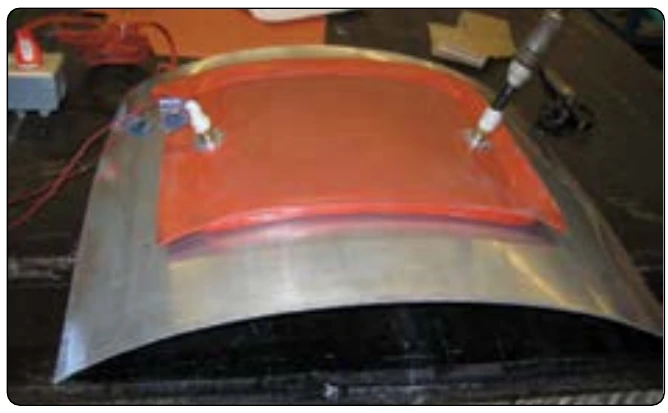
The vacuum bag material provides a tough layer between the repair and the atmosphere. The vacuum bag material is available in different temperature ratings, so make sure that the material used for the repair can handle the cure temperature. Most vacuum bag materials are one time use, but material made from flexible silicon rubber is reusable. Two small cuts are made in the bagging material so that the vacuum probe valve can be installed. The vacuum bag is not very flexible and plies need to be made in the bag if complex shapes are to be bagged. Sometimes, an envelope type bag is used, but the disadvantage of this method is that the vacuum pressure might crush the part. Reusable bags made from silicon rubber are available that are more flexible. Some have a built-in heater blanket that simplifies the bagging task. [Figures 7-35, 7-36, and 7-37]
Vacuum Equipment
A vacuum pump is used to evacuate air and volatiles from the vacuum bag so that atmospheric pressure consolidates the plies. A dedicated vacuum pump is used in a repair shop. For repairs on the aircraft, a mobile vacuum pump could be used. Most heat bonders have a built-in vacuum pump. Special air hoses are used as vacuum lines, because regular air hoses might collapse when a vacuum is applied. The vacuum lines that are used in the oven or autoclave need to be able to withstand the high temperatures in the heating device. A vacuum pressure regulator is sometimes used to lower the vacuum pressure during the bagging process.
Vacuum Compaction Table
Avacuum compaction table is a convenient tool for debulking composite layups with multiple plies. Essentially a reusable vacuum bag, a compaction table consists of a metal table surface with a hinged cover. The cover includes a solid frame, a flexible membrane, and a vacuum seal. Repair plies are laid up on the table surface and sealed beneath the cover with vacuum to remove entrapped air. Some compaction tables are heated but most are not.