
Chapter 8
Aircraft Painting & Finishing
- Not enough reducer (too thick) or the wrong type reducer for the ambient temperature.
- Material not uniformly mixed.
- Forced drying method, either with fans or heat, is too quick.
- Too little flash time between coats.
- Spray painting when the ambient or substrate temperature is either too hot or too cold.
Light orange peel can be wet sanded or buffed out with polishing compound. In extreme cases, it has to be sanded smooth and resprayed.
Fisheyes
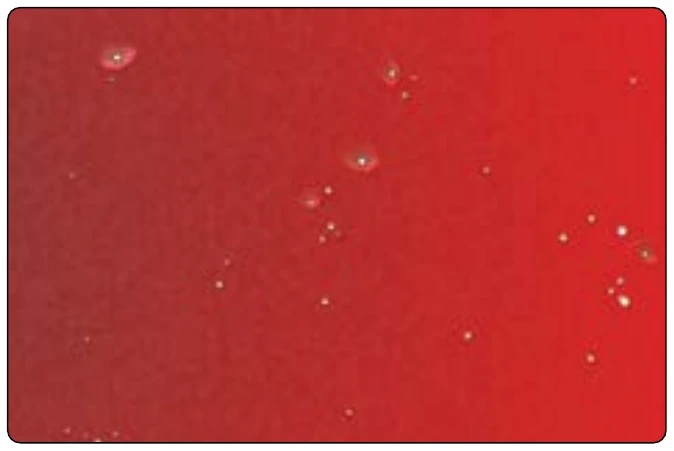
Fisheyes appear as small holes in the coating as it is being applied, which allows the underlying surface to be seen. [Figure 8-18] Usually, it is due to the surface not being cleaned of all traces of silicone wax. If numerous fisheyes appear when spraying a surface, stop spraying and clean off all the wet paint. Then, thoroughly clean the surface to remove all traces of silicone with a silicone wax remover.
The most effective way to eliminate fisheyes is to ensure that the surface about to be painted is clean and free from any type of contamination. A simple and effective way to check this is referred to as a water break test. Using clean water, spray, pour, or gently hose down the surface to be painted. If the water beads up anywhere on the surface, it is not clean. The water should flatten out and cover the area with an unbroken film.
If the occasional fisheye appears when spraying, wait until the first coat sets up and then add a recommended amount of fisheye eliminator to the subsequent finish coats. Fisheyes may appear during touchup of a repair. A coat of sealer may help, but a complete removal of the finish may be the only solution.
One last check before spraying is to ensure that the air compressor has been drained of water, the regulator cleaned, and the system filters are clean or have been replaced so that this source of contamination is eliminated.
Sanding Scratches
Sanding scratches appear in the finish paint when the surface has not been properly sanded and/or sealed prior to spraying the finish coats. [Figure 8-19] This usually shows up in nonmetal surfaces. Composite cowling, wood surfaces, and plastic fairings must be properly sanded and sealed before painting. The scratches may also appear if an overly rapid quick-drying thinner is used.
The only fix after the finish coat has set up is to sand down the affected areas using a finer grade of sandpaper, follow with a recommended sealer, and then repaint.
Wrinkling
Wrinkling is usually caused by trapped solvents and unequal drying of the paint finish due to excessively thick or solvent-heavy paint coats. [Figure 8-20] Fast reducers can also contribute to wrinkling if the sprayed coat is not allowed to dry thoroughly. Thick coatings and quick-drying reducers allow the top surface of the coating to dry, trapping the solvents underneath. If another heavy coat is applied before the first one dries, wrinkles may result. It may also have the effect of lifting the coating underneath, almost with the same result as a paint stripper.
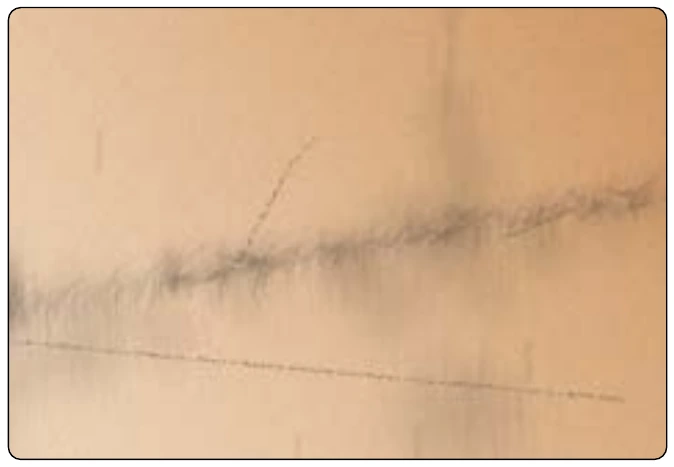
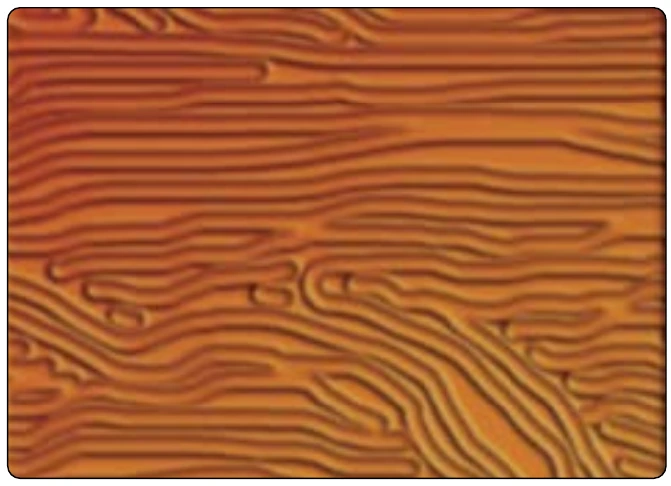
Rapid changes in ambient temperatures while spraying may cause an uneven release of the solvents, causing the surface to dry, shrink, and wrinkle. Making the mistake of using an incompatible thinner, or reducer, when mixing the coating materials may cause not only wrinkles but other problems as well. Wrinkled paint must be completely removed and the surface refinished.
Spray Dust
Spray dust is caused by the atomized spray particles from the gun becoming dry before reaching the surface being painted, thus failing to flow into a continuous film. [Figure 8-21] This may be caused by: