
Chapter 8
Aircraft Painting & Finishing
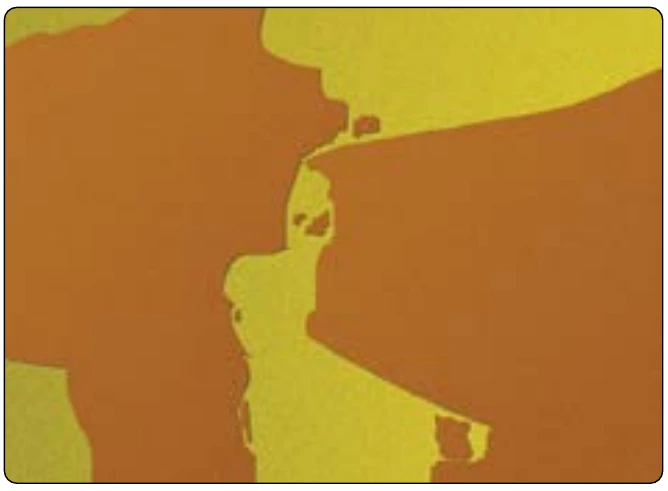
Poor Adhesion
- Improper cleaning and preparation of the surface to be finished.
- Application of the wrong primer.
- Incompatibility of the topcoat with the primer. [Figure 8-13]
- Improper thinning of the coating material or selection of the wrong grade reducer.
- Improper mixing of materials.
- Contamination of the spray equipment and/or air supply.
Correction for poor adhesion requires a complete removal of the finish, a determination and correction of the cause, and a complete refinishing of the affected area.
Blushing
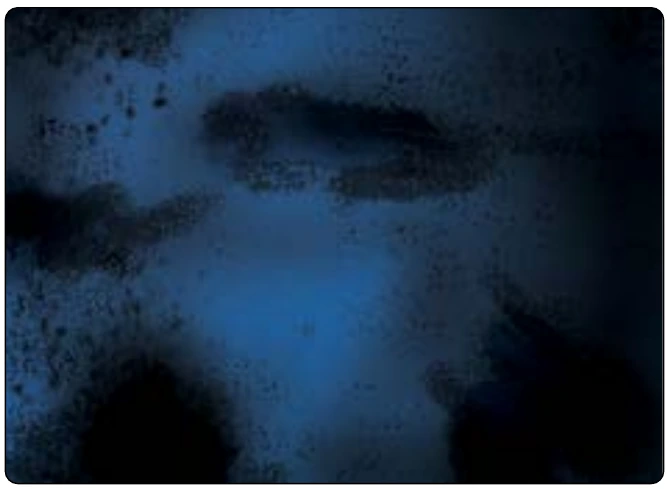
Blushing is the dull milky haze that appears in a paint finish. [Figure 8-14] It occurs when moisture is trapped in the paint. Blushing forms when the solvents quickly evaporate from the sprayed coating, causing a drop in temperature that is enough to condense the water in the air. It usually forms when the humidity is above 80 percent. Other causes include:
- Incorrect temperature (below 60 °F or above 95 °F).
- Incorrect reducer (fast drying) being used.
- Excessively high air pressure at the spray gun.
If blushing is noticed during painting, a slow-drying reducer can sometimes be added to the paint mixture, and then the area resprayed. If blushing is found after the finish has dried, the area must be sanded down and repainted.
Pinholes
Pinholes are tiny holes, or groups of holes, that appear in the surface of the finish as a result of trapped solvents, air, or moisture. [Figure 8-15] Examples include:
- Contaminants in the paint or air lines.
- Poor spraying techniques that allow excessively heavy or wet paint coats, which tend to trap moisture or solvent under the finish.
- Use of the wrong thinner or reducer, either too fast by quick drying the surface and trapping solvents or too slow and trapping solvents by subsequent topcoats.
If pinholes occur during painting, the equipment and painting technique must be evaluated before continuing. When dry, sand the surface smooth and then repaint.
Sags & Runs
Sags and runs are usually caused by applying too much paint to an area, by holding the spray gun too close to the surface, or moving the gun too slowly across the surface. [Figure 8-16] Other causes include:
- Too much reducer in the paint (too thin).
- Incorrect spray gun setting of air-paint mixture.
Sags and runs can be avoided by following the recommended thinning instructions for the coatings being applied and taking care to use the proper spray gun techniques, especially on vertical surfaces and projected edges. Dried sags and runs must be sanded out and the surface repainted.
Orange Peel
“Orange peel” refers to the appearance of a bumpy surface, much like the skin of an orange. [Figure 8-17] It can be the result of a number of factors with the first being the improper adjustment of the spray gun. Other causes include: