Chapter 1
Safety, Ground Operations, & Servicing
- Ensure all aircraft electrical systems and electronic devices, including radar, are turned off.
- Do not carry anything in the shirt pockets. These items could fall into the fuel tanks.
- Ensure no flame-producing devices are carried by anyone engaged in the fueling operation. A moment of carelessness could cause an accident.
- Ensure that the proper type and grade of fuel is used. Do not mix AVGAS and JET fuel.
- Ensure that all the sumps have been drained.
- Wear eye protection. Although generally not as critical as eye protection, other forms of protection, such as rubber gloves and aprons, can also protect the skin from the effects of spilled or splashed fuel.

can enter an open fuel tank, contaminating the entire contents of the tank.
- Do not fuel an aircraft when there is lightning within 5 miles.
- Do not fuel an aircraft within 500 feet of operating ground radar.
When using mobile fueling equipment:
- Approach the aircraft with caution, positioning the fuel truck so that if it is necessary to depart quickly, no backing needed.
- Set the hand brake of the fuel truck, and chock the wheels to prevent rolling.
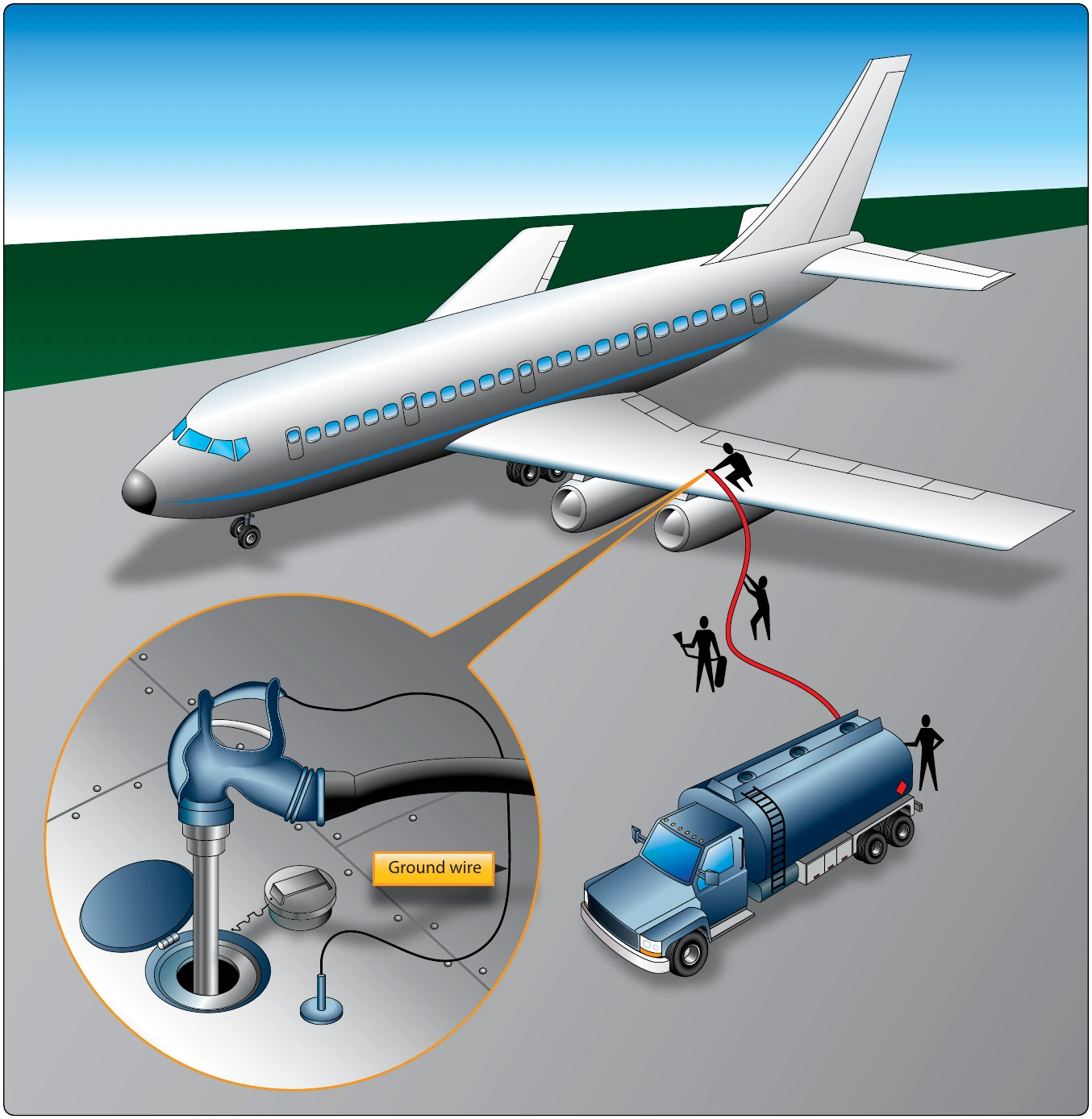
- Ground the aircraft and then ground the truck. Next, ground or bond them together by running a connecting wire between the aircraft and the fuel truck. This may be done by three separate ground wires or by a “Y” cable from the fuel truck.
- Ensure that the grounds are in contact with bare metal or are in the proper grounding points on the aircraft. Do not use the engine exhaust or propeller as grounding points. Damage to the propeller can result, and there is no way of quickly ensuring a positive bond between the engine and the airframe.
- Ground the nozzle to the aircraft, then open the fuel tank.
- Protect the wing and any other item on the aircraft from damage caused by spilled fuel or careless handling of the nozzle, hose, or grounding wires.
- Check the fuel cap for proper installation and security before leaving the aircraft.
- Remove the grounding wires in the reverse order. If the aircraft is not going to be flown or moved soon, the aircraft ground wire can be left attached.
When fueling from pits or cabinets, follow the same procedures as when using a truck. Pits or cabinets are usually designed with permanent grounding, eliminating the need to ground the equipment. However, the aircraft still must be grounded, and then the equipment must be grounded to the aircraft as it was with mobile equipment.
Defueling
Defueling procedures differ with different types of aircraft. Before defueling an aircraft, check the maintenance/service manual for specific procedures and cautions. Defueling can be accomplished by gravity defueling or by pumping the fuel out of the tanks. When the gravity method is used, it is necessary to have a method of collecting the fuel. When the pumping method is used, care must be taken not to damage the tanks, and the removed fuel cannot be mixed with good fuel.
General precautions when defueling are:
- Ground the aircraft and defueling equipment.
- Turn off all electrical and electronic equipment.
- Have the correct type of fire extinguisher available.
- Wear eye protection.