
Chapter 6
Aircraft Weight & Balance
The result using the numbers shown in Figure 6-52 would be:
If the CG is known in percent of MAC, and there is a need to know the CG location in inches from the datum, the conversion would be done as follows:
- Convert the percent of MAC to a decimal by dividing by 100.
- Multiply the decimal by the length of the MAC.
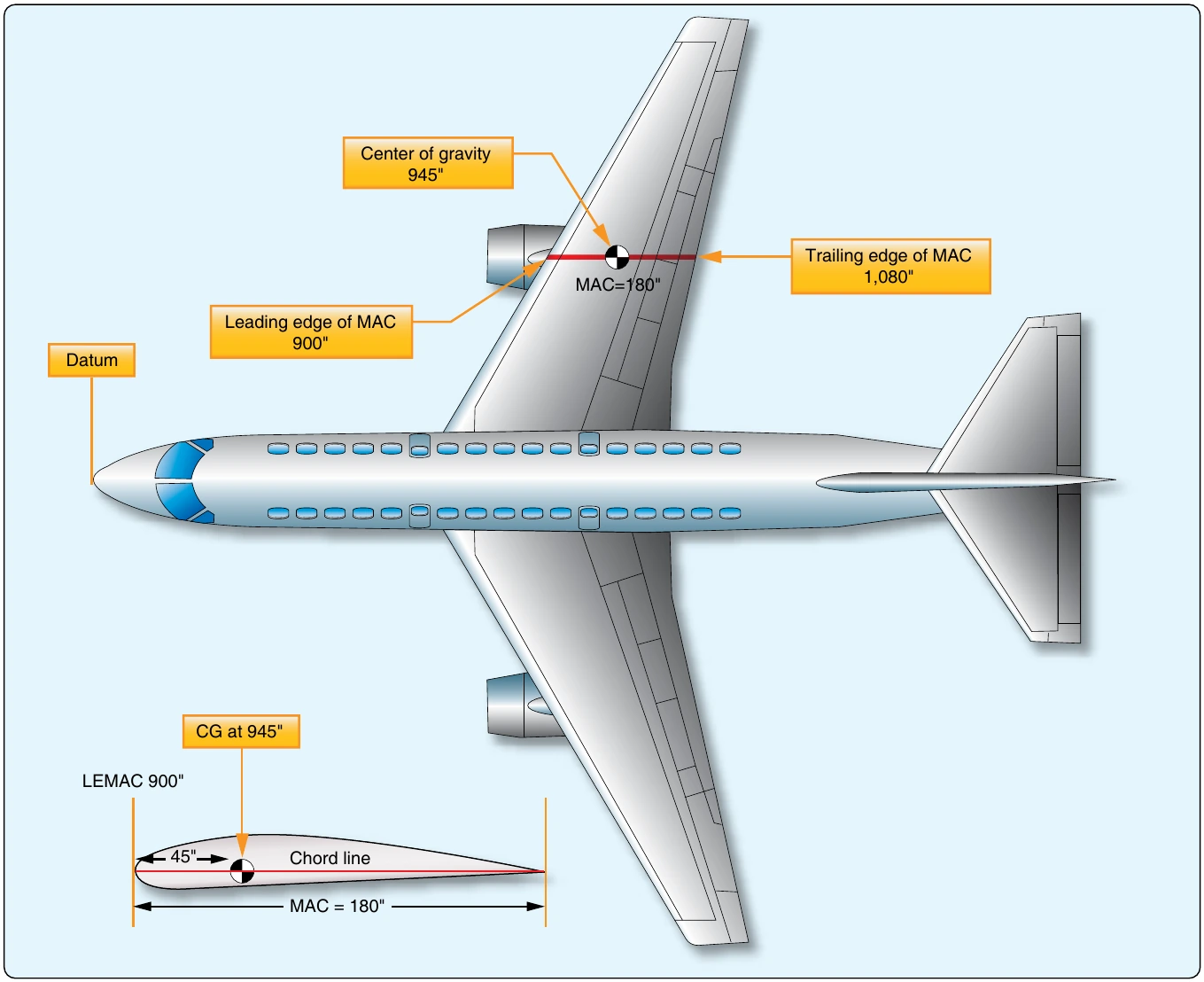
an inch value would be:
For the airplane in Figure 6-54, if the CG was at 32.5 percent of the MAC, the solution would be:
Weight & Balance Records
When a technician gets involved with the weight and balance of an aircraft, it almost always involves a calculation of the aircraft’s empty weight and EWCG. Only on rare occasions are technicians involved in calculating adverse-loading CG ort.
checks, how much ballast is needed, or the loaded weight and balance of the aircraft. Calculating the empty weight and EWCG might involve putting the aircraft on scales and weighing it, or a pencil and paper exercise after installing a new piece of equipment.
The FAA requires that a current and accurate empty weight and EWCG be known for an aircraft. This information must be included in the weight and balance report, which is a part of the aircraft permanent records. The weight and balance report must be in the aircraft when it is being flown.