
Chapter 2
Engine Fuel & Fuel Metering Systems
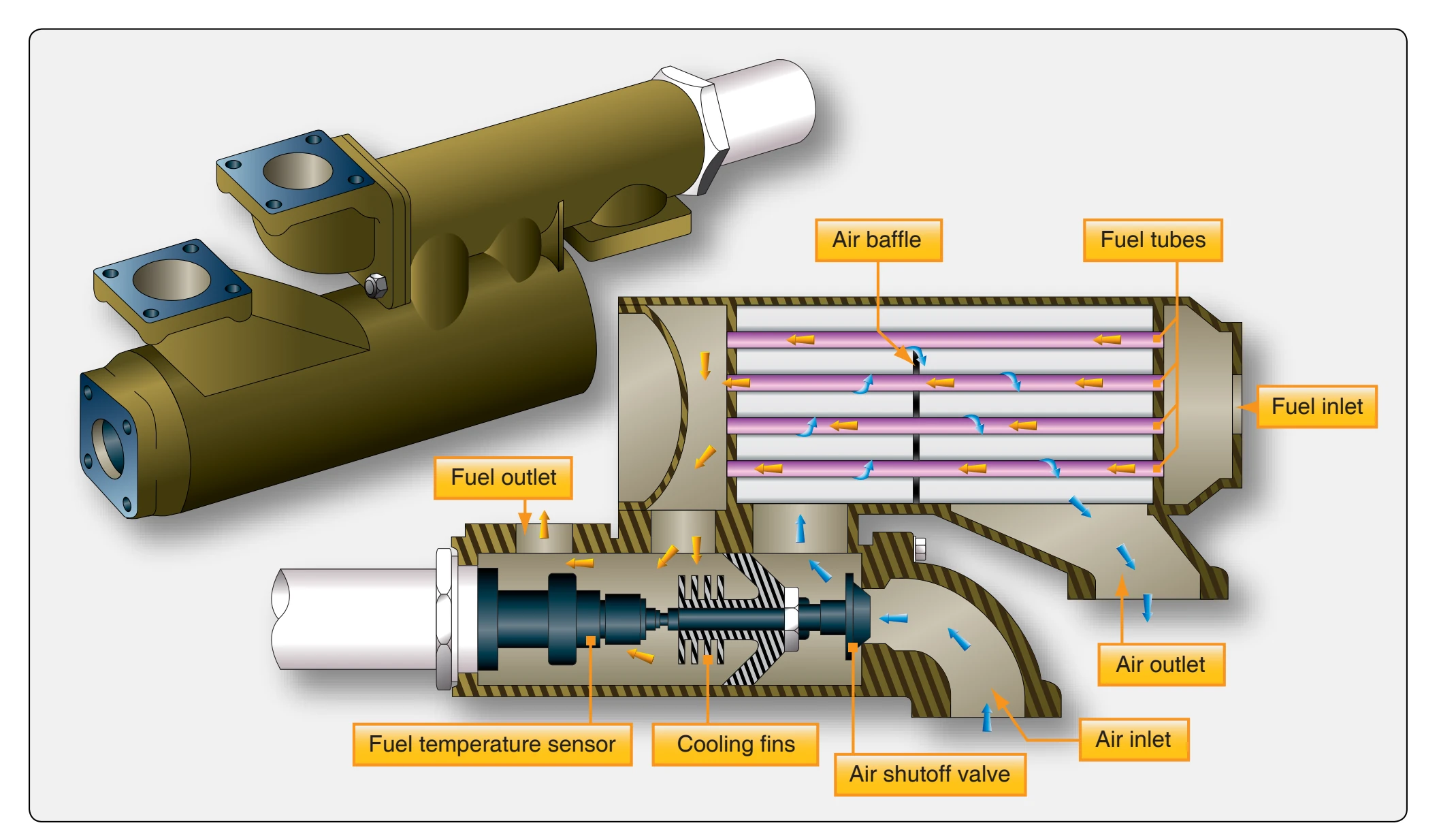
Fuel deicing systems are designed to be used intermittently. The control of the system may be manual, by a switch in the flight deck, or automatic, using a thermostatic sensing element in the fuel heater to open or close the air or oil shutoff valve. A fuel heater system is shown in Figure 2-61. In a FADEC system, the computer controls the fuel temperature by sensing the fuel temperature and heating it as needed.
Fuel Filters
A low-pressure filter is installed between the supply tanks and the engine fuel system to protect the engine-driven fuel pump and various control devices. An additional high-pressure fuel filter is installed between the fuel pump and the fuel control to protect the fuel control from contaminants that could come from the low pressure pump.
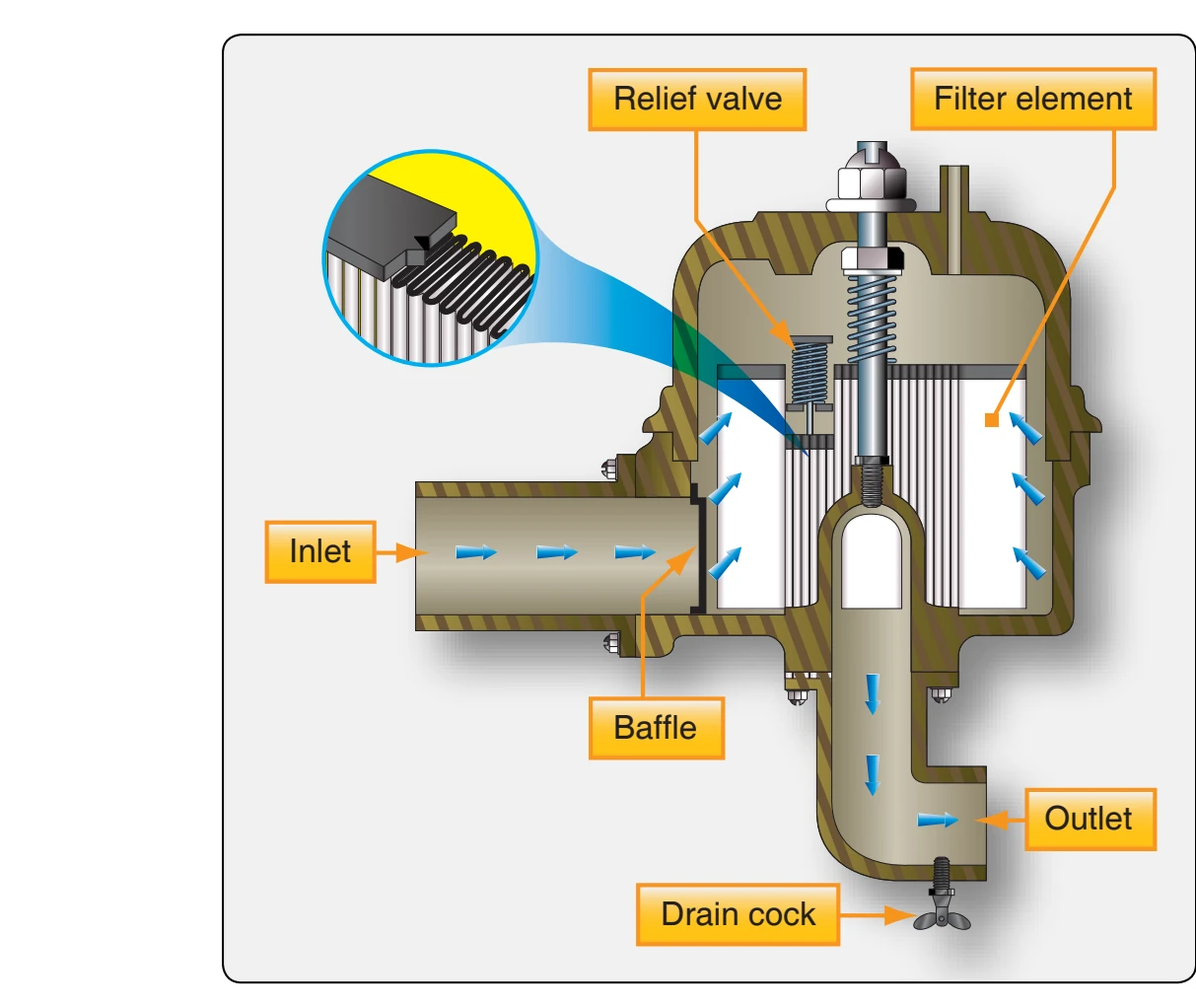
The three most common types of filters in use are the micron filter, the wafer screen filter, and the plain screen mesh filter. The individual use of each of these filters is dictated by the filtering treatment required at a particular location. The micron filter has the greatest filtering action of any presentday filter type and, as the name implies, is rated in microns. [Figure 2-62] (A micron is one thousandth of 1 millimeter.) The porous cellulose material frequently used in construction of the filter cartridges is capable of removing foreign matter measuring from 10–25 microns. The minute openings make this type of filter susceptible to clogging; therefore, a bypass valve is a necessary safety factor.
Since the micron filter does such a thorough job of removing foreign matter, it is especially valuable between the fuel tank and engine. The cellulose material also absorbs water, preventing it from passing through the pumps. If water does seep through the filter, which happens occasionally when filter elements become saturated with water, the water can and does quickly damage the working elements of the fuel pump and control units, since these elements depend solely on the fuel for their lubrication. To reduce water damage to pumps and control units, periodic servicing and replacement of filter elements is imperative. Daily draining of fuel tank sumps and low-pressure filters eliminates much filter trouble and undue maintenance of pumps and fuel control units.
The most widely used fuel filters are the 200-mesh and the 35-mesh micron filters. They are used in fuel pumps, fuel controls, and between the fuel pump and fuel control where removal of micronic particles is needed. These filters, usually made of fine-mesh steel wire, are a series of layers of wire.
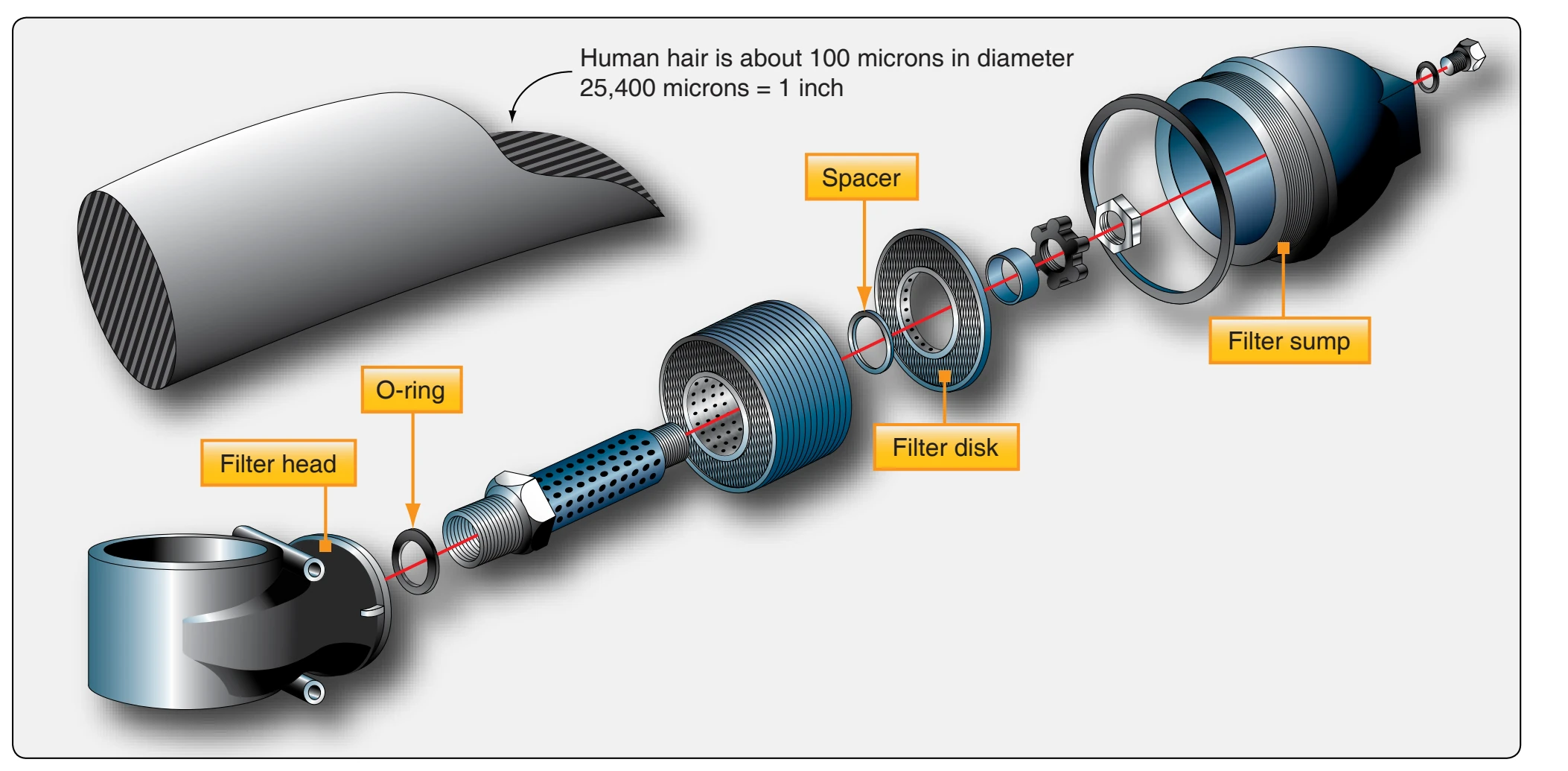
The wafer screen type of filter has a replaceable element, which is made of layers of screen discs of bronze, brass, steel, or similar material. [Figure 2-63] This type of filter is capable of removing micronic particles. It also has the strength to withstand high pressure.
Fuel Spray Nozzles & Fuel Manifolds
Although fuel spray nozzles are an integral part of the fuel system, their design is closely related to the type of combustion chamber in which they are installed. The fuel nozzles inject fuel into the combustion area in a highly atomized, precisely patterned spray so that burning is completed evenly, in the shortest possible time, and in the smallest possible space. It is very important that the fuel be evenly distributed and well centered in the flame area within the liners. This is to preclude the formation of any hot spots or hot streaking in the combustion chambers and to prevent the flame burning through the liner.
Fuel nozzle types vary considerably between engines, although for the most part fuel is sprayed into the combustion area under pressure through small orifices in the nozzles. The two types of fuel nozzles generally used are the simplex and the duplex configurations. The duplex nozzle usually requires a dual manifold and a pressurizing valve or flow divider for dividing primary and secondary (main) fuel flow, but the simplex nozzle requires only a single manifold for proper fuel delivery.
The fuel nozzles can be constructed to be installed in various ways. The two methods used quite frequently are:
- External mounting wherein a mounting pad is provided for attachment of the nozzles to the case or the inlet air elbow, with the nozzle near the dome; or
- Internal mounting at the liner dome, in which the chamber cover must be removed for replacement or maintenance of the nozzle.
The nozzles used in a specific engine should be matched so that they flow equal amounts of fuel. Even fuel distribution is important to efficient combustion in the burner section. The fuel nozzle must present a fine spray with the correct pattern and optimum atomization.
Simplex Fuel Nozzle
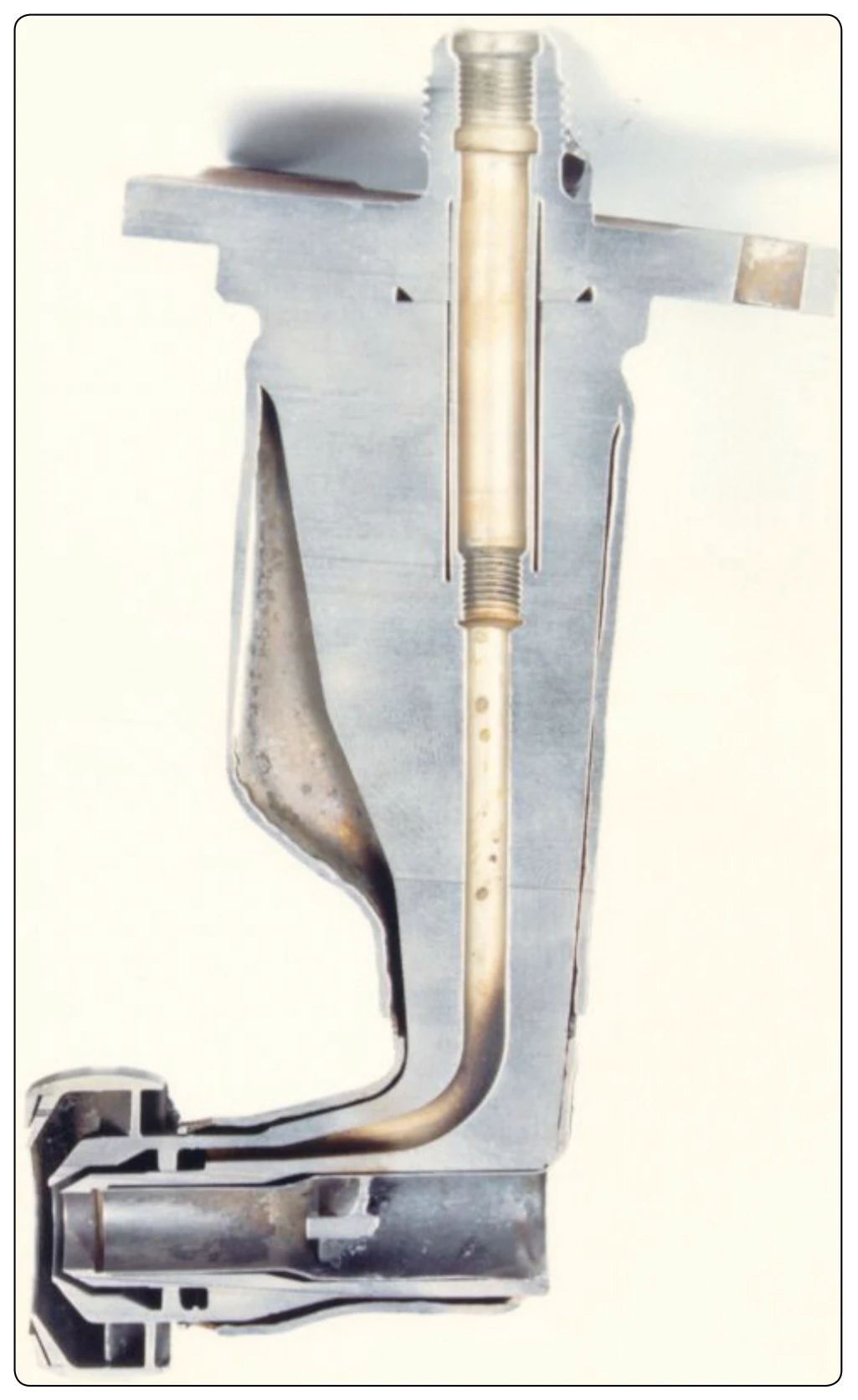
The simplex fuel nozzle was the first nozzle type used in turbine engines and was replaced in most installations with the duplex nozzle, which gave better atomization at starting and idling speeds. The simplex nozzle is still being used in several installations. [Figure 2-64] Each of the simplex nozzles consists of a nozzle tip, an insert, and a strainer made up of fine-mesh screen and a support.