
Chapter 6
Lubrication & Cooling Systems
Lubrication & Cool
Principles of Engine Lubrication
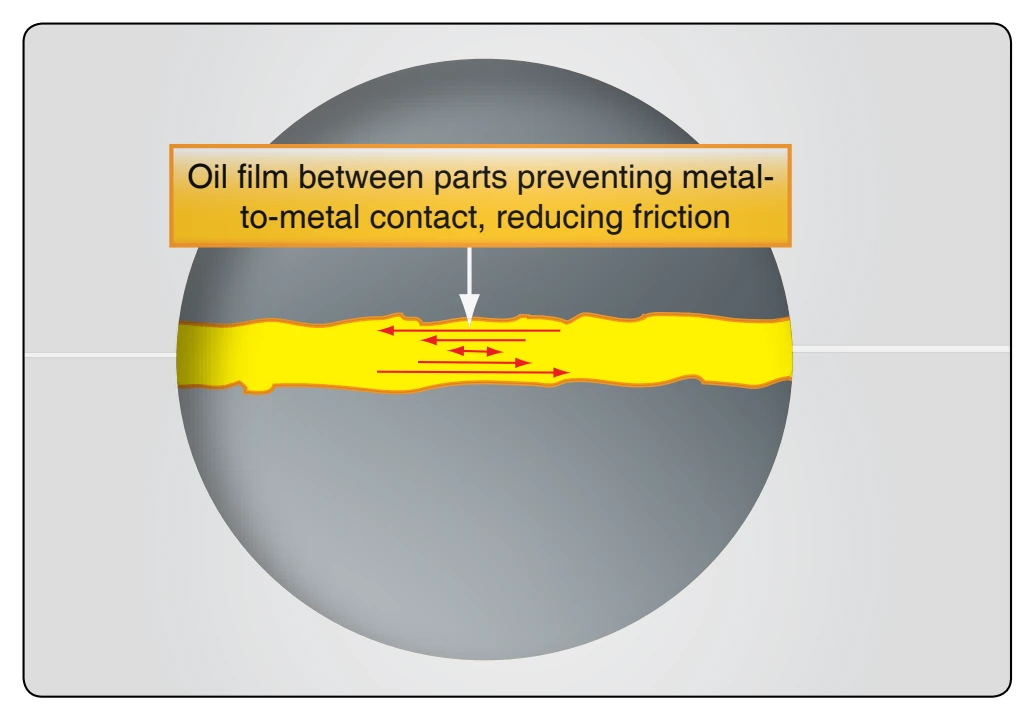
The primary purpose of a lubricant is to reduce friction between moving parts. Because liquid lubricants or oils can be circulated readily, they are used universally in aircraft engines. In theory, fluid lubrication is based on the actual separation of the surfaces so that no metal-to-metal contact occurs. As long as the oil film remains unbroken, metallic friction is replaced by the internal fluid friction of the lubricant. Under ideal conditions, friction and wear are held to a minimum. Oil is generally pumped throughout the engine to all areas that require lubrication. Overcoming the friction of the moving parts of the engine consumes energy and creates unwanted heat. The reduction of friction during engine operation increases the overall potential power output. Engines are subjected to several types of friction.
Types of Friction
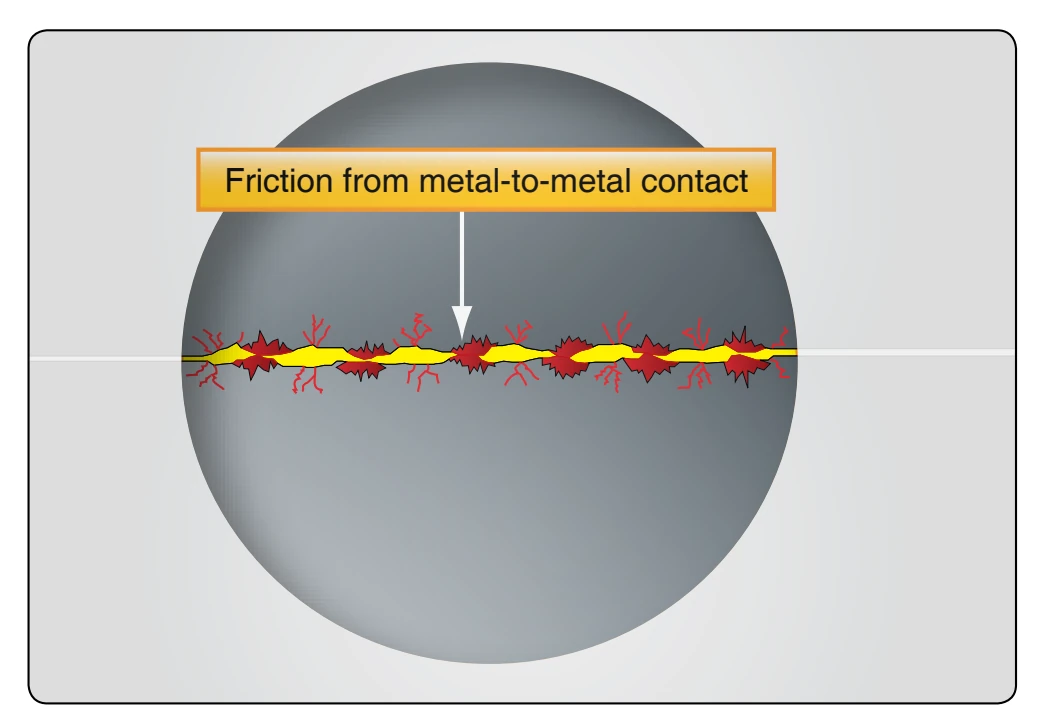
Friction may be defined as the rubbing of one object or surface against another. One surface sliding over another surface causes sliding friction, as found in the use of plain bearings. The surfaces are not completely flat or smooth and have microscopic defects that cause friction between the two moving surfaces. [Figure 6-1] Rolling friction is created when a roller or sphere rolls over another surface, such as with ball or roller bearings, also referred to as antifriction bearings. The amount of friction created by rolling friction is less than that created by sliding friction and this bearing uses an outer race and an inner race with balls, or steel spheres, rolling between the moving parts or races. Another type of friction is wiping friction, which occurs between gear teeth. With this type of friction, pressure can vary widely and loads applied to the gears can be extreme, so the lubricant must be able to withstand the loads.
Functions of Engine Oil
In addition to reducing friction, the oil film acts as a cushion between metal parts. [Figure 6-2] This cushioning effect is particularly important for such parts as reciprocating engine crankshafts and connecting rods, which are subject to shockloading. As the piston is pushed down on the power stroke, it applies loads between the connecting rod bearing and the crankshaft journal. The load-bearing qualities of the oil must prevent the oil film from being squeezed out, causing metal-to-metal contact in the bearing. Also, as oil circulates through the engine, it absorbs heat from the pistons and cylinder walls. In reciprocating engines, these components are especially dependent on the oil for cooling.
ling Systems
Oil cooling can account for up to 50 percent of the total engine cooling and is an excellent medium to transfer the heat from the engine to the oil cooler. The oil also aids in forming a seal between the piston and the cylinder wall to prevent leakage of the gases from the combustion chamber.
Oils clean the engine by reducing abrasive wear by picking up foreign particles and carrying them to a filter where they are removed. The dispersant, an additive, in the oil holds the particles in suspension and allows the filter to trap them as the oil passes through the filter. The oil also prevents corrosion on the interior of the engine by leaving a coating of oil on parts when the engine is shut down. This is one of the reasons why the engine should not be shut down for long periods of time. The coating of oil preventing corrosion will not last on
the parts, allowing them to rust or corrode.
The engine’s oil is the life blood of the engine and it is very important for the engine to perform its function and to extend the length between overhauls.
Requirements & Characteristics of Reciprocating Engine Lubricants
While there are several important properties that satisfactory reciprocating engine oil must possess, its viscosity is most important in engine operation. The resistance of an oil to flow is known as its viscosity. Oil that flows slowly is viscous or has a high viscosity; if it flows freely, it has a low viscosity. Unfortunately, the viscosity of oil is affected by temperature. It was not uncommon for earlier grades of oil to become practically solid in cold weather, increasing drag and making circulation almost impossible. Other oils may become so thin at high temperatures that the oil film is broken, causing a low load carrying ability, resulting in rapid wear of the moving parts.
The oil selected for aircraft engine lubrication must be light enough to circulate freely at cold temperatures, yet heavy enough to provide the proper oil film at engine operating temperatures. Since lubricants vary in properties and since no one oil is satisfactory for all engines and all operating conditions, it is extremely important that only the approved grade or Society of Automotive Engineers (SAE) rating be used.
Several factors must be considered in determining the proper grade of oil to use in a particular engine, the most important of which are the operating load, rotational speeds, and operating temperatures. The grade of the lubricating oil to be used is determined by the operating conditions to be met in the various types of engines. The oil used in aircraft reciprocating engines has a relatively high viscosity required by:
- Large engine operating clearances due to the relatively large size of the moving parts, the different materials used, and the different rates of expansion of the various materials;
- High operating temperatures; and
- High bearing pressures.