
Chapter 10
Wind
A mountain-plains wind system (see Figure 10-20) is the diurnal cycle of local winds between a mountain or mountain range and the adjacent plains. During the daytime, this wind system is the equivalent of one-half of a valley breeze. Air in contact with the sloping terrain becomes warmer (less dense) than air above the plains. This is because the air in contact with the sloping terrain heats up faster than the air above the plains.
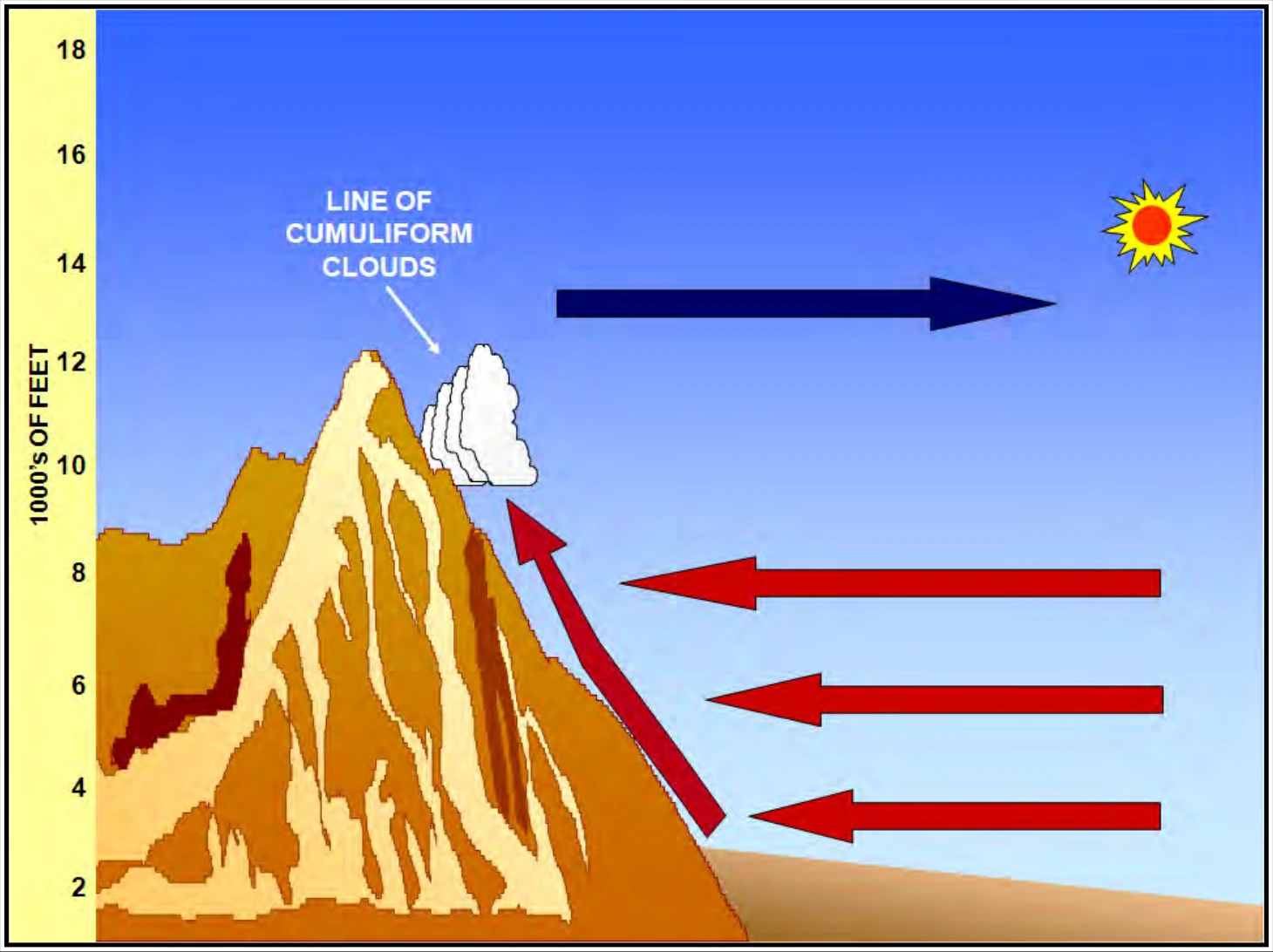
Pressure gradients develop (along a horizontal reference) with lower pressure over the warmer sloping terrain and higher pressure over the cooler plains. Winds develop in the direction of the PGF. Thus, the wind blows from the plains up the mountain slopes. There is a weak return flow aloft. Clouds and precipitation may develop in the rising air over the mountain.
10.6.6 Mountain Breeze
A mountain breeze (see Figure 10-21) is the nightly downslope winds commonly encountered in mountain valleys. Air in contact with the sloping terrain cools faster than air above the valley. Pressure over the sloping terrain is higher than over the valleys (along a horizontal reference). Cooler air over the sloping terrain is denser than warmer air over the valley.
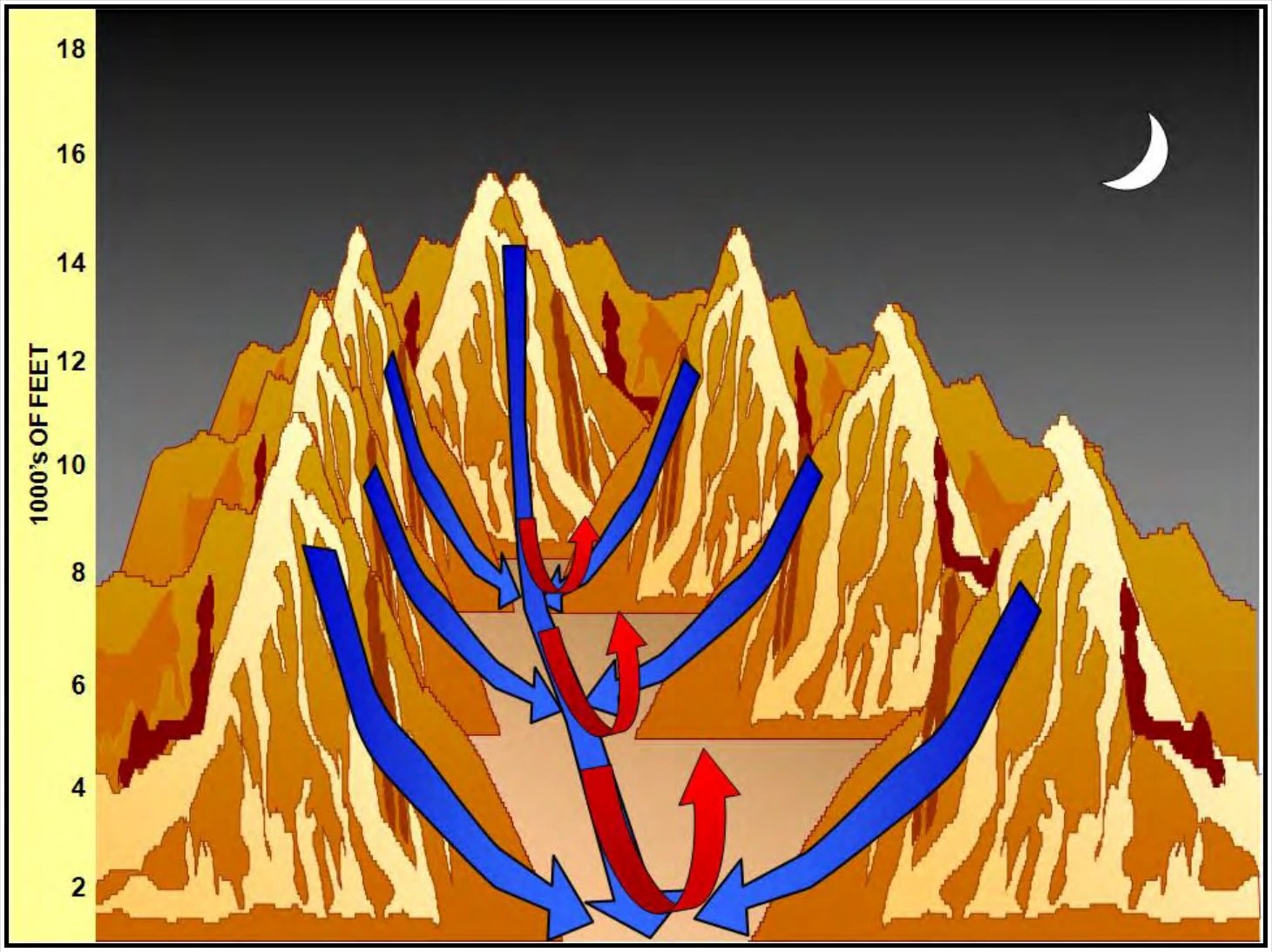
Surface wind flows from the mountain down the sloping terrain into the valley. Air rises over the valley and sinks over the sloping terrain.
10.7 Adverse Winds
10.7.1 Crosswind
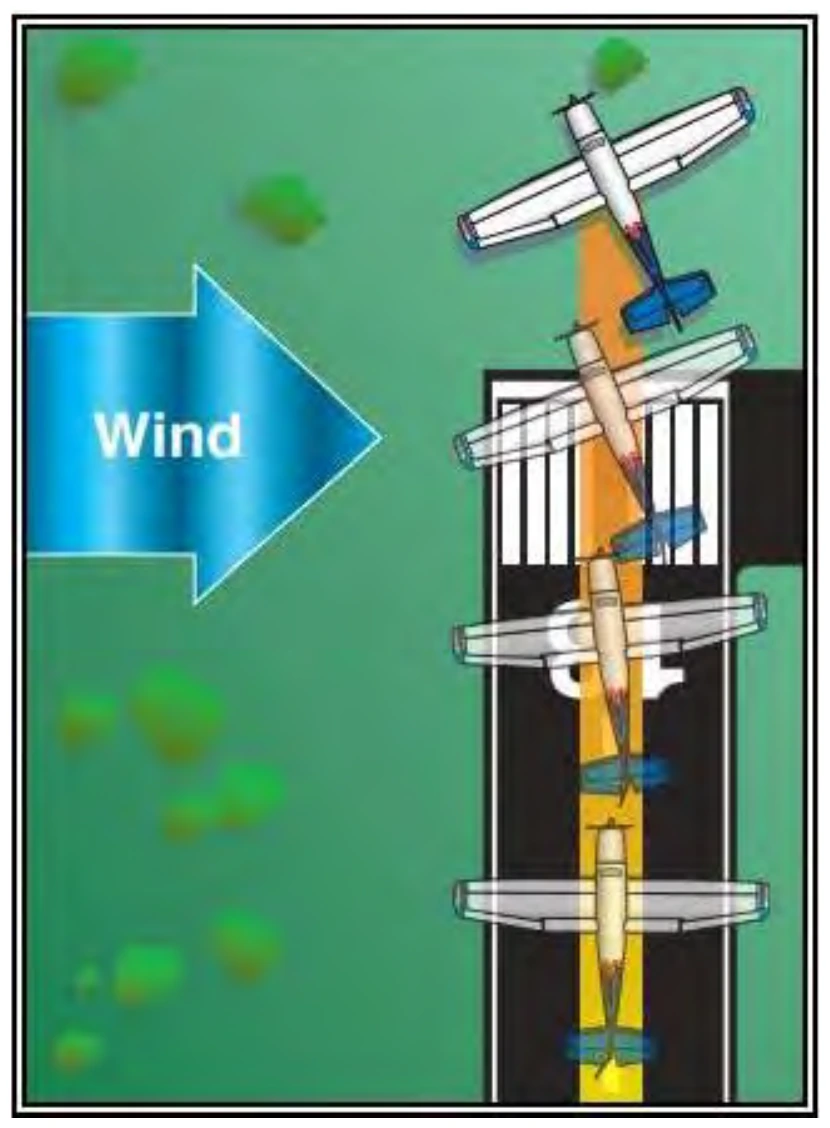
A crosswind is a wind that has a component directed perpendicularly to the heading of an aircraft (see Figure 10-22). The potential of drift produced by crosswind is critical to air navigation and can have its biggest impact during takeoff and landing. Airplanes take off and land more efficiently when oriented into the wind. The aircraft’s groundspeed is minimized, a shorter runway is required to achieve lift-off, and the pilot has more time to make adjustments necessary for a smooth landing. As the wind turns more perpendicular to the runway to become a crosswind, the airplane’s directional control is affected. If a pilot does not correctly compensate for the crosswind, the aircraft may drift off the side of the runway or side load on landing gear might occur. In extreme cases, the landing gear may collapse.
10.7.2 Gust
A gust is a fluctuation of wind speed with variations of 10 knots (kt) or more between peaks and lulls.
Even if the airplane is oriented into the wind, gusts during takeoff and landing cause airspeed fluctuations that can cause problems for pilots. A gust increases airspeed, which increases lift and may cause an aircraft to briefly balloon up. Once the gust ends, a sudden decrease of airspeed occurs, which decreases lift and causes the aircraft to sink. Gusty winds at the point of touchdown provide significant challenges to a safe landing.
10.7.3 Tailwind
A tailwind is a wind with a component of motion from behind the aircraft.
A tailwind can be hazardous during both takeoff and landing. A longer takeoff roll is necessary because a higher groundspeed is needed to generate sufficient lift, and the aircraft may roll off the end of the runway before lift-off. Also, a smaller initial climb gradient occurs during takeoff, which may be insufficient to clear obstacles at the end of the runway. During a landing, a longer landing roll is needed because the aircraft will touch down at a higher groundspeed. Wind should always be considered in takeoff performance planning.
10.7.4 Variable Wind/Sudden Wind Shift
A variable wind is a wind that changes direction frequently, while a sudden wind shift is a line or narrow zone along which there is an abrupt change of wind direction. Both, even at low wind speeds, can make takeoffs and landings difficult. A headwind can quickly become a crosswind or tailwind.