
Chapter 13
Atmospheric Stability
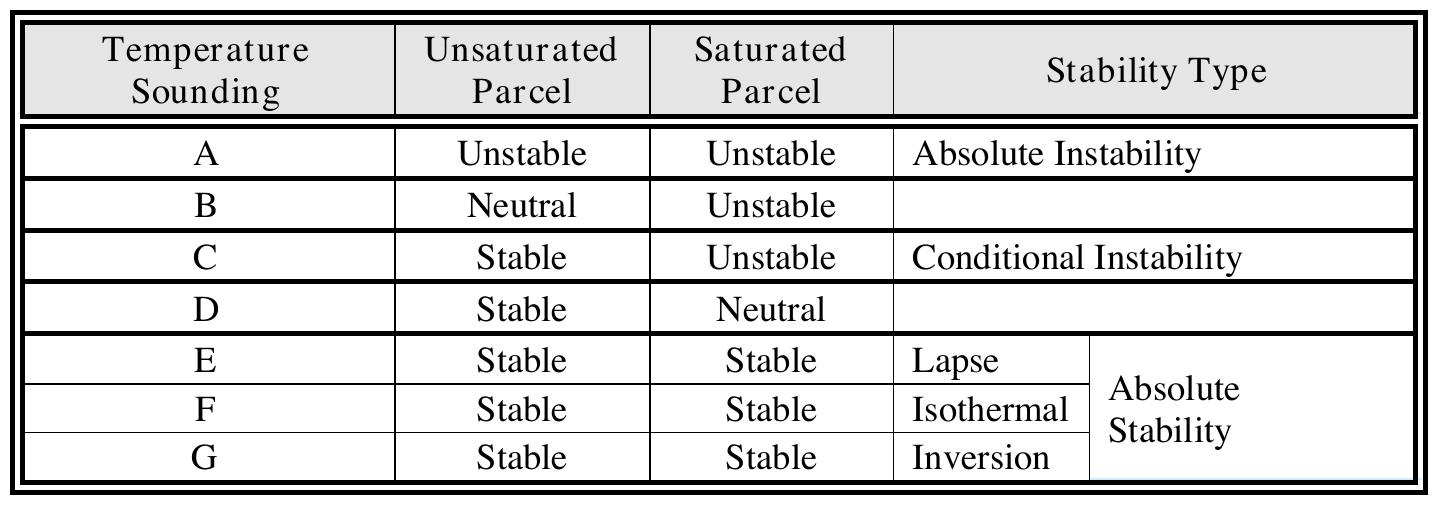
Figure 13-5 summarizes the possible atmospheric stability types.
13.4 Processes That Change Atmospheric Stability
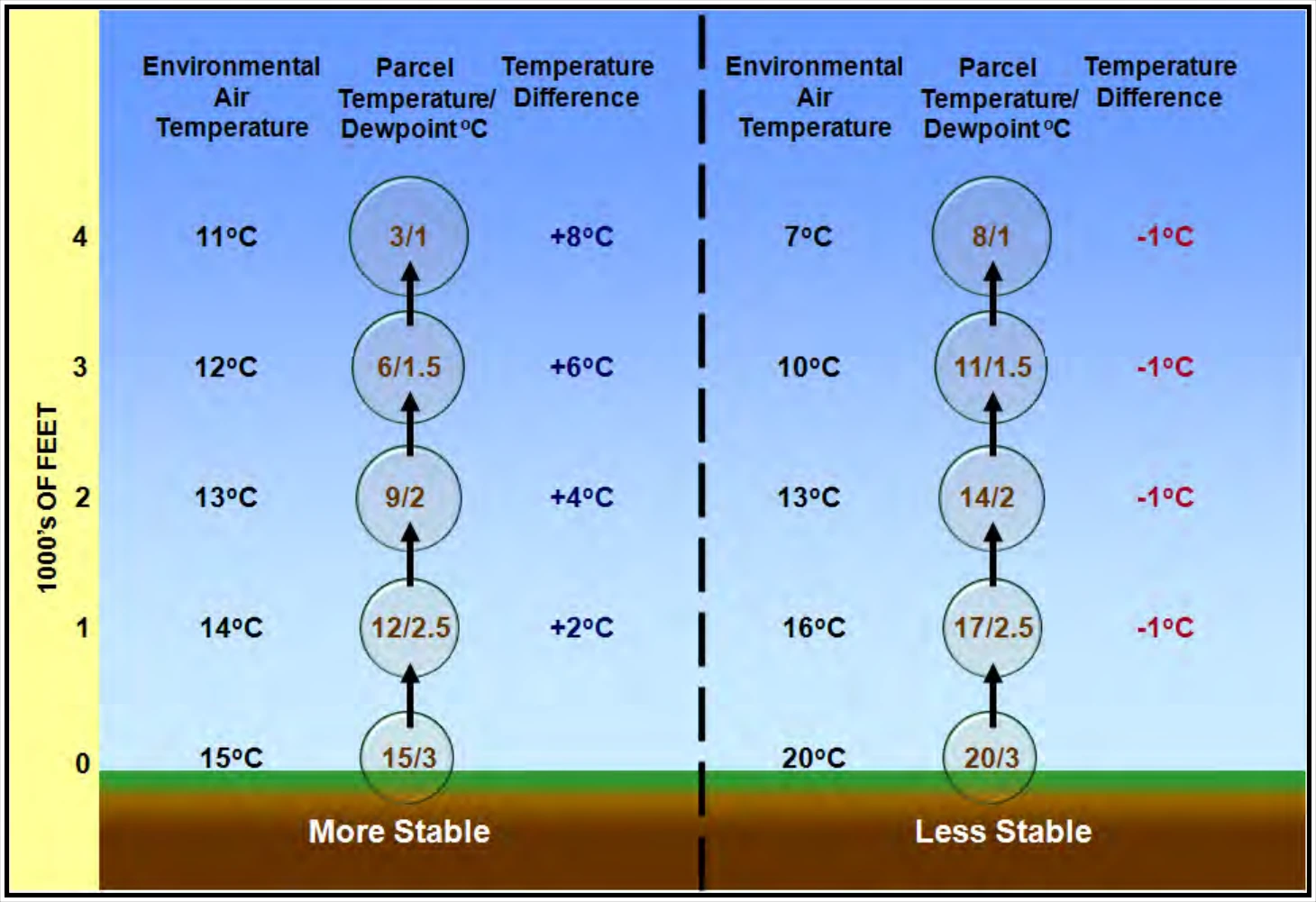
Changes in atmospheric stability are inversely related to temperature (density) changes with height (see Figure 13-6). If temperature lapse rates increase, then stability decreases. Conversely, if temperature lapse rates decrease, then stability increases. Most of these changes occur as a result of the movement of air, but diurnal (day/night) temperature variations can play a significant role.
In Figure 13-6, the column of air on the right is less stable because its temperature lapse rate is higher.
13.4.1 Wind Effects on Stability
Wind can act to change the stability of a column of air in the atmosphere by changing the temperature lapse rate. Stability increases when wind blows colder air into the bottom of the air column (cold air advection) and/or warmer air at the top (warm air advection). Conversely, stability decreases when wind blows warmer air into the bottom of the air column and/or colder air at the top.
13.4.2 Vertical Air Motion Effects on Stability
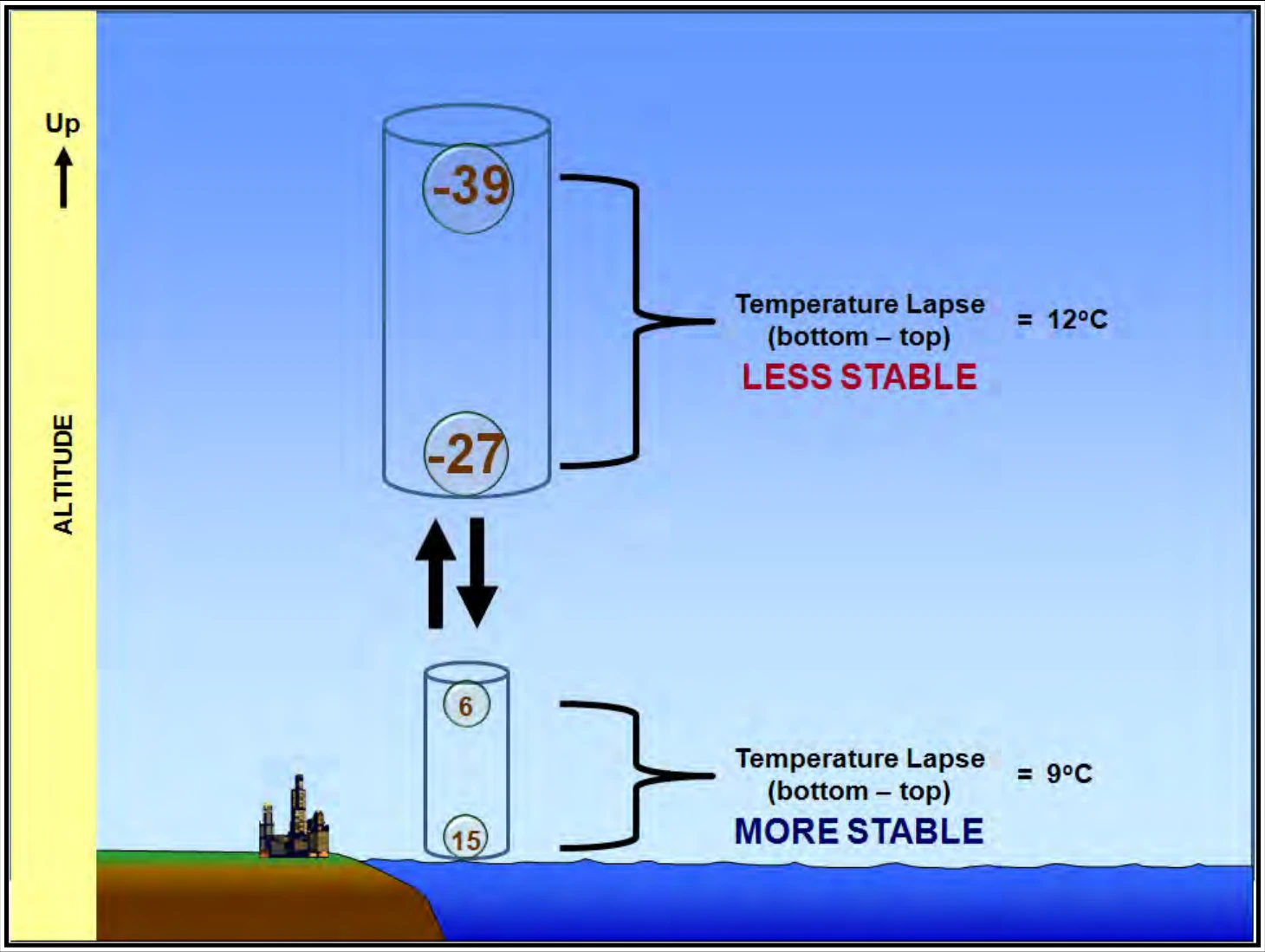
A column of air in the atmosphere will become more stable when it descends (subsides) (see Figure 13-7). As it subsides, it becomes compressed by the weight of the atmosphere and shrinks vertically. The entire layer warms due to adiabatic compression. However, the upper part of the column sinks farther and, thus, warms more than the bottom part. This process acts to decrease the temperature lapse rate and increase stability.
Conversely, a column of air in the atmosphere will become less stable when it ascends (rises). As it rises, the rapid decrease in air density aloft causes the column to stretch out vertically. As long as the layer remains unsaturated, the entire layer cools at the dry adiabatic lapse rate (see Figure 13-7). However, due to the stretching effect, air at the top of the column cools more than the air at the bottom of the column. This process acts to increase the temperature lapse rate and decrease stability.
A rising column of air will become less stable when air at the bottom has a higher relative humidity than air at the top. As the air moves upward, the bottom becomes saturated first and cools at the lesser moist adiabatic lapse rate. The net effect is to increase the lapse rate within the column and decrease stability. This process is called convective instability and is associated with the development of thunderstorms.
13.4.3 Diurnal Temperature Variation Effects on Stability
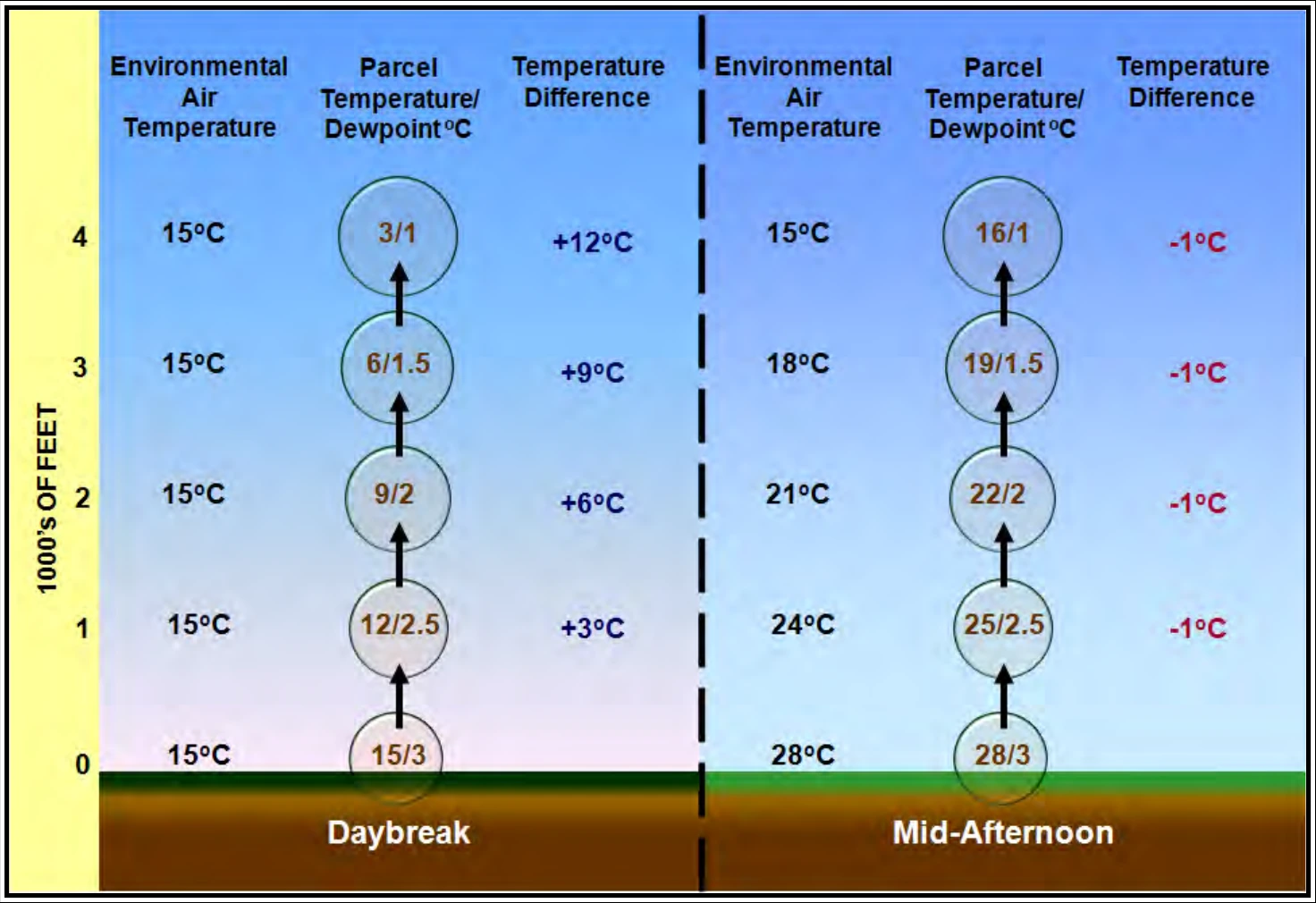
Diurnal (day/night) temperature variations can have a significant impact on atmospheric stability (see Figure 13-8). Daytime heating of the surface increases temperature lapse rates and decreases stability. Conversely, nighttime cooling of the surface decreases temperature lapse rates and increases stability. Diurnal temperature variations are most pronounced in the lower troposphere because air is a poor conductor of heat (see Table 5-3).
The magnitude of diurnal temperature (and stability) variation is primarily influenced by surface type, latitude, sky cover (e.g., clouds and pollutants), water vapor content of the air, and wind speed. Temperature variation is maximized over land, at low latitudes, with a clear sky, dry air, and light wind. Conversely, temperature variation is minimized over large bodies of water, at high latitudes, with a cloudy sky, moist air, and strong wind.
13.5 Measurements of Stability
Several stability indices and other quantities exist that evaluate atmospheric stability and the potential for convective storms. The most common of these are Lifted Index (LI) and Convective Available Potential Energy (CAPE).