
Chapter 24
Observations
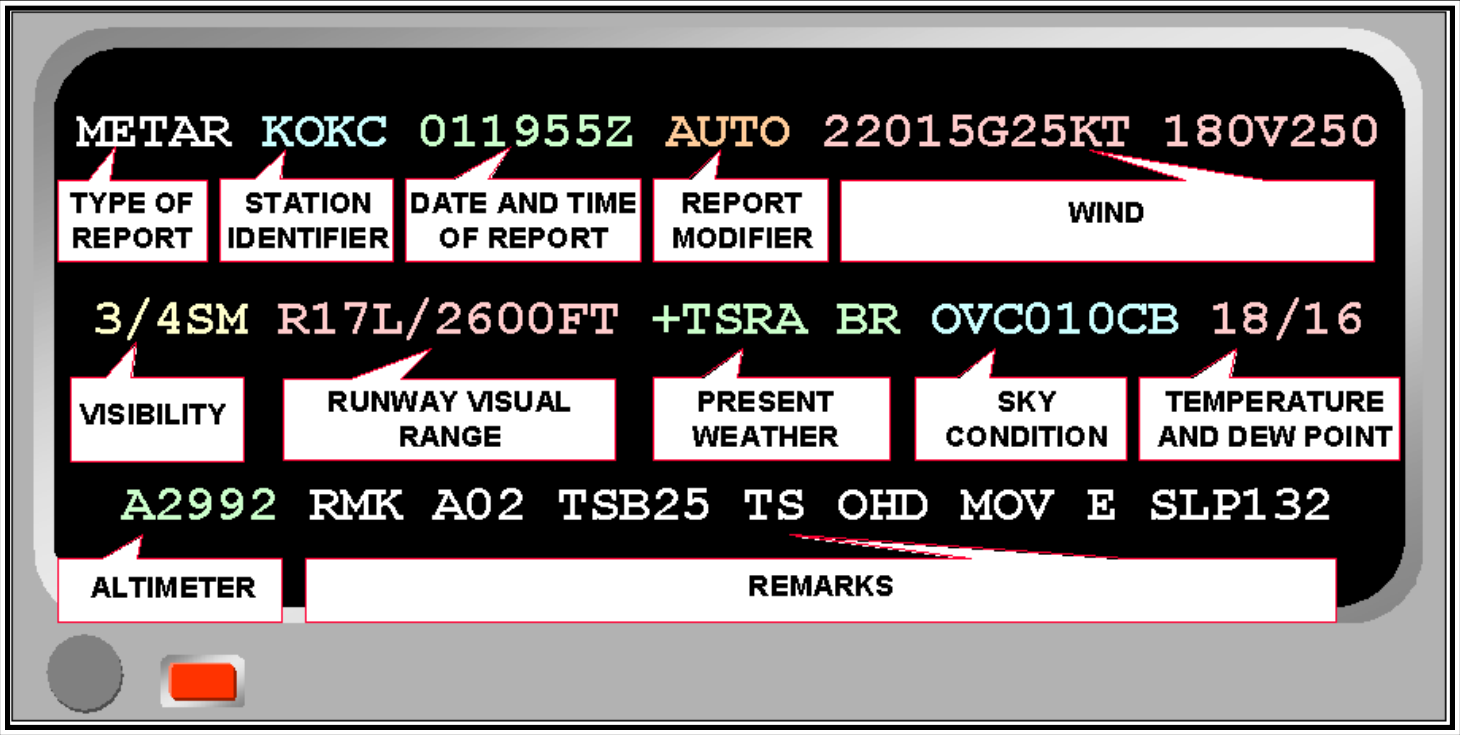
24.4.3.1 Type of Report
METAR KOKC 011955Z AUTO 22015G25KT 180V250 3/4SM R17L/2600FT +TSRA BR OVC010CB
18/16 A2992 RMK AO2 TSB25 TS OHD MOV E SLP132
The type of report, METAR or SPECI, precedes the body of all reports, but may not be shown or displayed on all aviation weather websites.
24.4.3.2 Station Identifier
METAR KOKC 011955Z AUTO 22015G25KT 180V250 3/4SM R17L/2600FT +TSRA BR OVC010CB
18/16 A2992 RMK AO2 TSB25 TS OHD MOV E SLP132
The station identifier, in ICAO format, is included in all reports to identify the station to which the coded report applies.
The ICAO airport code is a four-letter alphanumeric code designating each airport around the world. The ICAO codes are used for flight planning by pilots and airline operation departments. These codes are not the same as the International Air Transport Association (IATA) codes encountered by the general public used for reservations, baggage handling, and in airline timetables.
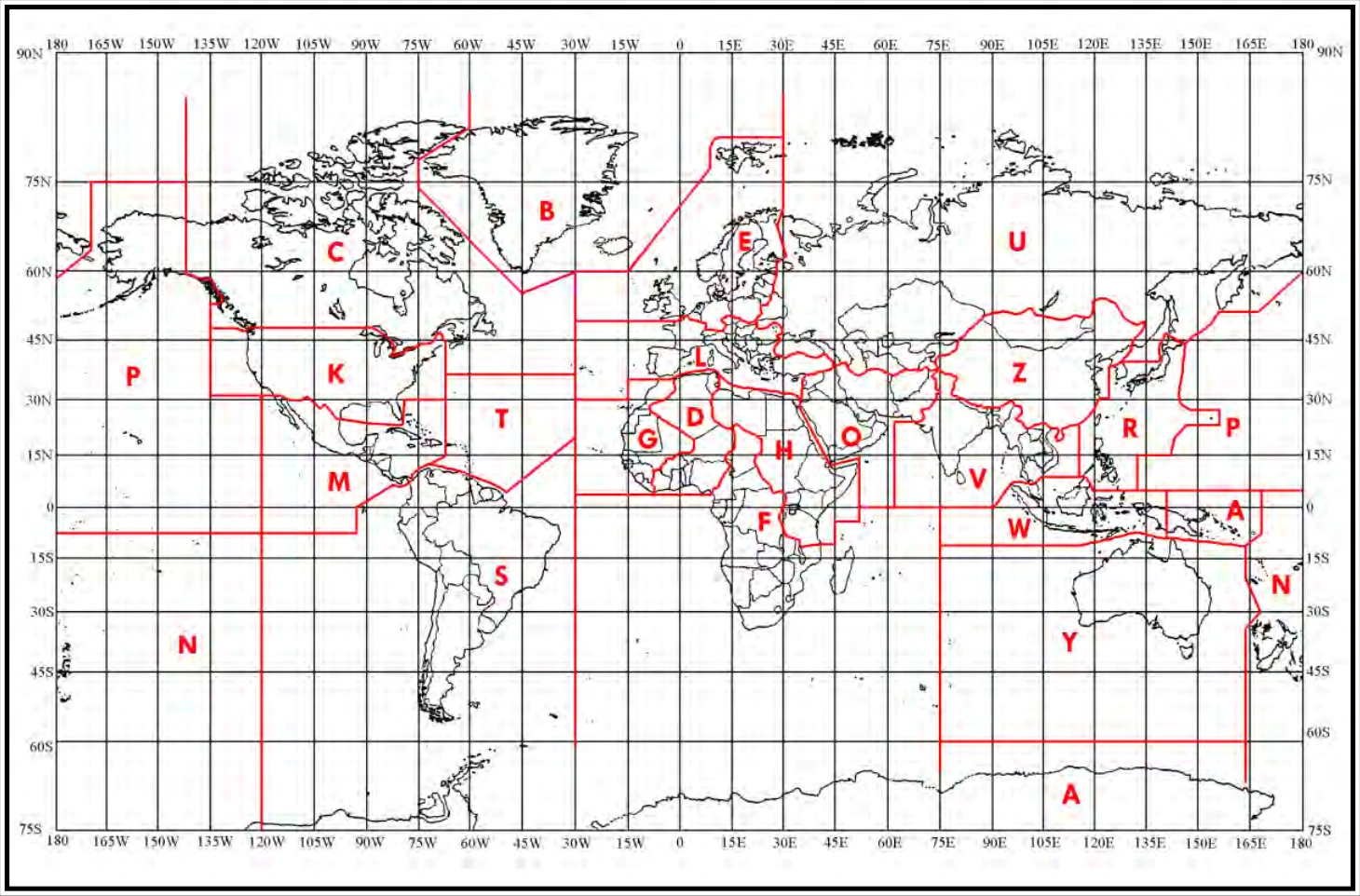
Unlike the IATA codes, the ICAO codes have a regional structure. The first letter identifies the region and country (see Figure 24-2). In some regions, the second letter identifies the country. ICAO station identifiers in Alaska begin with “PA,” Hawaii begins with “PH,” Guam begins with “PG,” and Puerto Rico begins with “TJ.” For example, the San Juan, Puerto Rico, IATA identifier “SJU” becomes the ICAO identifier “TJSJ.” The remaining letters are used to identify each airport.
In the CONUS, ICAO station identifiers are coded K, followed by the three-letter IATA identifier. For example, the Seattle, WA, IATA identifier “SEA” becomes the ICAO identifier “KSEA.”
ICAO station identifiers in Alaska, Hawaii, and Guam begin with the continent code P.
For a list of all U.S. identifiers, refer to FAA Order JO 7350.9, Location Identifiers. For a complete worldwide listing, refer to ICAO Doc 7910, Location Indicators. Both are available online.
24.4.3.3 Date and Time of Report
METAR KOKC 011955Z AUTO 22015G25KT 180V250 3/4SM R17L/2600FT +TSRA BR OVC010CB
18/16 A2992 RMK AO2 TSB25 TS OHD MOV E SLP132
The date and time are coded in all reports as follows: the day of the month is the first two digits (01), followed by the hour (19), and the minutes (55).
The coded time of observations is the actual time of the report or when the criteria for a SPECI is met or noted.
If the report is a correction to a previously disseminated report, the time of the corrected report is the same time used in the report being corrected.
The date and time group always ends with a Z, indicating Zulu time (or Coordinated Universal Time (UTC)).
For example, METAR KOKC 011955Z would be disseminated as the 2,000-hour routine report for station KOKC, taken on the 1st of the month at 1955 UTC.