
Chapter 5
Heat and Temperature
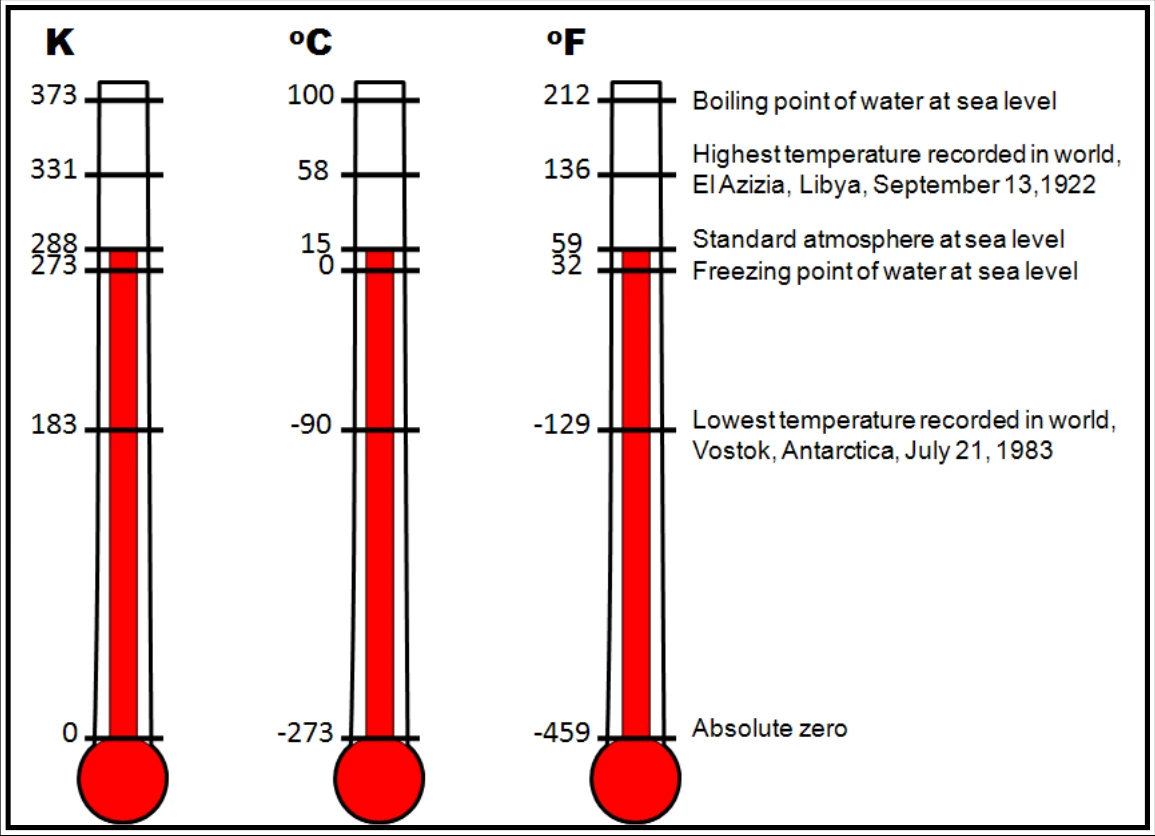
Figure 5-1 gives a comparison of Kelvin, Celsius, and Fahrenheit temperature scales.
5.6 Heat Transfer
Heat transfer is energy transfer as a consequence of temperature difference. When a physical body (e.g., an object or fluid) is at a different temperature than its surroundings or another body, transfer of thermal energy, also known as heat transfer (or heat exchange), occurs in such a way that the body and the surroundings reach thermal equilibrium (balance). Heat transfer always occurs from a hot body to a cold body. Where there is a temperature difference between objects in proximity, heat transfer between them can never be stopped; it can only be slowed down.
The heat source for the surface of Earth is the Sun. Energy from the Sun is transferred through space and through the Earth’s atmosphere to the Earth’s surface. Since this energy warms the surface and atmosphere, some of it becomes heat energy. There are three ways heat is transferred into and through the atmosphere: radiation, conduction, convection, or any combination of these. Heat transfer associated with the heat change of water from one phase to another (i.e., liquid water absorbs heat when changed to a vapor and liquid water releases heat when it changes to ice) can be fundamentally treated as a variation of convective heat transfer. The heat transfer associated with water will be discussed in Chapter 6, Water Vapor.
5.6.1 Radiation
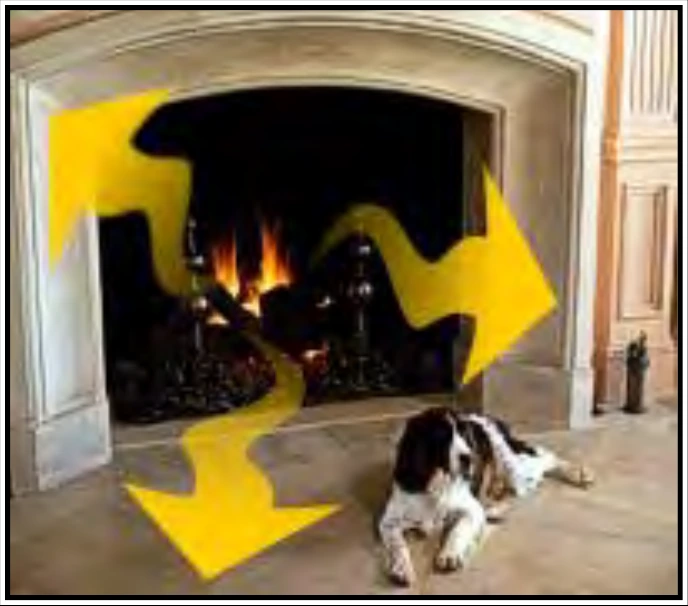
If a person has ever stood in front of a fireplace or near a campfire, then they have felt the heat transfer known as radiation (see Figure 5-2). The side of the body nearest the fire warms, while the other side remains unaffected by the heat. Although people are surrounded by air, the air has nothing to do with this type of heat transfer. Heat lamps that keep food warm work in the same way.
Radiation is the transfer of heat energy through space by electromagnetic radiation. These electromagnetic waves travel at the speed of light and are usually described in terms of wavelength or frequency. Frequencies range from gamma rays on the high end to radio waves on the low end. Also contained in the spectrum are x ray, ultraviolet, visible, infrared, and microwave.
All objects emit (radiate) energy as the heat energy within the object is converted to radiation energy. This transmitted radiation passes through entities such as air, water, or space. Along the way, the radiation can be reflected, which occurs when the wave energy changes direction when encountering an object. Eventually, the radiation is absorbed, and the electromagnetic wave energy is converted to heat energy by the absorbing object. The emitting object loses heat energy, and the absorbing object gains heat energy during this process.
5.6.1.1 Solar and Terrestrial Radiation
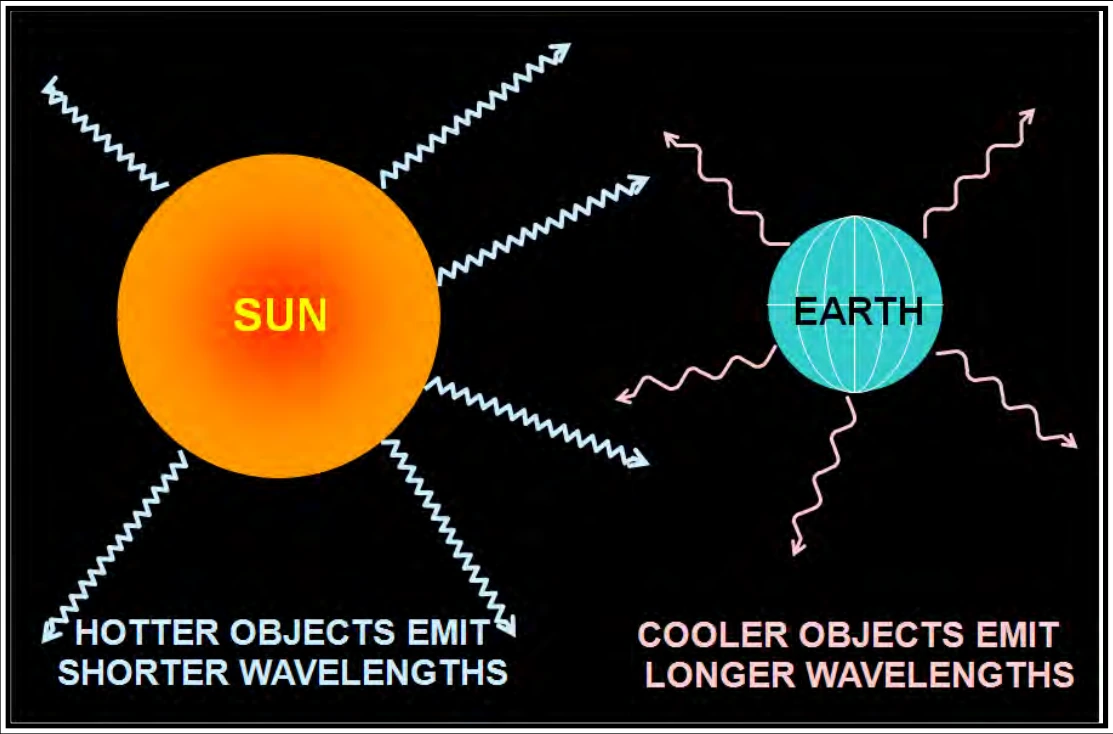
All objects emit radiation energy, including the Sun (solar radiation) and the Earth (terrestrial radiation). An object’s wavelength of maximum radiation is inversely related to its temperature; the hotter (colder) the object, the shorter (longer) the wavelength. The Sun’s wavelength of maximum radiation is relatively short and is centered in the visible spectrum. The Earth’s wavelength of maximum radiation is relatively long and is centered in the infrared spectrum.
Some of the solar radiation that reaches the Earth’s surface is radiated back into the atmosphere to become heat energy. Dark-colored objects such as asphalt absorb more of the radiant energy and warm faster than light-colored objects. Dark objects also radiate their energy faster than light-colored objects.
5.6.1.2 Solar Zenith Angle
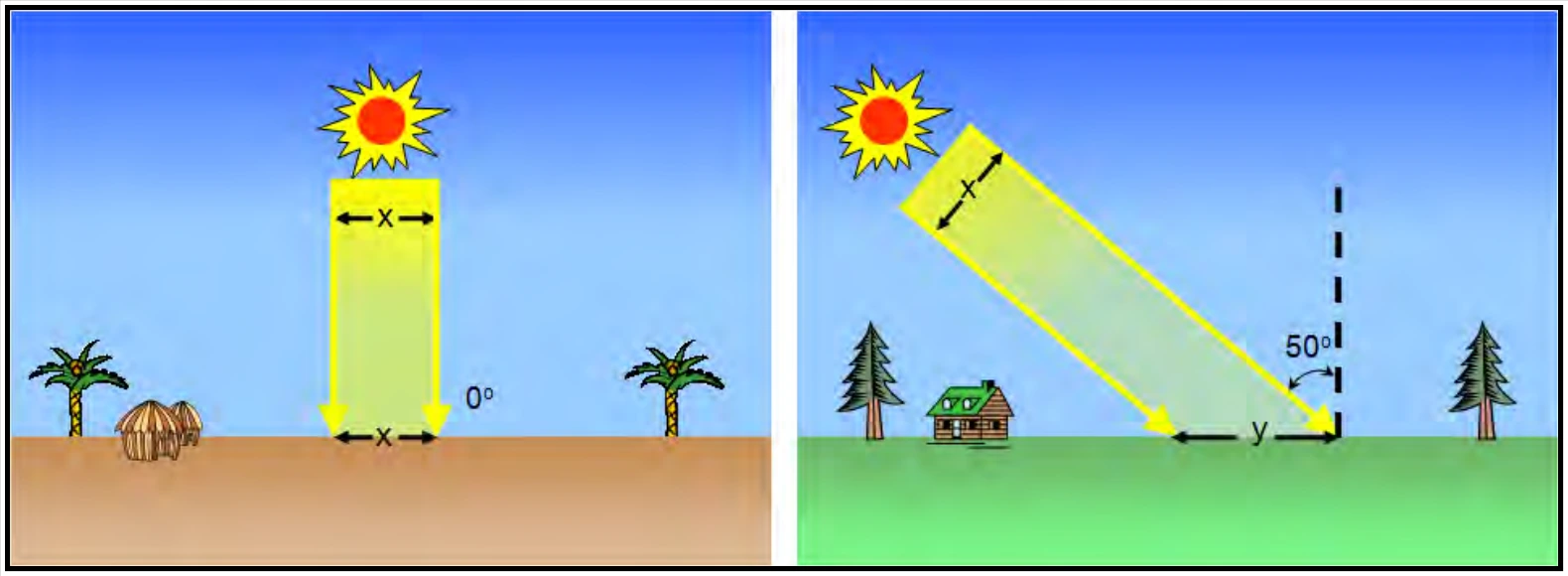
The intensity of incoming solar radiation that strikes the Earth’s surface (insolation) varies with solar zenith angle. Solar zenith angle is the angle measured from the Earth’s surface between the Sun and the zenith (i.e., directly overhead). Solar zenith angle varies with latitude, season, and the diurnal cycle (sunrise/sunset).
Figure 5-4 illustrates this concept. Insolation is maximized when the solar zenith angle is zero degrees (0°), i.e., the Sun is directly overhead. With increasing solar zenith angle, the insolation is spread over an increasingly larger surface area (y is greater than x) so that the insolation becomes less intense. Also, with increasing solar zenith angle, the Sun’s rays must pass through more of the Earth’s atmosphere, where they can be scattered and absorbed before reaching the Earth’s surface. Thus, the Sun can heat the surface to a much higher temperature when it is high in the sky, rather than low on the horizon.
5.6.2 Conduction
Conduction is the transfer of energy (including heat) by molecular activity from one substance to another in contact with or through a substance. Heat always flows from the warmer substance to the colder substance. The rate of heat transfer is greater with larger temperature differences and depends directly on the ability of the substance(s) to conduct heat. During conduction, the warmer substance cools and loses heat energy, while the cooler substance warms and gains heat energy.