
Chapter 8
Ground Procedures and Flight Preparations
There are exceptions to the use of the MEL for deferral. For example, should a component fail that is not listed in the MEL as deferrable (the rotor tachometer, engine tachometer, or cyclic trim, for example), then repairs are required to be performed prior to departure. If maintenance or parts are not readily available at that location, a special flight permit can be obtained from the nearest FSDO. This permit allows the helicopter to be flown to another location for maintenance. This allows an aircraft that may not currently meet applicable airworthiness requirements, but is capable of safe flight, to be operated under the restrictive special terms and conditions attached to the special flight permit.
Deferral of maintenance is not to be taken lightly, and due consideration should be given to the effect an inoperative component may have on the operation of a helicopter, particularly if other items are inoperative. Further information regarding MELs and operations with inoperative equipment can be found in AC 9 1-67, Minimum Equipment Requirements for General Aviation Operations Under FAR Part 91.
Engine Start and Rotor Engagement
During the engine start, rotor engagement, and systems ground check, use the manufacturer’s checklists. If a problem arises, have it checked before continuing. Prior to performing these tasks, however, make sure the area around and above the helicopter is clear of personnel and equipment. Position the rotor blades so that they are not aligned with the fuselage. This may prevent the engine from being started with the blades still fastened. For a two-bladed rotor system, position the blades so that they are perpendicular to the fuselage and easily seen from the cockpit. Helicopters are safe and efficient flying machines as long as they are operated within the parameters established by the manufacturer.
Rotor Safety Considerations
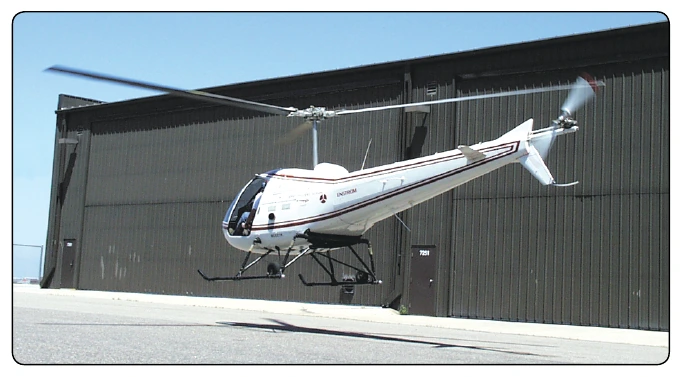
The exposed nature of the main and tail rotors deserves special caution. Exercise extreme care when taxiing near hangars or obstructions since the distance between the rotor blade tips and obstructions is very difficult to judge. [Figure 8-2] In addition, the tail rotor of some helicopters cannot be seen from the cabin. Therefore, when hovering backward or turning in those helicopters, allow plenty of room for tail rotor clearance. It is a good practice to glance over your shoulder to maintain this clearance
Another rotor safety consideration is the thrust a helicopter generates. The main rotor system is capable of blowing sand, dust, snow, ice, and water at high velocities for a significant distance causing injury to nearby people and damage to buildings, automobiles, and other aircraft. Loose snow, sand, or soil can severely reduce visibility and obscure outside visual references. There is also the possibility of sand and snow being ingested into the engine intake, which can overwhelm filters and cutoff air to the engine or allow unfiltered air into the engine, leading to premature failure. Any airborne debris near the helicopter can be ingested into the engine air intake or struck by the main and tail rotor blades.
Aircraft Servicing
The helicopter rotor blades are usually stopped, and both the aircraft and the refueling unit properly grounded prior to any refueling operation. The pilot should ensure that the proper grade of fuel and the proper additives, when required, are being dispensed.
Refueling of a turbine aircraft while the blades are turning, known as “hot refueling,” may be practical for certain types of operation. However, this can be hazardous if not properly conducted. Pilots should remain at the flight controls; and refueling personnel should be knowledgeable about the proper refueling procedures and properly briefed for specific helicopter makes and models.
The pilot may need to train the refueling personnel on proper hot refueling procedures for that specific helicopter. The pilot should explain communication signs or calls, normal servicing procedures, and emergency procedures as a minimum. At all times during the refueling process, the pilot should remain vigilant and ready to immediately shut down the engine(s) and egress the aircraft. Several accidents have occurred due to hot refueling performed by improperly trained personnel.
Refueling units should be positioned to ensure adequate rotor blade clearance. Persons not involved with the refueling operation should keep clear of the area. Smoking must be prohibited in and around the aircraft during all refueling operations.
If operations dictate that the pilot must leave the helicopter during refueling operations, the throttle should be rolled back to flight idle and flight control friction firmly applied to prevent uncommanded control movements. The pilot should be thoroughly trained on setting the controls and egressing/ingressing the helicopter.
Safety in and Around Helicopters
People have been injured, some fatally, in helicopter accidents that would not have occurred had they been informed of the proper method of boarding or deplaning. [Figure 8-3] A properly briefed passenger should never be endangered by a spinning rotor. The simplest method of avoiding accidents of this sort is to stop the rotors before passengers are boarded or allowed to depart. Because this action is not always practicable, and to realize the vast and unique capabilities of the helicopter, it is often necessary to take on passengers or have them exit the helicopter while the engine and rotors are turning. To avoid accidents, it is essential that all persons associated with helicopter operations, including passengers, be made aware of all possible hazards and instructed how those hazards can be avoided.
Ramp Attendants and Aircraft Servicing Personnel
These personnel should be instructed as to their specific duties and the proper method of fulfilling them. In addition, the ramp attendant should be taught to:
- Keep passengers and unauthorized persons out of the helicopter landing and takeoff area.
- Brief passengers on the best way to approach and board a helicopter with its rotors turning.
Persons directly involved with boarding or deplaning passengers, aircraft servicing, rigging, or hooking up external loads, etc., should be instructed as to their duties. It would be difficult, if not impossible, to cover each and every type of operation related to helicopters. A few of the more obvious and common ones are covered below.