Chapter 11
Emergency Operations
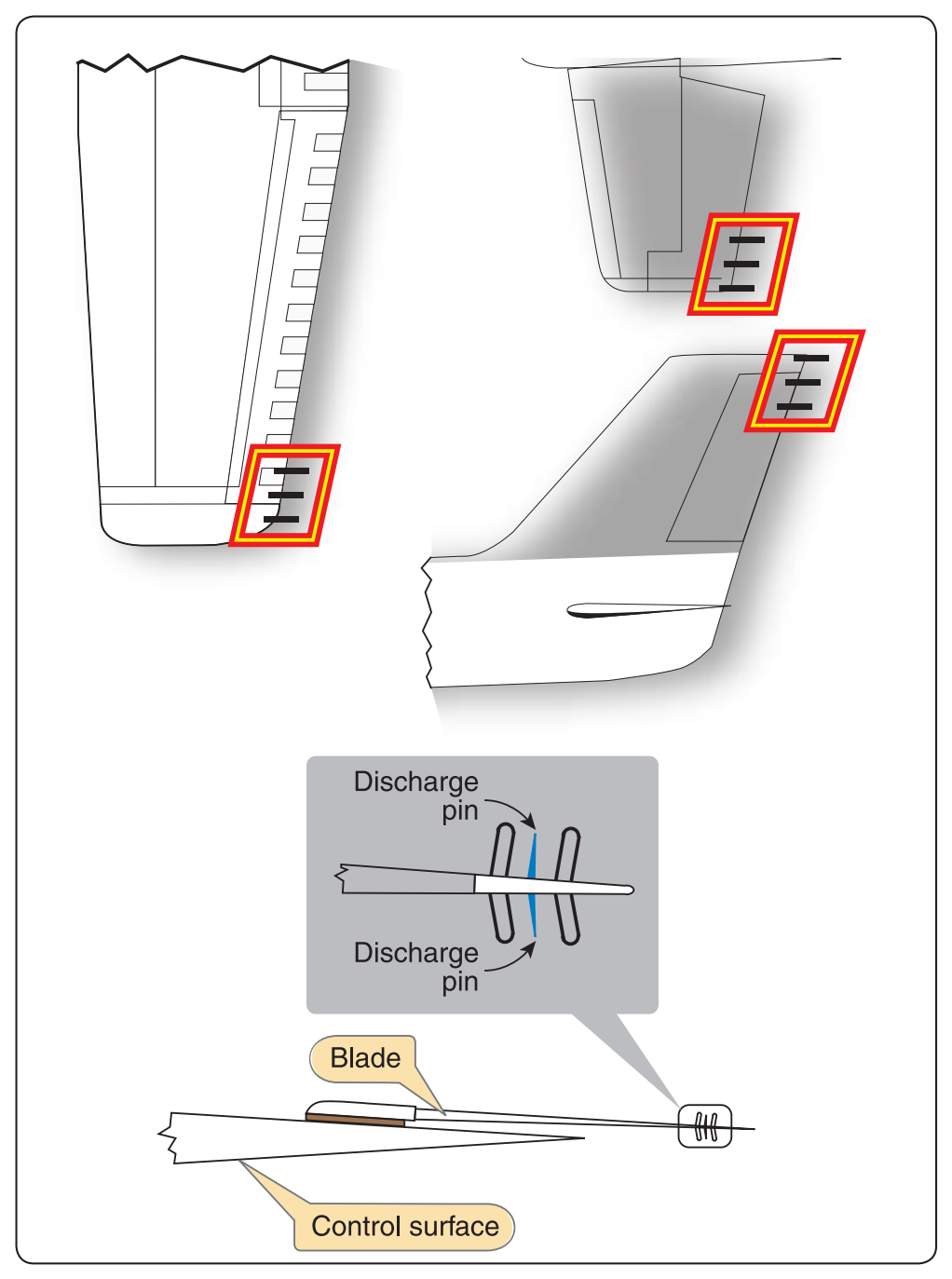
To reduce the problems associated with P-static, the pilot should ensure the aircraft’s static wicks are properly maintained and accounted for. Broken or missing static wicks should be replaced before an instrument flight. [Figure 11-2]
Aircraft System Malfunctions
Preventing aircraft system malfunctions that might lead to an inflight emergency begins with a thorough preflight inspection. In addition to those items normally checked prior to a visual flight rules (VFR) flight, pilots intending to fly under instrument flight rules (IFR) should pay particular attention to the alternator belt, antennas, static wicks, anti-icing/deicing equipment, pitot tube, and static ports.
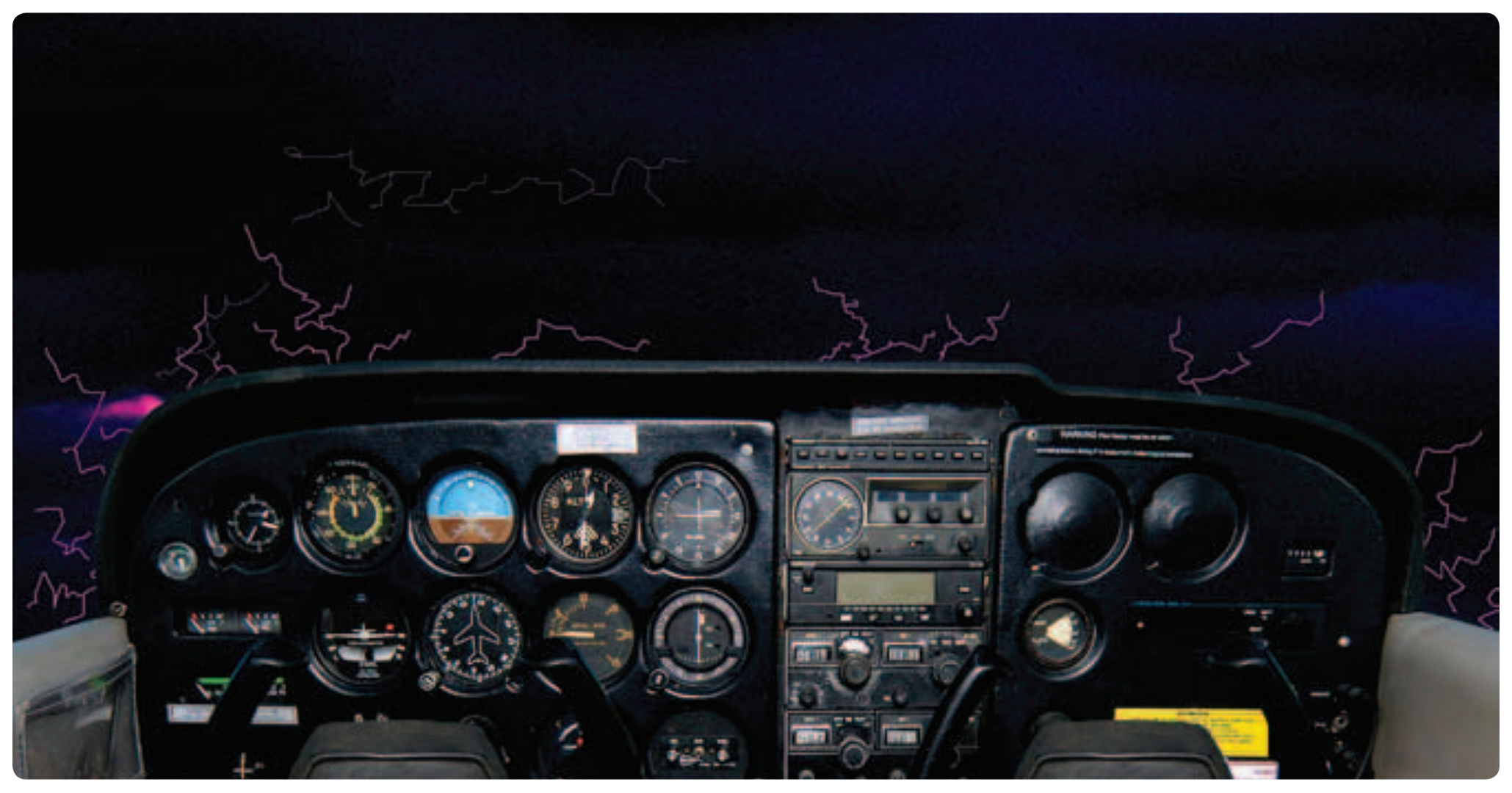
During taxi, verify the operation and accuracy of all flight instruments. In addition, during the run-up, verify that the operation of the pneumatic system(s) is within acceptable parameters. It is critical that all systems are determined to be operational before departing into IFR conditions.
Electronic Flight Display Malfunction
When a pilot becomes familiar and comfortable with the new electronic displays, he or she also tends to become more reliant on the system. The system then becomes a primary source of navigation and data acquisition instead of the supplementary source of data as initially intended.
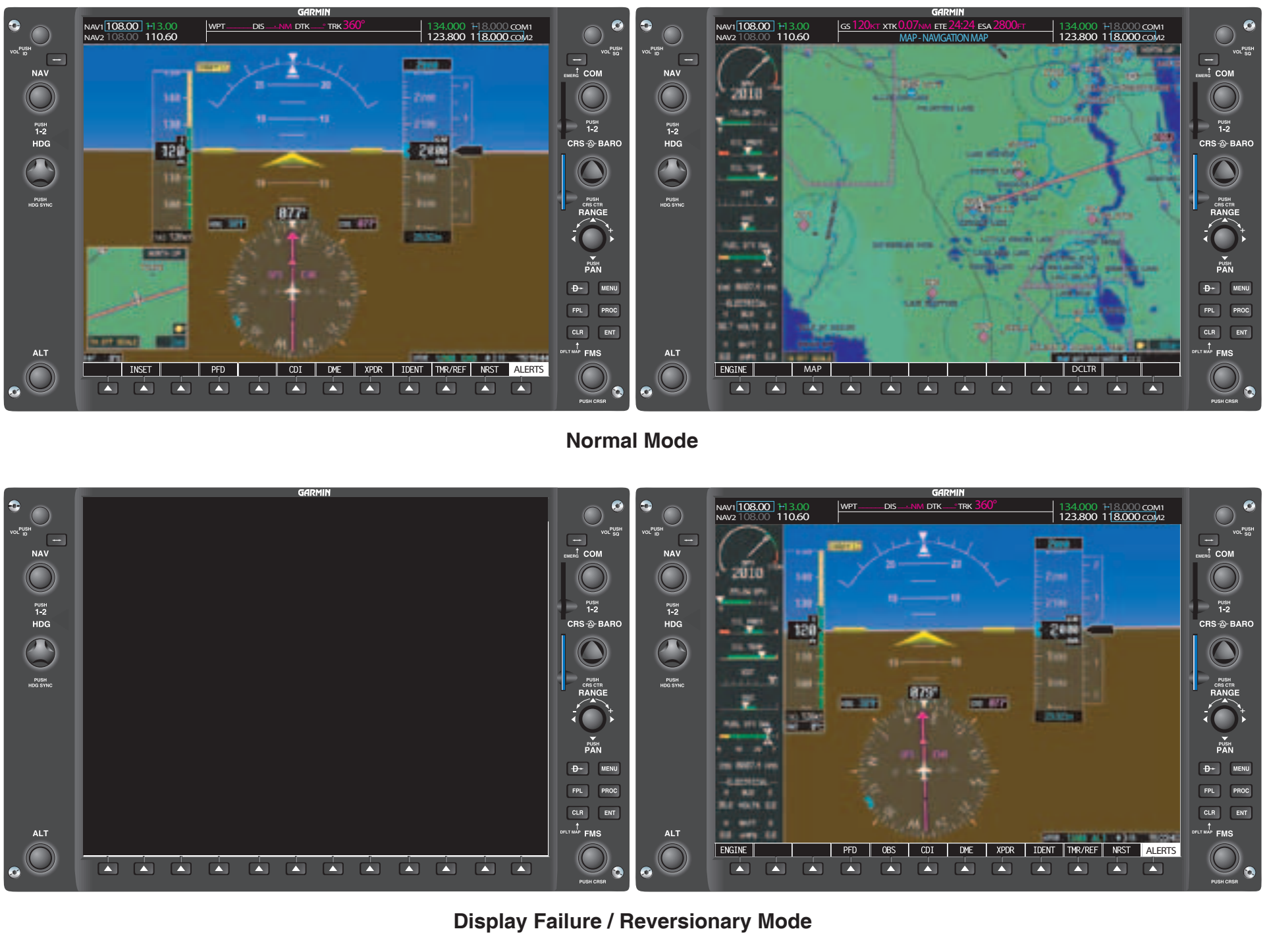
Complete reliance on the moving map for navigation becomes a problem during a failure of one, more, or all of the flight display screens. Under these conditions, the systems revert to a composite mode (called reversionary), which eliminates the moving map display and combines the primary flight display (PFD) with the engine indicating system. [Figure 11-3] If a pilot has relied on the display for navigation information and situational awareness, he or she lacks any concept of critical data such as the aircraft’s position, the nearest airport, or proximity to other aircraft.
The electronic flight display (EFD) is a supplementary source of navigation data and does not replace en route charts. To maintain situational awareness, a pilot must follow the flight on the en route chart while monitoring the PFD. It is important for the pilot to know the location of the closest airport as well as surrounding traffic relative to the location of his or her aircraft. This information becomes critical should the EFD fail.
For the pilot who utilizes the electronic database as a substitute for the Airport/Facilities Directory (A/FD), screen failure or loss of electrical power can mean the pilot is no longer able to access airport information. Once the pilot loses the ability to call up airport information, aeronautical decision-making (ADM) is compromised.
Alternator/Generator Failure
Depending upon the aircraft being flown, an alternator failure is indicated in different ways. Some aircraft use an ammeter that indicates the state of charge or discharge of the battery. [Figure 11-4] A positive indication on the ammeter indicates a charge condition; a negative indication reveals a discharge condition. Other aircraft use a loadmeter to indicate the load being carried by the alternator. [Figure 11-4]
Sometimes an indicator light is also installed in the aircraft to alert the pilot to an alternator failure. On some aircraft, such as the Cessna 172, the light is located on the lower left side making it difficult to see its illumination if charts are open. Ensure that these safety indicators are visible during flight.
When a loss of the electrical charging system is experienced, the pilot has approximately 40 minutes of battery life remaining before the system fails entirely. The time mentioned is an approximation and should not be relied upon as specific to all aircraft. In addition, the battery charge that exists in a battery may not be full, altering the time available before electrical exhaustion occurs. At no time should a pilot consider continuing a flight once the electrical charging system has failed. Land at the nearest suitable airport.
Techniques for Electrical Usage
Master Battery Switch
One technique for conserving the main battery charge is to fly the aircraft to the airport of intended landing while operating with minimal power. If a two-position battery master/alternator rocker switch is installed, it can be utilized to isolate the main battery from the electrical system and conserve power. [Figure 11-5]