Chapter 4
Approaches
“…four miles from LIMAA, turn right heading three four zero, maintain two thousand until established on the localizer, cleared ILS runway three six approach.”
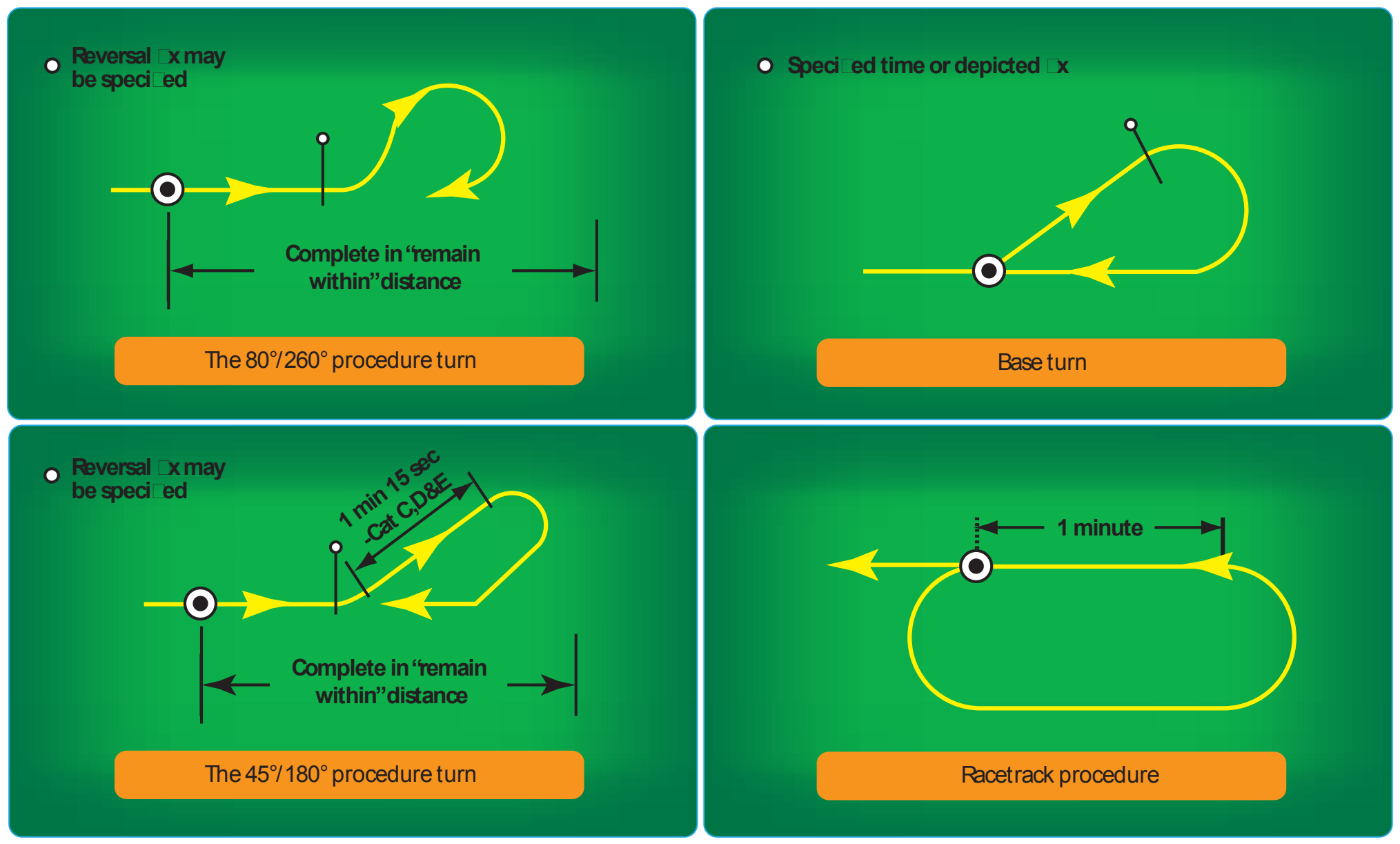
Other clearance formats may be used to fit individual circumstances, but the controller should always assign an altitude to maintain until the aircraft is established on a segment of a published route or IAP. The altitude assigned must guarantee IFR obstruction clearance from the point at which the approach clearance is issued until the aircraft is established on a published route. 14 CFR Part 91, § 91.175 (j) prohibits a pilot from making a procedure turn when vectored to a FAF or course, when conducting a timed approach, or when the procedure specifies “NO PT.”
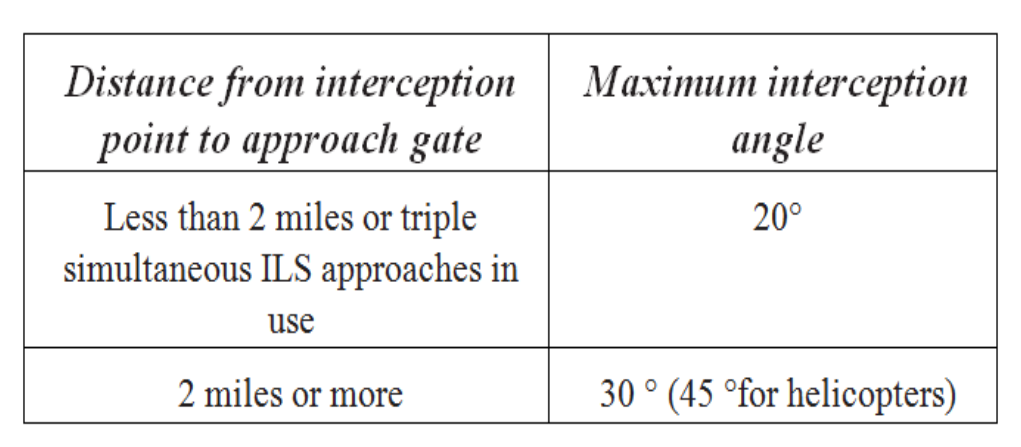
When vectoring aircraft to the final approach course, controllers are required to ensure the intercept is at least 2 NM outside the approach gate. Exceptions include the following situations, but do not apply to RNAV aircraft being vectored for a GPS or RNAV approach:
- When the reported ceiling is at least 500 feet above the MVA/MIA and the visibility is at least 3 SM (may be a pilot report (PIREP) if no weather is reported for the airport), aircraft may be vectored to intercept the final approach course closer than 2 NM outside the approach gate but no closer than the approach gate.
- If specifically requested by the pilot, aircraft may be vectored to intercept the final approach course inside the approach gate but no closer than the FAF.
Nonradar Environment
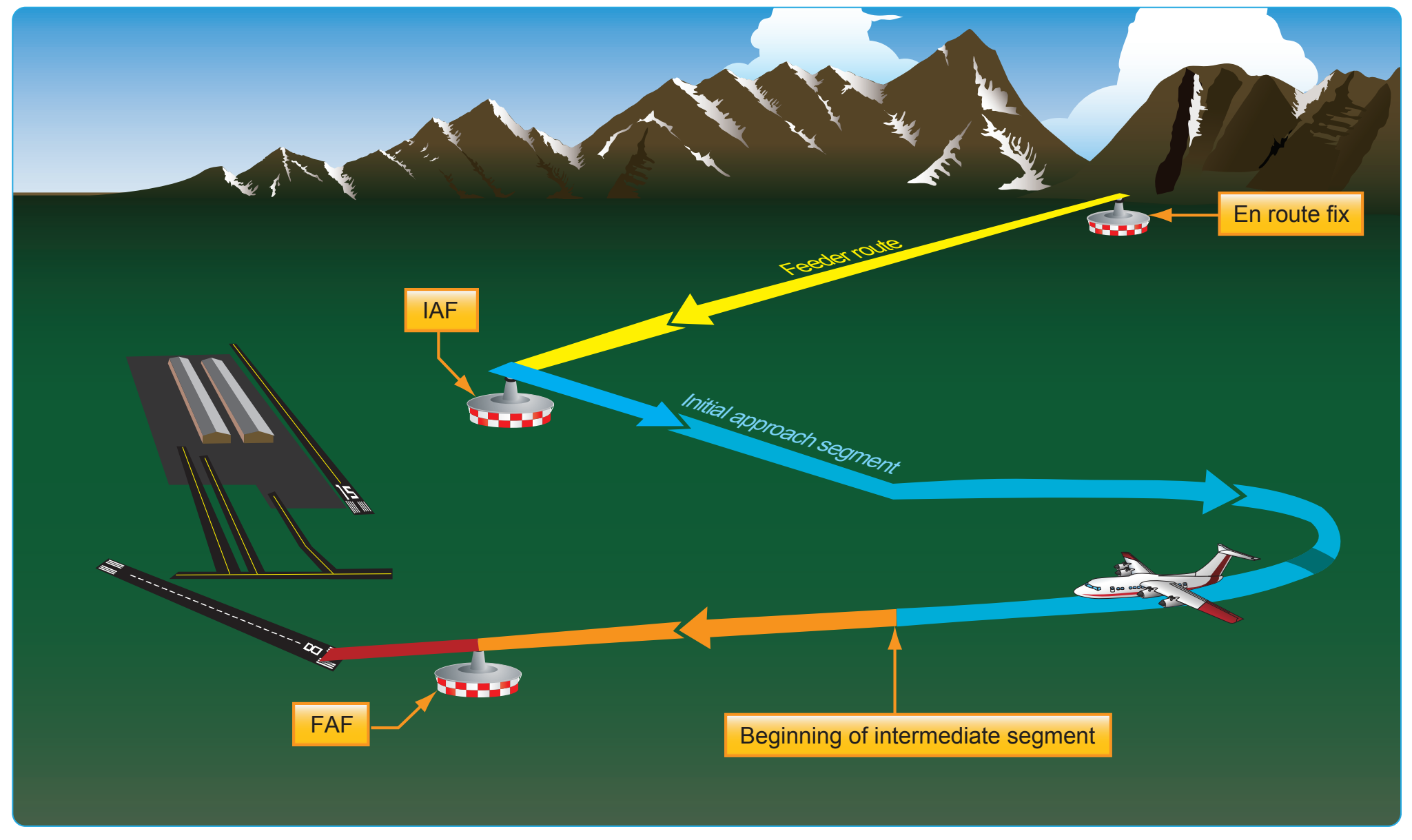
In the absence of radar vectors, an instrument approach begins at an IAF. An aircraft that has been cleared to a holding fix that, prior to reaching that fix, is issued a clearance for an approach, but not issued a revised routing, such as, “proceed direct to…” is expected to proceed via the last assigned route, a feeder route if one is published on the approach chart, and then to commence the approach as published. If, by following the route of flight to the holding fix, the aircraft would overfly an IAF or the fix associated with the beginning of a feeder route to be used, the aircraft is expected to commence the approach using the published feeder route to the IAF or from the IAF as appropriate. The aircraft would not be expected to overfly and return to the IAF or feeder route.
For aircraft operating on unpublished routes, an altitude is assigned to maintain until the aircraft is established on a segment of a published route or IAP. (Example: “Maintain 2,000 until established on the final approach course outbound, cleared VOR/DME runway 12.”) The FAA definition of established on course requires the aircraft to be established on the route centerline. Generally, the controller assigns an altitude compatible with glideslope/glidepath intercept prior to being cleared for the approach.
Types of Approaches
In the NAS, there are approximately 1,105 VOR stations, 916 NDB stations, and 1,194 ILS installations, including 25 LOC-type directional aids (LDAs), 11 simplified directional facilities (SDFs), and 235 LOC only facilities. As time progresses, it is the intent of the FAA to reduce navigational dependence on VOR, NDB, and other ground-based NAVAIDs and, instead, to increase the use of satellite-based navigation.
To expedite the use of RNAV procedures for all instrument pilots, the FAA has begun an aggressive schedule to develop RNAV procedures. As of 2010, the number of RNAV/ GPS approaches published in the NAS numbered 10,212 - with additional procedures published every revision cycle. While it had originally been the plan of the FAA to begin decommissioning VORs, NDBs, and other ground-based NAVAIDs, the overall strategy has been changed to incorporate a majority dependence on augmented satellite navigation while maintaining a satisfactory backup system. This backup system includes retaining all CAT II and III ILS facilities and close to one-half of the existing VOR network.
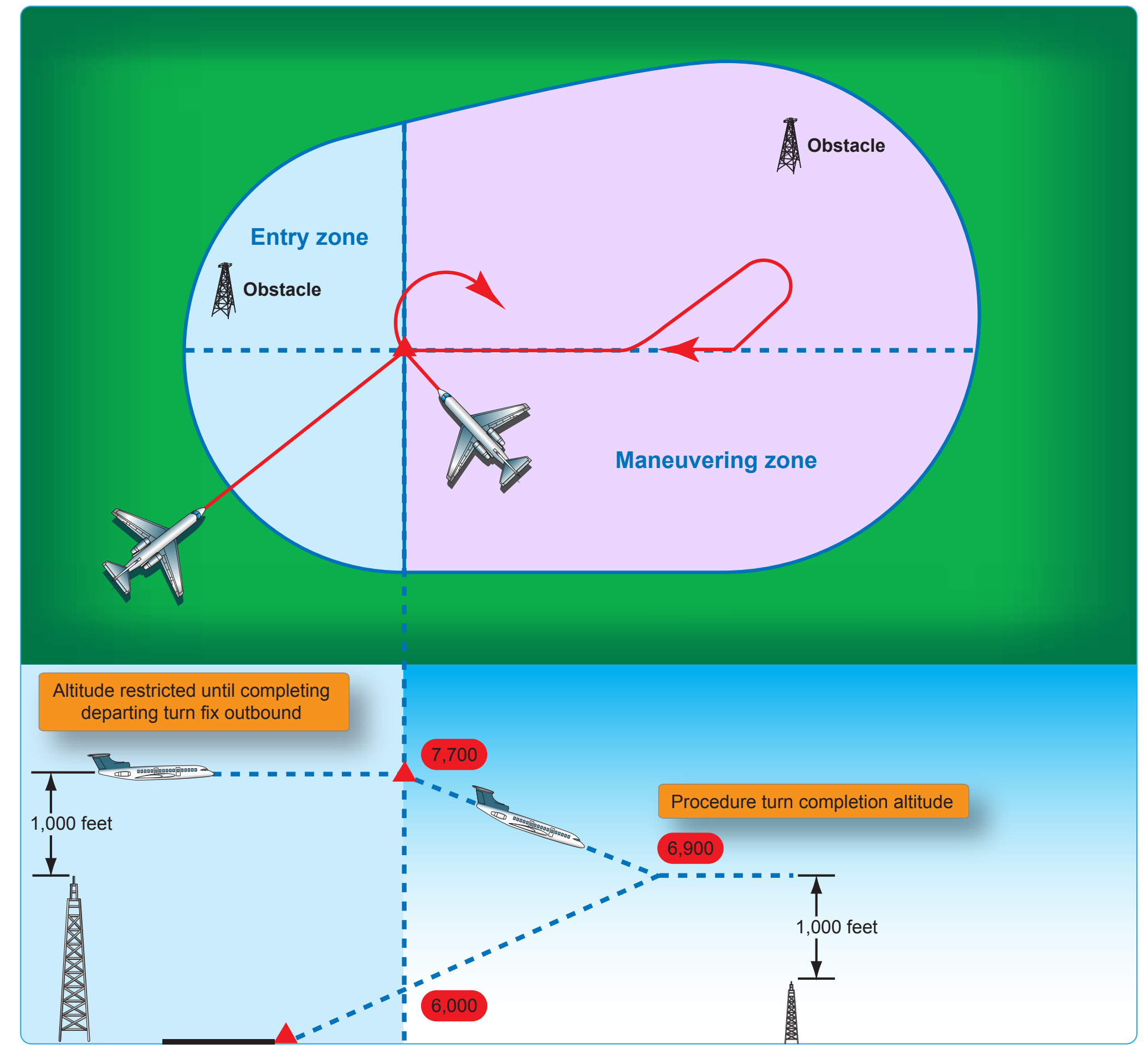
Each approach is provided obstacle clearance based on the FAA Order 8260.3 TERPS design criteria as appropriate for the surrounding terrain, obstacles, and NAVAID availability. Final approach obstacle clearance is different for every type of approach but is guaranteed from the start of the final approach segment to the runway (not below the MDA for non-precision approaches) or MAP, whichever occurs last within the final approach area. It is dependent upon the pilot to maintain an appropriate flight path within the boundaries of the final approach area and maintain obstacle clearance.
There are numerous types of instrument approaches available for use in the NAS including RNAV (GPS), ILS, MLS, LOC, VOR, NDB, SDF, and radar approaches. Each approach has separate and individual design criteria, equipment requirements, and system capabilities.
Visual and Contact Approaches
To expedite traffic, ATC may clear pilots for a visual approach in lieu of the published approach procedure if flight conditions permit. Requesting a contact approach may be advantageous since it requires less time than the published IAP and provides separation from IFR and special visual flight rules (SVFR) traffic. A contact or visual approach may be used in lieu of conducting a SIAP, and both allow the flight to continue as an IFR flight to landing while increasing the efficiency of the arrival.
Visual Approaches
When it is operationally beneficial, ATC may authorize pilots to conduct a visual approach to the airport in lieu of the published IAP. A pilot, or the controller, can initiate a visual approach. Before issuing a visual approach clearance, ATC must verify that the pilot has the airport, or a preceding aircraft that they are to follow, in sight. Once the pilot reports the airport, or aircraft, in sight, the pilot is responsible to maintain safe altitudes and separation from other aircraft. If the pilot reports the airport in sight but does not see the aircraft they are assigned to follow, ATC may still issue the visual approach clearance but the controller maintains responsibility for aircraft separation (including wake turbulence separation). Once pilots report the aircraft in sight, they assume the responsibilities for their own separation and wake turbulence avoidance.