
Chapter 1
Introduction to Parachute Rigging
A variation on this theme is accessing the packing instruction via the Internet. Many manufacturers provide manuals via their websites. If the parachute rigger does not download the actual instruction, they must show that they had access during the packing of the parachute. For example, a laptop computer may not have a printer attached but could still meet this requirement.
Parachute riggers are not necessarily required to download the instructions to a hard drive or disk as long as they are able to access the manual in real time. However, if a problem is identified with the parachute rigger’s pack job at a later date, the parachute rigger would need to prove to the Administrator that he or she had access to the instructions. Without a hardcopy or downloaded computer files, it would appear that the parachute rigger had not met the rule requirement.
Currency Requirements
Once an individual obtains a Parachute Rigger Certificate, it is valid for life unless surrendered, suspended, or revoked. If the individual intends to work as a parachute rigger and not just have the certificate, it is necessary that he or she maintain currency as a practicing parachute rigger. These currency requirements include at least one of the following.
- Performing parachute rigger duties for at least 90 days within the preceding 12 months.
- Demonstrating to the Administrator the ability to perform those duties.
Record Keeping
Maintaining proper records of parachute rigger activities is an important responsibility. This is necessary for the protection of the parachute rigger, the user of the parachute, and the satisfaction of the Administrator. Under 14 CFR part 65, section 65.131, certificated parachute riggers must document the packing, maintenance, and alteration of parachutes they have performed or supervised. These records normally are documented in a parachute rigger’s logbook. The following information must be documented:
- Parachute type and make
- Serial number
- Name and address of the owner
- Description of the work performed
- Date and location of work performed
- Results of any drop tests
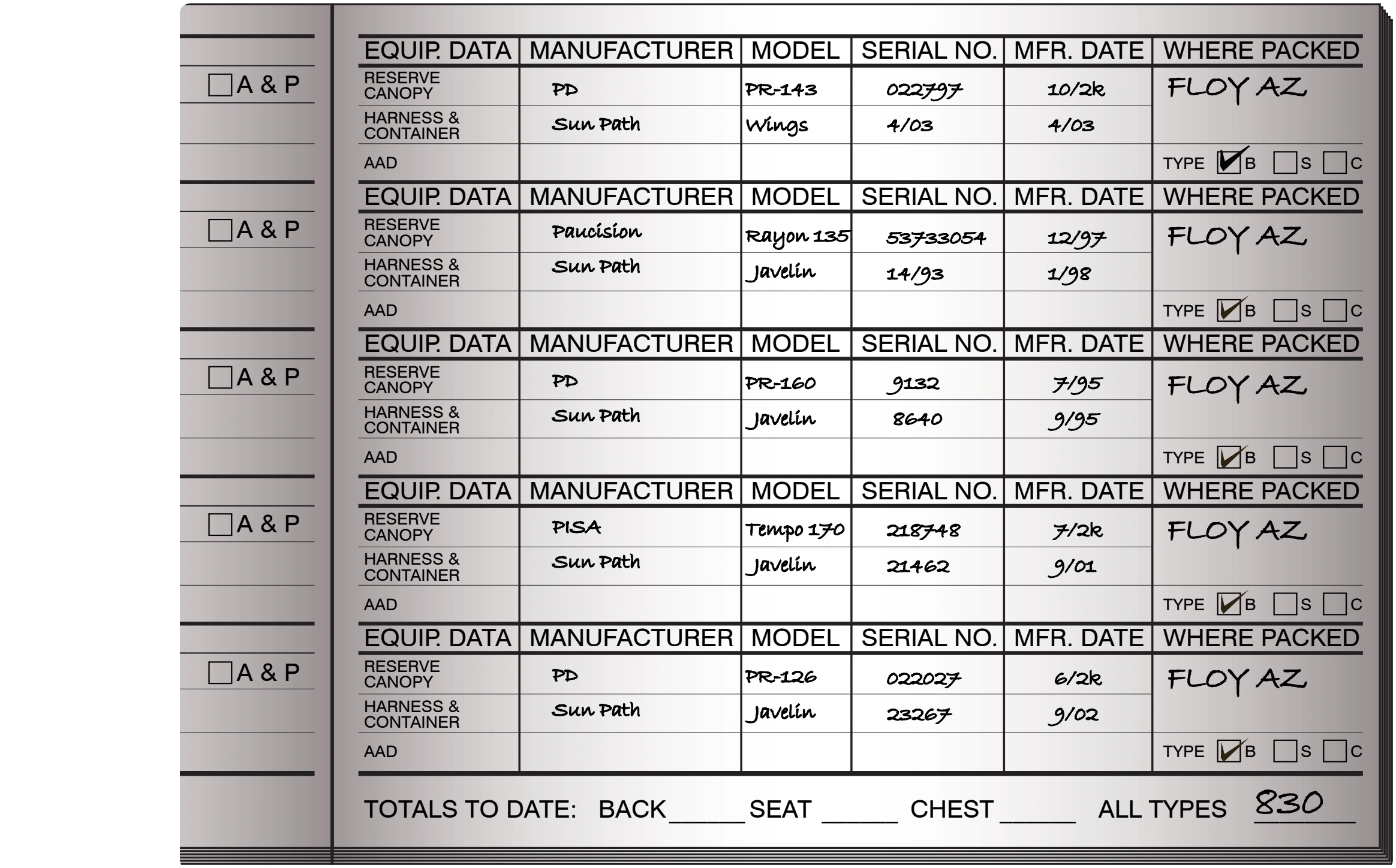
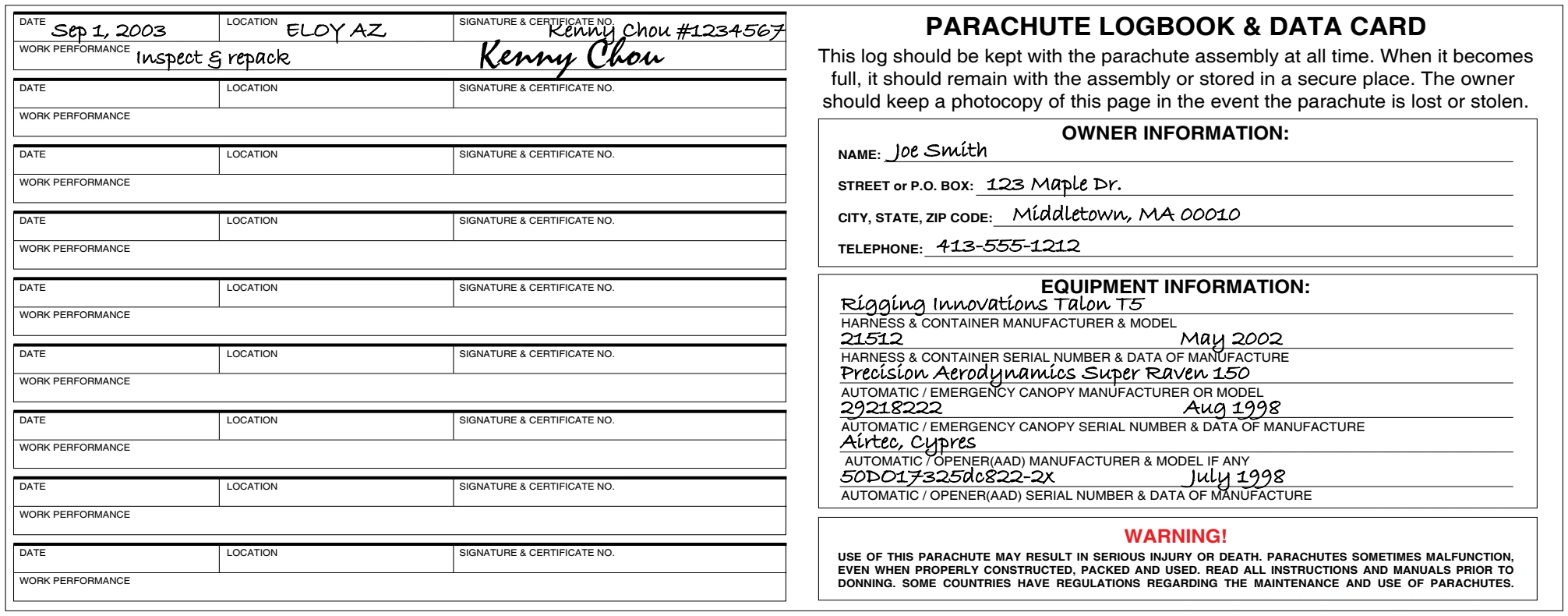
These records must be kept for a minimum of 2 years. Figure 1-7 shows a sample of a logbook page. In addition, each parachute rigger must note on the parachute packing record or data card the following information: [Figure 1-8]
- Date and location of packing
- A notation of any defects found on inspection
- Parachute Rigger Certificate number
- Parachute rigger name and signature
While not required on the data card, it has become commonplace for the parachute rigger to note the work performed as well. This is usually noted as assemble and pack (A&P) or inspect and repack (I&R). Professional parachute riggers often use an ink stamp on the data card that indicates name, certificate number, seal symbol, and provides an area for signature. This allows the customer or other parachute riggers to read the name (some signatures are illegible) and to correlate the last entry with the seal on the parachute.
Sealing the Parachute
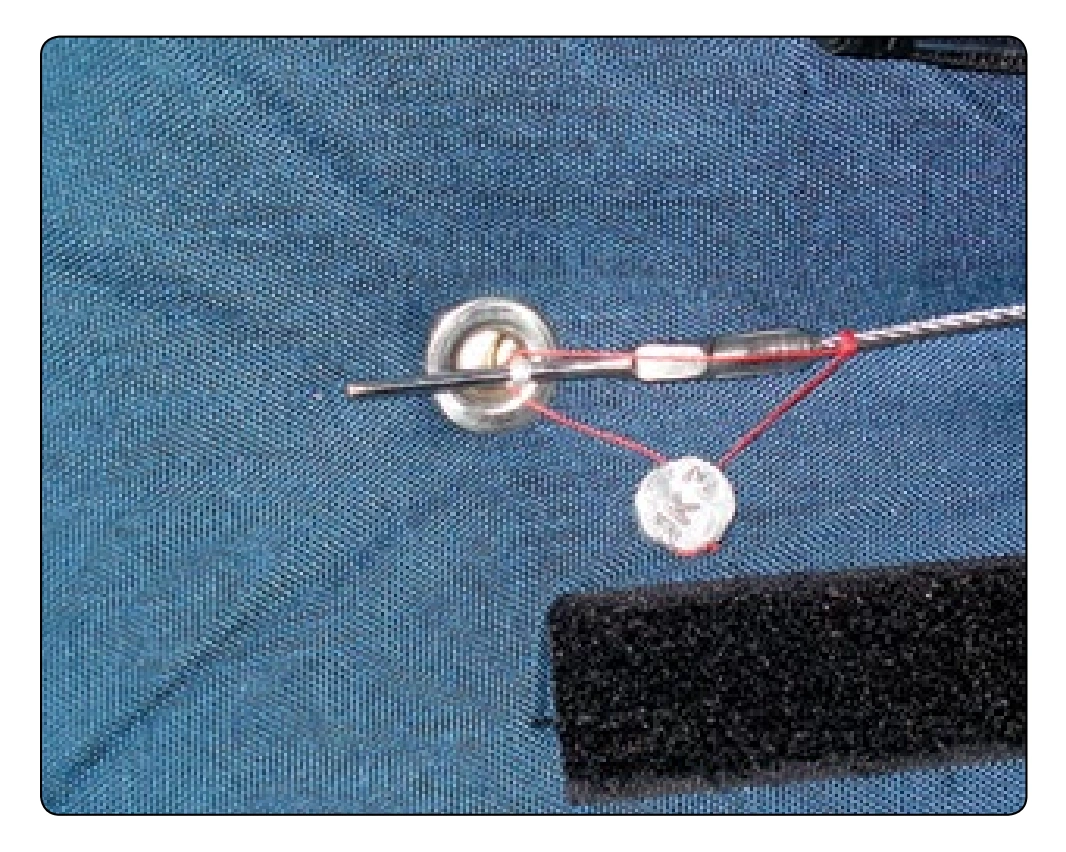
As noted previously, each certificated parachute rigger is issued a unique symbol with which to seal each parachute once he or she packs it in a manner prescribed by the manufacturer. A hand press, 4.75 pound tensile seal thread, and a lead blank are used for this purpose. This ensures that no one tampers with the parachute, and the owner knows that it is ready for use.
Regulatory Compliance
As with other airman certificates, there are additional parts of 14 CFR that are of direct concern to the parachute rigger in addition to those already mentioned. It is important that the parachute rigger have a thorough understanding of these parts in order to avoid any inadvertent non-compliance: 14 CFR parts 1, 21, 39, 91, 105, and 183.