
Chapter 2
Design and Construction
Ripcords or Equivalent Devices for the Main and Reserve Parachutes
The ripcord is a device for securing the container closed prior to use. It usually consists of a handle, a flexible cable, one or more pins, and a device for securing the cable to the handle. Some ripcords use a stiffened cable instead of a pin. Similar to the ripcord is the main riser retain/release cable/ handle assembly if the parachute is equipped with a main riser release system, such as the 3-ring release.
Deployment Devices for the Main and Reserve Parachutes
Deployment devices are designed to provide an orderly and controlled deployment of the parachute during use. Typical devices include bags, sleeves, pockets, straps, diapers, and sliders.
Main Parachute Release Mechanism and Associated Handles or Static Lines
The main parachute release mechanism has two parts. One part is attached to the harness and the other to the risers.
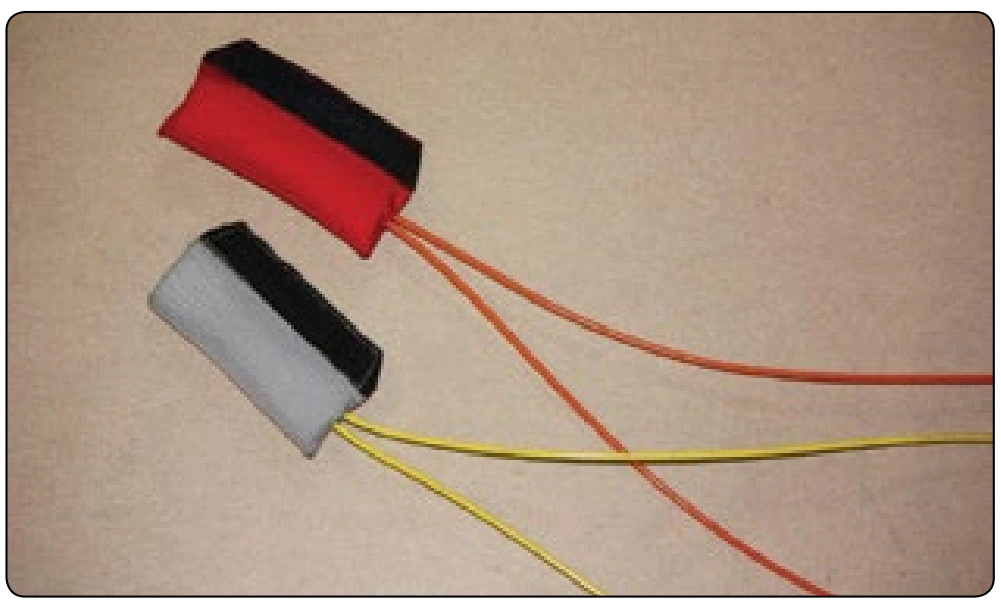
Typically such devices are the 3-ring release or Capewell releases. These types may utilize a separate release handle to provide release of both sides with one motion. This cable/ handle assembly consists of a cable to each riser and a velcro-mounted handle. The cables must be kept lubricated to function properly. There are several types of cable coatings used by various manufacturers. Nylon coating, which is hydroscopic, includes the yellow (Lolon) coated cables and the clear coated cables. This type of cable should be oiled frequently as climate conditions dictate. When you pull the cable between your fingers, if it squeaks like clean hair, then it needs to be lubricated. The Red or (new) orange-coated cable is pure FEP Teflon coating and requires no maintenance. Typically when the cable is removed from its housing, it has black oil in spots along the cable. This black oil is the residue of the cutting oil used in the manufacture of the housings. It is not harmful. In fact, if this black oil is distributed evenly along the cable, it provides limited lubrication. There is no need to worry about sand or dirt being attracted to the oil on the cable as it is more important for the cable to be lubricated than it is to be clean. [Figure 2-3] The reserve may employ a static line (RSL) that is activated upon cutaway. This is covered in greater detail later in the chapter.
Risers and Associated Steering Toggles
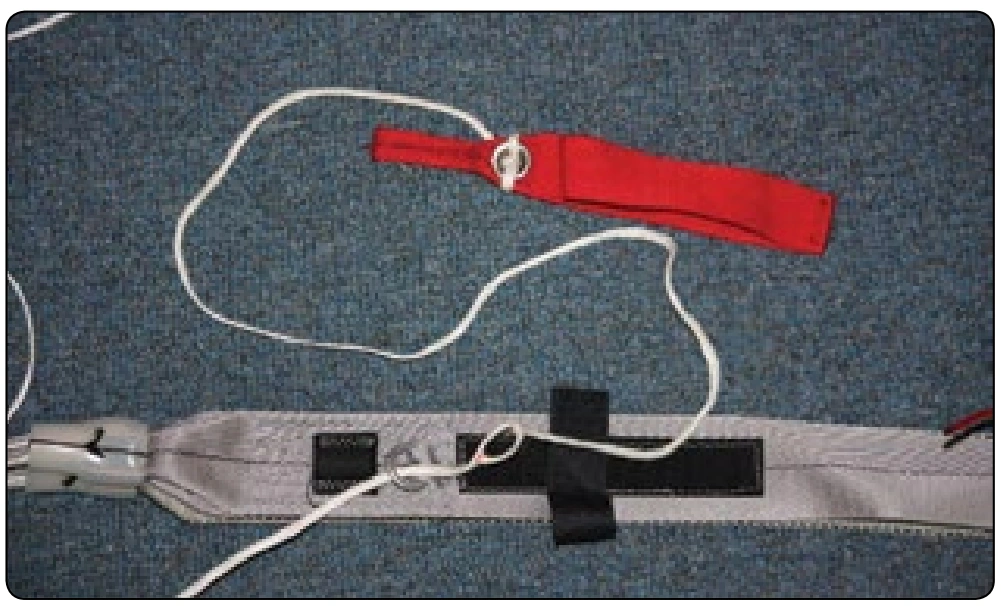
Risers are part of the suspension system between the lines and the harness or load. Generally made of webbing, emergency parachutes usually have the risers integral to the harness. If they are detachable and not integral and are being used for an emergency parachute, they require a cross connector, as they are tested with only one side connected. Main risers used on sport or military systems used for intentional jumping have release mechanisms installed. Steering toggles are usually design specific to the riser for the type of canopy installed. Ram air canopies use the steering toggle to lock the deployment brake. Pulling on the toggle after opening releases the brake. Premature brake release is a major cause of malfunctions. [Figure 2-4]
Other Harness/Container Assembly Components
Other components designed to function as part of the harness/ container assembly, such as closing loops, also may be used.
Closing loops used with automatic activation devices (AADs) on reserve or emergency parachutes are usually design specific to ensure proper operation of the system.
TSO Standards
The original TSO C23b for parachutes came into existence in 1949. The specifications were revised in 1984 to C23c and again in 1994 to C23d. The TSO is a simple two-page document that specifies the requirements for certification.
This document also references a performance standard that the parachute must meet. C23b parachutes were tested to standards under National Aircraft Standards Specifications NAS-804. When the TSO was revised in 1984, the specification document was drafted under the auspices of the Society of Automotive Engineers (SAE) S-17 committee as
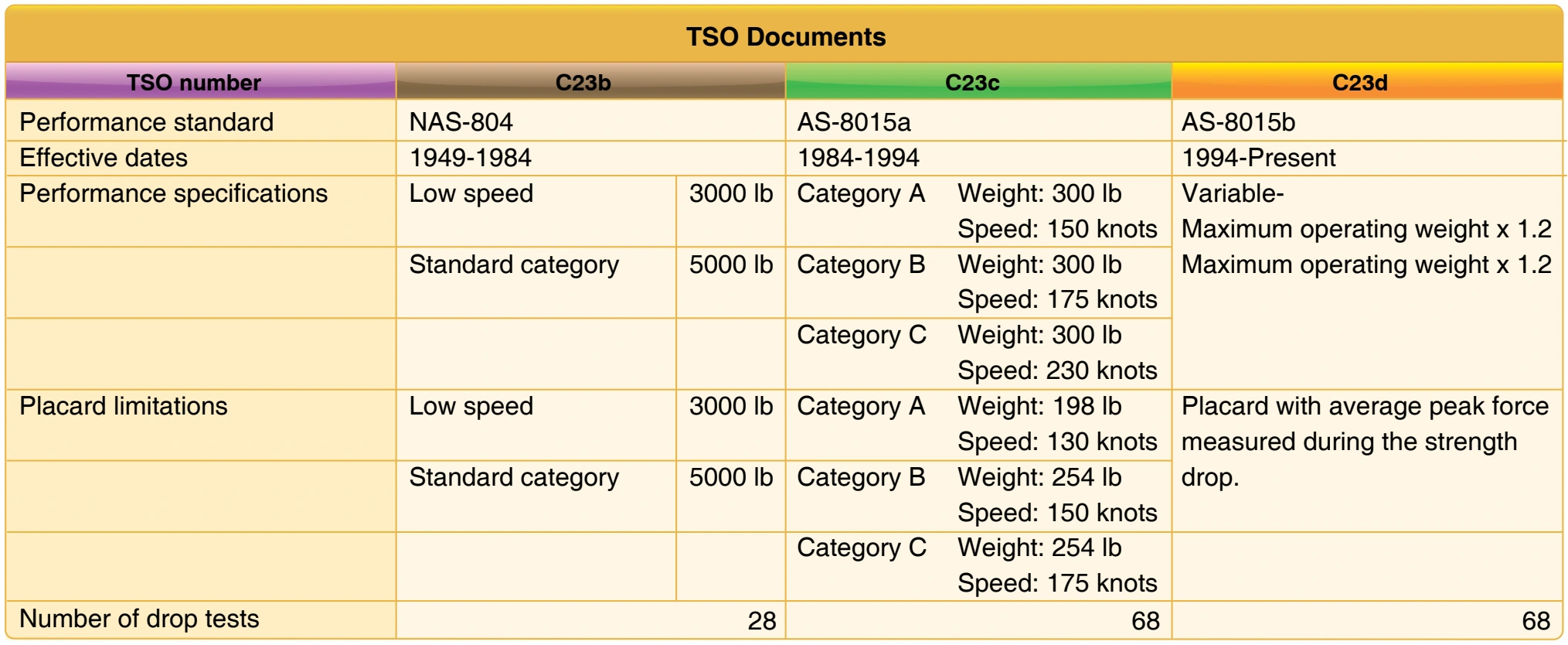
Aerospace Standard AS-8015. When the TSO was revised again in 1994, the revised document became AS-8015b with the original as AS-8015a. Figure 2-5 is a table showing the pertinent points of each of the TSO certifications. For a more thorough study of the documents, refer to Appendix B.
The TSO system consists of two parts. The first is the performance standards listed above. This ensures that the parachute performs as specified. The second is the production approval, which ensures that the manufacturer is able to produce the parachute as designed and tested. While minor design changes are allowed, any major design change must be submitted to the FAA for approval before implementation. A major change is anything that affects the airworthiness of the system of the parachute.