Chapter 3
Materials
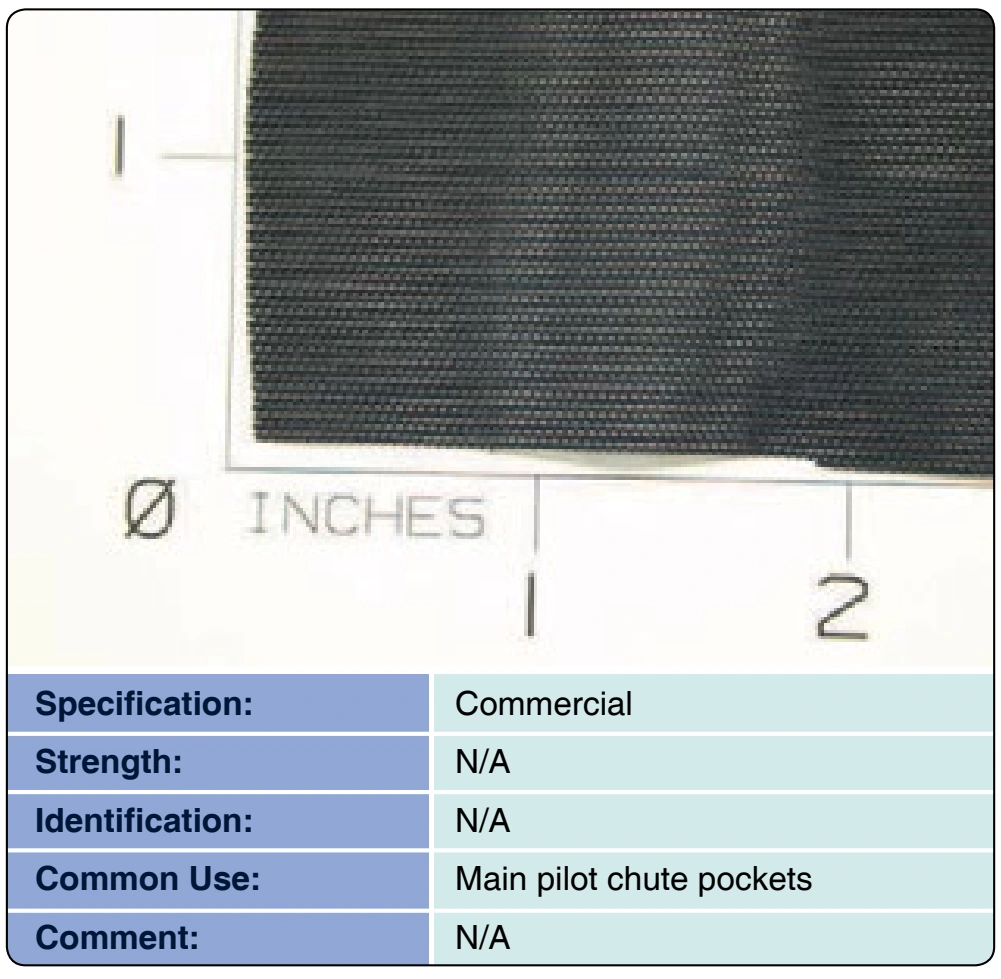
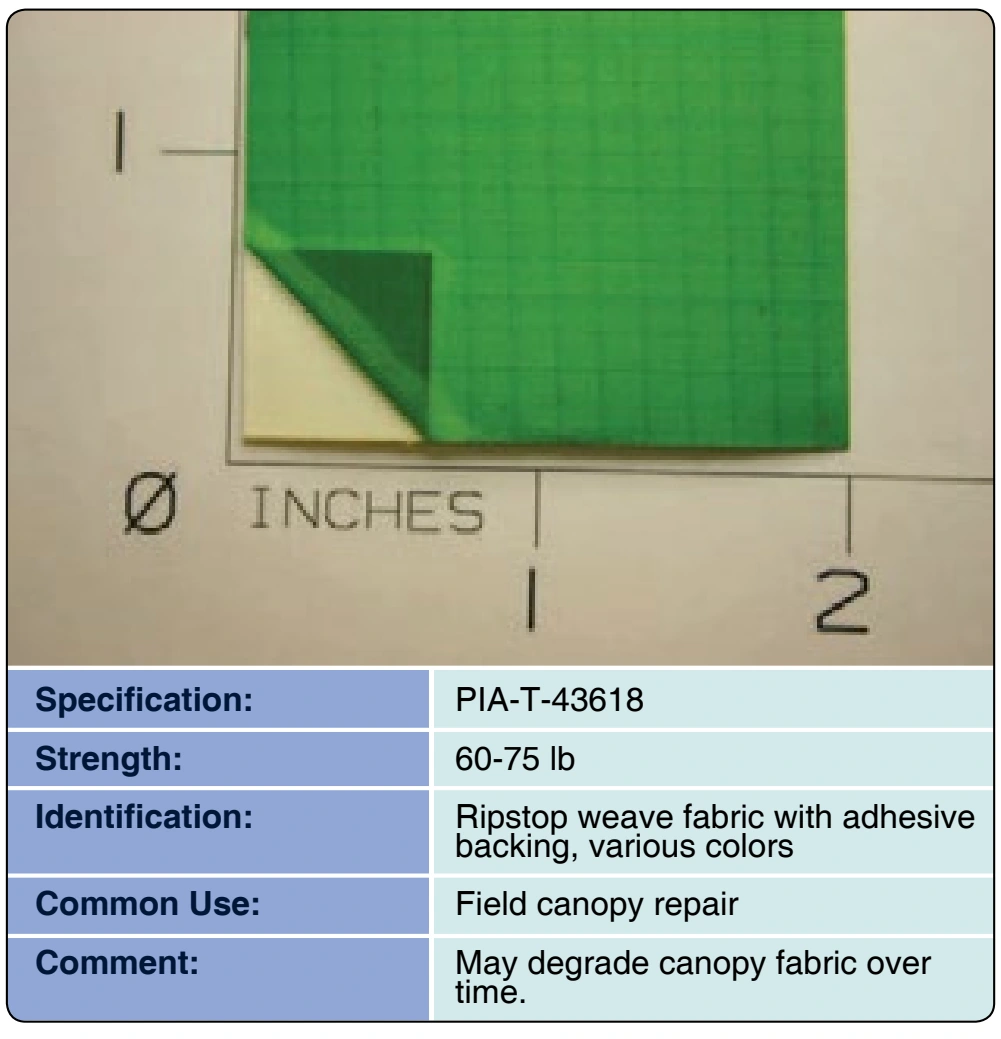
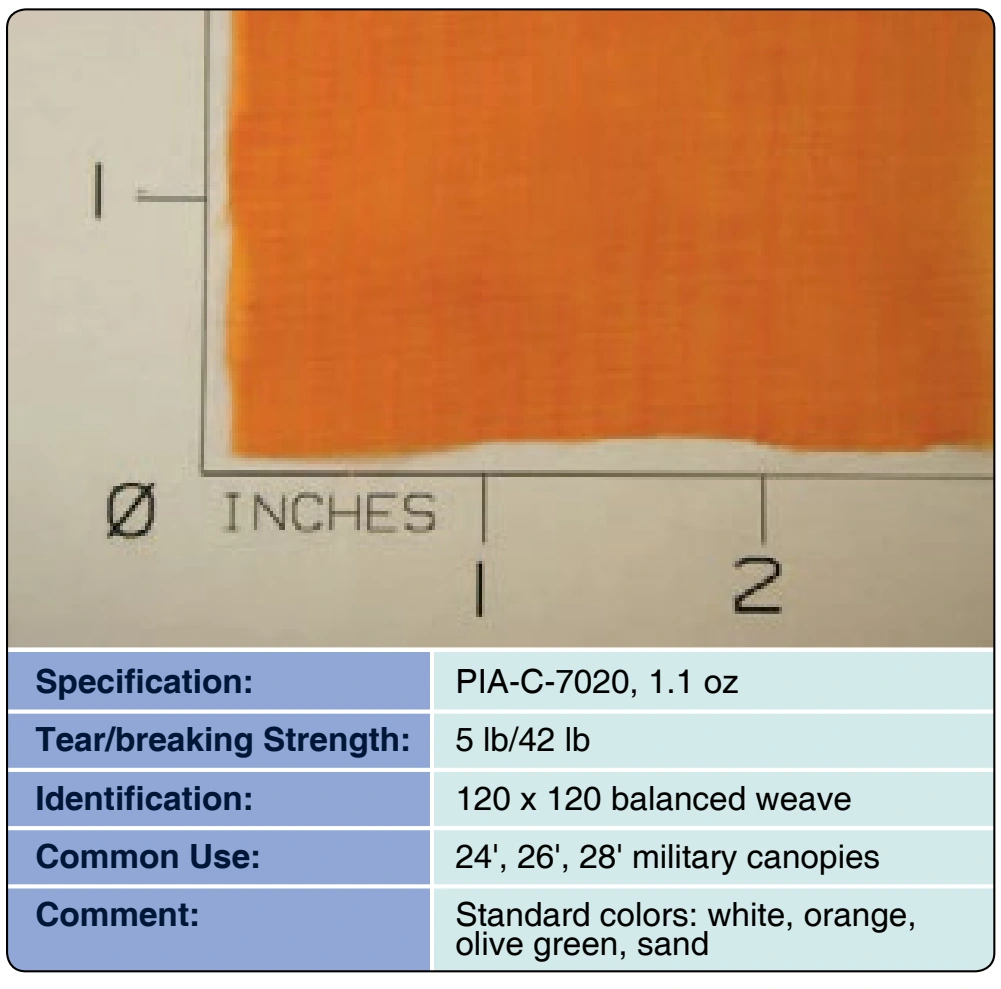
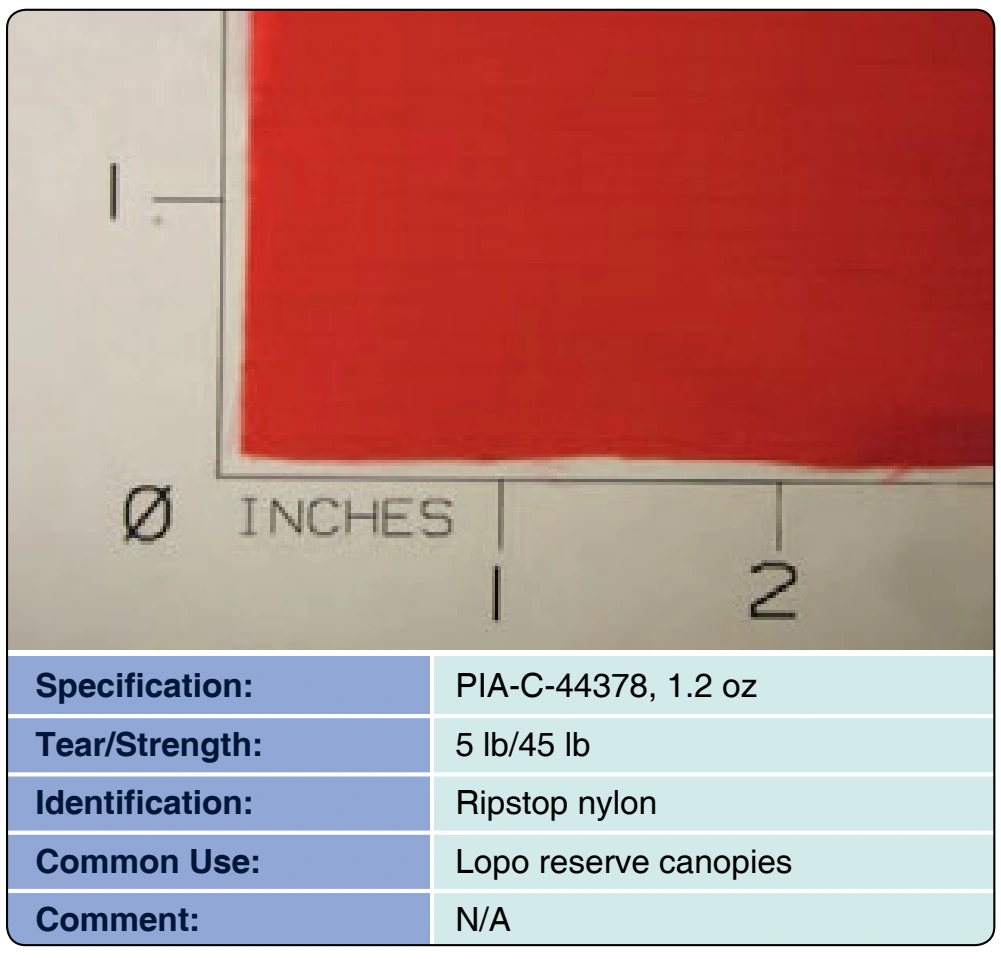
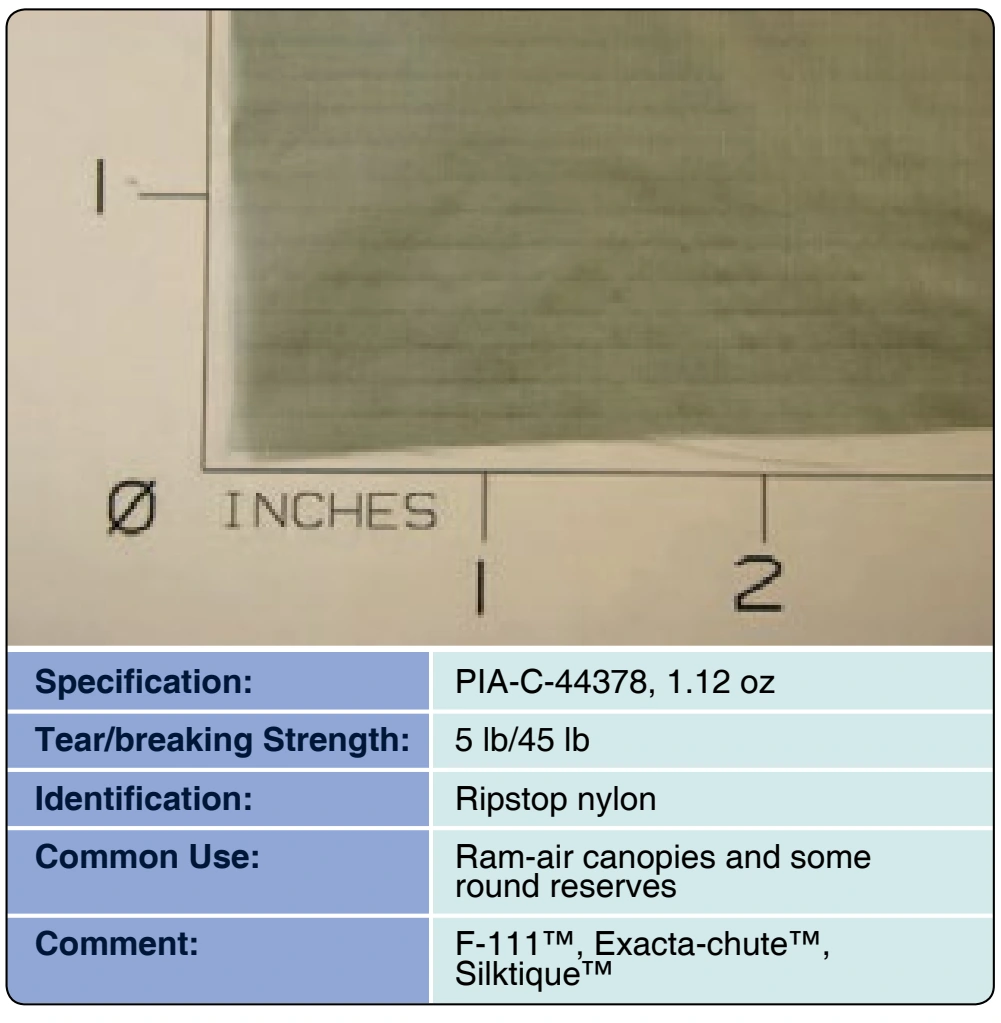
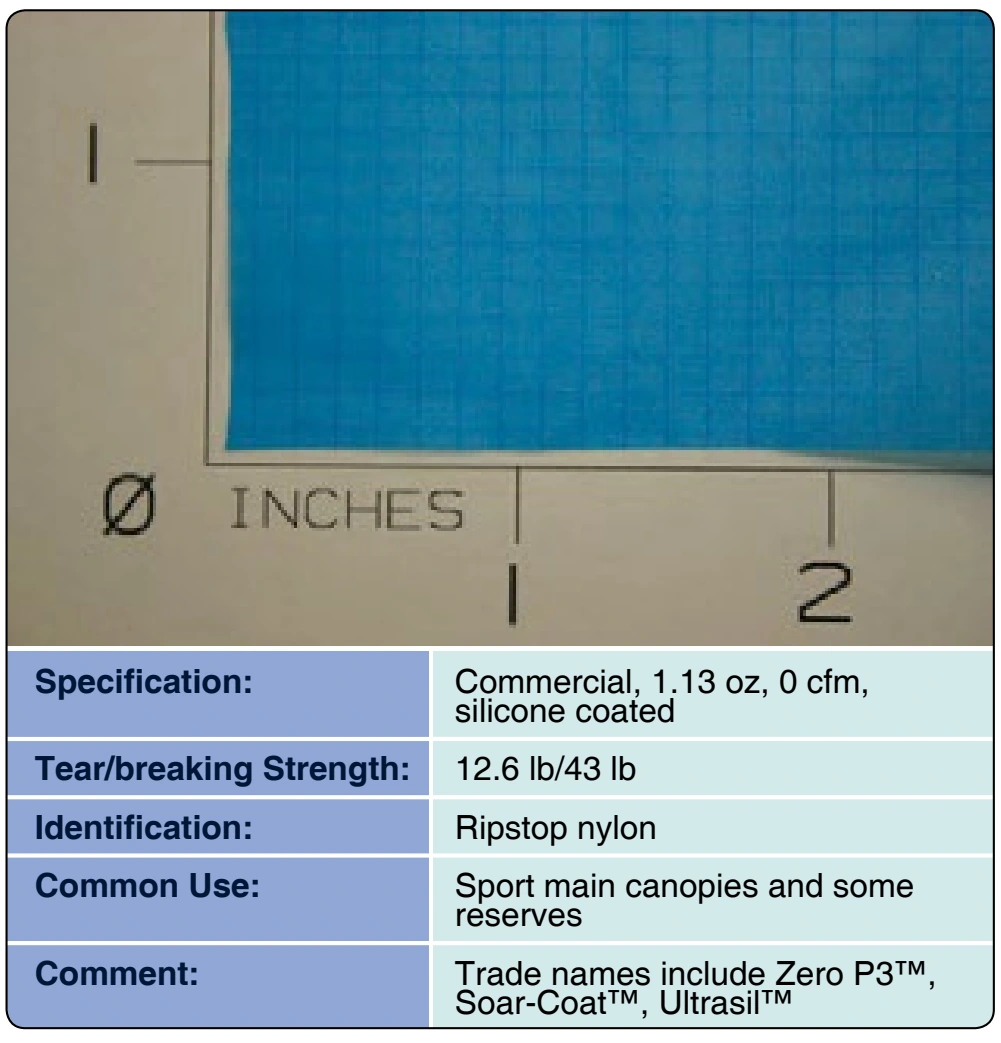
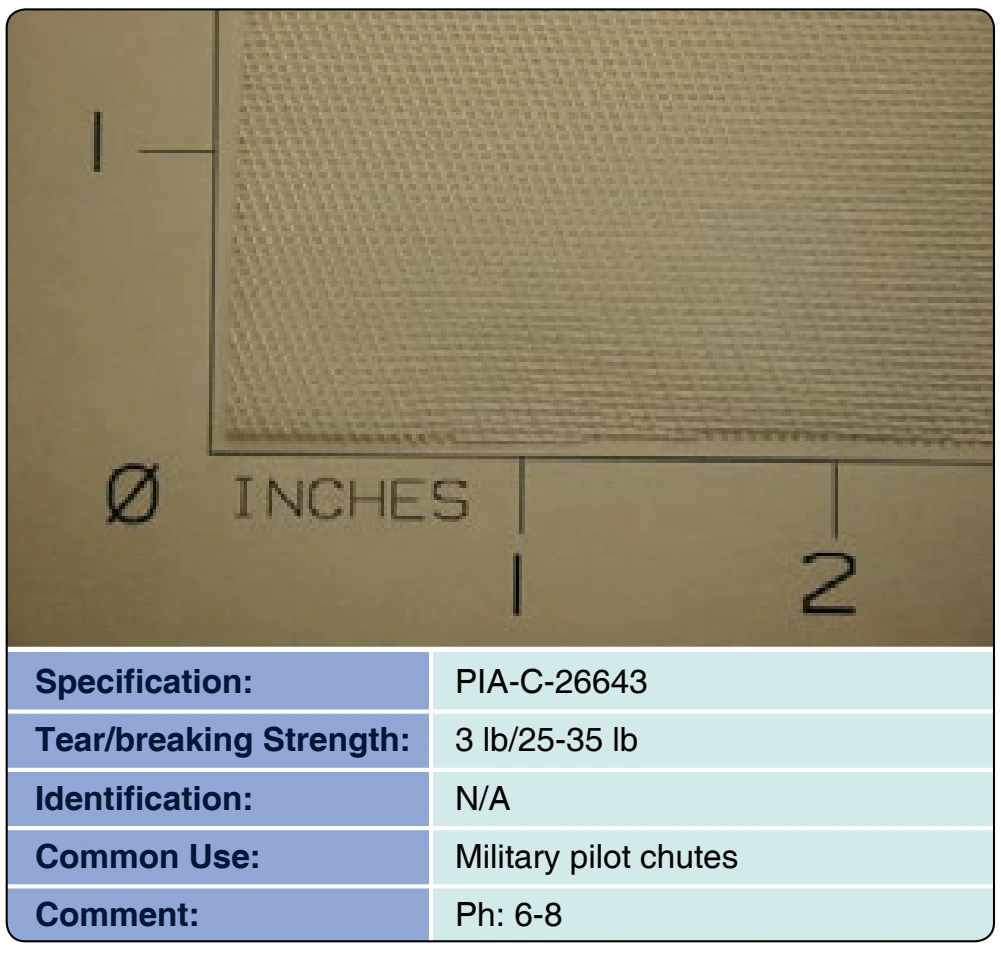
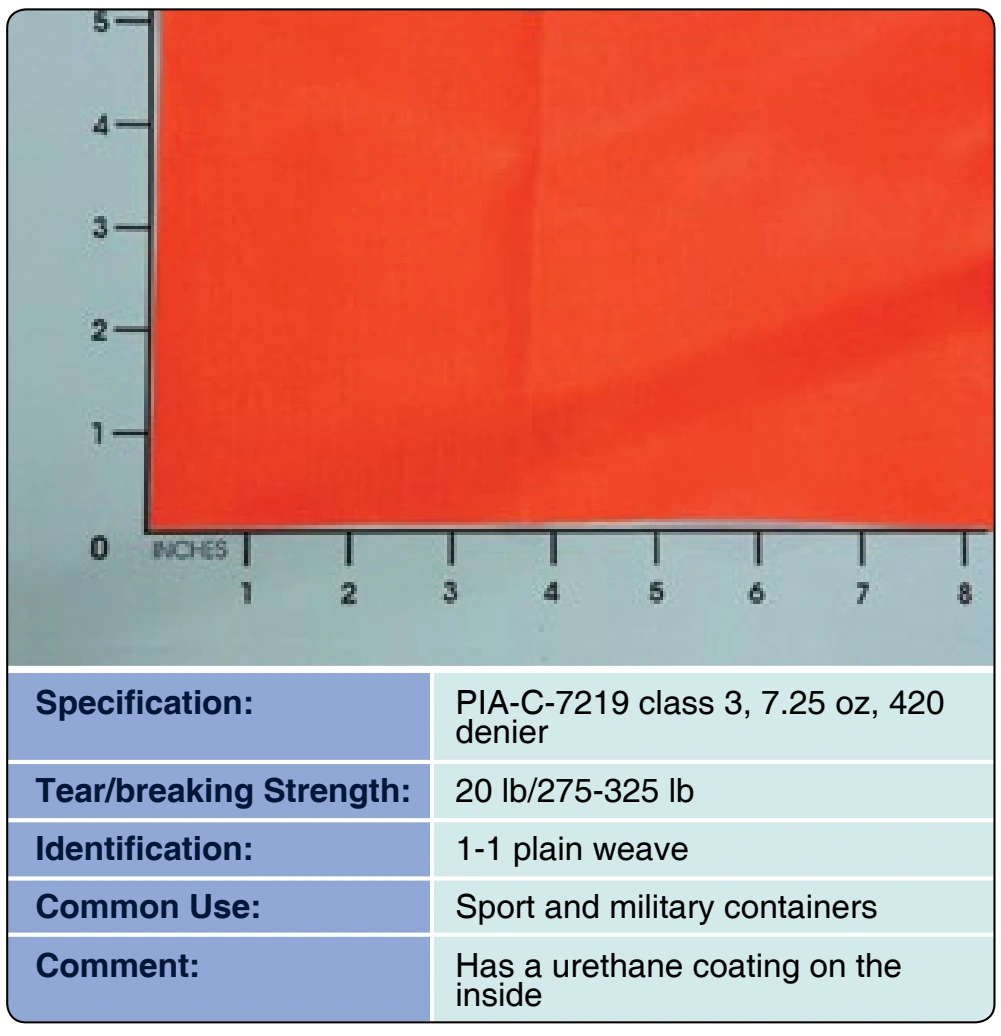
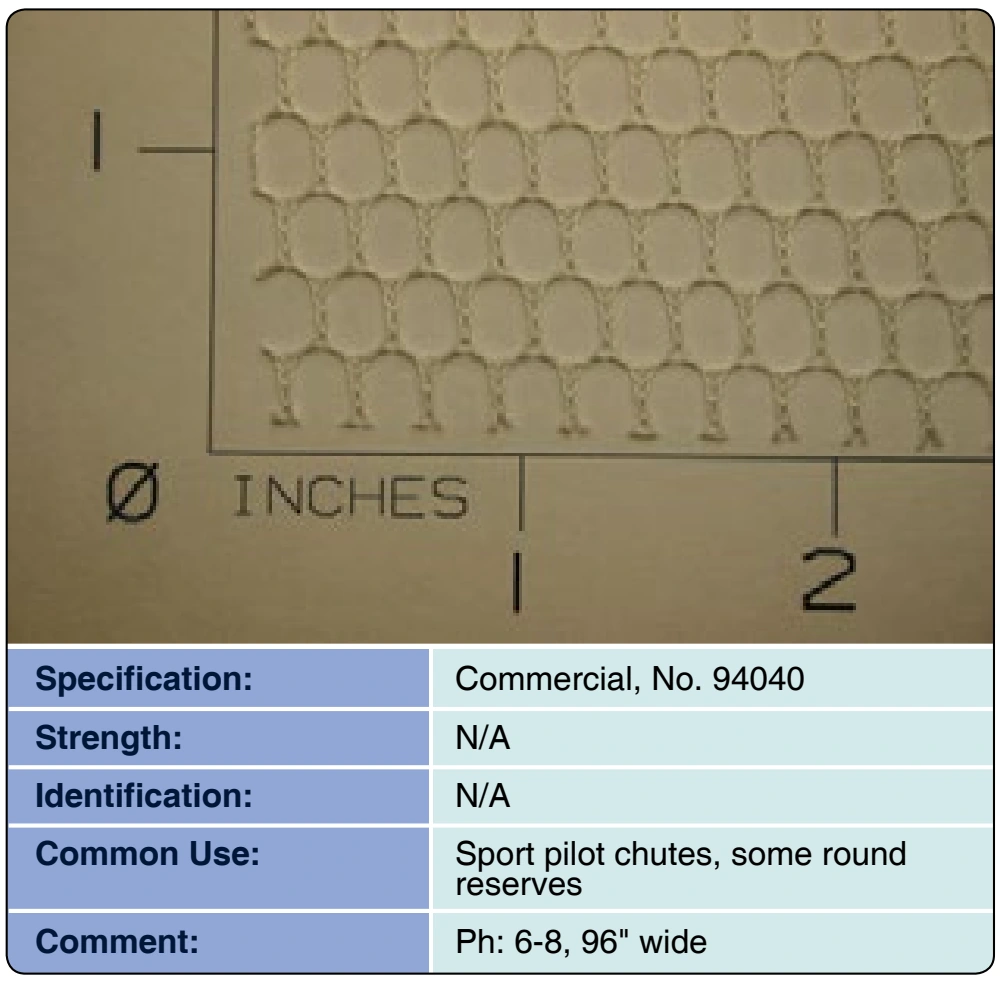
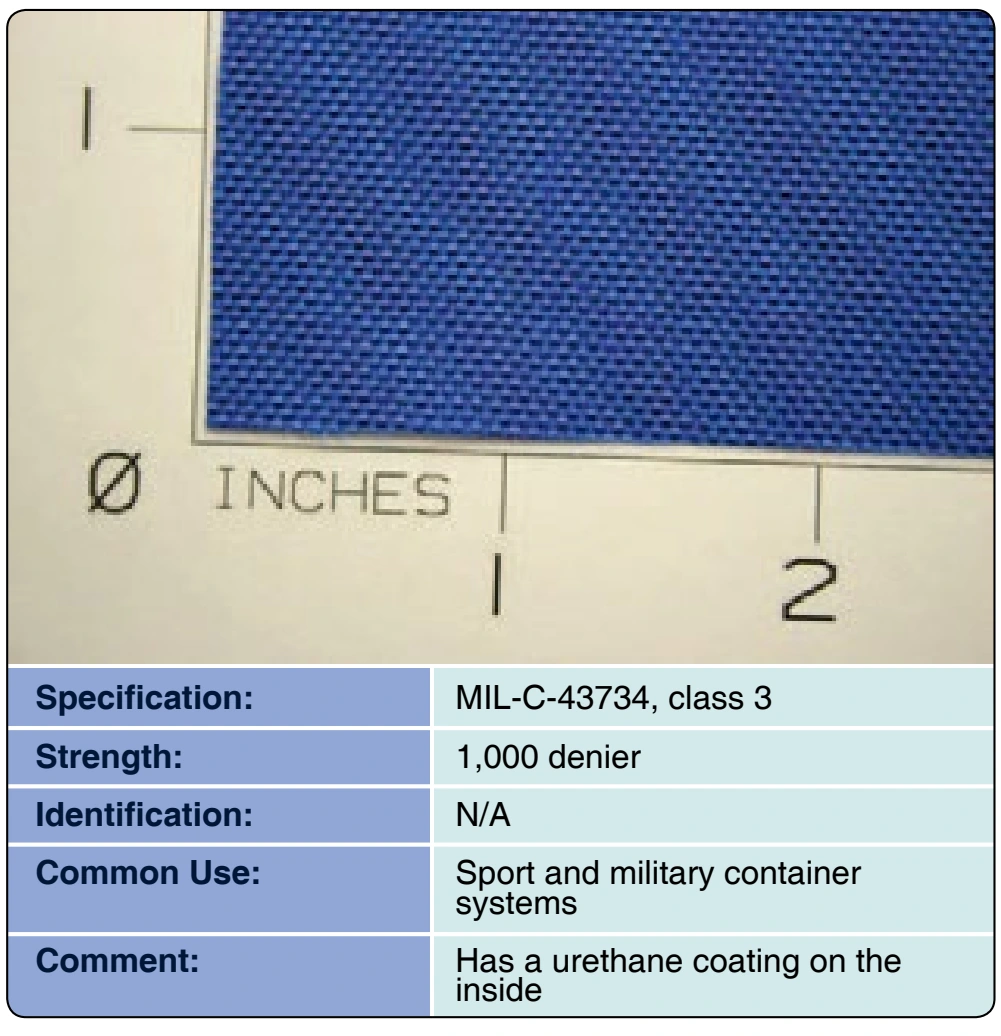
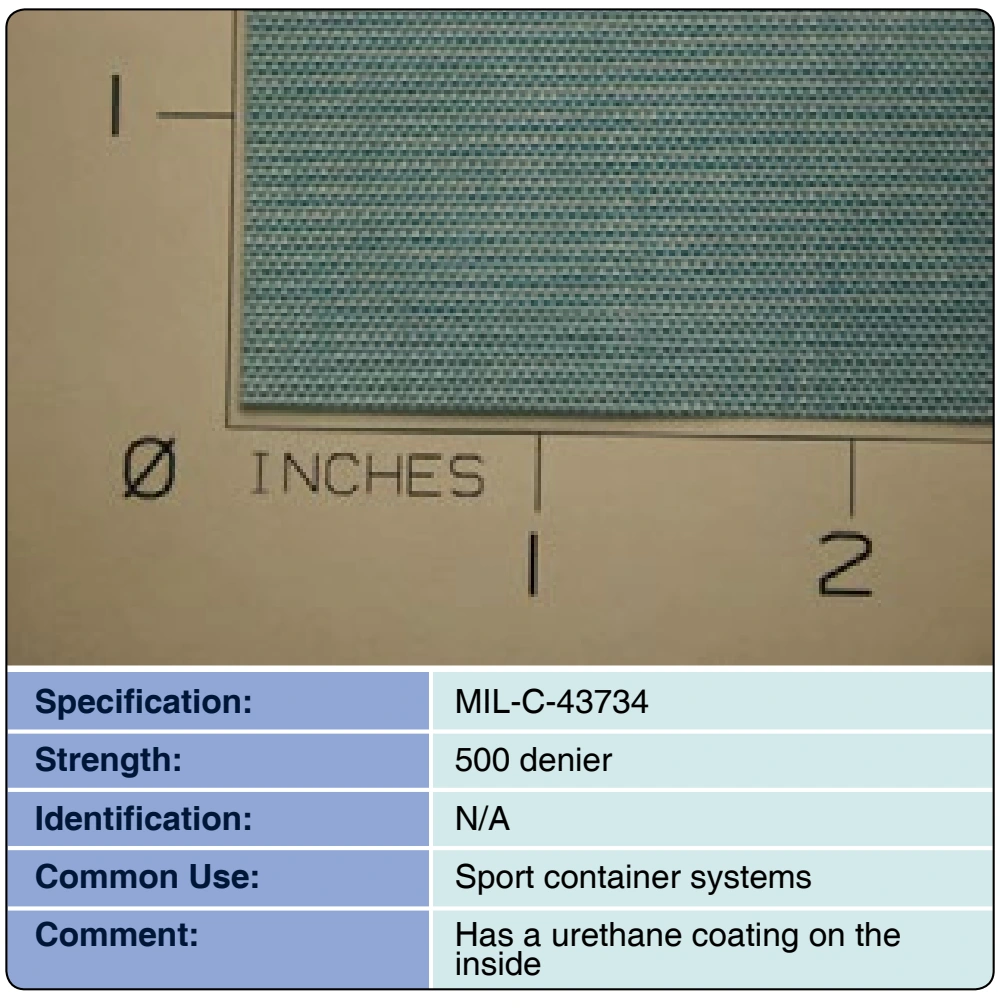
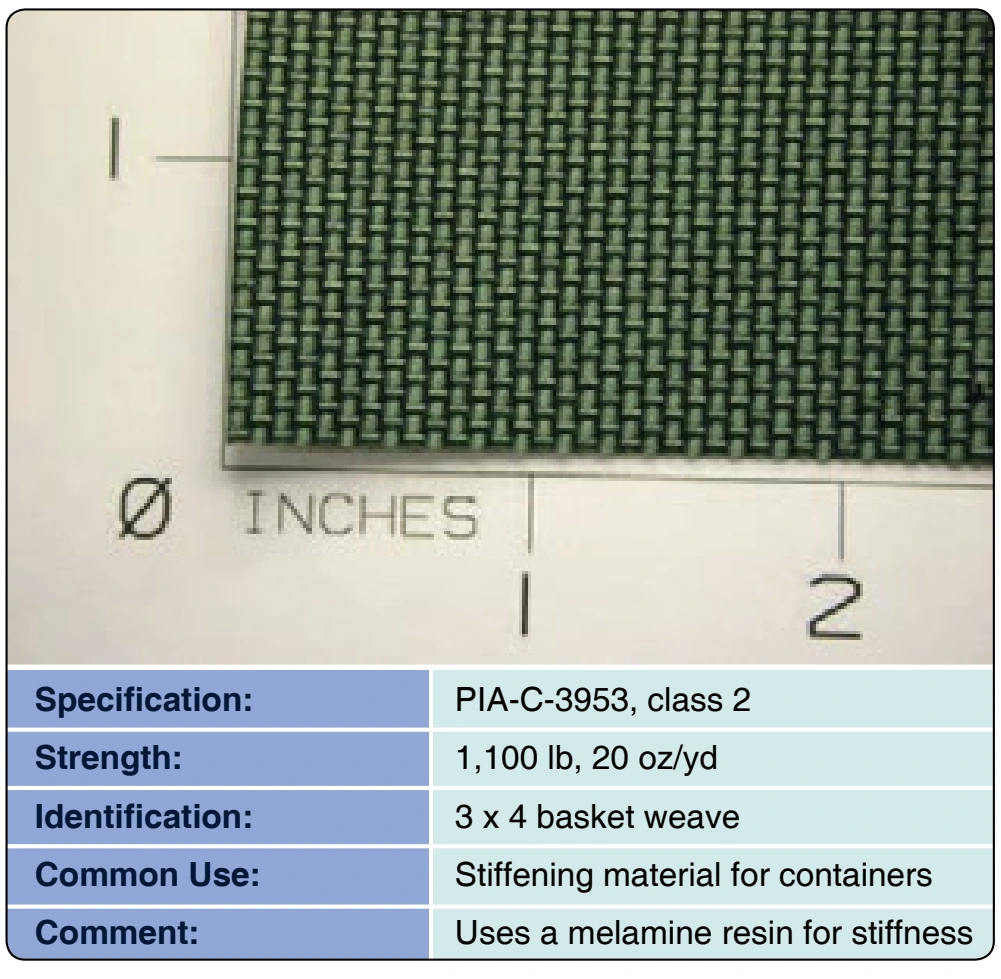
The composition of most containers is from either nylon duck (Para-pack) or Cordura®. Para-pack has a smooth somewhat shiny finish; Cordura has a matte, more rugged appearance. Both are sturdy and long lasting. Most sport containers also utilize a thin foam lining on the inside of the flaps to smooth out the fabric and absorb wear and tear. Other fabrics, such as mesh, Spandex®, and ballistic fabric, serve specialized purposes. [Figures 3-7 through 3-16]
Webbing and Tapes
While many webbings and tapes have the same specifications, they still have different designations. The difference is a common rule of thumb where anything 1 inch or wider and over 1000-lb strength is webbing. Anything less is a tape. There are, however, some examples that fall outside of this criterion.
The primary use for webbing is for load bearing purposes, such as harnesses and risers. Tapes are for use as support and reinforcing for canopies and containers. Most webbing and tapes, when manufactured, are left in their natural, untreated condition (condition U), or treated with a synthetic resin named Merlon, for stiffness (condition R). A newer treatment, called “Ecco,” is similar to a light condition R. This is a newer treatment that is ecologically friendlier than using Merlon. It also results in a medium stiffness that is easier to sew. This is for use primarily in the lighter weight tapes, such as 3⁄4" Ty-3. Recently some harness/container manufacturers have begun to replace 3⁄4" Ty-3 binding tape with 7⁄8" Ty-3 because modern container designs are getting thicker with the application of more stiffeners and more padding. There are pros and cons to this trend.
Webbing Selection
When a repair requires replacement of webbing and tapes, care must be taken to use the correct webbing or tape for the job. Generally, there are two types of webbings used in industry: needle weave and shuttle weave. Remember this: “Needle Never, Shuttle Sure.” This is because needle weave webbing is rarely, if ever, used in personnel parachute assemblies.
The reason for this limitation is because of the reaction of the webbing when “edge nicked” while under tension. In tests of the most advanced needle weave products several years ago, it was dramatically demonstrated, numerous times, that the webbing would fail catastrophically when the edge was nicked with sharp metal while under tension.
The two types may be identified by comparing their edges. Fold the webbing in half and align the selvage edges. They should be identical in weave. If they are, then it is shuttle weave and acceptable for use. If they are not, then it is needle weave.