Aviation Training Experts™

handbook

Parachute Rigger Handbook

FAA-H-8083-17A Version 2015 (Change 1)

Chapter 3

Materials

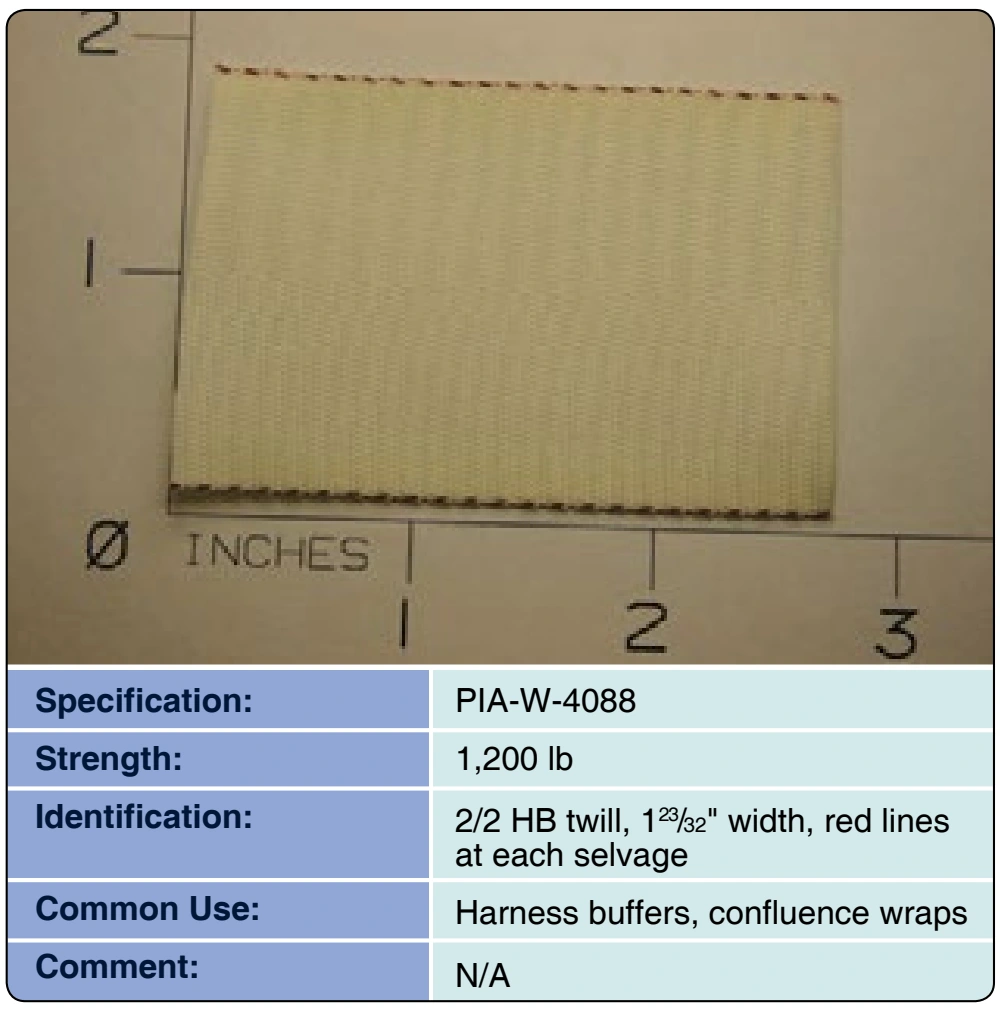
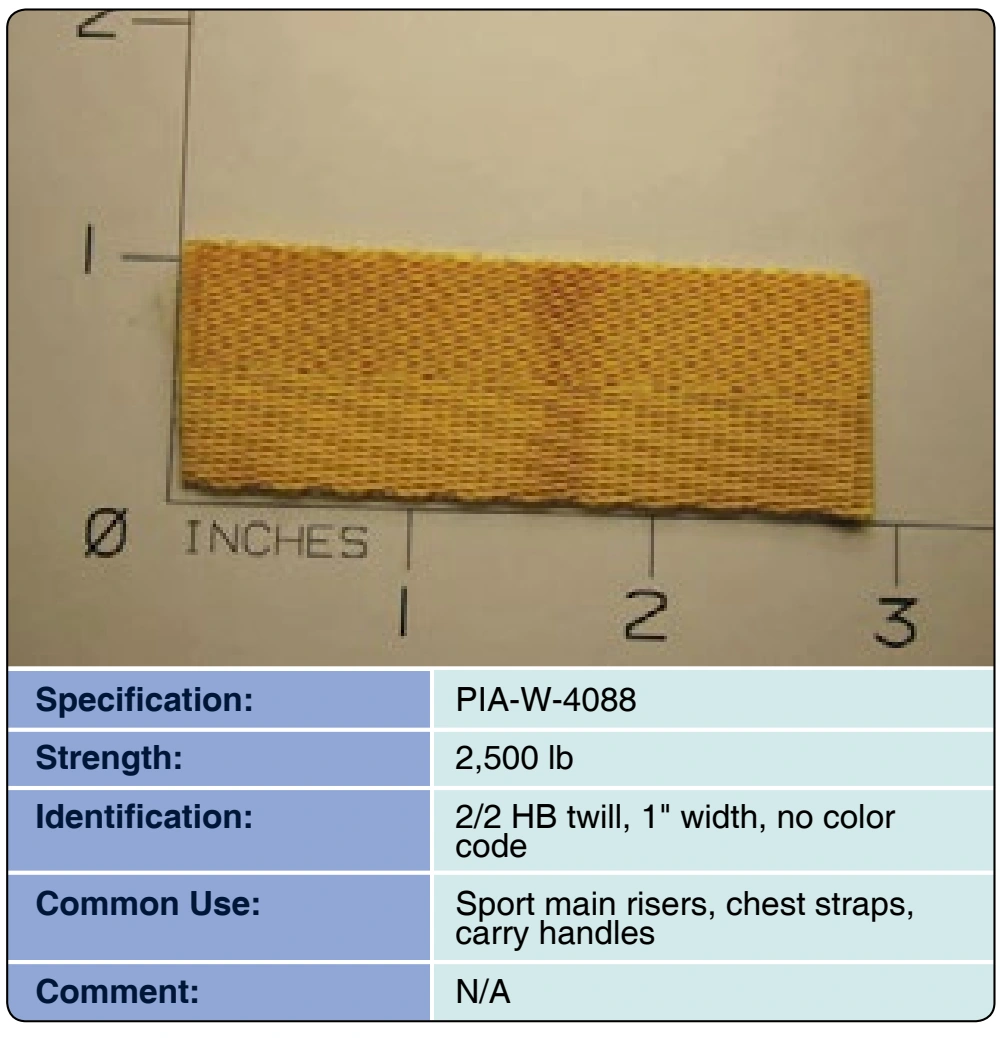
One should never be substituted for the other in a repair. The rigger should have material certification and lot tractability for any materials used in the repair. The material certification should additionally identify the type. [Figures 3-17 through 3-32]
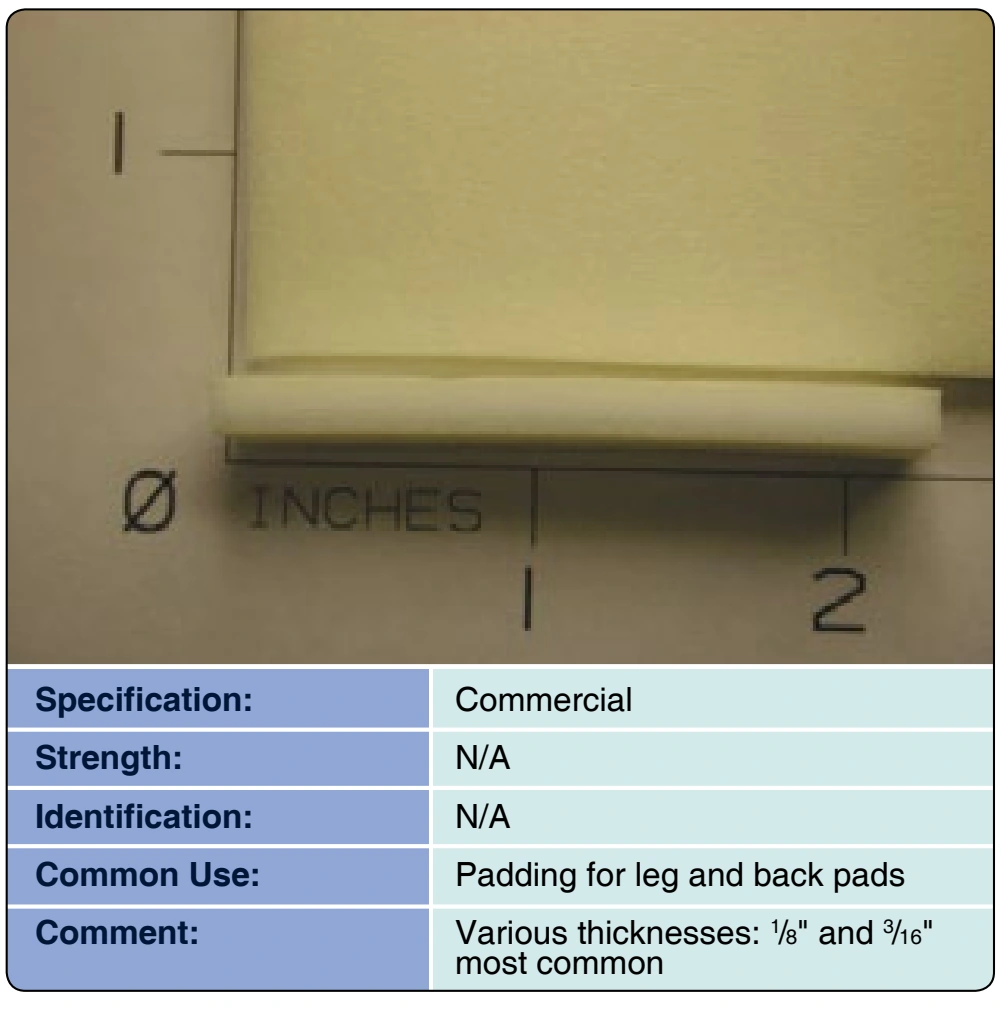
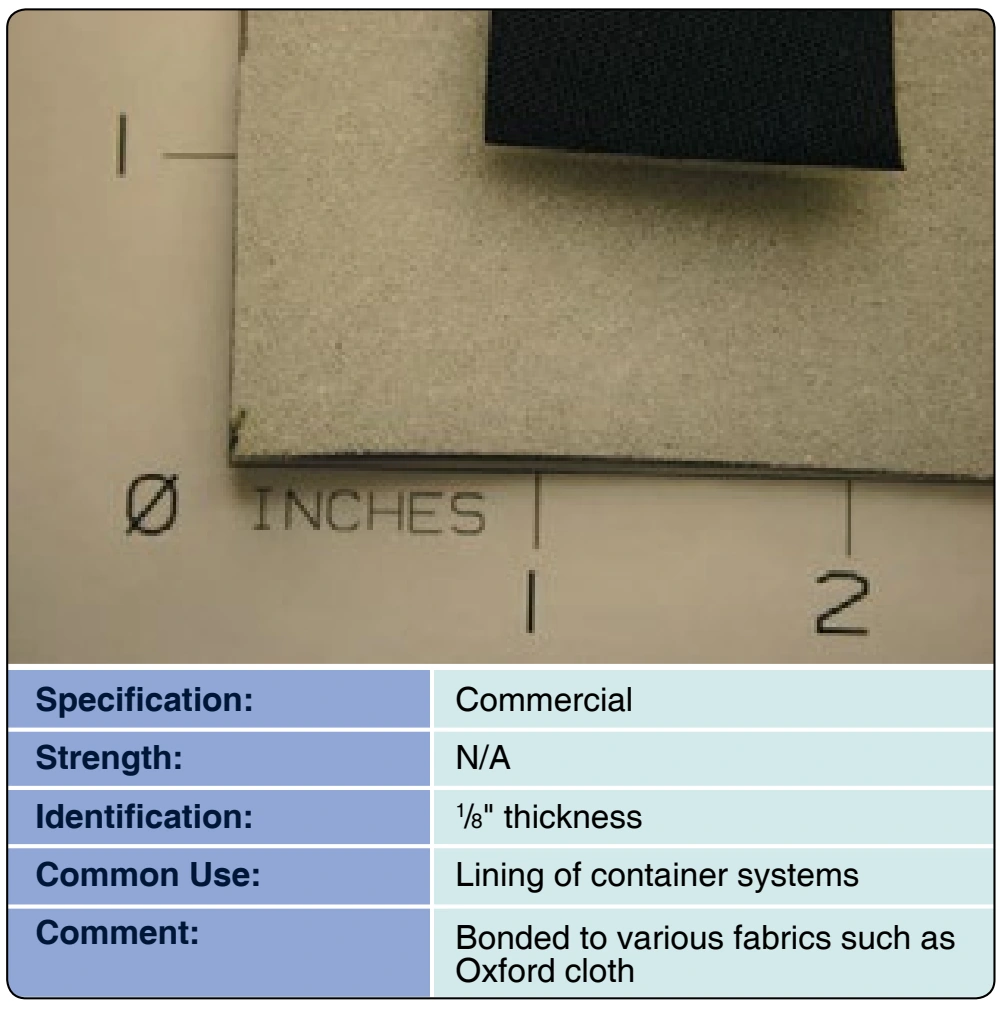
Figure 3-13. Foam, Volara®.
Figure 3-15. Foam, ester liner.
Figure 3-16. Oxford cloth, 200 denier.
Figure 3-14. Foam, ¼" closed cell athletic foam.
Figure 3-17. 9⁄16" Type-1 Webbing.
Figure 3-18. 3" Type-4 Webbing.
Figure 3-19. Type-6 Webbing.
Figure 3-20. Type-7 Webbing.
Figure 3-21. Type-8 Webbing.
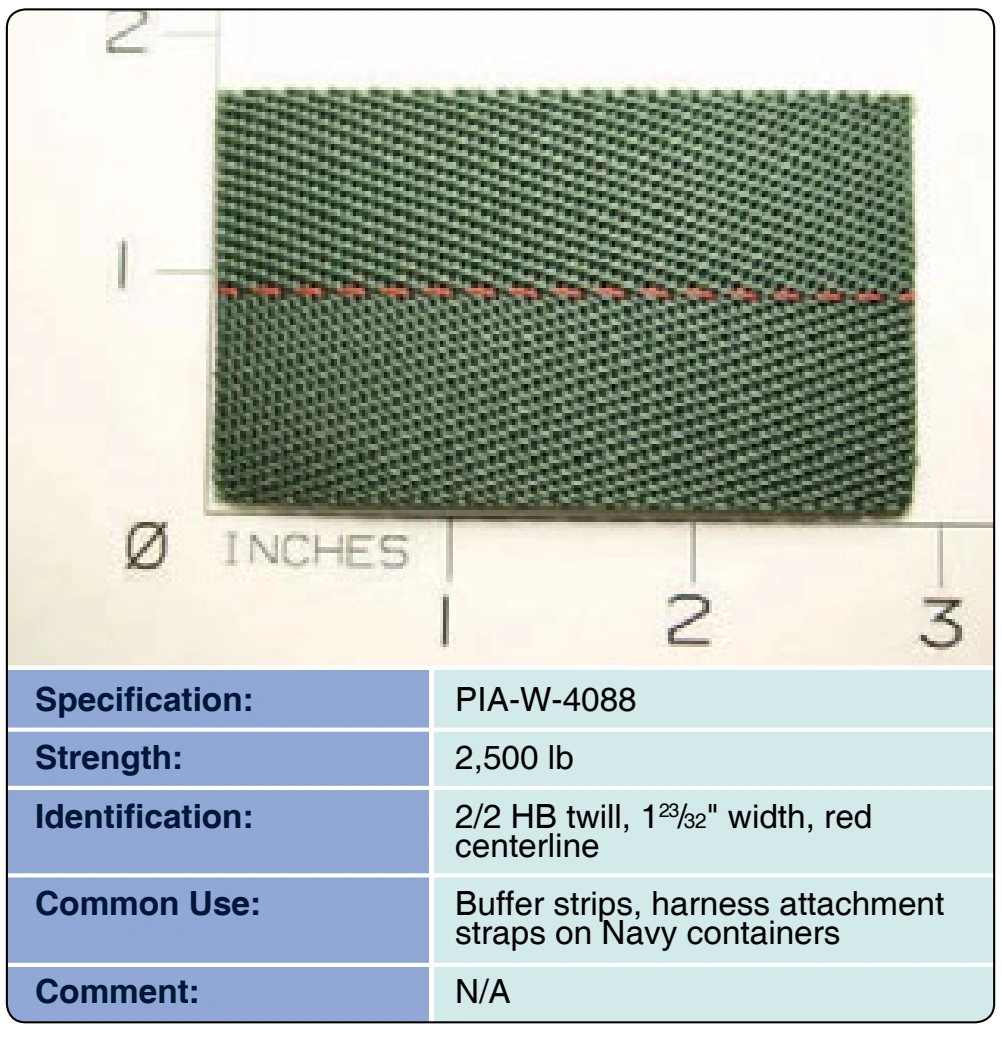
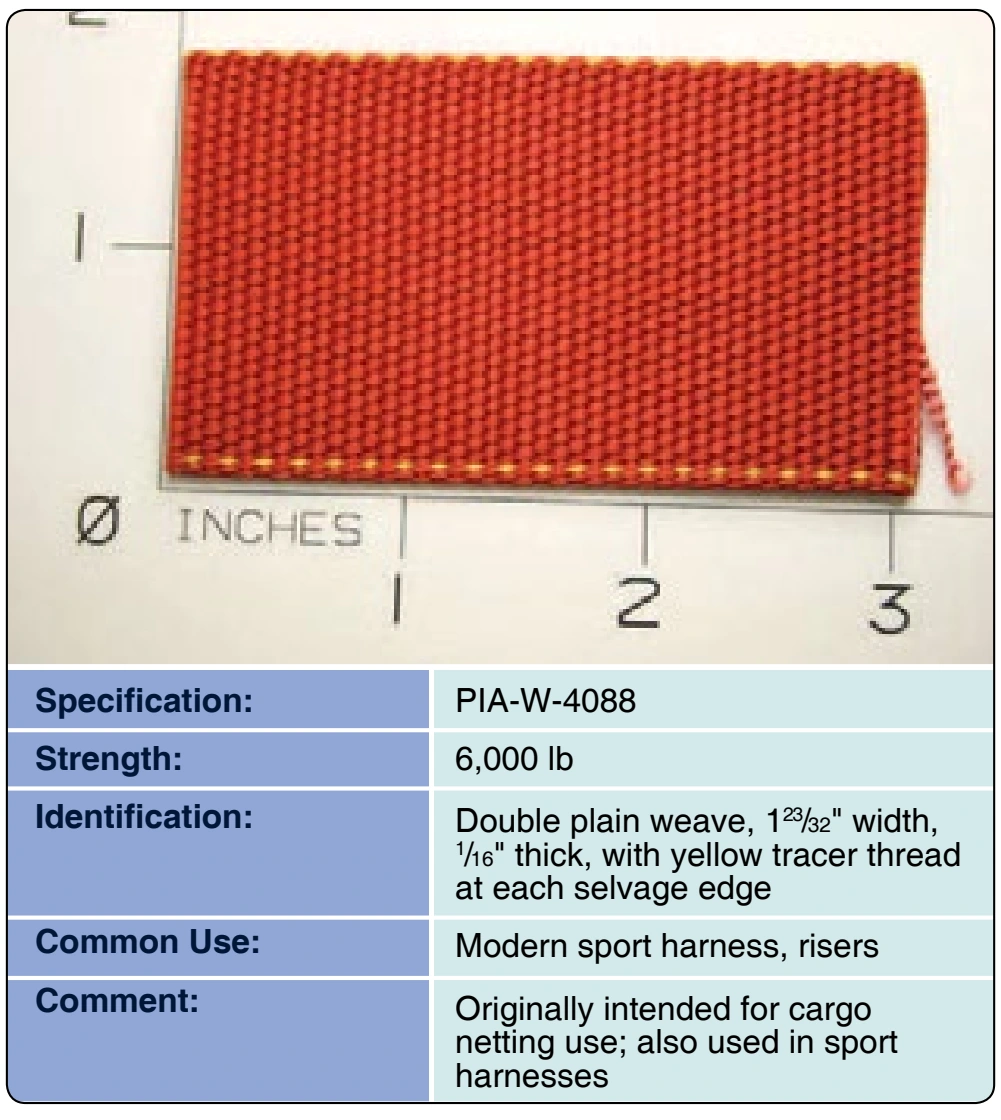
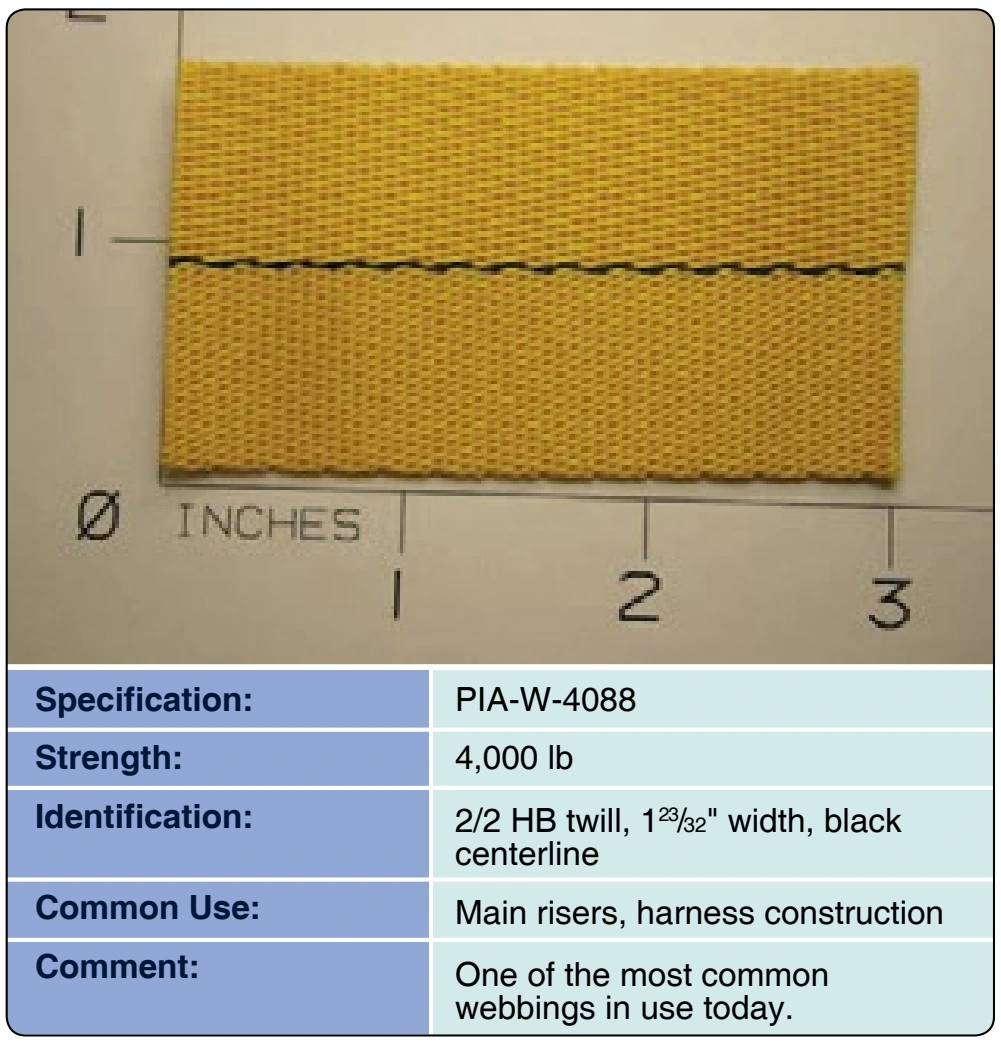
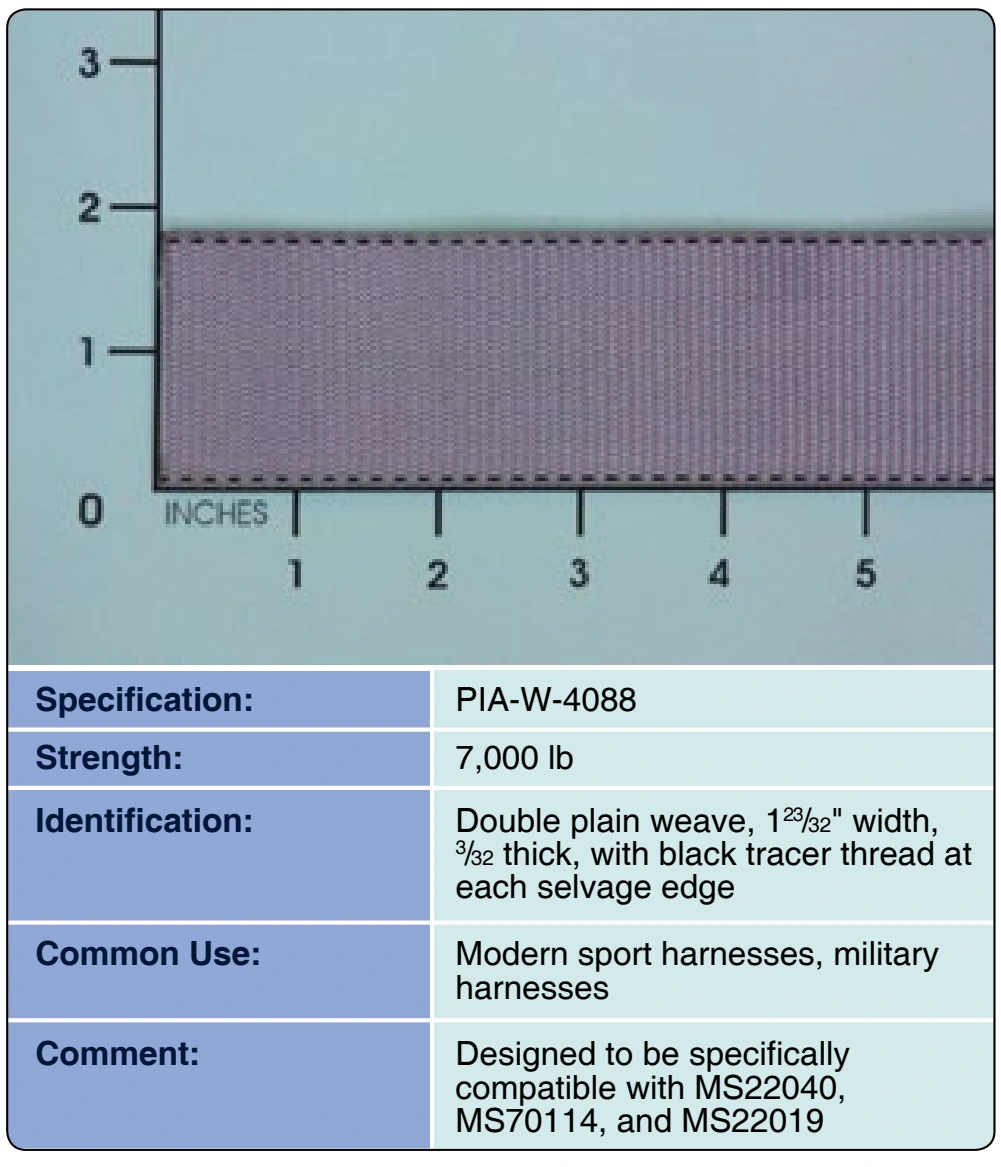
Figure 3-23. Type-13 Webbing.
Figure 3-22. Type-12 Webbing.
Figure 3-24. Type-17 Webbing.

Cords, Lines, and Threads

The most common uses of cord and lines are the suspension lines of the canopy. There are many different types in use.

Today, the most common are nylon, Dacron, and Spectra®.

The rigger needs to know the different types and their uses.

Each may have special techniques to work with them.

Almost all cords, lines, and threads are constructed of Nylon, again because of its inherent strength and relative elasticity. [Figures 3-33 through 3-43]
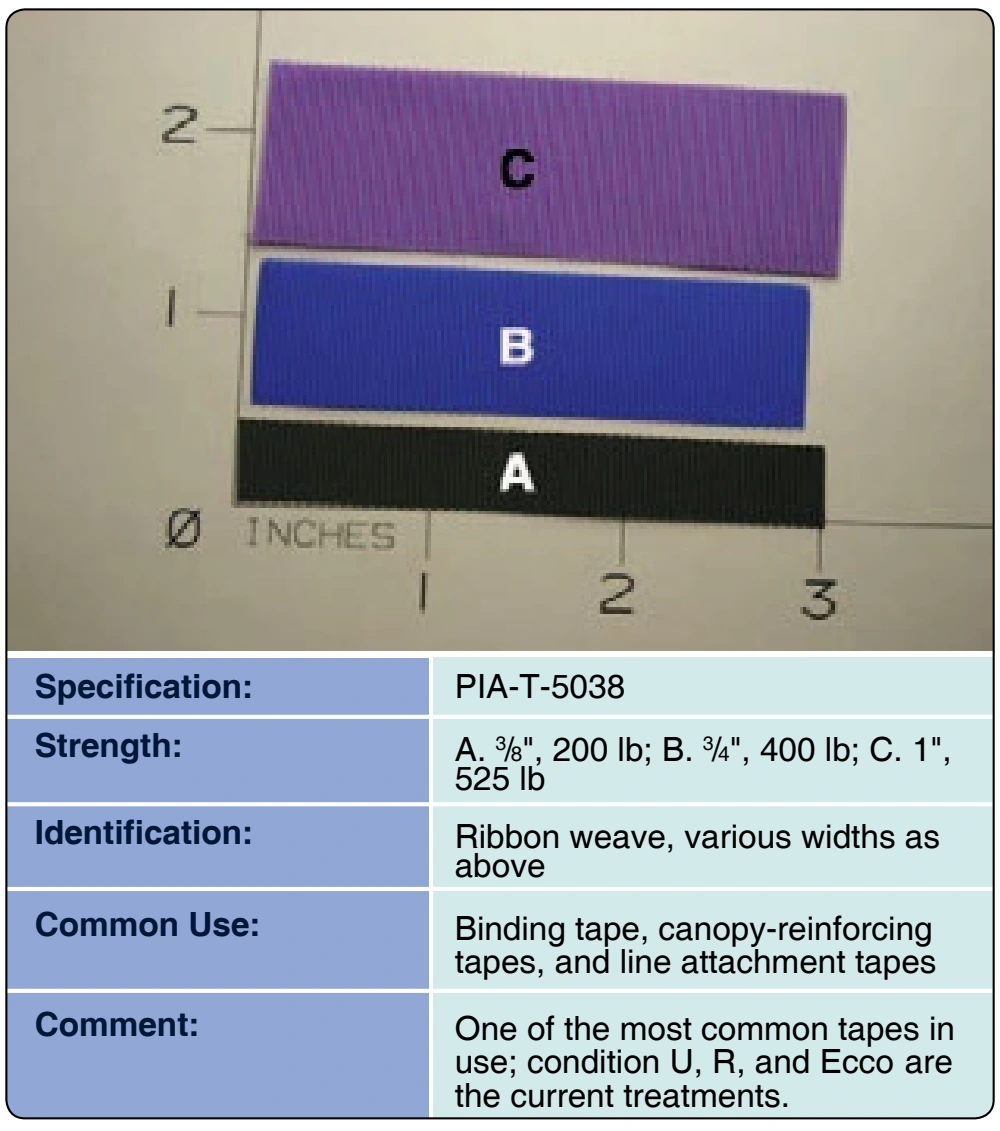
Figure 3-25. Type-3 Tape.