
Chapter 4
Operations
Let’s say a harness is built for System 1 using 1,500 pounds capable hardware. It passes the structural drops, as it only sees 1,304 pounds.
Another harness is built for System 2 that has a canopy with desirable flight characteristics but that tends to open hard.
The jumper wants the canopy with desirable flight characteristics in his new System 1 rig. If compatibility is derived from performance standards, then these are compatible since they were both tested using a 300-pound drop test dummy at 180 knots. It is entirely possible that a sport opening under extreme conditions could produce an opening of 1,600 pounds, which exceeds the capability of the 1,500 pound hardware. [Figure 4-53]
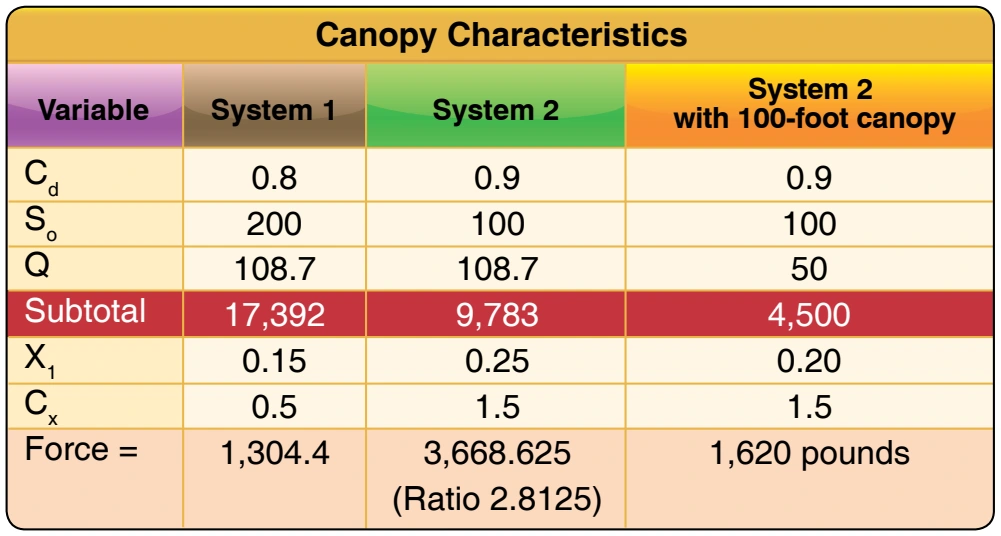
TSO-C23b does not really have any limitations except for speeds below 150 for “Low Speed” category with no weight limit. That standard is good for all skydiving scenarios. The 3,000 pounds test load is strong enough for anything and force is a good base line for compatibility.
The current regulation for placarding (AS8015c/TSO C-23d) calls for “Average Peak Force.” Under AS8015b/TSO-C23c (the previous version), there is no way for a rigger to make the necessary determinations without help from the manufacturer doing some kind of retro placcarding as the requirement did not include force measurement. Fortunately, there are only a small number of systems/components certified under this rendition. Any component so certified would not be able to be used as there are no guidelines for compatibility.
Volume
An important criterion in determining compatibility is the volume of the canopy. The canopy has to fit into the container in such a manner as to not place undue stress on the system when packing and to be extracted by the pilot chute during deployment. The container manufacturer usually provides a volume chart of their systems stating what the volumes are for the various model sizes. Container volumes are somewhat nonsequitur; however, as container manufacturers derive their numbers in different ways. Some container manufacturers do not publish numbers per se; rather, they indicate a model designation that fits a size range of canopies.
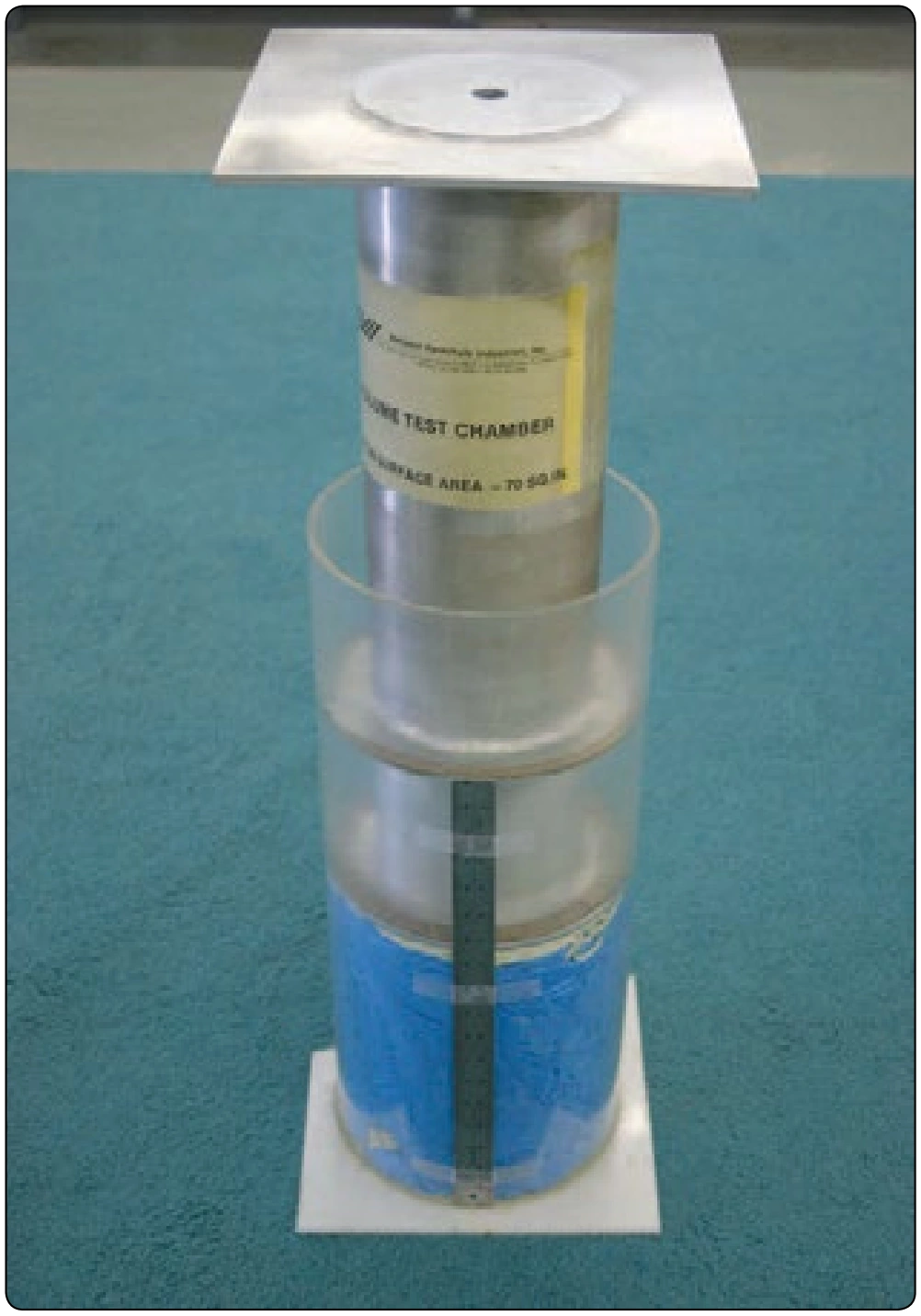
The canopy manufacturer should provide the volumes of the canopy models. Measuring canopy volumes has proven to be an imprecise science as there are various methods that can be used. The most common method involves placing the canopy in a tubular chamber and compressing it with a standard amount of weight for a set time. The displaced volume is then measured. Figure 4-54 shows one such volume chamber. Slight differences in volume can be seen from chamber to chamber and canopy to canopy. These variances occur due to humidity at the time the test is conducted and due to variation in the bulk of the fabric that the canopy was built with. For example, sometimes a 150 square foot reserve is 312 cubic inch and sometimes that very same model, built using a different dye lot of fabric is 363 cubic inch. Canopy volume charts can be found on the Parachute Industry Association (PIA) website at www.pia.com and the Parachute Labs website at www.jumpshack.com. While some canopy manufacturers disagree with the resultant numbers, most container manufacturers and riggers agree that these independent test methods are useful in determining volume compatibility.
Deployment Type
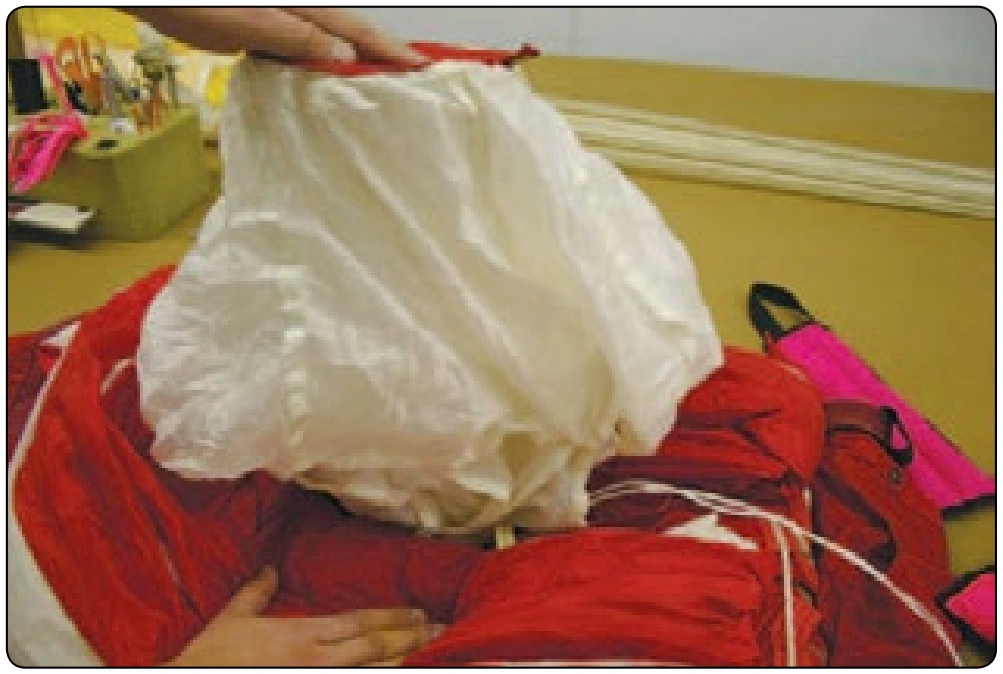
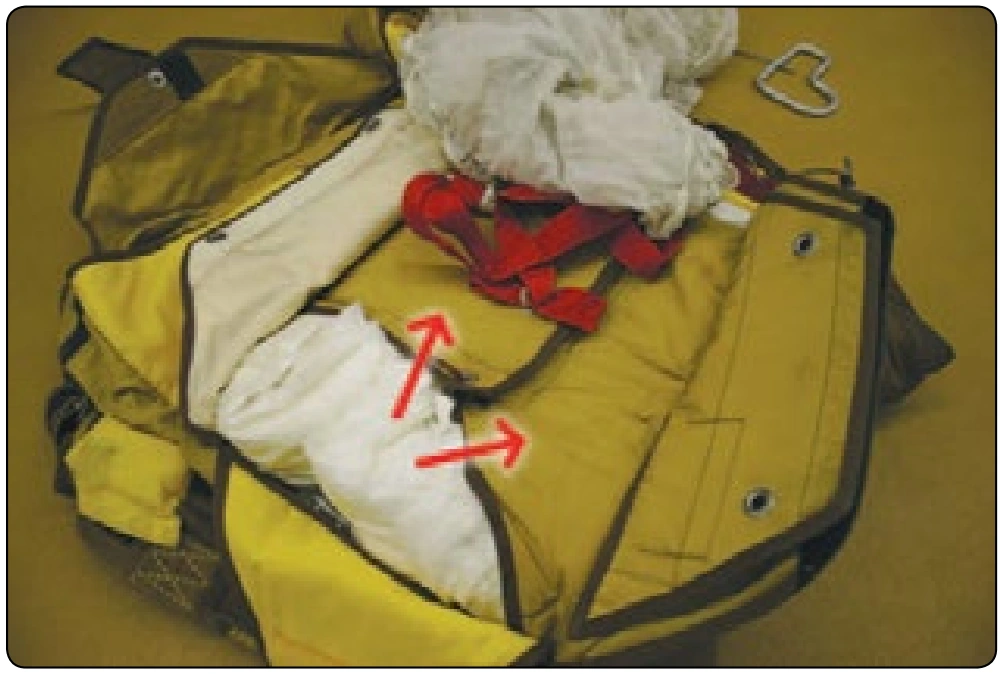
In Chapter 2 of this handbook, Design and Construction, the different types of canopy deployment devices were described. In some instances, the container system needs to be of a specific configuration to accommodate a certain deployment device. An example of this would be where a round canopy utilizing a Type 1 configuration is packed into a pilot emergency parachute system. In this case, the pilot chute is compressed directly onto the floor of the container system. [Figure 4-55] This same canopy can be packed into a sport reserve container, but the sport rig has two internal or staging flaps that compress and hold the canopy in place and are locked together by the bridle. [Figure 4-56] The pilot chute is then packed on top of the internal flaps. The rigger needs to know and understand these differences to determine how the two components interface for compatibility.
Chapter Summary
This chapter focuses on main parachute packing techniques. The first rule is that the lines must be straight (no tangles, also known as “step throughs”). If the lines are straight and the slider is up (in square parachutes), the parachute will most likely open. The speed of the opening directly impacts the comfort or discomfort perceived by the jumper. Opening speed and orderliness is controlled by attenuation devices such as the slider, deployment bag, stow bands, or the diaper on a round parachute. Accoutrements, such as pilot chutes and bridles, must be checked frequently for wear that could affect their performance.
Rubber bands should be changed when they begin to exhibit small holes or ragged edges. Minor maintenance now prevents hard openings and major failures later. Learn to be observant of small details about the parachute system even when packing the main. Virtually every pack job should be an inspection. It does not have to be as thorough an inspection as you would perform at the 180-day inspection and recertification, but the packer should be vigilant for damage or things that do not look quite right.
Compatibility can be complex. When in doubt about which TSO a component was certified in, and whether it is compatible with another component in terms of opening force generated by the canopy versus strength of the harness, do not hesitate to call the manufacturer for guidance.
One of the most critical things the rigger must observe when servicing their customers rigs is reserve bag extraction force. When a customer brings his or her container for inspection and repack, reserve bag extraction force should be tested with the container closed. A good rule of thumb is that the extraction force should be the same as the weight of the bagged canopy. If excessive forces are encountered, call the manufacturer.