
Chapter 4
Operations
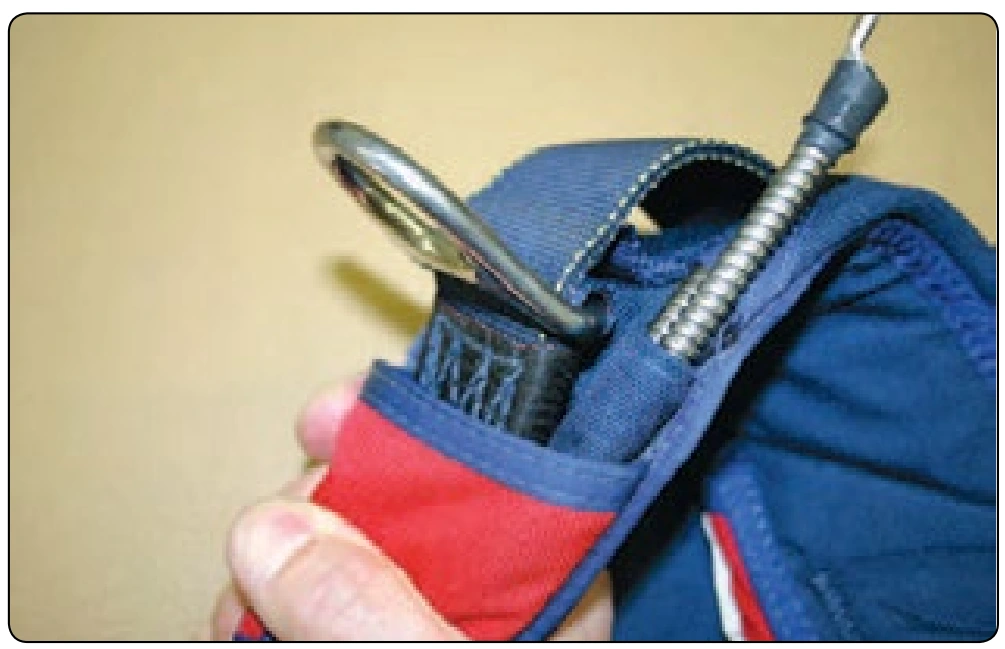
- Harness 3-ring attachment—check for wear on the webbing and any damage to the ring or chipping of the plating. [Figure 4-48]
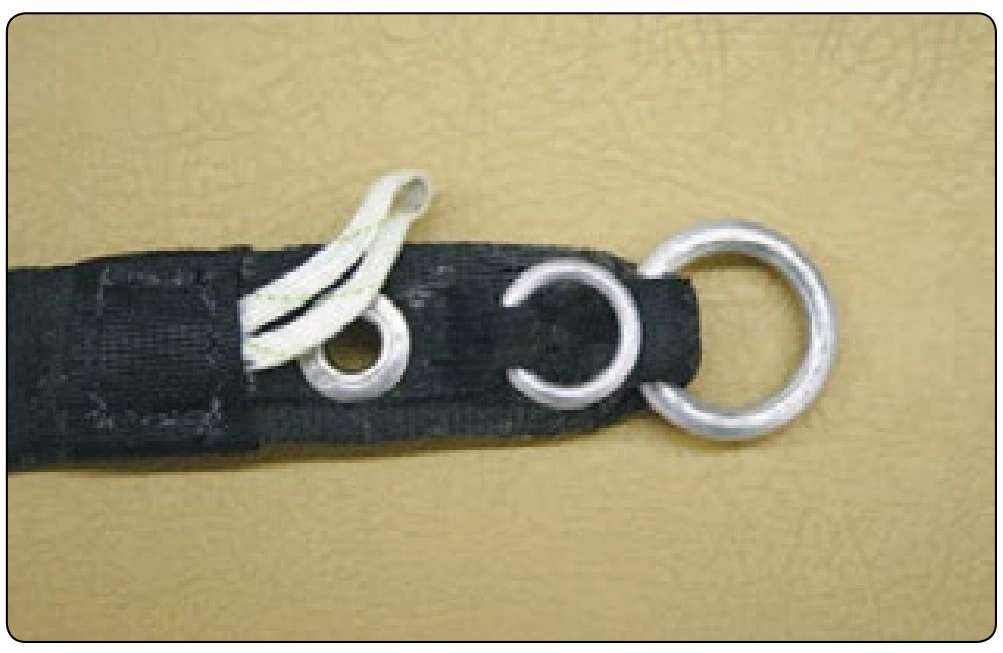
- Main riser rings—check for webbing wear, hardware plating, grommet wear, and locking loop wear/ damage. [Figure 4-49]
- Release housings—check for damage to terminal endings and grommet, obstructions or dirt in housing, and check security of the housing tacking to the harness. [Figure 4-50]
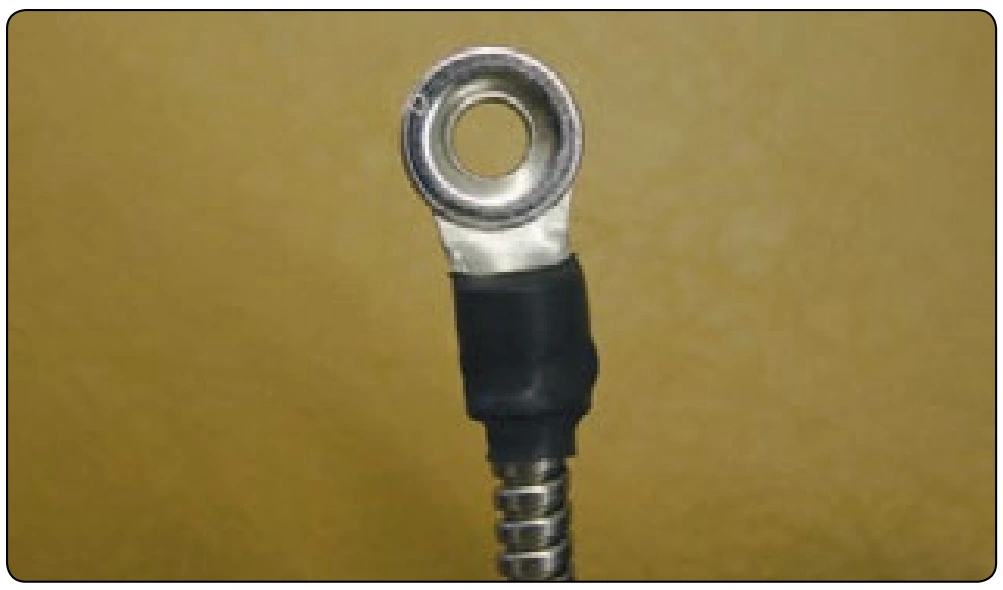
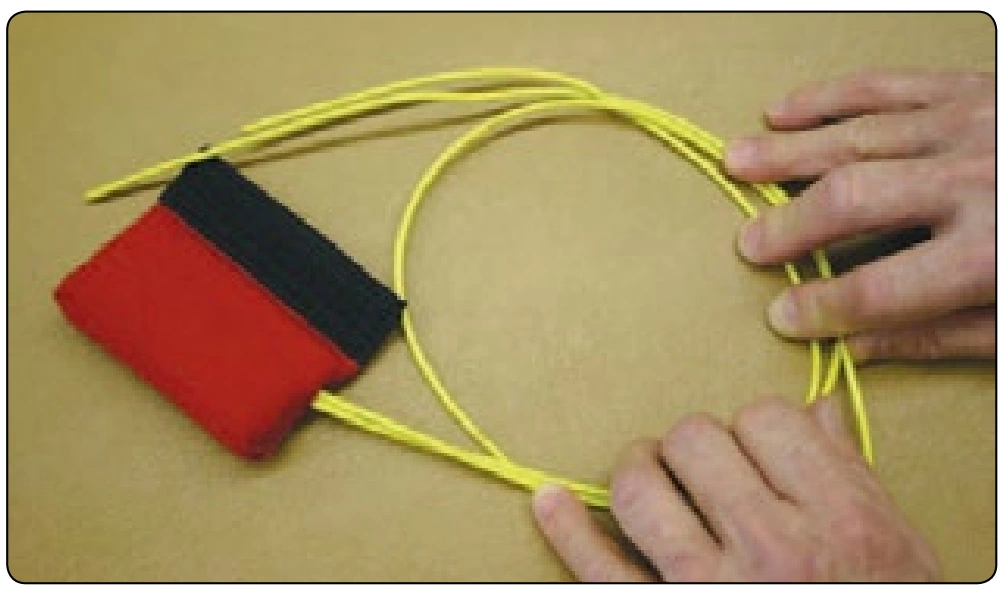
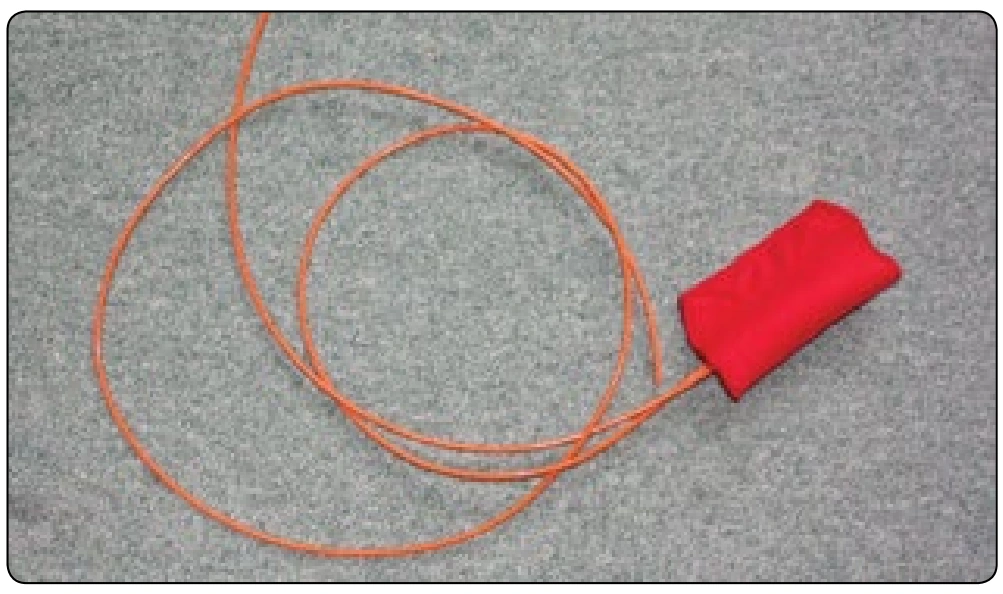
- 3-ring release handle—check the cable for cleanliness and cracks, and ensure that the cable ends are sealed. Yellow Lolon cables must be oiled monthly to ensure release-ability. [Figure 4-51] Red or orange Teflon cables do not require oil but should still be inspected every 180 days; inspect the Velcro® on the handle. [Figure 4-52]
Any questions concerning the particular harness 3-ring installation should be directed to the harness and container manufacturer.
Assembly of Components and Compatibility
Advisory Circular (AC) 105-2D, Sport Parachuting states that “the assembly or mating of approved parachute components from different manufacturers may be made by a certificated, appropriately rated parachute rigger in accordance with the parachute manufacturer's instructions and without further authorization by the manufacturer's or the FAA.” This allows the rigger to assemble different canopies to different harness and container systems. This is an important authorization for any rigger in that there are dozens of possible combinations.
When various parachute components are interchanged, the parachute rigger should follow the canopy manufacturer’s instructions, as well as the parachute container manufacturer’s instructions. However, the container manufacturer’s instructions take precedence when there is a conflict between the two. The logic behind this is that the container is the active component and the canopy is the passive component with regard to deployment. Determining compatibility is more than simply determining the volume compatibility of a canopy to a container size. Other factors, that need to be considered are the deployment type, technical standard order (TSO) certification, and placard limitations.
Reserve Bag Extraction Force
When we ask the question, “How do you determine compatibility between approved parachute components,” the answer is, “Rig functionality must not be compromised.”
Some say if a reserve canopy is too bulky, the reserve deployment bag is not easily extracted. If you can get the bagged canopy in the container, it should take no more than 18 pounds of pull force to extract it.
TSO Certification and Placard Limitations
This area is one where many riggers have some confusion.
According to AC 105-2, Sport Parachute Jumping, “the strength of the harness must always be equal to or greater than the maximum force generated by the canopy during certification tests.” In the case where the harness is certificated under TSO-C23b and the canopy under TSO-C23c, the maximum generated force of the canopy must not exceed the certificated category force of the harness and container (i.e., Low Speed Category (3,000 pounds) and Standard Category (5,000 pounds)). In this instance, no additional marking on the container is necessary.
In the case where the canopy is certificated under TSO-C23b and the harness under TSO-C23c, the strength of the harness must be equal to or greater than the certificated category force of the canopy.
For the current TSO-C23d, the peak force measured during the strength drops must be placarded on the outside of the harness. In this case, the strength of the canopy must not exceed that of the harness.