
Chapter 7
Repairs, Alterations, and Manufacture
- Wrap the hardware of the rig with the rags to pad them so they do not beat the inside of the machine.
- Soak the rig in lukewarm water and apply Woolite® or other soap directly onto the dirtiest parts. Scrub these parts vigorously. Allow these parts to absorb the Woolite® during the time traveling to the Laundromat.
- Place the rig into the pillowcase or laundry bag and add extra padding, such as extra laundry. Levi’s® work exceptionally well for this. Tie off the pillowcase or bag to hold everything in. Place in the washing machine adding more washing soap and Woolite® and wash in warm water.
- Run through at least two rinse cycles or hand rinse several times until no soap comes out.
- Hang to dry out of direct sunlight. The use of a fan onto the rig will greatly speed up the drying process.
Scotchgard®
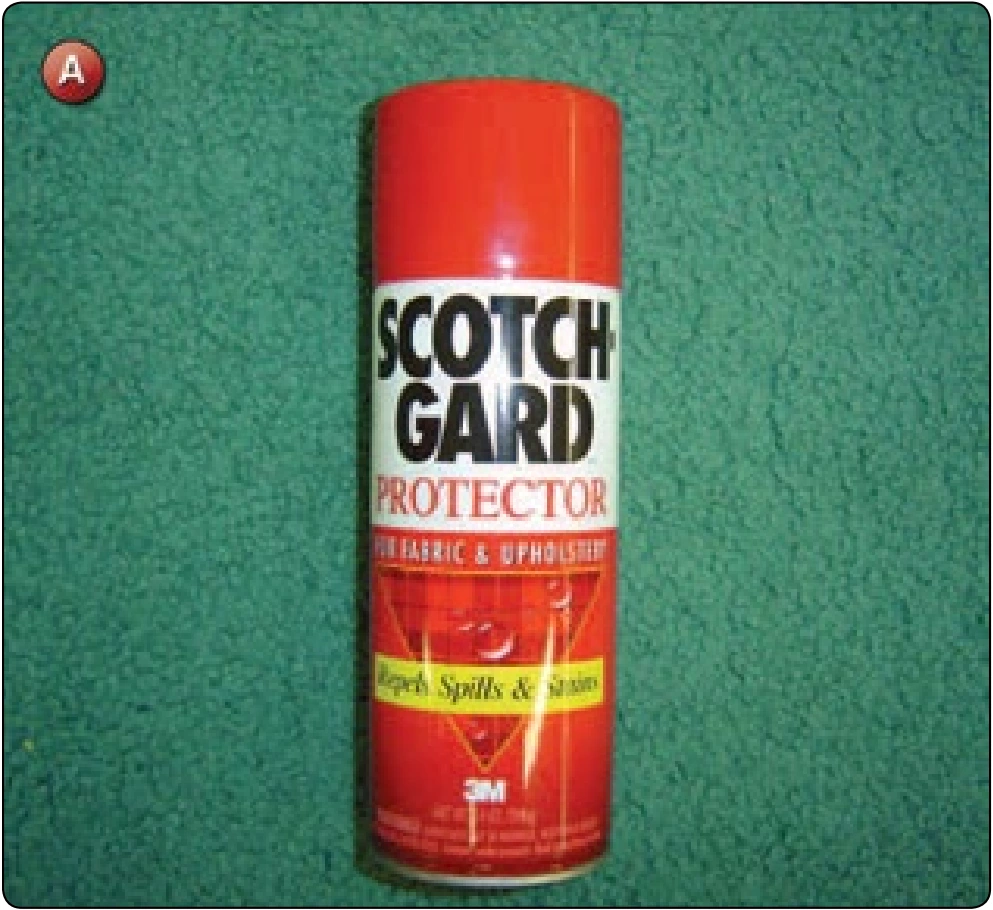
The use of Scotchgard® brand fabric protector has become commonplace in recent years. This fabric treatment seals the pores of the fabric against dirt and other stains. Scotchgard® is not a magical “silver bullet” against dirt. However, it has shown good results in keeping lighter-colored fabric cleaner longer under normal use. Grinding in on grass or asphalt or other heavy abuse still stains and/or damages the rig materials. Scotchgard® is not harmful to today’s container fabrics, such as para-pak and Cordura®. There are currently several Scotchgard® formulas. The standard fabric and upholstery formula is in the red can. [Figure A] Do not use the rug and carpet formula in the blue can. After the rig is completely dry, hang it in a well ventilated location.
Following the directions on the can, apply the protector to the entire outer surface of the rig. For those areas, such as the inside of the leg pads, backpad, and bottom of the main container, and light colored panels, such as white, etc., apply a second coat after the first has dried. Do not intentionally spray the hardware, housings, and clear vinyl CYPRES® window. After the rig has dried, it may then be reassembled and placed back into service.
Chapter Summary
It is very important that any repairs or maintenance of the parachute and its related systems are done correctly so that the parachute is always airworthy. This chapter provides detailed step-by-step procedures for many repairs and alterations that can be done by both senior and master riggers. All riggers must learn to identify conditions that may be unsafe and learn how to undertake the necessary repairs to return the parachute to its original, airworthy configuration.