Chapter 1
Introduction to the Powered Parachute
Stroke and Heart Attack
In the event you feel light-headed or dizzy, you should remove your feet from an input position on the steering controls. When you feel light-headed or dizzy, there is a possibility this could be a prelude to a heart attack or stroke. If you are about to experience a medical problem of this magnitude, then you could have a seizure or leg spasms (due to the pain from the heart attack) and therefore, uncontrollably and without intention, spiral yourself into the ground if the leg spasm induces severe steering input.
If you don’t feel “right”— pull your feet away from those steering controls, at least until you begin to feel better, and then get yourself safely on the ground as soon as possible.
Medical Summary— “The Bottom Line”
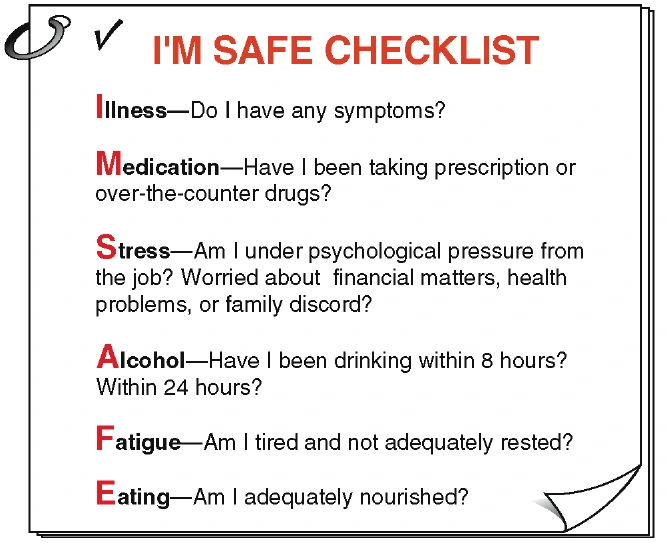
Before even approaching the PPC, you must take a moment to reflect upon your current medical, physical, and psychological condition. It is in this reflective moment that you should begin to evaluate your ability to safely conduct the flight. Once satisfied with your self-evaluation, the preflight inspection can then continue. Using the “I’M SAFE” checklist is a smart way to start your preflight before getting to the powered parachute. Prior to flight, assess your fitness as well as the aircraft’s airworthiness. [Figure 1-5]