
Chapter 5
Preflight and Ground Operations
Walk the entire length of the intended takeoff and landing area prior to departure. Look for holes, muddy spots, rocks, dips in the terrain, high grass, and other objects that can cause the aircraft to be damaged or the wing to snag during takeoff and landing. Physically mark areas of concern with paint, flags, or cones; a pothole may not look like a pothole from the air.
There are a number of preflight actions you must perform, mandated by 14 CFR part 91. You must become familiar with all available information concerning your flight, to include runway lengths at airport of intended use, takeoff and landing distance accounting for airport elevation and runway slope, aircraft gross weight, wind, and temperature. For a flight not in the vicinity of a conventional airport, this information must include weather reports and forecasts, fuel requirements, and alternatives available if the planned flight cannot be completed.
Weather
The weather is a determining factor for all flight operations. Get a full weather briefing prior to your flight, to include the current conditions and forecasts for your departure and destination areas, and along the route of flight. There are many sources for obtaining a weather briefing, such as www.nws.noaa.gov, calling 1-800-WX-BRIEF, and a variety of internet sites that specialize in local and regional weather. Crosswind landings are possible in a powered parachute, but crosswind takeoffs should be avoided. It is important to review your departure procedure at your destination to ensure you don’t get into a field you cannot depart from. In gathering your weather information, know the wind conditions, temperature and dew point spread, sky condition, and visibility. Review Chapters 10 and 11 in the Pilot’s Handbook of Aeronautical Knowledge for a comprehensive understanding of weather theory, reports, forecasts, and charts.
PPCs fly best in calm air. Check the wind forecast as well as current conditions, as this information will determine whether safe flight can be conducted. Winds less than 10 miles per hour (MPH) are ideal; follow the recommendations provided by the PPC manufacturer for the aircraft you will be flying. Steady winds that are not gusting are more desirable, as the inflation and overall performance of the wing is more predictable. For example, 5 MPH with no gusting is better than 1 MPH gusting to 5 MPH. Some types of wings perform differently in certain types of wind conditions and pilotage skills—know your wing and your abilities. Crosswind takeoffs in a powered parachute are dangerous and should be avoided. If the runway configuration does not allow for takeoff into the wind, then the flight should be canceled or postponed from that takeoff area. Do not attempt to take off in a cross-wind with a powered parachute unless it is within the pilot and aircraft capabilities, not a limitation in the aircraft POH, and you have been trained thoroughly for this advanced procedure. Crosswind landings are possible in a powered parachute, but crosswind takeoffs should be avoided. It is important to review your departure procedure at your destination to ensure you don’t get into a field you cannot depart from.
Air temperature and humidity directly affect the performance of the powered parachute wing and engine. The powered parachute pilot who doesn’t understand and respect the effect(s) density altitude has on any given flight may get into situations that are not desirable and could be hazardous. The higher the temperature, humidity, and the actual altitude of the field you are operating from, the greater the role density altitude plays in determining how much runway the powered parachute needs to get off the ground with the load on board, and how much climb performance the wing will have once airborne. The powered parachute may have cleared that obstacle at 8 a.m. when the weather conditions were cooler with less humidity, but at 1 p.m. with increased air temperature and higher humidity levels the pilot will have to re-evaluate the performance of that same aircraft. You need a full understanding of density altitude to be a safe PPC pilot; refer to Chapter 9 in the Pilot’s Handbook of Aeronautical Knowledge.
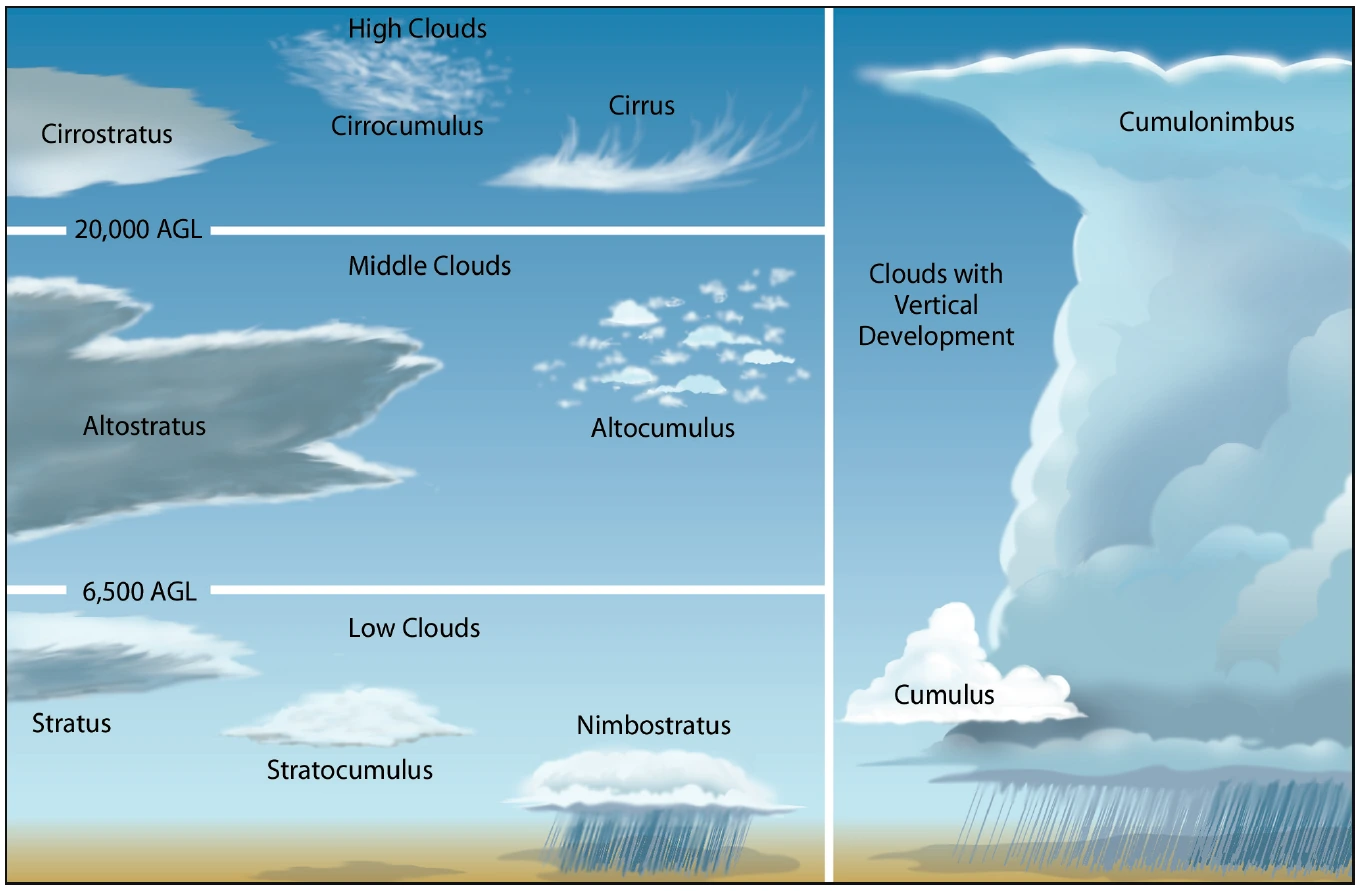
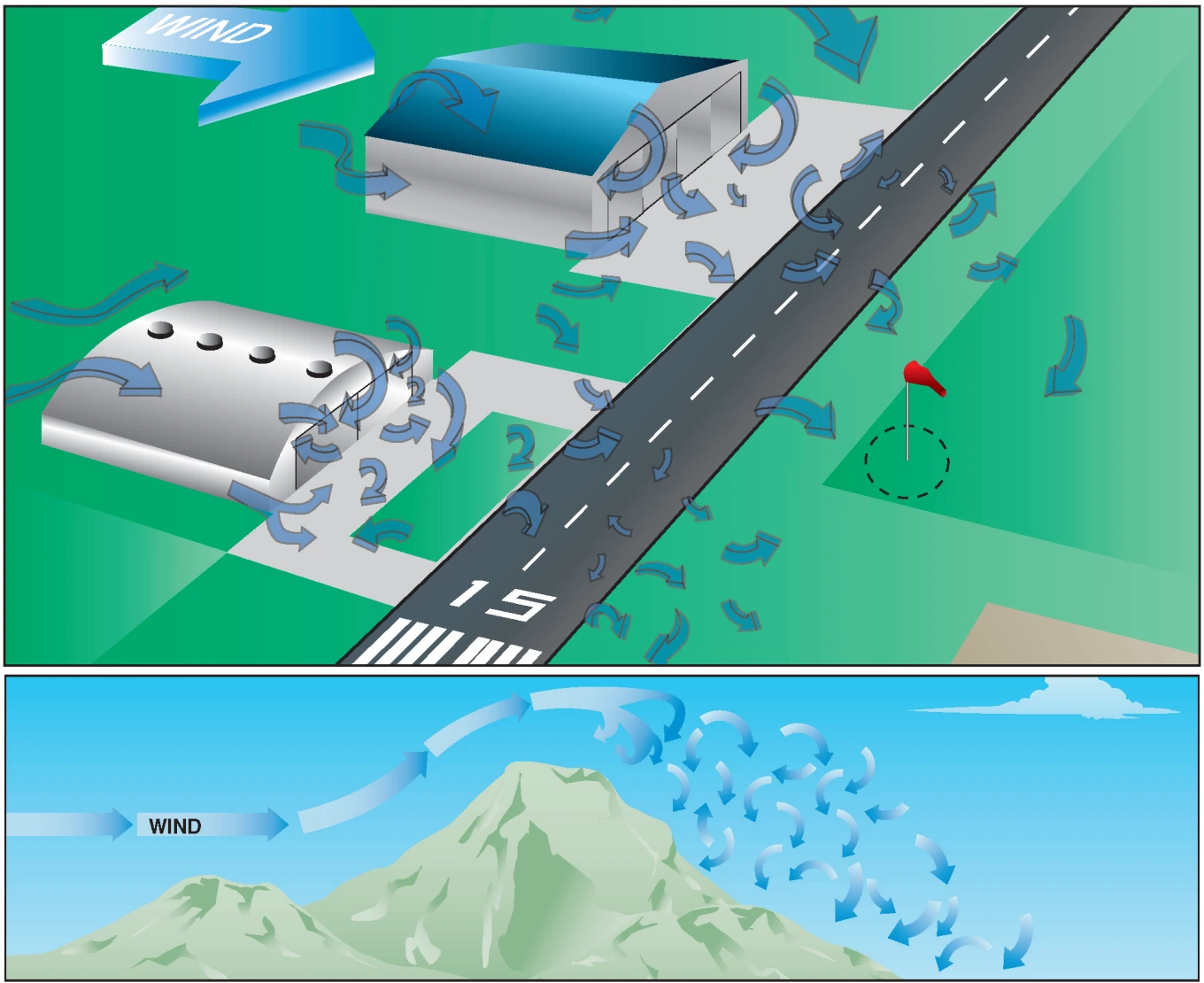
Understand the different cloud formations and the ground/air effects they can produce. [Figure 5-2] Cloud clearance and visibility should be maintained for the operations you intend to conduct (see Chapter 8 for cloud clearance requirements in each class of airspace). Knowledge of thermals and turbulence, and how to determine where they can occur is also important. [Figure 5-3]
Do not fly when ground and flight visibility is below minimums for your pilot certificate and the class of airspace where you will be operating (see Chapter 8). Be particularly watchful for low visibilities when the air and dewpoint temperatures are within a spread of three or four degrees. The closer these temperatures are to each other, the greater the chance for fog and reduced visibility conditions.
In addition to adhering to the regulations and manufacturer recommendations for weather conditions, it’s important for you to develop your own set of personal minimums. These minimums will evolve as you gain experience, and are also dependent on your recency and currency in the make/model of aircraft you will be flying.
Weight and Loading
Weight and loading must be considered before each flight. Do not exceed the maximum gross weight as specified in the POH. Always follow the POH performance limitations.
The balance of the pilot, passenger, fuel and baggage must be compared to the limitations, and the wing attachment to the fuselage position must be within the limits as specified in the POH. The cart must be balanced properly or an unsafe cart configuration, either nose-high or nose-low will result.
The Preflight Checklist
Use a written checklist during preflight and ground operations. The checklist is an aid to the memory and helps to ensure that critical items necessary for the safe operation of the aircraft are not overlooked or forgotten.
Certificates and Documents
The airworthiness of the powered parachute is determined, in part, by the following certificates and documents, which must be on board the aircraft when operated:
- Airworthiness certificate.
- Registration certificate.
- Operating limitations, which may be in the form of an FAA-approved Aircraft Flight Manual and/or Pilot’s Operating Handbook (AFM/POH), placards, instrument markings, or any combination thereof.
- Weight and balance
AROW is the acronym commonly used to remember these items. The pilot in command is ultimately responsible to make sure the proper documentation is on board. [Figure 5-4]