Chapter 6
Basic Flight Maneuvers
A stabilized power-off descent is referred to as a normal glide. The flight instructor, while demonstrating a normal glide, should direct the pilot to note:
- sounds made by the PPC,
- no steering control is required except to maintain intended direction, and
- feel of the powered parachute.
Wing Trim
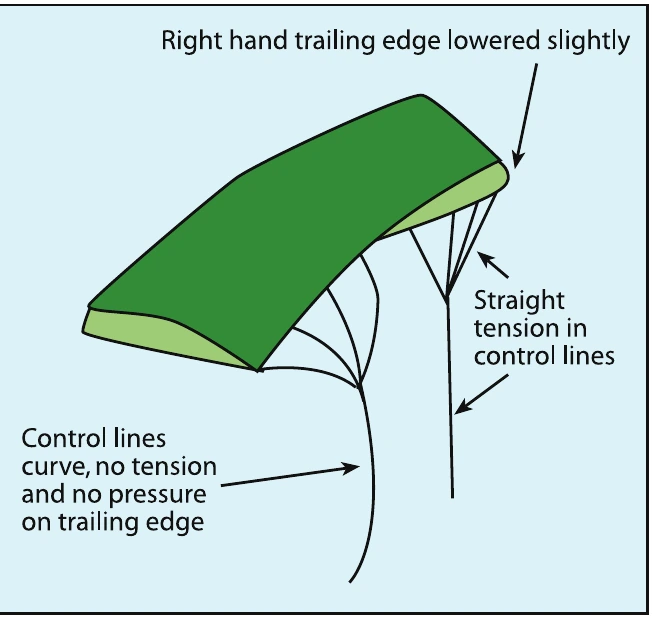
The powered parachute is designed so there is no pressure needed on the flight steering controls, thus, no pulling on the trailing edge when the PPC is flying along normally. If properly trimmed, the PPC will fly straight with no pilot input except for slight variations due to left-turning tendencies. If the PPC is flying out of this basic balanced condition, one of the steering controls can be pulled down and slight pressure applied on the side to reduce the speed of the faster side wing with a trim lock to temporarily relieve the pilot of constant steering input. This trim lock is a mechanical device the pilot can set on the ground or in flight. [Figure 6-8] It holds the pressure on the side that needs it so the pilot does not have to continually apply pressure. Due to the inefficiency of increased drag, the constant use of trim locks should not be a replacement for a well set up and properly trimmed wing. Most PPCs are currently not equipped with trim locks but this will depend on the specific manufacturer and make/model. An improperly-trimmed PPC can quickly produce pilot tension and fatigue, requiring constant pressure on one of the steering bars.