Chapter 2
Personal Minimums
Introduction
Federal regulations that apply to aviation do not cover every situation nor do they guarantee safety. For example, a pilot may legally fly in marginal VFR conditions at night even though low visibility and night hazards increase the risk for an incident or accident. Therefore, pilots should consider non-mandatory self-regulation in the form of personal minimums.
Personal Minimums
Pilots who understand the difference between what is “smart” or “safe” based on pilot experience and proficiency establish personal minimums that are more restrictive than the regulatory requirements. The following six steps allow pilots to establish a set of personal minimums in order to reduce risk and fly with greater confidence.
Step 1—Review Weather Flight Categories
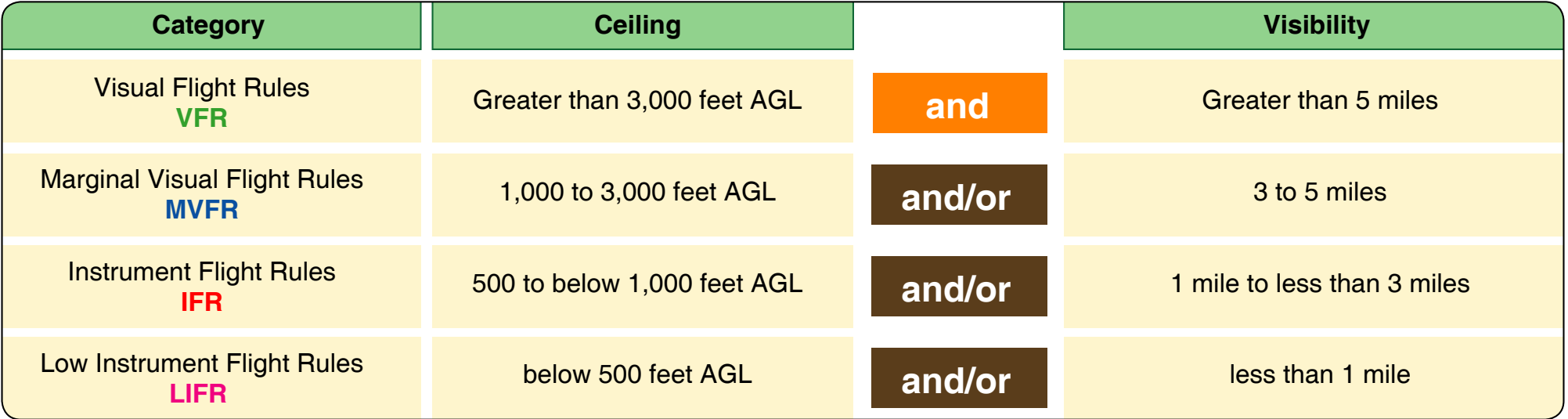
Establishing personal minimums normally begins with weather, and pilots should know the range of ceiling and visibility that defines each category. [Figure 2-1]
Step 2—Assess Experience and Comfort Level
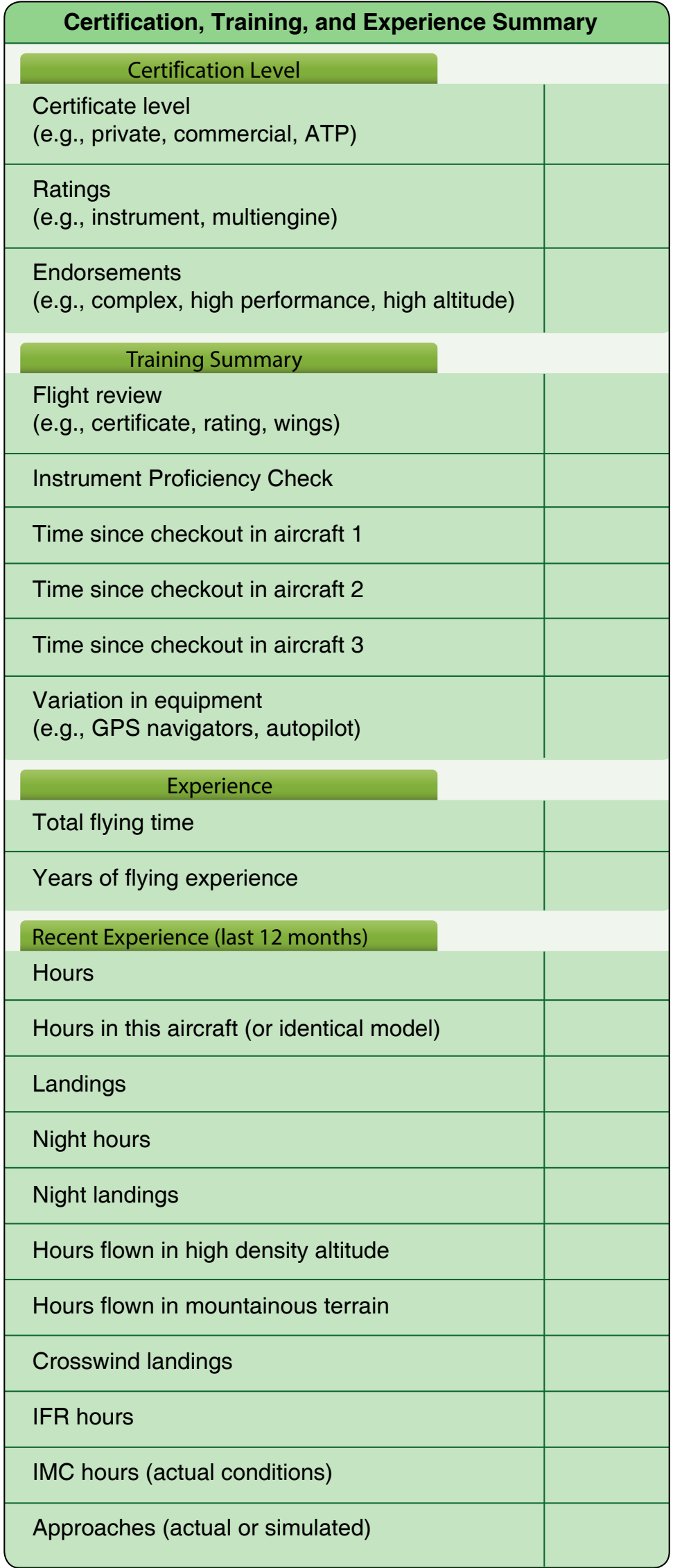
Pilots should also take a few minutes to complete the certification, training, and experience summary in Figure 2-2 by filling in the right column. Some pilots fly different aircraft categories and classes and may develop different personal minimums based on the specific aircraft flown. For example, many pilots will have a different set of personal minimums when flying a single-engine airplane versus a multiengine airplane. Depending on pilot experience, the minimums in a multiengine airplane could be higher than the single-engine airplane minimums. Pilots may use the information entered in Figure 2-2 to set personal minimums for a variety of situations using tables in Figure 2-3, Figure 2-4, and Figure 2-5.
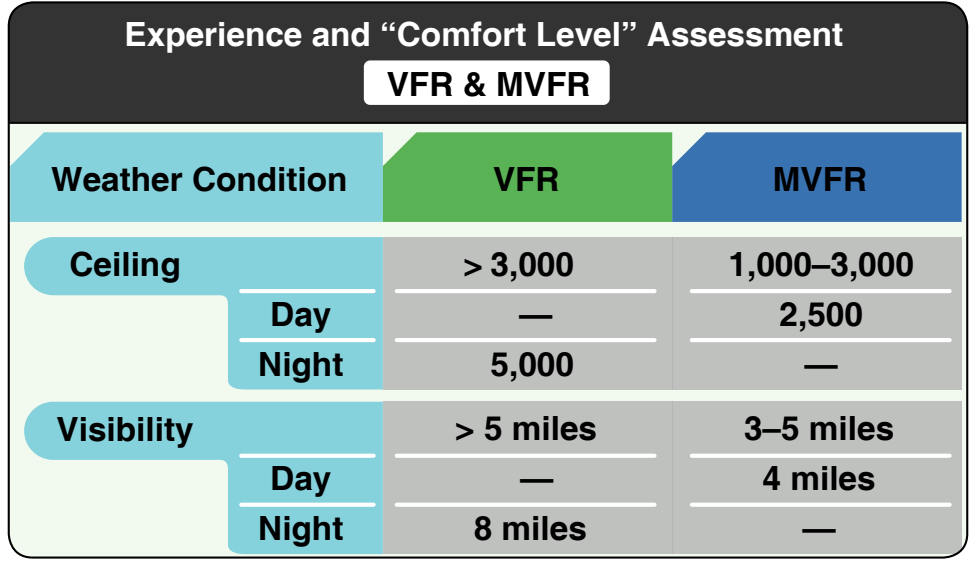
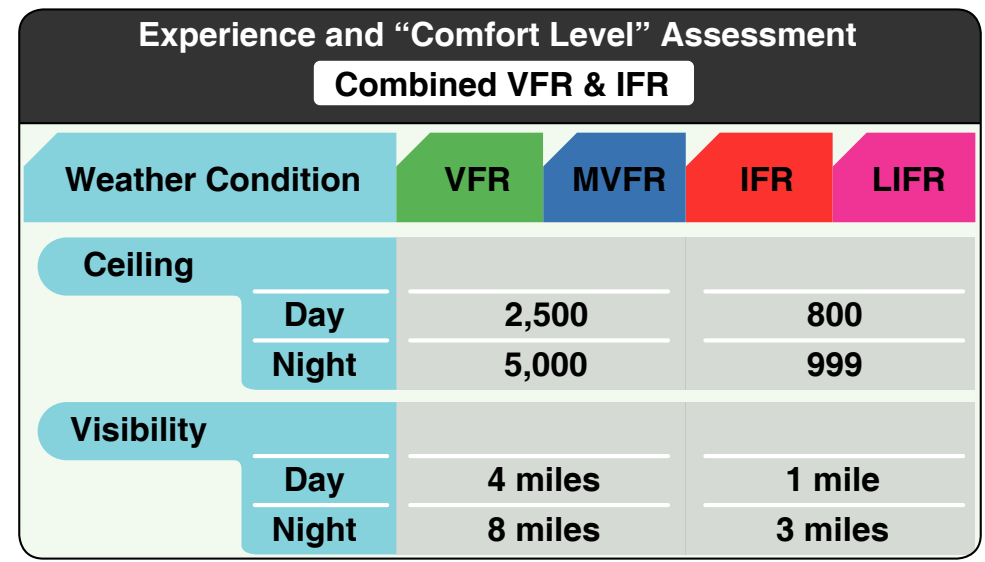
The tables in Figure 2-3, Figure 2-4, and Figure 2-5 layout a sample assessment. Figure 2-3 shows how entries might look in the Experience & Comfort Level Assessment VFR & MVFR table. Suppose a pilot’s flying takes place in a part of the country where clear skies and visibilities of 30 miles or more are normal. The entry might specify the lowest VFR ceiling as 7,000 feet, and the lowest visibility as 15 miles. A pilot may never experience MVFR conditions and would leave the dash in place. However, in this example and as shown in Figure 2-3, the pilot regularly flies in an area where normal summer flying involves hazy conditions over relatively flat terrain and is more experienced and comfortable in MVFR. The pilot used the MVFR column to record personal minimums of a 2,500-foot ceiling and 4 miles visibility for daytime operations.
For night flight, a ceiling under 3,000 feet or visibility less than 5 miles may create an unnecessary risk, so the pilot decided to record a 5,000-foot ceiling and 8 miles visibility in the VFR column.
For IFR, Figure 2-4 shows how a pilot recorded the lowest IFR conditions recently and regularly experienced. Although a pilot may have successfully flown in low IFR (LIFR) conditions, it does not mean the pilot was “comfortable” in these conditions. In this example, the pilot did not fill in the LIFR boxes for known “comfort level” in instrument meteorological conditions (IMC) after deciding to avoid flight in those conditions.
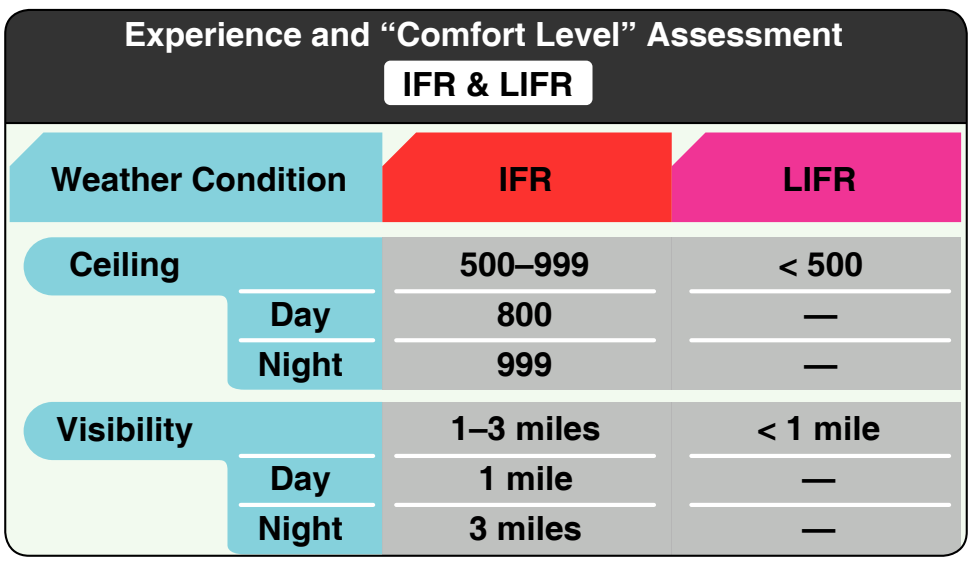
If combined into a single table, the summary of a pilot’s known “comfort level” for VFR, MVFR, IFR, and LIFR weather conditions might appear as shown in Figure 2-5.
Step 3—Consider Other Conditions
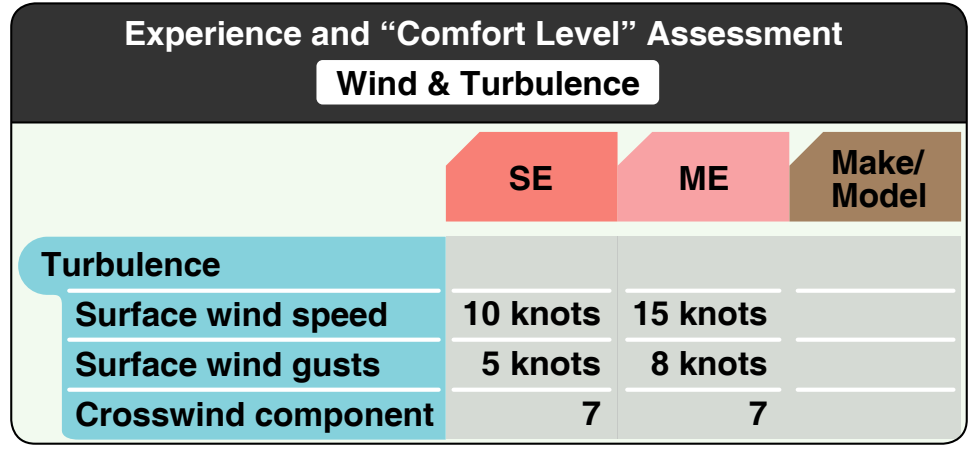
Pilots should also have personal minimums for wind and turbulence and record the most challenging wind conditions comfortably experienced during the last six to twelve months. As shown in Figure 2-6, a pilot may record these values for category and class, or for a specific aircraft.