
Chapter 18
Gyroplane Systems
Slip/Skid Indicator
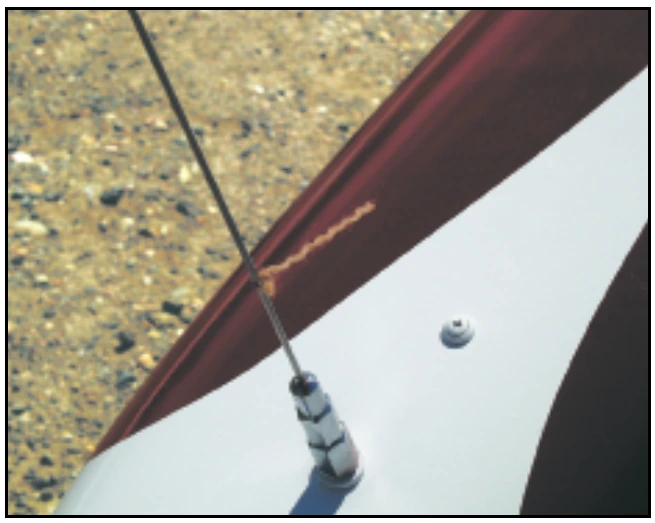
A yaw string attached to the nose of the aircraft and a conventional inclinometer are often used in gyroplanes to assist in maintaining coordinated flight. [Figure 18-7]
Airspeed Indicator
Airspeed knowledge is essential and is most easily obtained by an airspeed indicator that is designed for accuracy at low airspeeds. Wind speed indicators have been adapted to many gyroplanes. When no airspeed indicator is used, as in some very basic amateur-built machines, you must have a very acute sense of “q” (impact air pressure against your body).
Altimeter
For the average pilot, it becomes increasingly difficult to judge altitude accurately when more than several hundred feet above the ground. A conventional altimeter may be used to provide an altitude reference when flying at higher altitudes where human perception degrades.
IFR Flight Instrumentation
Gyroplane flight into instrument meteorological conditions requires adequate flight instrumentation and navigational systems, just as in any aircraft. Very few gyroplanes have been equipped for this type of operation.
The majority of gyroplanes do not meet the stability requirements for single-pilot IFR flight. As larger and more advanced gyroplanes are developed, issues of IFR flight in these aircraft will have to be addressed.
Ground Handling
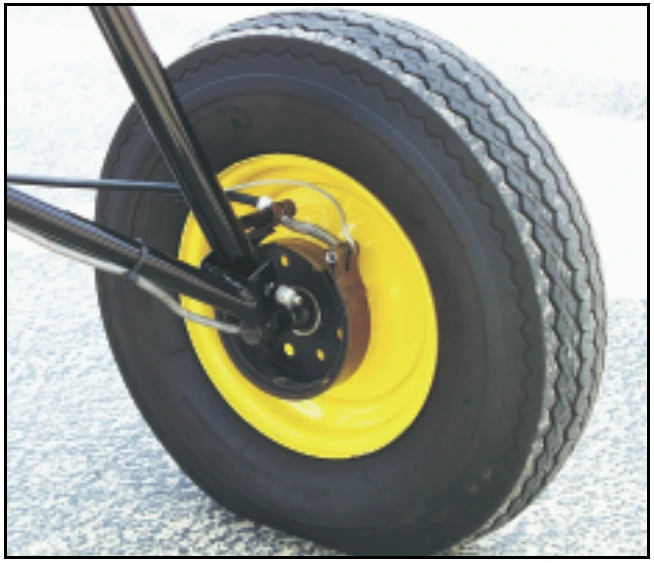
The gyroplane is capable of ground taxiing in a manner similar to that of an airplane. A steerable nose wheel, which may be combined with independent main wheel brakes, provides the most common method of control.
[Figure 18-8] The use of independent main wheel brakes allows differential braking, or applying more braking to one wheel than the other to achieve tight radius turns. On some gyroplanes, the steerable nose wheel is equipped with a foot-operated brake rather than using main wheel brakes. One limitation of this system is that the nose wheel normally supports only a fraction of the weight of the gyroplane, which greatly reduces braking effectiveness. Another drawback is the inability to use differential braking, which increases the radius of turns.
The rotor blades demand special consideration during ground handling, as turning rotor blades can be a hazard to those nearby. Many gyroplanes have a rotor brake that may be used to slow the rotor after landing, or to secure the blades while parked. A parked gyroplane should never be left with unsecured blades, because even a slight change in wind could cause the blades to turn or flap.