
Chapter 7
Center of Gravity Change After a Repair or Alteration
Introduction
The largest weight changes that occur during the lifetime of an aircraft are those caused by alterations and repairs. It is the responsibility of the FAA-certificated mechanic or repairman doing the work to accurately document the weight change and record it in both the maintenance records and the Pilot’s Operating Handbook/Aircraft Flight Manual (POH/AFM).
Equipment List
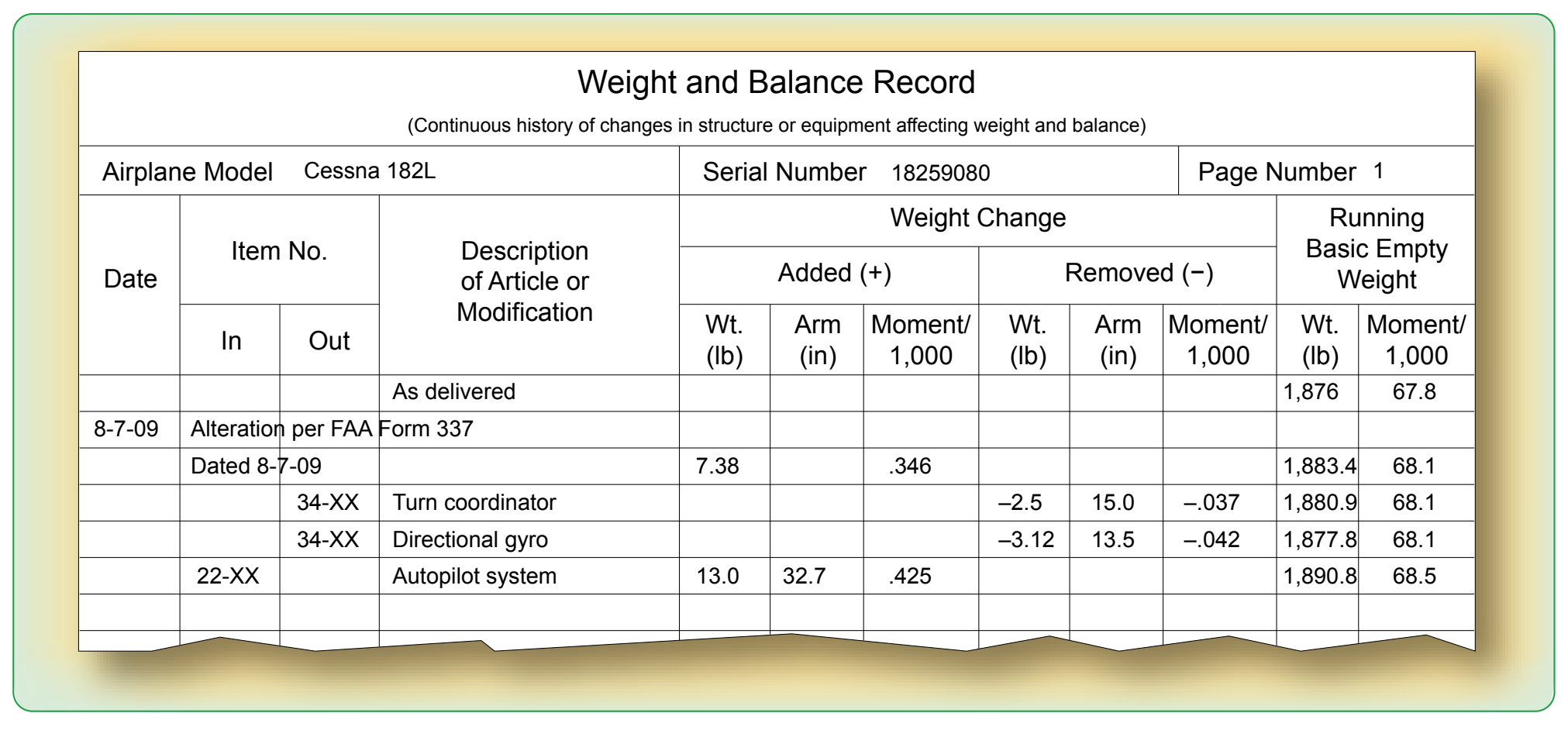
The Federal Aviation Administration (FAA) considers the addition or removal of equipment included in the Comprehensive Equipment List to be a minor alteration. The weights and arms are included with the items in the equipment list, and these minor alterations can be done and the aircraft approved for return to service by an FAA-certificated mechanic or repairman. The only documentation required is an entry in the aircraft maintenance records and the appropriate change to the weight and balance record in the POH/AFM. [Figure 7-1]
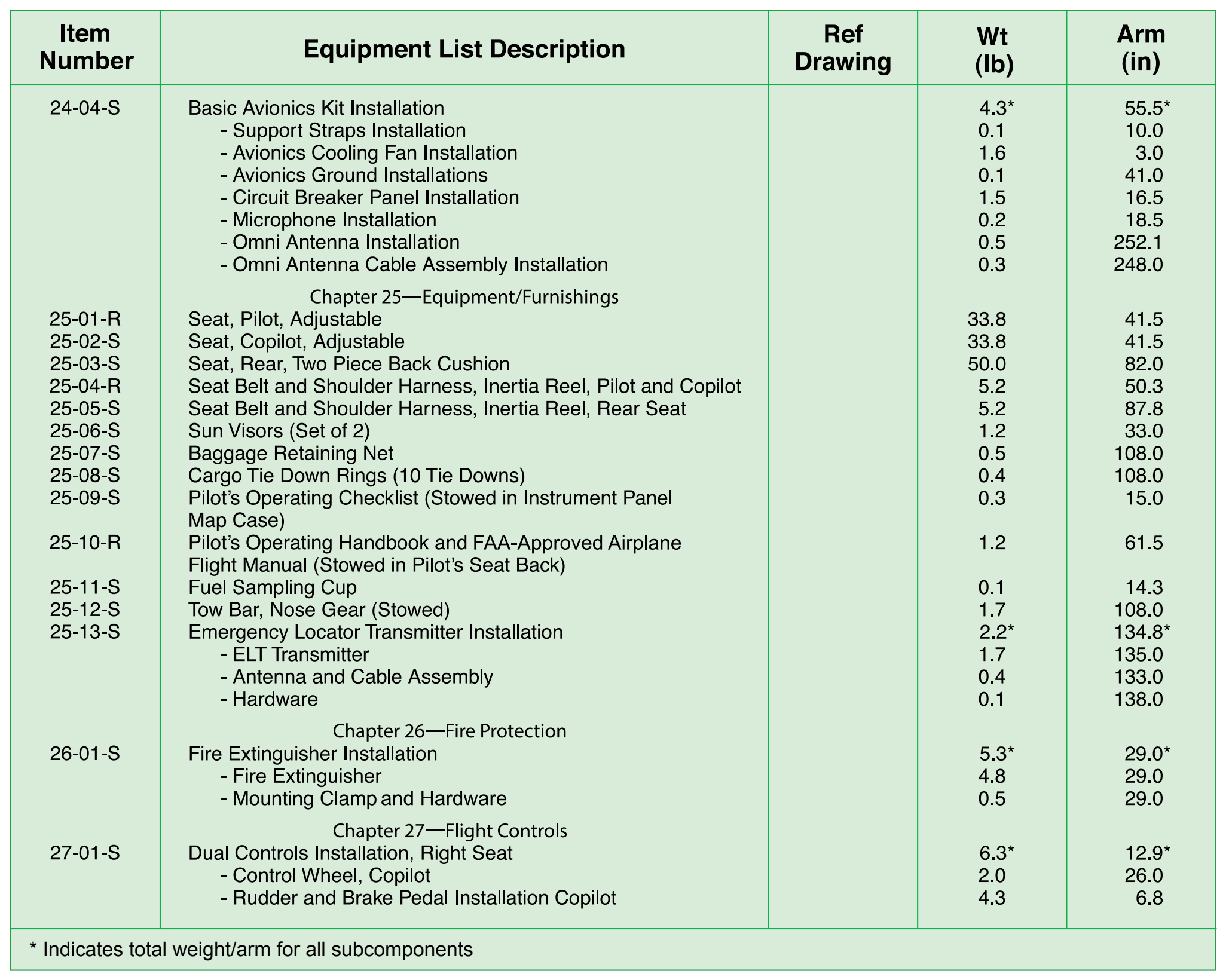
Figure 7-2 is a comprehensive list of all Cessna equipment that is available for the Model 182S airplane. It should not be confused with the airplane-specific equipment list. An airplane-specific list is provided with each individual airplane at delivery and is typically found at the end of the Pilot’s Operating Handbook. The following comprehensive equipment list and the airplane-specific list have a similar order of listing.
The comprehensive equipment list provides the following information in column form:
In the Item No column, each item is assigned a coded number. The first two digits of the code represent the assignment of an equipment item within the ATA Specification 100 breakdown (Chapter 11 for Placards, Chapter 21 for Air Conditioning, Chapter 77 for Engine Indicating, etc.). These assignments also correspond to the Maintenance Manual chapter breakdown for the airplane. Items receive a unique sequence number (01, 02, 03, etc.). After the sequence number (and hyphen), a suffix letter is assigned to identify an equipment item as required, standard, or optional. Suffix letters are as follows:
- R = required item or equipment for FAA certification
- S = standard equipment item
- O = optional equipment item replacing required or standard item(s)
- A = optional equipment item that is in addition to required or standard items
In the Equipment List Description column, each item is assigned a descriptive name to help identify its function.
In the Ref Drawing column, a drawing number is provided that corresponds to the item.
In the Wt and Arm columns, you find the weight in pounds and arm in inches of the equipment item.
Notes: Unless otherwise indicated, true values (not net change values) for the weight and arm are shown. Positive arms are distances aft of the airplane datum; negative arms are distances forward of the datum. Asterisks (*) in the weight and arm column indicate complete assembly installations. Some major components of the assembly are listed on the lines immediately following. The sum of these major components does not necessarily equal the complete assembly installation.
Major Alteration and Repair
Within the following text, information concerning major repairs or major alterations does not apply to any aircraft within the light-sport category.
Any major alteration or repair requires the work to be done by an FAA-certificated mechanic or repairman or facility. The work must be checked for conformity to FAA-approved data and signed off by an aircraft mechanic holding an Inspection Authorization (IA) or by an authorized agent of an appropriately rated FAA-approved repair station. A Repair Station record and/or FAA form 337, Major Repair and Alteration, must be completed describing the work. (Reference Title 14 of the Code of Federal Regulations (14 CFR) part 43, appendix B, for the recording of major repair and alterations requirements.) A dated and signed revision to the weight and balance record is made and kept with the maintenance records, and the airplane’s new empty weight and empty weight arm or moment index are entered in the POH/AFM.