
Aviation Training Experts™

handbook

Airplane Flying Handbook

FAA-H-8083-3C Version 2021

Chapter 1

Introduction to Flight Training

Introduction

The overall purpose of primary and intermediate flight training, as outlined in this handbook, is the acquisition and honing of basic airmanship skills. [Figure 1-1] Airmanship is a broad term that includes a sound knowledge of and experience with the principles of flight; the knowledge, experience, and ability to operate an aircraft with competence and precision both on the ground and in the air; and the application of sound judgment that results in optimal operational safety and efficiency. [Figure 1-2] Learning to fly an aircraft has often been compared to learning to drive an automobile. This analogy is misleading. Since aircraft operate in a three- dimensional environment, they require a depth of knowledge and type of motor skill development that is more sensitive to this situation, such as:

⦁ Coordination–the ability to use the hands and feet together subconsciously and in the proper relationship to produce desired results in the airplane.
⦁ Timing–the application of muscular coordination at the proper instant to make flight, and all maneuvers, a constant, smooth process.
⦁ Control touch–the ability to sense the action of the airplane and knowledge to determine its probable actions immediately regarding attitude and speed variations by sensing the varying pressures and resistance of the control surfaces transmitted through the flight controls.
⦁ Speed sense–the ability to sense and react to reasonable variations of airspeed.
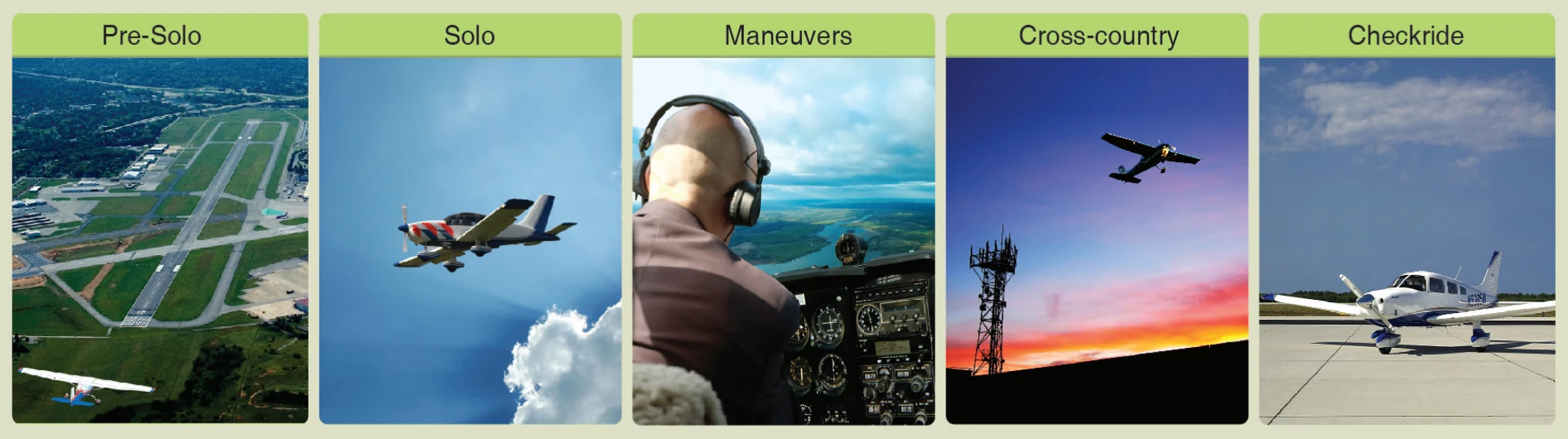
Figure 1-1. Primary and intermediate flight training teaches basic airmanship skills and creates a good foundation for learners.

An accomplished pilot demonstrates the knowledge and ability to:

⦁ Assess a situation quickly and accurately and determine the correct procedure to be followed under the existing circumstance.
⦁ Predict the probable results of a given set of circumstances or of a proposed procedure.
⦁ Exercise care and due regard for safety.
⦁ Accurately gauge the performance of the aircraft.
⦁ Recognize personal limitations and limitations of the aircraft and avoid exceeding them.
⦁ Identify, assess, and mitigate risk on an ongoing basis.
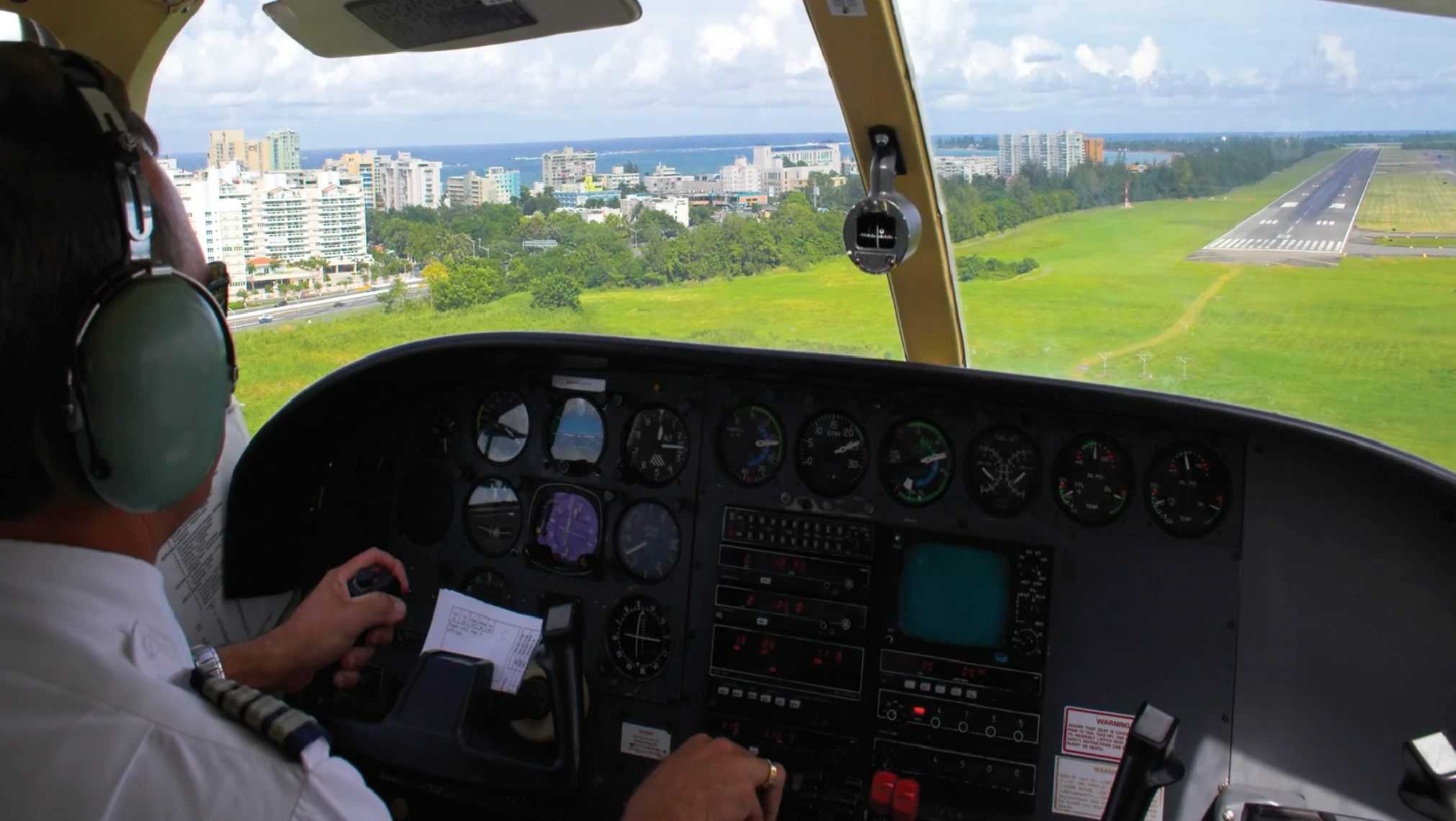
Figure 1-2. Good airmanship skills include sound knowledge of the principles of flight and the ability to operate an airplane with competence and precision.

The development of airmanship skills depends upon effort and dedication on the part of both the learner and the flight instructor, beginning with the very first training flight where proper habit formation begins with the learner being introduced to good operating practices.

Every airplane has its own particular flight characteristics. The purpose of primary and intermediate flight training, however, is not to learn how to fly a particular make and model airplane. The purpose of flight training is to develop the knowledge, experience, skills, and safe habits that establish a foundation and are transferable to any airplane. The pilot who has acquired necessary skills during training, and develops these skills by flying training-type airplanes with precision and safe flying habits, is able to easily transition to more complex and higher performance airplanes. Also note that the goal of flight training is a safe and competent pilot; passing required practical tests for pilot certification is only incidental to this goal.

Role of the FAA

The Federal Aviation Administration (FAA) is empowered by the U.S. Congress to promote aviation safety by prescribing safety standards for civil aviation. Standards are established for the certification of airmen and aircraft, as well as outlining operating rules. This is accomplished through the Code of Federal Regulations (CFR), formerly referred to as Federal Aviation Regulations (FAR). Title 14 of the CFR (14 CFR) is titled Aeronautics and Space with Chapter 1 dedicated to the FAA. Subchapters are broken down by category with numbered parts detailing specific information. [Figure 1-3] For ease of reference and since the parts are numerical, the abbreviated pattern 14 CFR part ___ is used (e.g., 14 CFR part 91).

This guidance is not legally binding in its own right and will not be relied upon by the FAA as a separate basis for affirmative enforcement action or other administrative penalty. Conformity with the guidance is voluntary only and nonconformity will not affect rights and obligations under existing statutes and regulations.

While the various subchapters and parts of 14 CFR provide general to specific guidance regarding aviation operations within the U.S., the topic of aircraft certification and airworthiness is spread through several interconnected parts of 14 CFR.
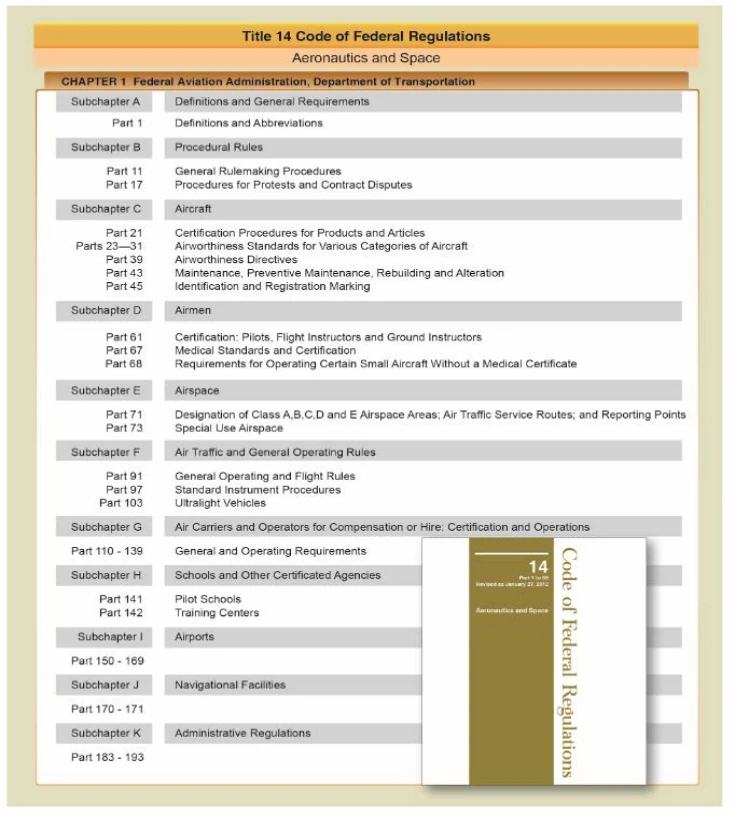
Figure 1-3. Title 14 CFR, Chapter 1, Aeronautics and Space and subchapters.

⦁ 14 CFR part 21 prescribes procedural requirements for issuing airworthiness certificates and airworthiness approvals for aircraft and aircraft parts. A standard airworthiness certificate, FAA Form 8100-2 [Figure 1-4], is required to be displayed in the aircraft in accordance with 14 CFR part 91, section 91.203(b). It is issued for aircraft type certificated in the normal, utility, acrobatic, commuter or transport category, and for manned free balloons. A standard airworthiness certificate remains valid as long as the aircraft meets its approved type design, is in a condition for safe operation and maintenance, and preventative maintenance and alterations are performed in accordance with 14 CFR parts 21, 43, and 91.
⦁ 14 CFR part 39 is the authority for the FAA to issue Airworthiness Directives (ADs) when an unsafe condition exists in a product, aircraft, or part, and the condition is likely to exist or develop in other products of the same type design.
⦁ 14 CFR part 43 prescribes rules governing the maintenance, preventive maintenance, rebuilding, and alteration of any aircraft having a U.S. airworthiness certificate. It also applies to the airframe, aircraft engines, propellers, appliances, and component parts of such aircraft.
⦁ 14 CFR part 45 identifies the requirements for the identification of aircraft, engines, propellers, certain replacement and modification parts, and the nationality and registration marking required on U.S.- registered aircraft.
⦁ 14 CFR part 91 outlines aircraft certifications and equipment requirements for the operation of aircraft in
U.S. airspace. It also prescribes rules governing maintenance, preventive maintenance, and alterations. Also
found in 14 CFR part 91 is the requirement to maintain records of maintenance, preventive maintenance,
and alterations, as well as records of the 100-hour, annual, progressive, and other required or approved
inspections.
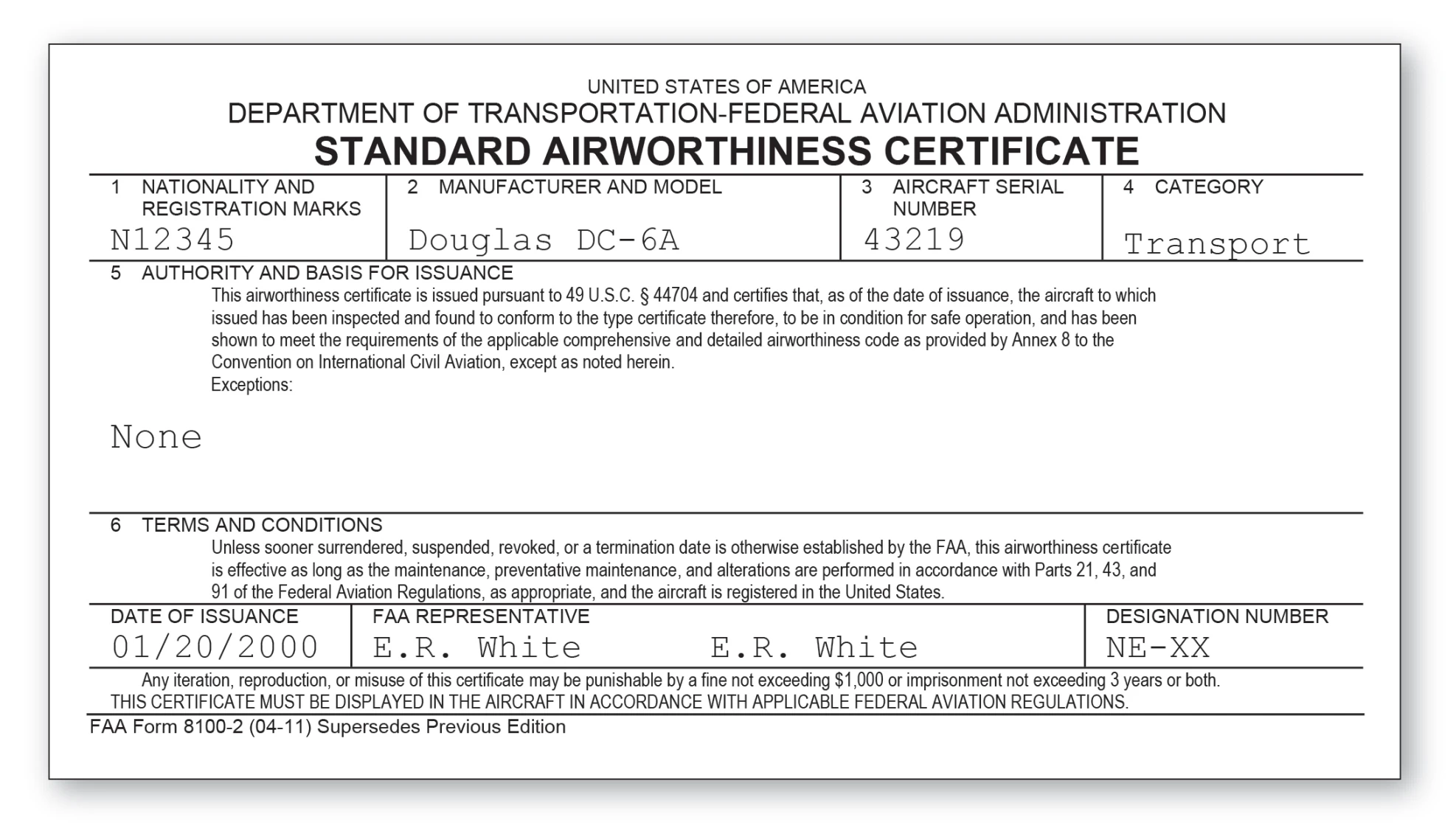
Figure 1-4. FAA Form 8100-2, Standard Airworthiness Certificate.

While 14 CFR part 91, section 91.205 outlines the minimum equipment required for flight, the Airplane Flight Manual/Pilot’s Operating Handbook (AFM/POH) lists the equipment required for the airplane to be airworthy. The equipment list found in the AFM/POH is developed during the airplane certification process. This list identifies those items that are required for airworthiness, optional equipment installed in addition to the required equipment, and any supplemental items or appliances.

Figure 1-5 shows an example of some of the required equipment, standard or supplemental (not required but commonly found in the aircraft) and optional equipment for an aircraft. The equipment list, originally issued by the manufacturer, is maintained by the Type Certificate Data Sheet (TCDS). An aircraft and its installed components and parts must conform to the original Type Certificate or approved altered conditions to meet the definition of airworthy in accordance with 14 CFR part 3.5.

Certification requirements for pilots, medical certificate requirements, and operating rules are found in the following parts:

⦁ 14 CFR part 61 pertains to the certification of pilots, flight instructors, and ground instructors. It prescribes the eligibility, aeronautical knowledge, flight proficiency training, and testing requirements for each type of pilot certificate issued.
⦁ 14 CFR part 67 prescribes the medical standards and certification procedures for issuing medical certificates for airmen and for remaining eligible for a medical certificate.
⦁ 14 CFR part 68 contains requirements for operating certain small aircraft without a medical certificate.
⦁ 14 CFR part 91 contains general operating and flight rules. The section is broad in scope and provides general guidance in the areas of general flight rules, visual flight rules (VFR), instrument flight rules (IFR), and as previously discussed aircraft maintenance, and preventive maintenance and alterations.

Figure 1-5. Example of some of the required standard or supplemental and optional equipment for an aircraft.

Flight Standards Service

The FAA’s Flight Standards Service (FS) sets aviation standards for airmen and aircraft operations in the United States and for American airmen and aircraft around the world. Flight Standards is organized into four functional offices: Office of Safety Standards, Air Carrier Safety Assurance, General Aviation Safety Assurance, and Foundational Business.

The primary interface between FS and the general aviation community/general public is the local Flight Standards District Office (FSDO). The FSDOs are responsible for the certification and surveillance of certain air carriers, air operators, flight schools/training centers, airmen (pilots, flight instructors, mechanics and other certificate holders). FSDO inspectors also handle general aviation accident investigation at the request of, or in cooperation with, the National Transportation Safety Board.

Each FSDO is staffed by Aviation Safety Inspectors (ASIs) whose specialties include operations, maintenance, and avionics. General Aviation ASIs are highly qualified and experienced aviators. Once accepted for the position, an inspector will satisfactorily complete indoctrination training conducted at the FAA Academy. The indoctrination training coursework for a General Aviation Operations Inspector, which is oriented to the tasks to be performed by an ASI in the general aviation environment, includes classroom and flight training on pilot certification activities. Thereafter, the inspector will complete recurrent training on a regular basis. Among other duties, the ASI is responsible for administering FAA practical tests for pilot and flight instructor certificates and associated ratings. Questions concerning pilot certification and/or requests for other aviation information or services should be directed to the FSDO. For specific FSDO locations and telephone numbers, refer to www.faa.gov.

Role of the Pilot Examiner

Pilot and flight instructor certificates are issued by the FAA upon satisfactory completion of required knowledge and practical tests. The administration of practical tests is an FAA responsibility that may occur at the FSDO level. However, in order to satisfy the public need for pilot testing and certification services, the FAA delegates certain responsibilities, as the need arises, to private individuals who are not FAA employees. A Designated Pilot Examiner (DPE) is a private citizen who is designated as a representative of the FAA Administrator to perform specific (but limited) pilot certification tasks on behalf of the FAA and may charge a reasonable fee for doing so. Generally, a DPE’s authority is limited to accepting applications and conducting practical tests leading to the issuance of specific pilot certificates and/or ratings. A DPE operates under the direct supervision of the FSDO that holds the examiner’s designation file. A FSDO inspector is assigned to monitor the DPE’s certification activities.

The FAA selects highly qualified individuals to be DPEs. These individuals have good industry reputations for professionalism, high integrity, a demonstrated willingness to serve the public, and adhere to FAA policies and procedures in certification matters. A DPE is expected to administer practical tests with the same degree of professionalism, using the same methods, procedures, and standards as an FAA ASI. Note that a DPE is not an FAA ASI. A DPE cannot initiate enforcement action, investigate accidents, or perform surveillance activities on behalf of the FAA. However, the majority of FAA practical tests at the recreational, private, and commercial pilot level are administered by DPEs.

Role of the Flight Instructor

The flight instructor is the cornerstone of aviation safety. The FAA has adopted an operational training concept that places the full responsibility for pilot training on the flight instructor. In this role, the instructor assumes the total responsibility for providing training in all the knowledge areas and skills necessary for pilots to operate safely and competently in the National Airspace System (NAS). This training includes airmanship skills, pilot judgment and decision-making, hazard identification, risk analysis, and good operating practices. (See Risk Management Handbook, FAA-H-8083-2). [Figure 1-6]

Figure 1-6. The flight instructor is responsible for teaching and training.

A flight instructor normally meets broad flying experience requirements, passes rigid knowledge and practical tests, and demonstrates the ability to apply recommended teaching techniques before being certificated.

A pilot training program is dependent on the quality of the ground and flight instruction given. A good flight instructor has a thorough understanding of the learning process, knowledge of the fundamentals of instruction, and the ability to communicate effectively with the learner.

A good flight instructor uses a syllabus and insists on correct techniques and procedures from the beginning of training so that the learner will develop proper habit patterns. The syllabus should embody the “building block” method of instruction in which the learner systematically progresses from the known to the unknown. The course of instruction should be laid out so that each new maneuver embodies the principles involved in the performance of those previously undertaken. Consequently, through each new subject introduced, the learner not only learns a new principle or technique, but also broadens their application of those previously learned and has their deficiencies in the previous maneuvers emphasized and made obvious. [Figure 1-7]

Figure 1-7. Sample lesson plan for stall training and recovery procedures.

The flying habits of the flight instructor, both during flight instruction and as observed by learners when conducting other pilot operations, have a vital effect on safety. Learners consider their flight instructor to be a paragon of flying proficiency whose flying habits they, consciously or unconsciously, attempt to imitate. For this reason, a good flight instructor meticulously observes the safety practices taught to the learners. Additionally, a good flight instructor carefully observes all regulations and recognized safety practices during all flight operations.

A prospective pilot should know that there are other differences among flight instructors. Certain instructors who have performed at a high level have earned a Gold Seal Flight Instructor Certificate. This is not a requirement when looking for an instructor, but it is indication of an active and successful instructor. Top notch instructors also participate in the Pilot Proficiency Awards Wings Program (Wings program) to improve their proficiency and to serve as an example to learners who also benefit from program participation.

Generally, an individual who enrolls in a pilot training program is prepared to commit considerable time, effort, and expense in pursuit of a pilot certificate. A trainee may judge the effectiveness of the flight instructor and the overall success of the pilot training program solely in terms of being able to pass the requisite FAA practical test. A good flight instructor is able to communicate that evaluation through practical tests is a mere sampling of pilot ability that is compressed into a short period of time. The flight instructor’s role is to train the “total” pilot.

Sources of Flight Training

The major sources of flight training in the United States include FAA-approved pilot schools and training centers, non-certificated (14 CFR part 61) flying schools, and independent flight instructors. FAA-approved schools are those flight schools certificated by the FAA as pilot schools under 14 CFR part 141. [Figure 1-8]

Figure 1-8. FAA Form 8000-4, Air Agency Certificate.

Application for part 141 certification is voluntary, and the school needs to meet specific requirements for personnel, equipment, maintenance, and facilities. The school operates each course offering in accordance with an established curriculum that includes a training course outline (TCO) approved by the FAA. Each TCO contains enrollment prerequisites, a detailed description of each lesson including standards and objectives, expected accomplishments and standards for each stage of training, and a description of the checks and tests used to measure each training course enrollee's accomplishments. An FAA-approved pilot school Air Agency certificate expires and needs to be renewed every 2 years.

Renewal is contingent upon proof of continued high quality instruction and a minimum level of instructional activity. Training at an FAA-certificated pilot school is structured and because of this structured environment, the graduates of these pilot schools are allowed to meet the certification experience requirements of 14 CFR part 61 with less flight time. Many FAA-certificated pilot schools have DPEs on staff to administer FAA practical tests. Some schools have been granted examining authority by the FAA. A school with examining authority for a particular course(s) has the authority to recommend its graduates for pilot certificates or ratings without further testing by the FAA. A list of FAA-certificated pilot schools and their training courses can be found at https://av-info.faa.gov/pilotschool.asp.

FAA-approved training centers are certificated under 14 CFR part 142. Training centers, like certificated pilot schools, operate in a structured environment with approved courses and curricula and stringent standards for personnel, equipment, facilities, operating procedures, and record keeping. Training centers certificated under 14 CFR part 142, however, specialize in the use of flight simulation (full flight simulators and flight training devices) in their training courses.

There are a number of flying schools in the United States that are not certificated by the FAA. These schools operate under the provisions of 14 CFR part 61. Many of these non-certificated flying schools offer excellent training and meet or exceed the standards required of FAA-approved pilot schools. Flight instructors employed by non-certificated flying schools, as well as independent flight instructors, meet the same basic 14 CFR part 61 flight instructor requirements for certification and renewal as those flight instructors employed by FAA-certificated pilot schools. In the end, any training program is dependent upon the quality of the ground and flight instruction a learner receives.

Airman Certification Standards (ACS) and Practical Test Standards (PTS)

Figure 1-9. Airman Certification Standards (ACS) developed by FAA

Practical tests for FAA pilot certificates and associated ratings are administered by FAA inspectors and DPEs using FAA Airman Certification Standards (ACS) and Practical Test Standards (PTS), which contain structured areas of operation, tasks, and standards. [Figure 1-9] 14 CFR part 61, section 61.43 specifies that the practical test consists of the tasks specified in the areas of operation for the airman certificate or rating sought. To pass the test, the applicant demonstrates mastery of the aircraft performing each task successfully, proficiency and competency within the approved standards, and sound judgment.

It should be emphasized that the ACS and PTS are testing documents rather than teaching documents. Although the pilot applicant should be familiar with these books and refer to the standards they contain during training, the ACS and PTS are not intended to be used as a training syllabus. They contain the standards to which maneuvers/procedures on FAA practical tests should be performed and the FAA policies governing the administration of practical tests. An appropriately rated flight instructor is responsible for training a pilot applicant to acceptable standards in all subject matter areas, procedures, and maneuvers included in, and encompassed by, the tasks within each area of operation in the appropriate ACS and PTS. Flight instructors and pilot applicants should always remember that safe, competent piloting requires a commitment to learning, planning, and risk management that goes beyond rote performance of maneuvers. Descriptions of tasks and information on how to perform maneuvers and procedures are contained in reference and teaching documents, such as this handbook. A list of reference documents is contained in the appendices of each ACS and PTS. It is necessary that the latest version of the PTS and ACS, with all recent changes, be referenced for training. All recent versions and changes to the FAA ACS and PTS may be viewed or downloaded at www.faa.gov.

Safety Considerations

In the interest of safety and good habit pattern formation, there are certain basic flight safety practices and procedures that should be emphasized by the flight instructor, and adhered to by both instructor and learner, beginning with the very first dual instruction flight. These include, but are not limited to, collision avoidance procedures including proper scanning techniques and clearing procedures, runway incursion avoidance, stall awareness, positive transfer of controls, and flight deck workload management.

Collision Avoidance

All pilots should be alert to the potential for midair collision and impending loss of separation. The general operating and flight rules in 14 CFR part 91 set forth the concept of “see and avoid.” This concept requires that vigilance shall be maintained at all times by each person operating an aircraft regardless of whether the operation is conducted under IFR or VFR. Pilots should also keep in mind their responsibility for continuously maintaining a vigilant lookout regardless of the type of aircraft being flown and the purpose of the flight. Most midair collision accidents and reported near midair collision incidents occur in good VFR weather conditions and during the hours of daylight. Most of these accident/incidents occur within 5 miles of an airport and/or near navigation aids. [Figure 1-10]

Figure 1-10. Most midair collision accidents occur in good weather.

The “see and avoid” concept relies on knowledge of the limitations of the human eye and the use of proper visual scanning techniques to help compensate for these limitations. Pilots should remain constantly alert to all traffic movement within their field of vision, as well as periodically scanning the entire visual field outside of their aircraft to ensure detection of conflicting traffic. Remember that the performance capabilities of many aircraft, in both speed and rates of climb/descent, result in high closure rates limiting the time available for detection, decision, and evasive action. [Figure 1-11]

Figure 1-11. Proper scanning techniques can mitigate midair collisions. Pilots should be aware of potential blind spots and attempt to clear the entire area in which they are maneuvering.

The probability of spotting a potential collision threat increases with the time spent looking outside, but certain techniques may be used to increase the effectiveness of the scan time. The human eyes tend to focus somewhere, even in a featureless sky. In order to be most effective, the pilot should shift glances and refocus at intervals. Most pilots do this in the process of scanning the instrument panel, but it is also important to focus outside to set up the visual system for effective target acquisition. Pilots should also realize that their eyes may require several seconds to refocus when switching views between items on the instrument panel and distant objects.

Proper scanning requires the constant sharing of attention with other piloting tasks, thus it is easily degraded by psychological and physiological conditions such as fatigue, boredom, illness, anxiety, or preoccupation.

Effective scanning is accomplished with a series of short, regularly-spaced eye movements that bring successive areas of the sky into the central visual field. Each movement should not exceed 10 degrees, and each area should be observed for at least 1 second to enable detection. Although horizontal back-and-forth eye movements seem preferred by most pilots, each pilot should develop a scanning pattern that is comfortable and adhere to it to assure optimum scanning.

Peripheral vision can be most useful in spotting collision threats from other aircraft. Each time a scan is stopped and the eyes are refocused, the peripheral vision takes on more importance because it is through this element that movement is detected. Apparent movement is usually the first perception of a collision threat and probably the most important because it is the discovery of a threat that triggers the events leading to proper evasive action. It is essential to remember that if another aircraft appears to have no relative motion, it is likely to be on a collision course. If the other aircraft shows no lateral or vertical motion, but is increasing in size, the observing pilot needs to take immediate evasive action to avoid a collision.

The importance of, and the proper techniques for, visual scanning should be taught at the very beginning of flight training. The competent flight instructor should be familiar with the visual scanning and collision avoidance information contained in AC 90-48, Pilots’ Role in Collision Avoidance, and the Aeronautical Information Manual (AIM).

There are many different types of clearing procedures. Most are centered around the use of clearing turns. The essential idea of the clearing turn is to be certain that the next maneuver is not going to proceed into another aircraft’s flightpath. Some pilot training programs have hard and fast rules, such as requiring two 90° turns in opposite directions before executing any training maneuver. Other types of clearing procedures may be developed by individual flight instructors. Whatever the preferred method, the flight instructor should teach the beginning learner an effective clearing procedure and insist on its use. The learner should execute the appropriate clearing procedure before all turns and before executing any training maneuver. Proper clearing procedures, combined with proper visual scanning techniques, are the most effective strategy for collision avoidance.

In case of pilot incapacitation, an installed Emergency Autoland (EAL) system may take control of an airplane, navigate to an airport, and land without additional human intervention. Currently, these systems take no evasive action in response to potential impact with another aircraft, although they transmit over the radio. Pilots should avoid the path of any aircraft under the control of an EAL or suspected as under the control of an EAL system. The Emergency Procedures chapter in this handbook contains additional information about these systems.

Runway Incursion Avoidance

A runway incursion is any occurrence at an airport involving an aircraft, vehicle, person, or object on the ground that creates a collision hazard or results in a loss of separation with an aircraft taking off, landing, or intending to land. The three major areas contributing to runway incursions are communications, airport knowledge, and flight deck procedures for maintaining orientation. [Figure 1-12]

Figure 1-12. Three major areas contributing to runway incursions are communications with air traffic control (ATC), airport knowledge, and flight deck procedures.

Taxi operations require constant vigilance by the entire flight crew, not just the pilot taxiing the airplane. During flight training, the instructor should emphasize the importance of vigilance during taxi operations. Both the learner and the flight instructor need to be continually aware of the movement and location of other aircraft and ground vehicles on the airport movement area. Many flight training activities are conducted at non-tower controlled airports. The absence of an operating airport control tower creates a need for increased vigilance on the part of pilots operating at those airports. [Figure 1-13]

Figure 1-13. Sedona Airport is one of the many airports that operate without a control tower.

Planning, clear communications, and enhanced situational awareness during airport surface operations reduces the potential for surface incidents. Safe aircraft operations can be accomplished and incidents eliminated if the pilot is properly trained early on and throughout their flying career on standard taxi operating procedures and practices. This requires the development of the formalized teaching of safe operating practices during taxi operations. The flight instructor is the key to this teaching. The flight instructor should instill in the learner an awareness of the potential for runway incursion, and should emphasize the runway incursion avoidance procedures. For more information and a list of additional references, refer to Chapter 14 of the Pilot’s Handbook of Aeronautical Knowledge.

Stall Awareness

Figure 1-14. All student pilots receive and log flight training in stalls and stall recoveries prior to their first solo flight.
Figure 1-15. Stalls occur when the airfoil's angle of attack reaches the critical point which can vary between 16° and 20°

The flight instructor should emphasize that low speed is not necessary to produce a stall. The wing can be brought to an excessive AOA at any speed. High pitch attitude is not an absolute indication of proximity to a stall. Some airplanes are capable of vertical flight with a corresponding low AOA. Most airplanes are quite capable of stalling at a level or near level pitch attitude.

The key to stall awareness is the pilot’s ability to visualize the wing’s AOA in any particular circumstance, and thereby be able to estimate his or her margin of safety above stall. This is a learned skill that should be acquired early in flight training and carried through the pilot’s entire flying career.

The pilot should understand and appreciate factors such as airspeed, pitch attitude, load factor, relative wind, power setting, and aircraft configuration in order to develop a reasonably accurate mental picture of the wing’s AOA at any particular time. It is essential to safety of flight that pilots take into consideration this visualization of the wing’s AOA prior to entering any flight maneuver. Chapter 3, Basic Flight Maneuvers, discusses stalls in detail.

Use of Checklists

Figure 1-16. Checklists have been the foundation of pilot standardization and flight safety for many years.

The importance of consistent use of checklists cannot be overstated in pilot training. A major objective in primary flight training is to establish habit patterns that will serve pilots well throughout their entire flying career. The flight instructor should promote a positive attitude toward checklist usage, and the learner should realize its importance. At a minimum, prepared checklists should be used for the following phases of flight: [Figure 1-17]

⦁ Preflight inspection
⦁ Before engine start
⦁ Engine starting
⦁ Before taxiing
⦁ Before takeoff
⦁ After takeoff
⦁ Cruise
⦁ Descent
⦁ Before landing
⦁ After landing
⦁ Engine shutdown and securing

Figure 1-17. A sample checklist used by pilots.

During flight training, there should be a clear understanding between the learner and flight instructor of who has control of the aircraft. Prior to any flight, a briefing should be conducted that includes the procedures for the exchange of flight controls. The following three-step process for the exchange of flight controls is highly recommended.

When a flight instructor wishes the learner to take control of the aircraft, he or she should say to the learner, “You have the flight controls.” The learner should acknowledge immediately by saying, “I have the flight controls.” The flight instructor should then confirm by again saying, “You have the flight controls.” Part of the procedure should be a visual check to ensure that the other person actually has the flight controls. When returning the controls to the flight instructor, the learner should follow the same procedure the instructor used when giving control to the learner. The learner should stay on the controls until the instructor says, “I have the flight controls.” There should never be any doubt as to who is flying the airplane at any time. Numerous accidents have occurred due to a lack of communication or misunderstanding as to who actually had control of the aircraft, particularly between learners and flight instructors. Establishing the above procedure during initial training ensures the formation of a very beneficial habit pattern.

Continuing Education

FAA WINGS Program

Compare continuous training and practice to 14 CFR part 61, section 61.56(c)(1) and (2), which allows for training and a sign-off within the previous 24 calendar months in order to act as a pilot in command. Many astute pilots realize that this regulation specifies a minimum requirement, and the path to enhanced proficiency, safety, and enjoyment of flying takes a higher degree of commitment such as using 14 CFR part 61, section 61.56(e). For this reason, many pilots keep their flight review up-to-date using the FAA WINGS program. The program provides continuing pilot education and contains interesting and relevant study materials that pilots can use all year round.

A pilot may create a WINGS account by logging on to www.faasafety.gov. This account gives the pilot access to the latest information concerning aviation technology and risk mitigation. It provides a means to document targeted skill development as a means to increase safety. As an added bonus, participants may receive a discount on certain flight insurance policies.

Chapter Summary

This chapter discussed some of the concepts and goals of primary and intermediate flight training. It identified and provided an explanation of regulatory requirements and the roles of the various entities involved. It also offered recommended techniques to be practiced and refined to develop the knowledge, proficiency, and safe habits of a competent pilot.