Chapter 17
Transition to Light Sport Airplanes (LSA)
Flight Schools
The LSA category has created new business opportunities due to low fuel usage, reliability, and low maintenance costs. Many owners and operators of flight schools use S-LSAs for flight instruction and rental.
When considering a transition to LSA, a pilot should look for a flight school that has experience in LSA instruction and can provide quality instruction. Personally touring a school and soliciting feedback from other pilots that have transitioned into LSAs may help find an appropriate school. Some questions to be asked include the following:
- How many pilots has the flight school transitioned into LSAs and how many LSAs are available for instruction?
- What are the flight school’s rental, insurance, and safety policies?
- How is maintenance accomplished and by whom?
- How are records maintained and how is scheduling accomplished?
Flight Instructors
The flight instructor is an important link in a successful LSA transition. A transitioning pilot should choose a flight instructor that has verifiable experience in LSA instruction. The Sport Pilot rule allows for a Sport Pilot flight instructor certificate, the flight instructor- S. 14 CFR part 61, section 61.413 limits a flight instructor-S to instruction in LSAs—a flight instructor-S cannot give instruction in a non-LSA airplane (e.g., a Cessna 150). While FAA policy allows a flight instructor certificated as a flight instructor-A to give instruction in both a light-sport airplane and a non-light-sport airplane, a flight instructor-S with teaching experience in LSA might provide better instruction than a flight instructor-A who has minimal teaching experience in light-sport airplanes.
A transitioning LSA pilot should have an opportunity to review the curriculum, syllabus, lesson plans, as well as the process for tracking progress through the training program. Depending on the transitioning pilot’s experience, currency, and type of airplane typically flown, the flight instructor should make appropriate adjustments to any LSA training curriculum. A suggested LSA transition training outline is presented:
- CFR review as pertaining to LSAs and sport pilots
- Pilot’s Operating Handbook (POH) review
- LSA maintenance
- LSA weather considerations
- Wake turbulence avoidance
- Performance and limitations
- Operation of systems
- Ground operations
- Preflight inspection
- Before takeoff check
- Normal and crosswind takeoff and climb
- Normal and crosswind approach and landing
- Soft-field takeoff, climb, approach, and landing
- Short-field takeoff, climb, approach, and landing
- Go-around/rejected landing
- Steep turns
- Stalls and spin awareness
- Emergency approach and landing
- Systems and equipment malfunctions
- After landing, parking, and securing
LSA Maintenance
LSAs should be treated with the same level of care as any standard airworthiness certificated airplane. However, S-LSAs have greater latitude pertaining to who may conduct maintenance as compared to standard airworthiness certificated airplanes. S-LSAs may be maintained and inspected by:
- An LSA Repairman with a Maintenance rating; or,
- An FAA-certificated Airframe and Powerplant Mechanic (A&P); or,
- As specified by the aircraft manufacturer; or
- As permitted, owners performing limited maintenance on their S-LSA.
The airplane maintenance manual includes the specific information for repair and maintenance on inspections, repair, and authorization for repairs and maintenance. Most often, S-LSA inspections can be signed off by an FAA-certificated A&P or LSA repairman with a Maintenance rating rather than an A&P with Inspection Authorization (IA); however, the aircraft maintenance manual provides the procedures to follow. The FAA does not issue Airworthiness Directives (ADs) for S-LSAs or E-LSAs. If an FAA-certified component is installed on an LSA, the FAA issues any pertaining ADs for that specific component. Manufacturer safety directives are not distributed by the FAA. S-LSA owners should comply with:
- Safety directives (alerts, bulletins, and notifications) issued by the LSA manufacturer
- ADs if any FAA-certificated components are installed
- Safety alerts (immediate action)
- Service bulletins (recommending future action)
- Safety notifications (informational)
S-LSA compliance with maintenance requirements provides greater latitude for owners and operators of these airplanes. Because of the options in complying with the maintenance requirements, pilots who are transitioning to LSAs should understand how maintenance is accomplished; who is providing the maintenance services; and verify that all compliance requirements have been met.
Airframe and Systems
Construction
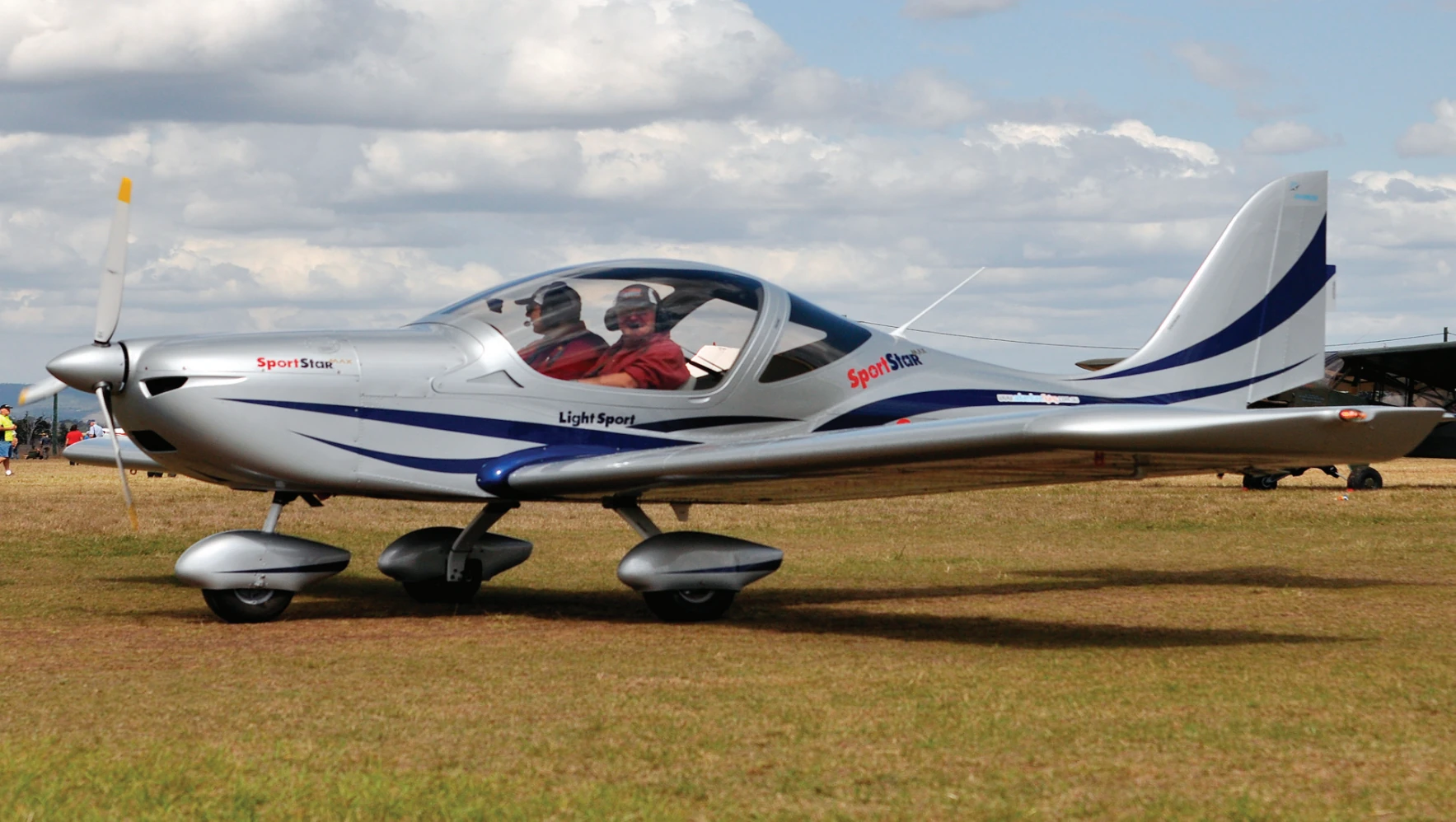
LSAs may be constructed using wood, tube and fabric, metal, composite, or any combination of materials. In general, the manufacturer selects materials and design to keep the airplane lightweight while maintaining the structural requirements. Composite LSAs tend to be sleek and modern looking with clean lines as molding of the various components allows designers great flexibility in shaping the airframe. Other LSAs are authentic-looking renditions of early aviation airplanes with fabric covering a framework of steel tubes. Of course, LSAs may be anything in between using both metal and composite construction. [Figure 17-3] A pilot transitioning into LSA should understand the types of construction and the typical concerns for each type of construction:
- Steel tube and fabric—while the techniques of steel tube and fabric construction hails back to the early days of aviation, this construction method has proven to be lightweight, strong, and inexpensive to build and maintain. Advances in fabric technology continue to make this method of covering airframes an excellent choice. Fabric can be limited in its life span if not properly maintained. Fabric should be free from tears, well-painted with little to no fading, and should easily spring back when lightly pressed.
- Aluminum—an aluminum-fabricated airplane has been a favorite choice for decades. Pilots should be quite familiar with this type of construction. Generally, airframes tend to be lightly rounded structures dotted with rivets and fasteners. This construction is easily inspected due to the wide-spread experience with aluminum structures. Any corrosion, working rivets, dents, and cracks should be identified during a pilot’s preflight inspection.
- Composite—a composite airplane is principally made from structural epoxies and cloth-like fabrics, such as bi-directional and uni-directional fiberglass cloths, and specialty cloths like carbon fiber. Airframe components, such as wing and fuselage halves, are made in molds that result in a sculpted, mirror-like finish. Generally, composite construction has few fasteners, such as protruding rivets and bolts. Pilots should become acquainted with inspection concerns such as looking for hair-line cracks and delamination.