
Chapter 17
Transition to Light Sport Airplanes (LSA)
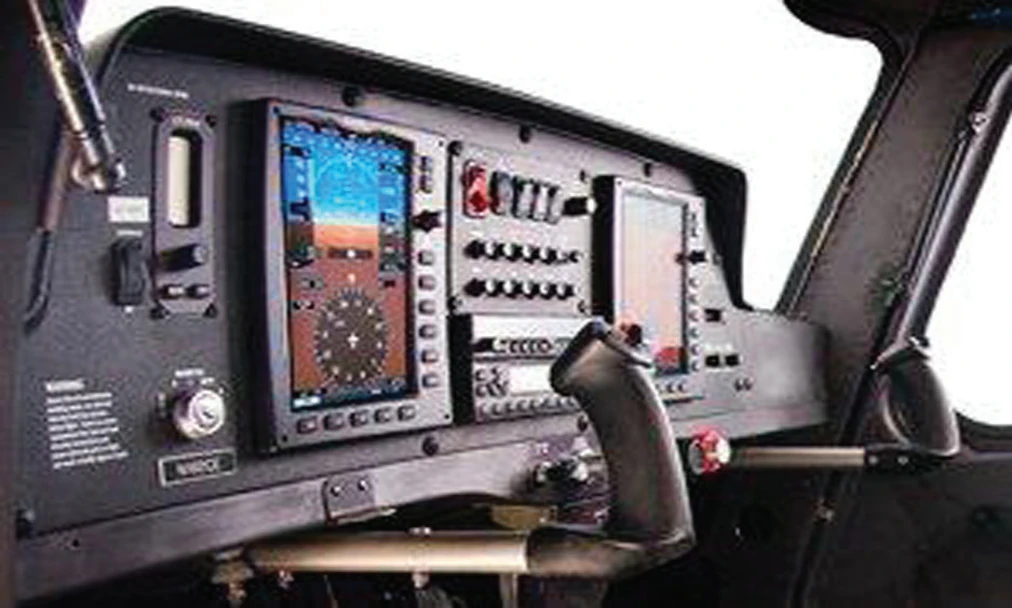
Elevator trim on many LSAs is electrically actuated with no mechanical trim adjustment available. [Figure 17-12] Depending on the airplane, trim position indication may be displayed on the EFIS, an LED display, or with a mechanical indicator. On electric trim systems, as it is with any airplane, it is important to ensure that the trim position is correctly set prior to takeoff. Because trim positioning/indicting systems vary widely in light-sport airplanes, pilots should fully understand not only how to position the trim, but also how to respond to a trim-run-away condition. Part of the preflight inspection should include actuating the trim switch in both nose-up and nose-down directions, verifying that the trim disconnect (if equipped) is properly functioning, and then properly setting the takeoff trim position.
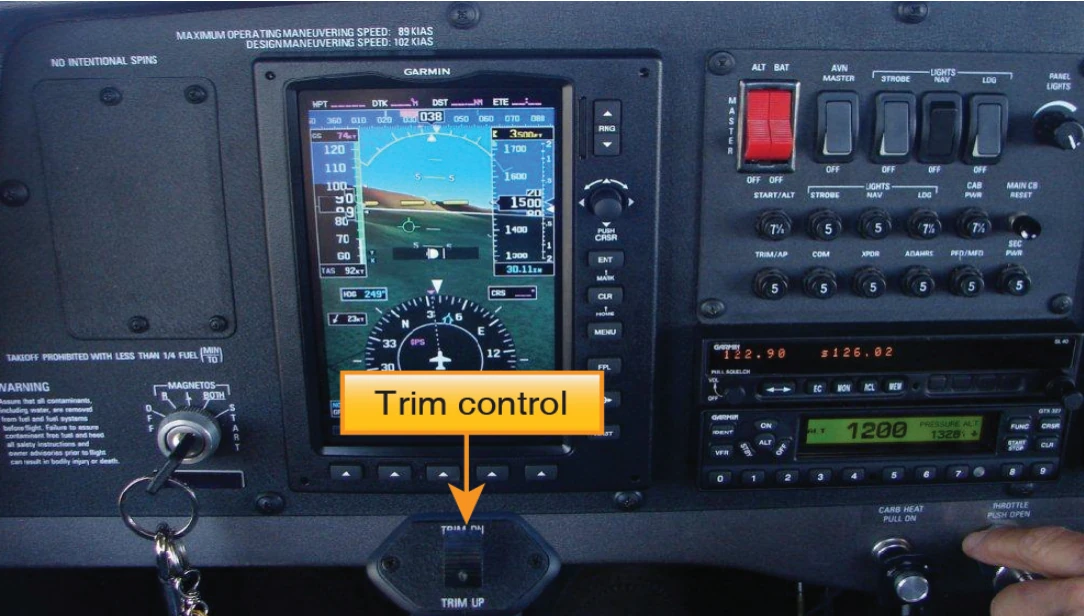
Depending on the engine manufacturer, the engine controls may be completely familiar to a transitioning pilot (throttle, mixture, and carburetor heat); however, some engines have no mixture control or carburetor heat. Instead, there could be a throttle, a choke control, and carburetor preheater.
Regardless, a pilot should become familiar with the specific engine installed and its operation. A transitioning pilot also needs to become comfortable with the difference between conventional engine control knobs and those found in LSAs. In standard airworthiness airplanes, control knobs are reasonably standardized; however, LSAs may use controls that are much larger or smaller in size.
If the LSA is equipped with an EFIS, the manufacturer’s EFIS Pilot Guide should be available for reference. In addition, the airplane POH likely has specific EFIS preflight procedures that should be completed. These checks are to verify that all internal tests are passed, that no red “Xs” are displayed, and that appropriate annunciators are illuminated. Some systems have a “reversionary” mode where the information from one display can be sent to another display. For example, should the Primary Flight Display (PFD) fail, information can be routed to the Multi-Function Display (MFD). Not all LSA EFIS systems are equipped with a MFD or reversionary capability, so it is important for a transitioning pilot to understand the system and its limitations.
Fuel level in any airplane should be checked both visually and via the fuel level instrument or sight gauges. In LSAs, fuel level quantities can be shown using a variety of systems. Some models may have conventional float activated indictors while others may have the fuel level display on the EFIS with low-fuel alarm capability. It is not uncommon for a light-sport airplane to have advanced EFIS technology for attitude and navigation information, but have a simple sight gauge for fuel level indication. Fuel tank selection can also vary from simple on/off valves to a left/right selector. Fuel starvation remains a leading factor in aircraft accidents, which should be a reminder that when transitioning into a new airplane, time spent understanding the fuel system is time well spent.
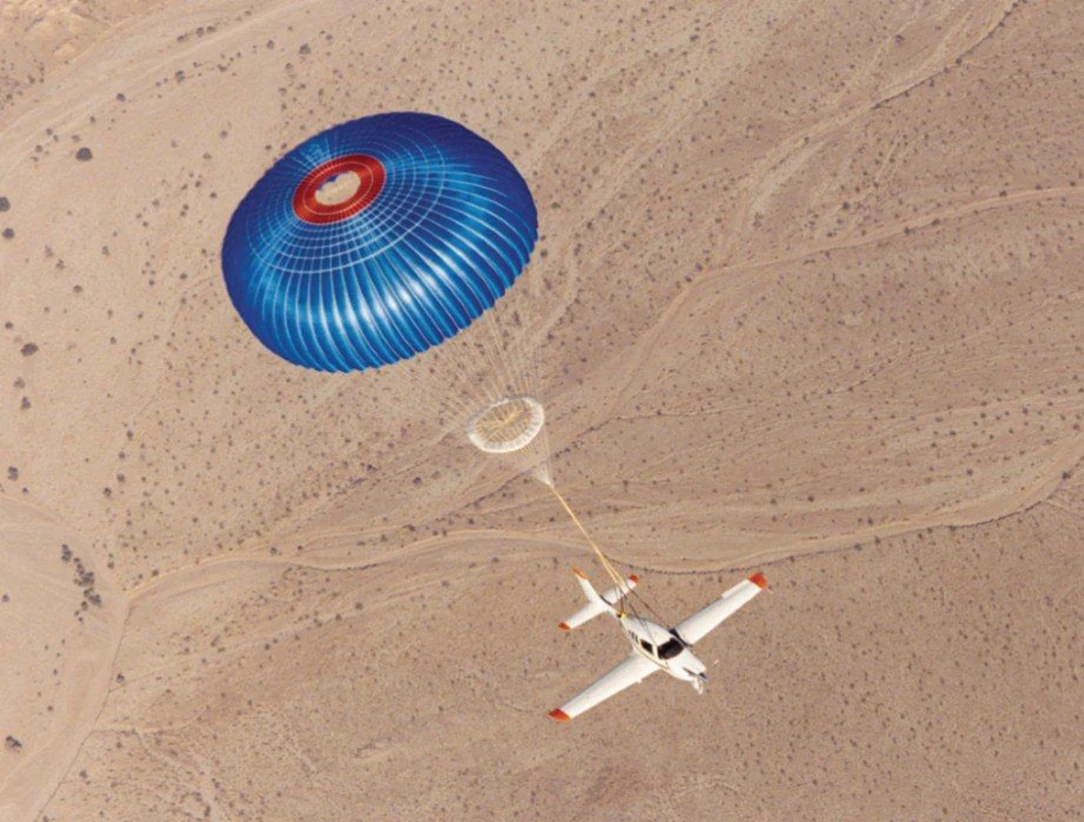
A ballistic parachute is a popular safety feature on certain LSAs. [Figure 17-13] These devices have been shown to be well worth their cost in the unlikely event of a catastrophic failure or some other unsurvivable emergency. This system rockets a parachute into a deployed state such that the parachute slowly lowers the aircraft. The preflight inspections of these systems require a check of the mounts, safety pin and flag, and the activation handle and cable. Because most standard airworthiness type certificated airplanes do not have these systems installed, LSA training should cover the operation and limitations of the system.
Outside the Airplane
Transitioning pilots should feel comfortable and in a familiar setting when preflighting the outside of an LSA. Some unique areas worthy of notation are presented below.
Propellers of LSAs may range from a conventional metal propeller to composite or wood. If a transitioning pilot is principally familiar with metal propellers, time should be spent with the LSA flight instructor covering the type of propeller installed. Many LSA propellers are composite and have a ground adjustable pitch adjustment. There may be more areas to check with these types of propellers. For example, on ground adjustable propellers, ensure that the blades are tight against the hub by snugly twisting the blade at the root to verify that there is no rotation of the blade at the hub.
Many LSAs are equipped with water-cooled engines. LSAs may be tightly cowled, which reduces drag. A liquid-cooled engine minimizes the need for cylinder cooling inlets, which further reduces drag and improves performance. This does present a new system for a transitioning pilot to check. Preflighting this system requires that the radiator, coolant hoses, and expansion tank are checked for condition, freedom from leaks, and coolant level requirements.
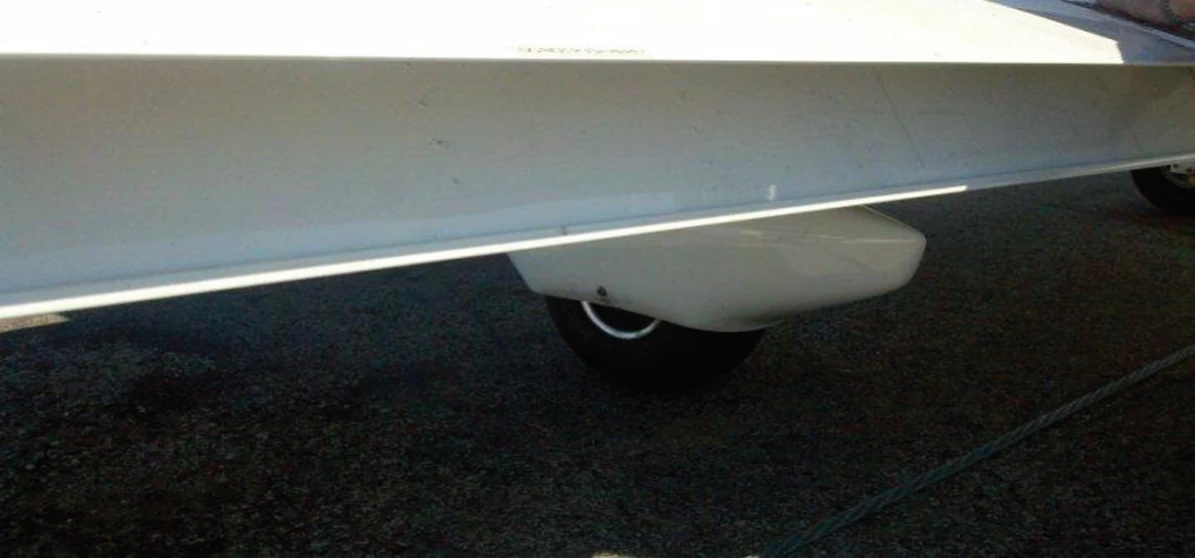
Split flaps may be used on some LSA designs. [Figure 17-14] These flaps hinge down from underneath the wing and inspecting these flaps requires the pilot to crouch and twist low for inspection. A suitable handheld mirror can facilitate inspection without undue twisting and bending. In an attempt to keep complexity to a minimum, flap control is typically a handle that actuates the flaps. A pilot should verify that the flaps extend and retract smoothly.
Before Start and Starting Engine
Once a pilot has completed the preflight inspection of the LSA, the pilot should properly seat themselves in the airplane ensuring that the rudder pedals can be exercised with full-range movement without over-reaching. Seat belts should be checked for proper position and security. The pilot should continue to use the POH checklists. Starting newer generation LSA engines can be quite simple and only require the pull of the choke and a twist of the ignition switch. If the LSA is equipped with a standard certificated engine, starting procedures are normal and routine. The canopy or doors of an LSA may have quite different latching mechanisms than standard airworthiness airplanes. Practice latching and unlatching the doors or canopy to ensure that understanding is complete. Having a gull-wing door or sliding canopy “pop” open in flight can become an emergency in seconds.
Taxi
LSAs may have a full-castoring or steerable nose-wheel, or a tailwheel if equipped with conventional gear. In order to taxi a full-castoring nose-wheel equipped airplane, the use of differential brakes is required. This type of nose-wheel can require practice to keep the airplane on the centerline while minimizing brake application or damage to the tires. If the taxi speed is too slow, application of a brake can cause the aircraft to pivot to a stop, rather than adjust in direction. This results in excessive brake and tire wear. If the speed is too fast, excessive brake wear is likely.
Transitioning into an LSA with conventional gear (tailwheel) should occur initially during no-wind conditions. Due to its light weight the airplane, requires the development of the proper flight control responses before operations in any substantial wind.