
Chapter 17
Transition to Light Sport Airplanes (LSA)
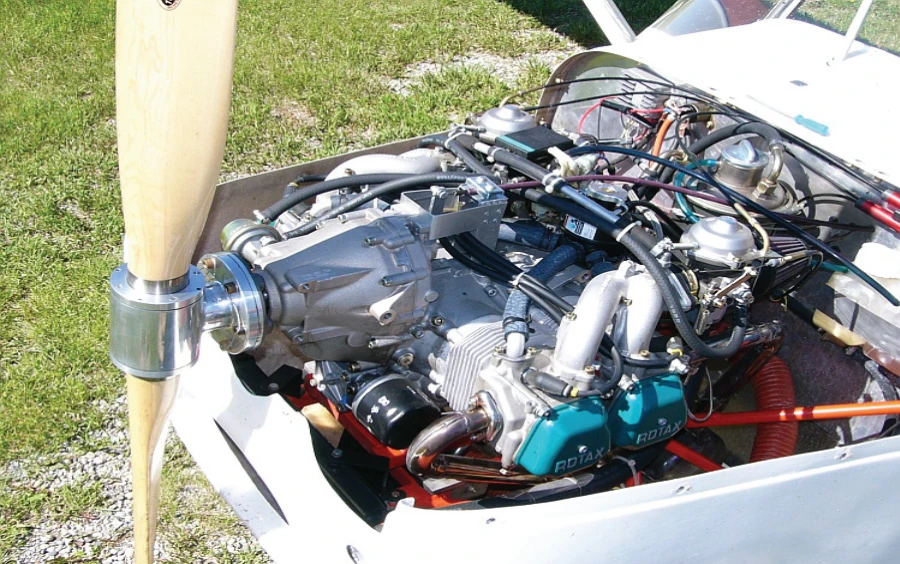
LSAs use a variety of engines that range from FAA-certificated to non-FAA-certificated. Engine technology varies significantly from conventional air-cooled to high revolutions per minute (rpm)/water-cooled designs. [Figure 17-4] These different technologies present a transitioning pilot new training opportunities and challenges. Since most light-sport airplanes use non-FAA-certificated engines, a transitioning pilot should fully understand the engine controls, procedures, and limitations. In most light-sport airplanes, engines are water-cooled, 4-cycle, and carbureted. These engines have much higher operating rpm and require a gear-box to reduce propeller rpm to the proper range. Because of the higher engine operating rpm, vibration and noise signatures are quite different in most light-sport airplanes when compared to most standard type certificated designs.
Instrumentation
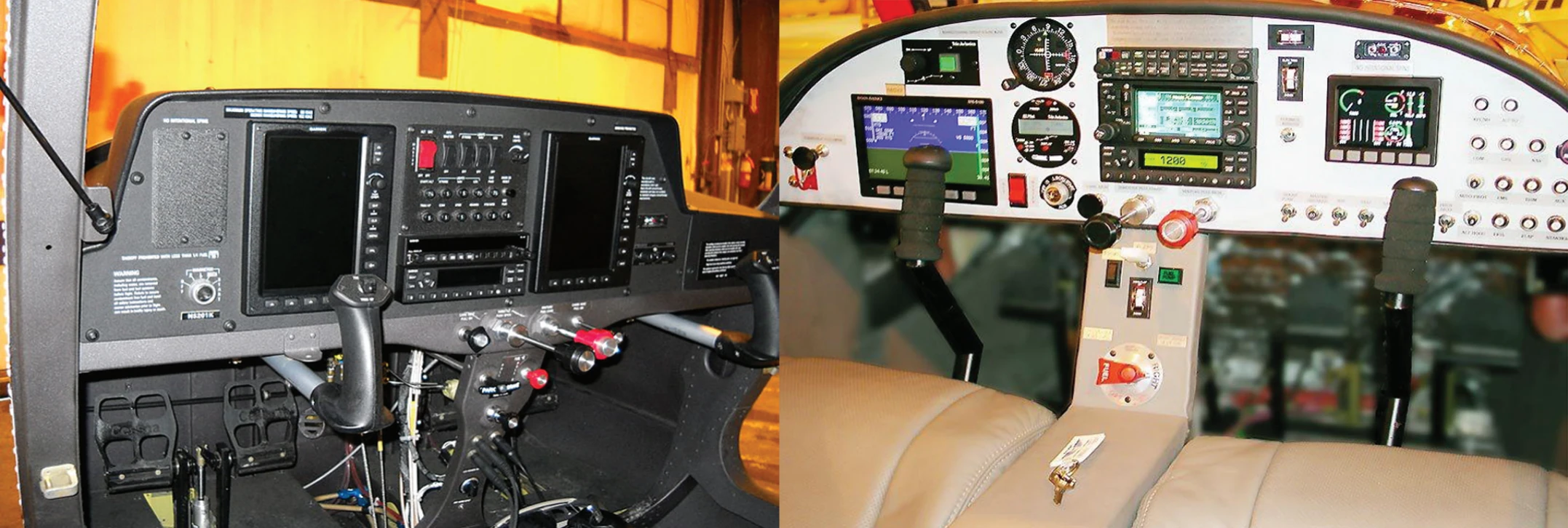
In addition to advanced airframe and engine technology, LSAs often have advanced flight and engine instrumentation. Installation of electronic flight instrumentation systems (EFIS) provides attitude, airspeed, altimeter, vertical speed, direction, moving map, navigation, terrain awareness, traffic, weather, engine data, etc., all on one or two liquid crystal displays. [Figure 17-5] EFIS has become a cost-effective replacement for traditional mechanical gyros and instruments. Compared to mechanical instrumentation systems, EFIS requires almost no maintenance. There are tremendous advantages to EFIS systems as long as the pilot is correctly trained in their use. EFIS systems can cause a “heads down” syndrome and loss of situation awareness if the pilot is not trained to quickly and properly configure, access, program, and interpret the information provided. If EFIS is installed, transition training should include instruction in the use of the specific EFIS in the training airplane. In some cases, EFIS manufacturers or third party products are available for the pilot to practice EFIS operations on a personal computer as opposed to learning their functions in flight.
Weather Considerations
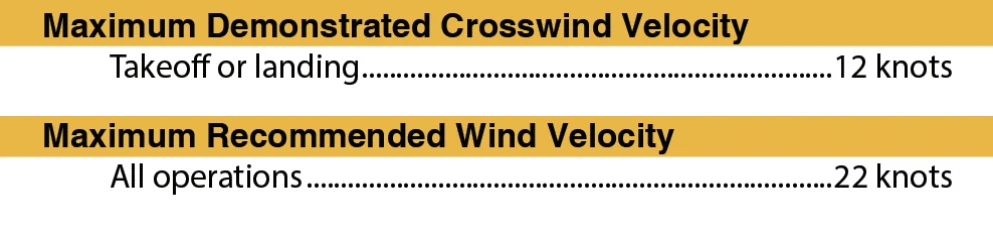
Managing weather factors is important for all aircraft but becomes more significant as the weight of the airplane decreases. Smaller, lighter weight airplanes are more easily affected by strong winds (especially crosswinds), turbulence, terrain influences, and other hazardous conditions. [Figures 17-6 and 17-7] LSA Pilots should carefully consider any hazardous weather and effectively use an appropriate set of personal minimums to mitigate flight risk. Some LSAs have a maximum recommend wind velocity regardless of wind direction. [Figure 17-8] While this is not a limitation, it would be prudent to heed any factory recommendations.
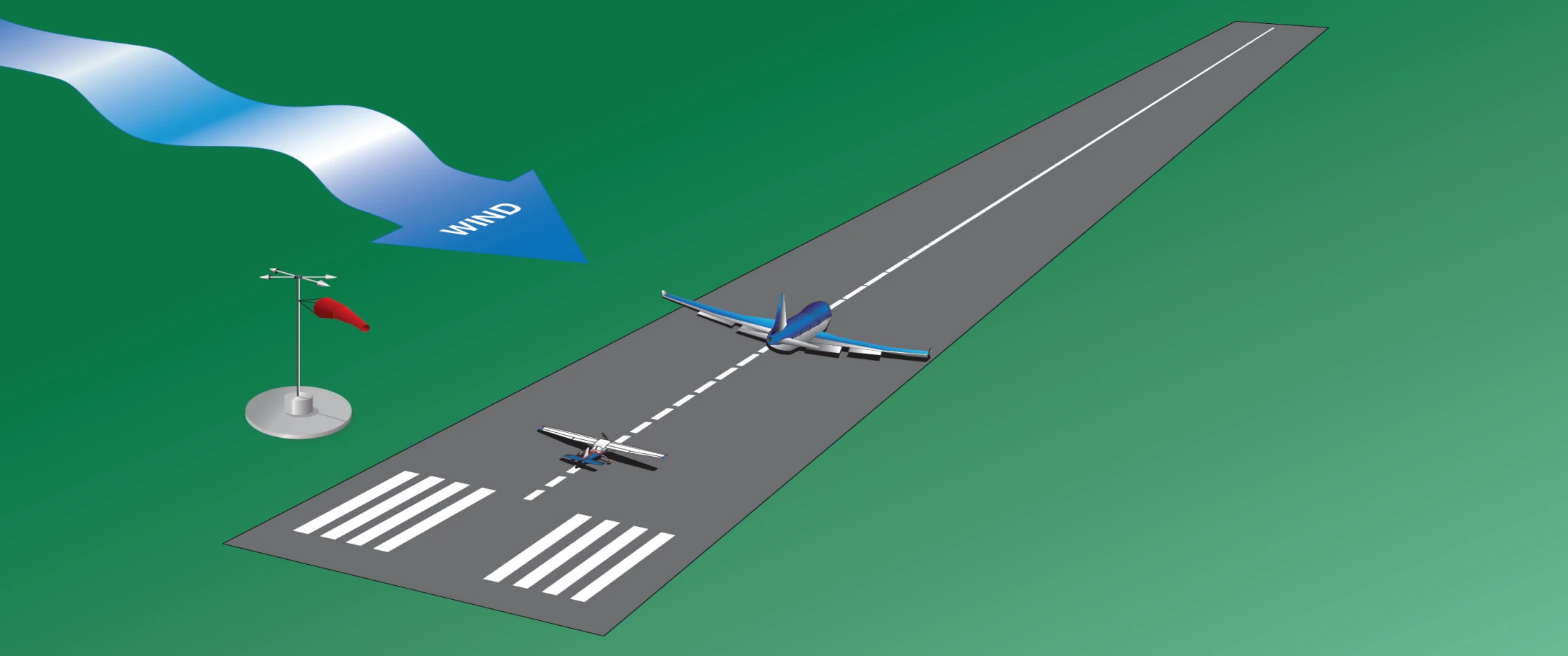
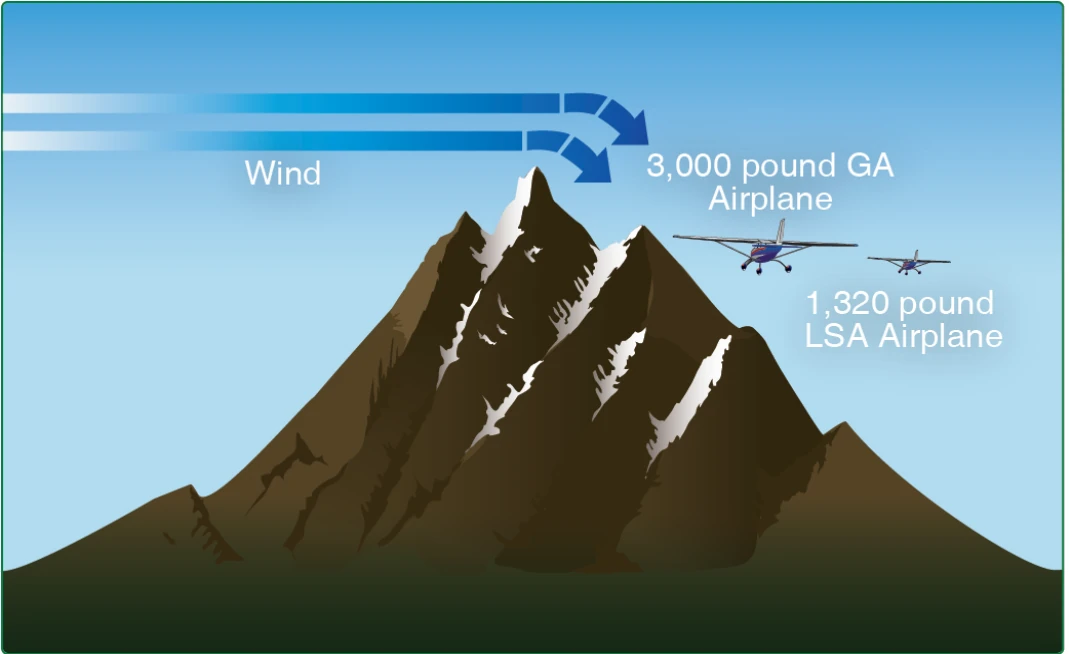
Due to an LSA’s lighter weight, even greater distances from convective weather should be considered the norm. While low-level winds that enter and exit a thunderstorm should be avoided by all airplanes, operations in the vicinity of convection should not be attempted in lightweight airplanes. Since it is not always possible to fly in clear, calm air, pilots of lighter weight LSAs should carefully manage all weather-related risks. For example, some consideration should be given to flight activity that crosses varying terrain boundaries, such as grass or water to hard surfaces. Differential heating can cause lighter weight airplanes to experience sinking and lifting to a greater degree than heavier airplanes. Careful planning, knowledge, experience, and an understanding of the flying environment assists in mitigating weather-related risks.
Flight Environment
The skills used to fly LSAs resemble those pilots use when flying any airplane, but the techniques may vary. This section outlines areas that are unique to light-sport airplanes. Most skills learned in a standard airworthiness type certificated airplane are transferable to LSAs; however, since LSAs can vary significantly in performance, equipment, systems, and construction, pilots should seek competent flight instruction and refer to the airplane’s POH for detailed and specific information prior to flight.
Preflight
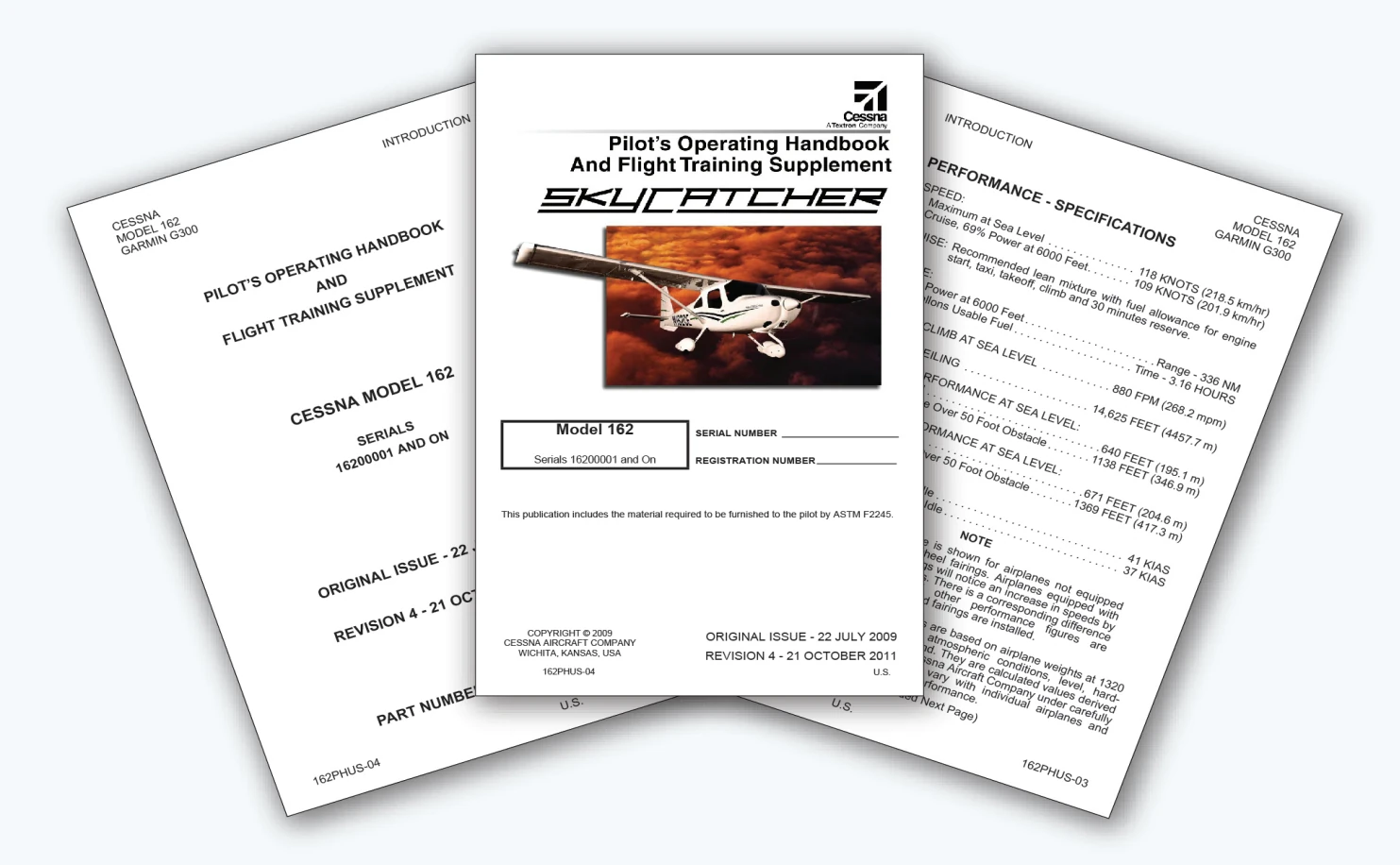
The preflight inspection of any airplane is critical to mitigating flight risks. A pilot transitioning into an LSA should allow adequate time to become familiar with the airplane prior to a first flight. First, the pilot and flight instructor should review the POH and cover the airplane’s limitations, systems, performance, weight and balance, normal procedures, emergency procedures, and handling requirements. [Figure 17-9]
Inside the Airplane
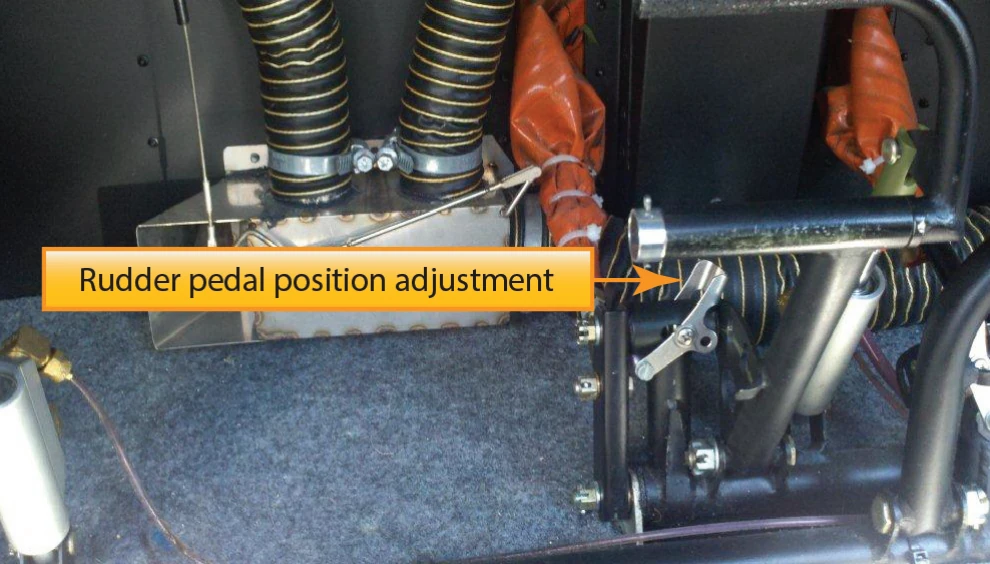
Transitioning pilots find an LSA very familiar when conducting a preflight inspection; however, some preflight differences are worth pointing out. For example, many LSAs do not have adjustable seats but rather adjustable rudder pedals. [Figure 17-10] Often, LSA seats are in a fixed position. LSA manufacturers have implemented various systems for rudder pedal position adjustment. Some manufacturers use a simple removable pin while others use a knob near the rudder pedals to adjust position. Shorter pilots may find that the adjustment range may not be sufficient, and an appropriate seat cushion may be needed to experience the proper range of rudder pedal movement. In addition, seats in some LSAs are in a semi-reclined position. The first time a pilot sits in a semi-reclining seat, it may seem somewhat unusual. A pilot should take time to get comfortable.
Transitioning pilots should become familiar with the flight and engine controls. These may vary significantly from airplane model to airplane model. Some light-sport airplanes use a conventional control stick while others use a yoke. One manufacturer has combined the two types of controls in what has been termed a “stoke.” While this control may seem unique, it provides a completely natural feel for flight control. [Figure 17-11] Regardless of the flight controls, the pilot should perform a full range of motion check of the flight controls. This means full forward to full forward left to full aft left to full aft right and then full forward right. Verify that each control surface moves freely and smoothly. On some LSAs, aileron control geometry, in an attempt to minimize adverse yaw, moves ailerons in a highly differential manner; a pilot may see very little “down” aileron when compared to the “up” aileron. Pilots should always verify the direction of control surface movement.