Chapter 1
Aircraft Structures
A Brief History of Aircraft Structures
The history of aircraft structures underlies the history of aviation in general. Advances in materials and processes used to construct aircraft have led to their evolution from simple wood truss structures to the sleek aerodynamic flying machines of today. Combined with continuous powerplant development, the structures of “flying machines” have changed significantly.
The key discovery that “lift” could be created by passing air over the top of a curved surface set the development of fixed and rotary-wing aircraft in motion. George Cayley developed an efficient cambered airfoil in the early 1800s, as well as successful manned gliders later in that century. He established the principles of flight, including the existence of lift, weight, thrust, and drag. It was Cayley who first stacked wings and created a tri-wing glider that flew a man in 1853.
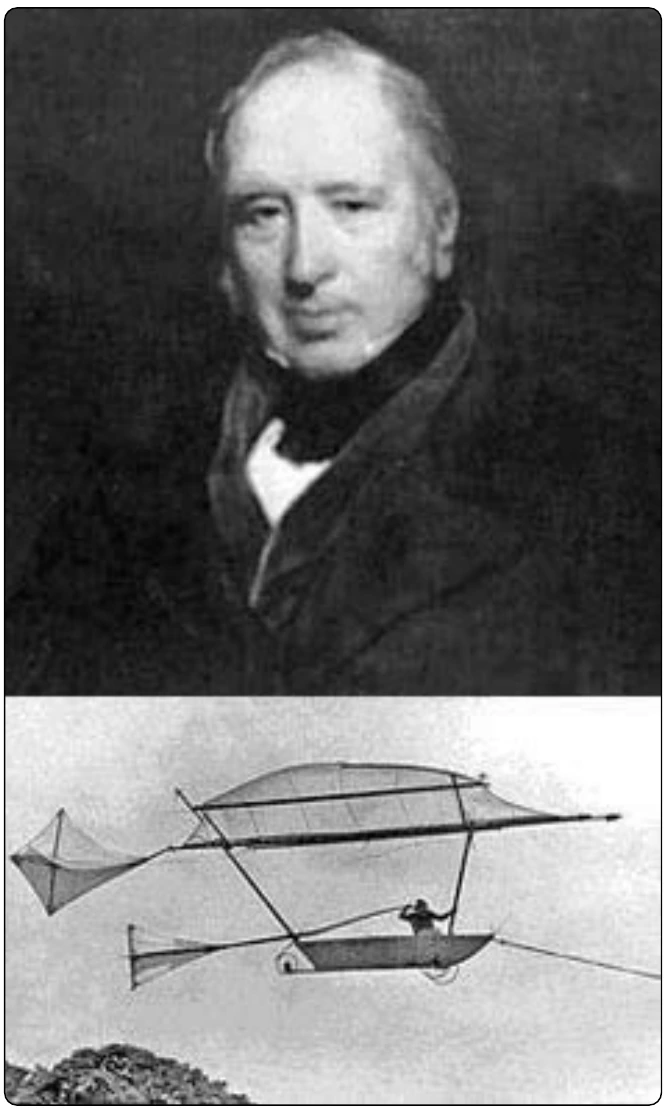
Earlier, Cayley studied the center of gravity of flying machines, as well as the effects of wing dihedral. Furthermore, he pioneered directional control of aircraft by including the earliest form of a rudder on his gliders. [Figure 1-1]
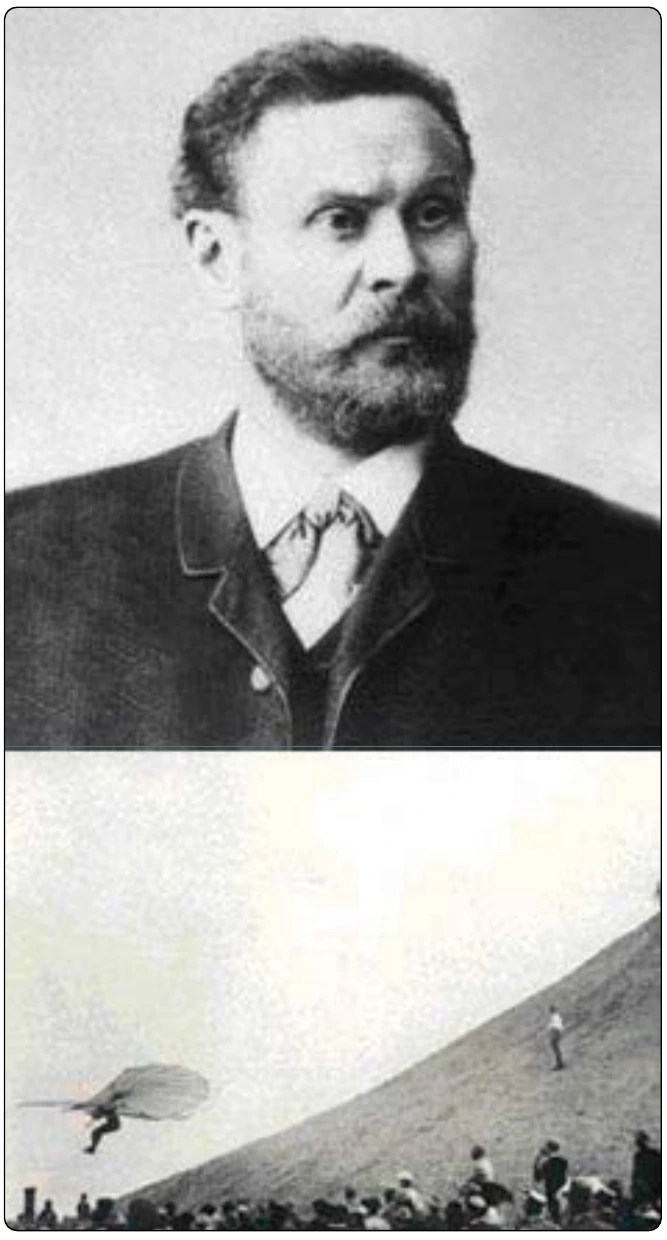
In the late 1800s, Otto Lilienthal built upon Cayley’s discoveries. He manufactured and flew his own gliders on over 2,000 flights. His willow and cloth aircraft had wings designed from extensive study of the wings of birds. Lilienthal also made standard use of vertical and horizontal fins behind the wings and pilot station. Above all, Lilienthal proved that man could fly. [Figure 1-2]
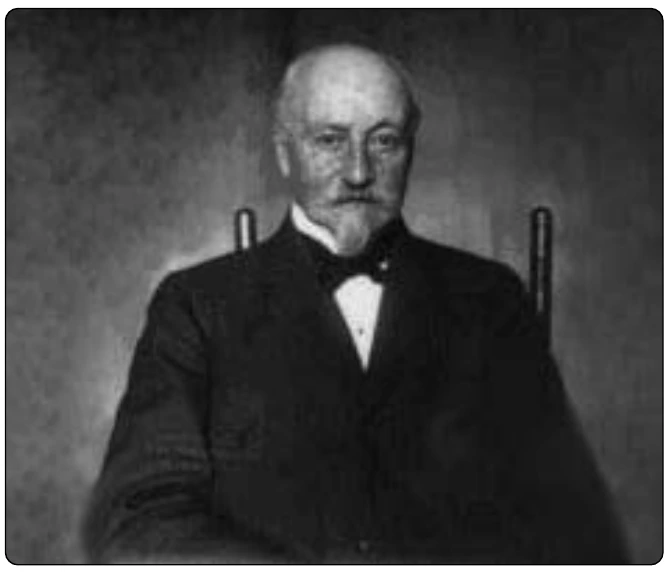
Octave Chanute, a retired railroad and bridge engineer, was active in aviation during the 1890s. [Figure 1-3] His interest was so great that, among other things, he published a definitive work called “Progress in Flying Machines.” This was the culmination of his effort to gather and study all of the information available on aviation. With the assistance of others, he built gliders similar to Lilienthal’s and then his own. In addition to his publication, Chanute advanced aircraft structure development by building a glider with stacked wings incorporating the use of wires as wing supports.
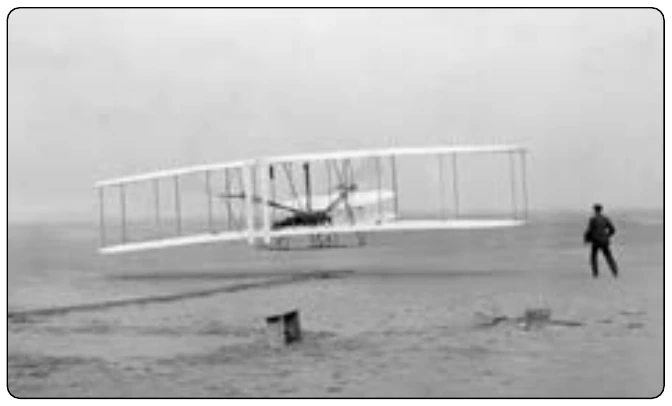
The work of all of these men was known to the Wright Brothers when they built their successful, powered airplane in 1903. The first of its kind to carry a man aloft, the Wright Flyer had thin, cloth-covered wings attached to what was primarily truss structures made of wood. The wings contained forward and rear spars and were supported with both struts and wires. Stacked wings (two sets) were also part of the Wright Flyer. [Figure 1-4]
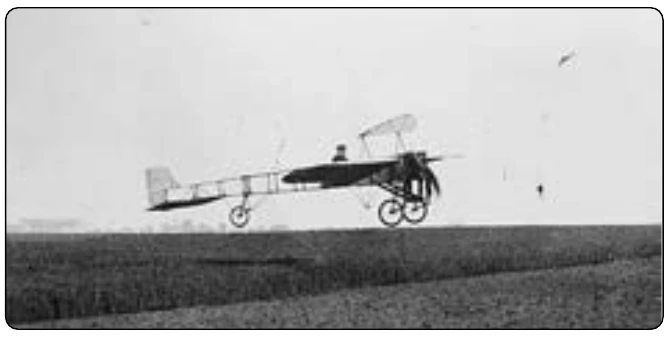
Powered heavier-than-air aviation grew from the Wright design. Inventors and fledgling aviators began building their own aircraft. Early on, many were similar to that constructed by the Wrights using wood and fabric with wires and struts to support the wing structure. In 1909, Frenchman Louis Bleriot produced an aircraft with notable design differences. He built a successful mono-wing aircraft. The wings were still supported by wires, but a mast extending above the fuselage enabled the wings to be supported from above, as well as underneath. This made possible the extended wing length needed to lift an aircraft with a single set of wings. Bleriot used a Pratt truss-type fuselage frame. [Figure 1-5]
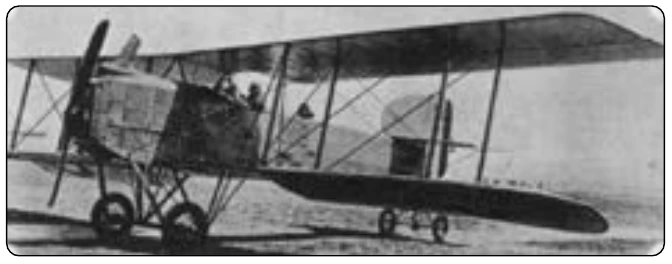
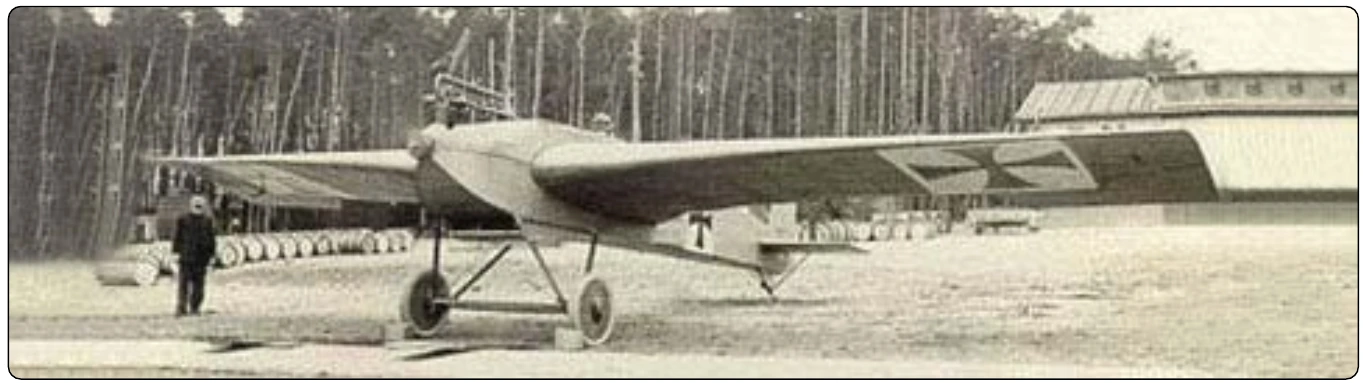
More powerful engines were developed, and airframe structures changed to take advantage of the benefits. As early as 1910, German Hugo Junkers was able to build an aircraft with metal truss construction and metal skin due to the availability of stronger powerplants to thrust the plane forward and into the sky. The use of metal instead of wood for the primary structure eliminated the need for external wing braces and wires. His J-1 also had a single set of wings (a monoplane) instead of a stacked set. [Figure 1-6] Leading up to World War I (WWI), stronger engines also allowed designers to develop thicker wings with stronger spars. Wire wing bracing was no longer needed. Flatter, lower wing surfaces on high-camber wings created more lift. WWI expanded the need for large quantities of reliable aircraft. Used mostly for reconnaissance, stacked-wing tail draggers with wood and metal truss frames with mostly fabric skin dominated the wartime sky. [Figure 1-7] The Red Baron’s Fokker DR-1 was typical.
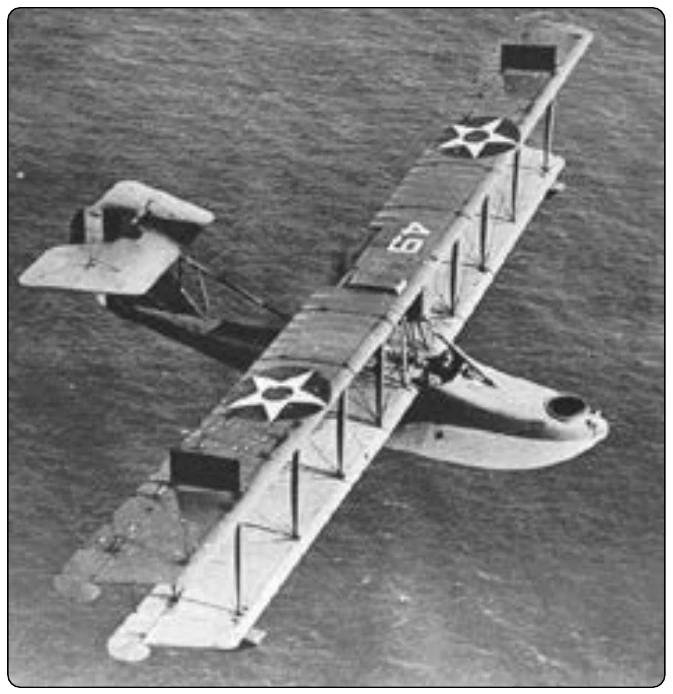
In the 1920s, the use of metal in aircraft construction increased. Fuselages able to carry cargo and passengers were developed. The early flying boats with their hull-type construction from the shipbuilding industry provided the blueprints for semimonocoque construction of fuselages. [Figure 1-8] Truss-type designs faded. A tendency toward cleaner mono-wing designs prevailed.
Into the 1930s, all-metal aircraft accompanied new lighter and more powerful engines. Larger semimonocoque fuselages were complimented with stress-skin wing designs. Fewer truss and fabric aircraft were built. World War II (WWII) brought about a myriad of aircraft designs using all metal technology. Deep fuel-carrying wings were the norm, but the desire for higher flight speeds prompted the development of thin-winged aircraft in which fuel was carried in the fuselage. The first composite structure aircraft, the De Havilland Mosquito, used a balsa wood sandwich material in the construction of the fuselage. [Figure 1-9] The fiberglass radome was also developed during this period.
After WWII, the development of turbine engines led to higher altitude flight. The need for pressurized aircraft pervaded aviation. Semimonocoque construction needed to be made even stronger as a result. Refinements to the all-metal semimonocoque fuselage structure were made to increase strength and combat metal fatigue caused by the pressurization-depressurization cycle. Rounded window and door openings were developed to avoid weak areas where cracks could form. Integrally machined copper alloy aluminum skin resisted cracking and allowed thicker skin and controlled tapering. Chemical milling of wing skin structures provided great strength and smooth high-performance surfaces. Variable contour wings became easier to construct. Increases in flight speed accompanying jet travel brought about the need for thinner wings. Wing loading also increased greatly. Multispar and box beam wing designs were developed in response.