
Chapter 11
Communication & Navigation
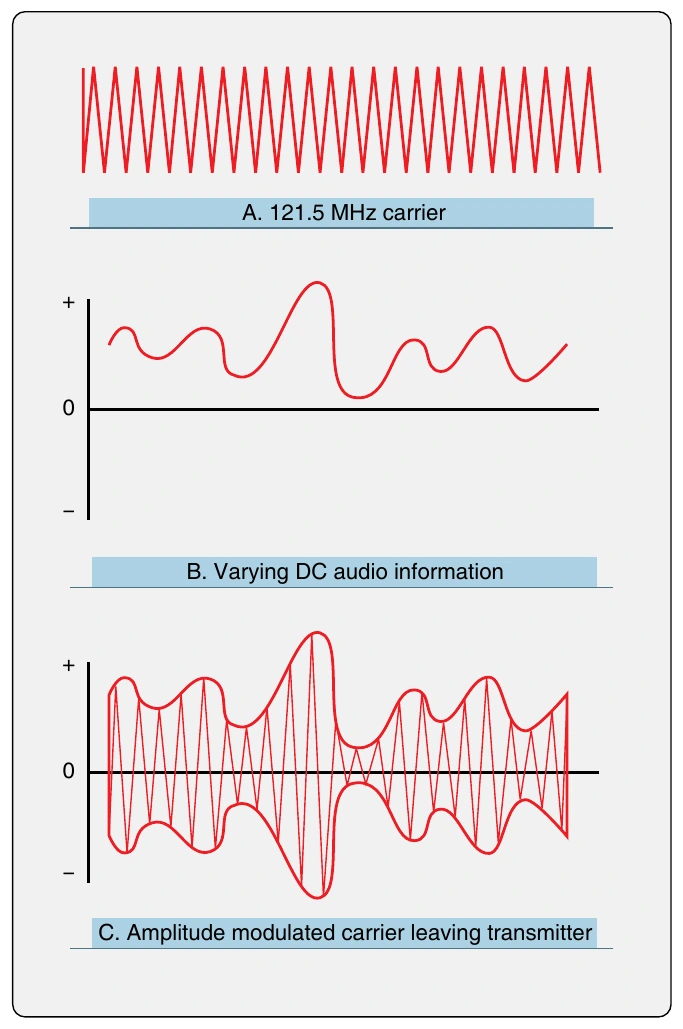
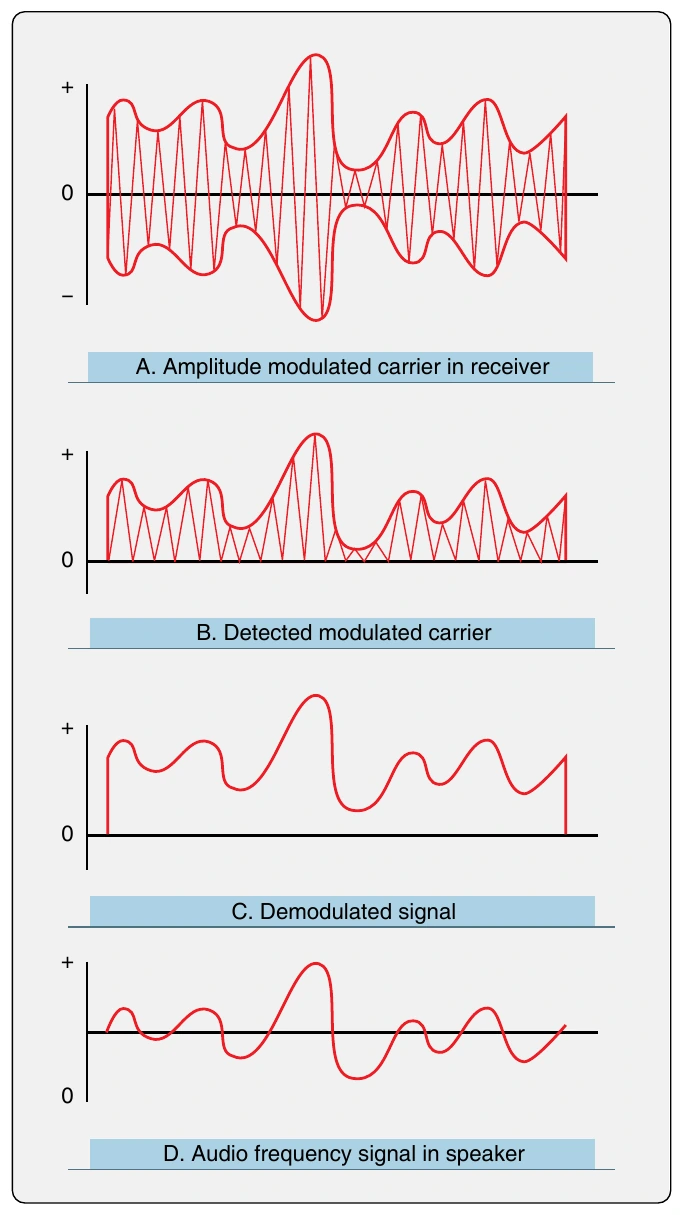
AM has limited fidelity. Atmospheric noises or static alter the amplitude of a carrier wave making it difficult to separate the intended amplitude modulation caused by the information signal and that which is caused by static. It is used in aircraft VHF communication radios.
Frequency Modulation (FM)
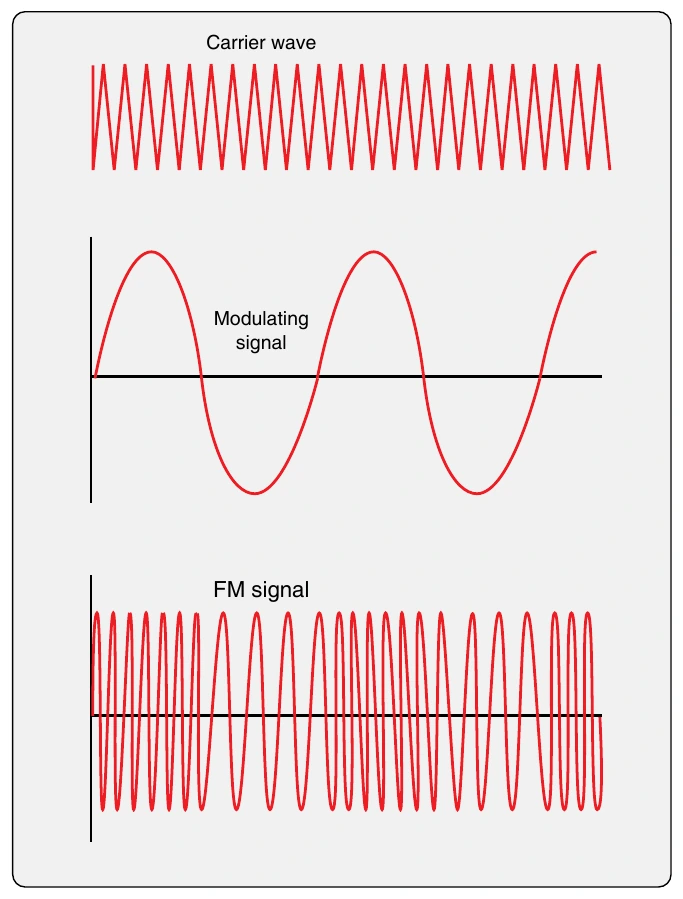
Frequency modulation (FM) is widely considered superior to AM for carrying and deciphering information on radio waves. A carrier wave modulated by FM retains its constant amplitude. However, the information signal alters the frequency of the carrier wave in proportion to the strength of the signal. Thus, the signal is represented as slight variations to the normally consistent timing of the oscillations of the carrier wave. [Figure 11-81]
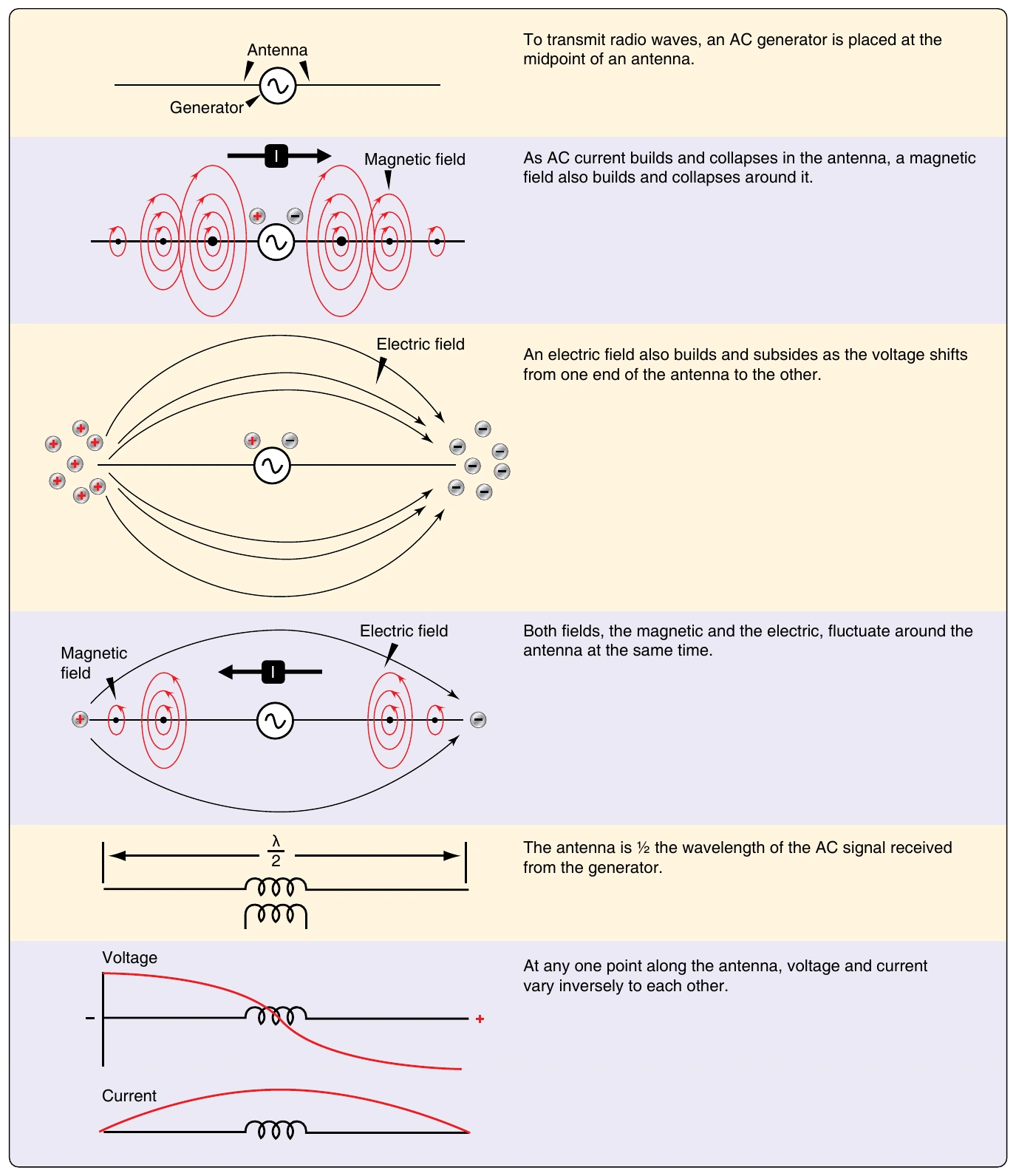
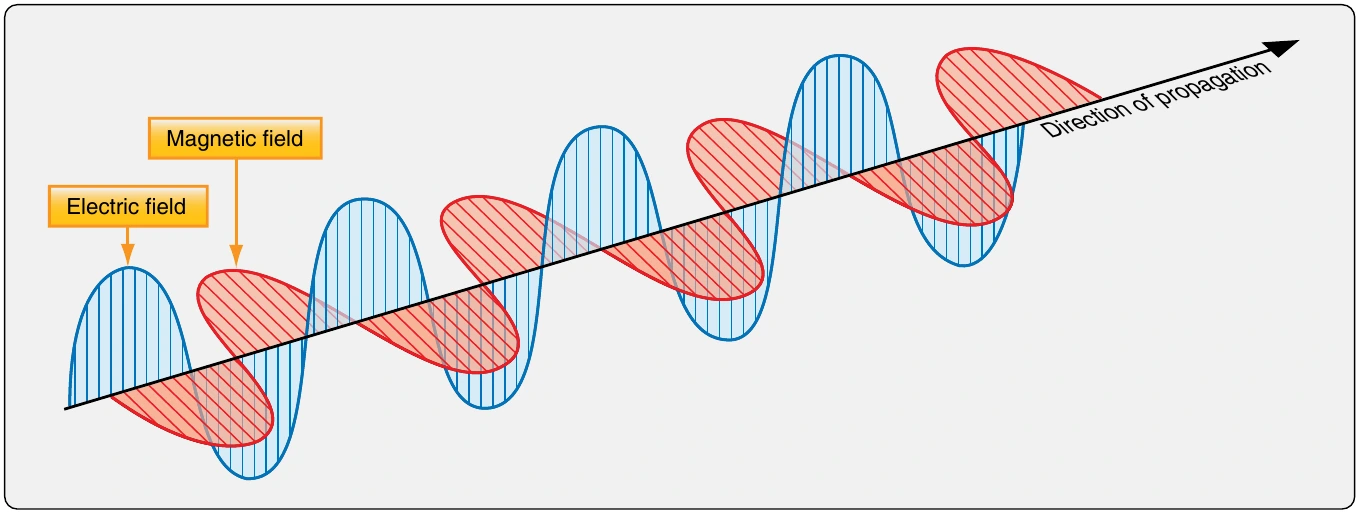
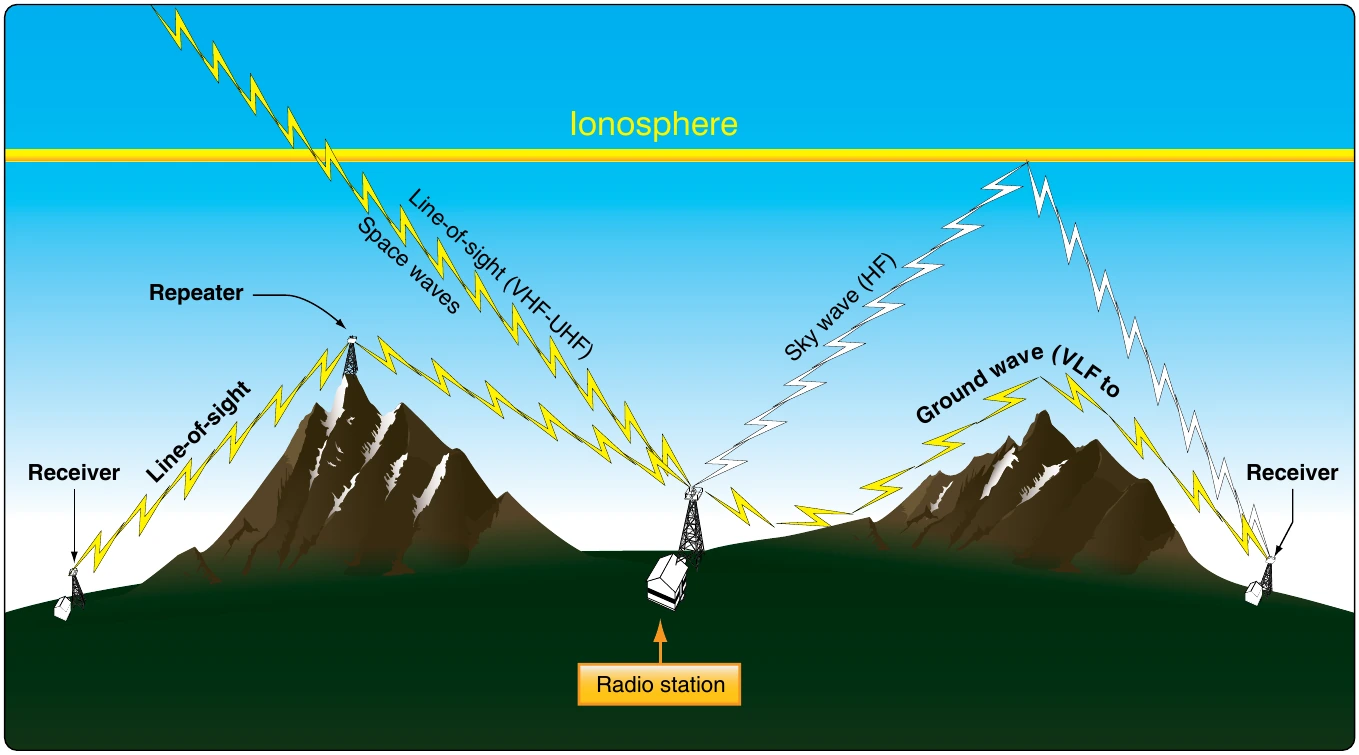
Since the transmitter oscillator output fluctuates during modulation to represent the information signal, FM bandwidth is greater than AM bandwidth. This is overshadowed by the ease with which noise and static can be removed from the FM signal. FM has a steady current flow and requires less power to produce since modulating an oscillator producing a carrier wave takes less power than modulating the amplitude of a signal using an amplifier.
Demodulation of an FM signal is similar to that of an AM receiver. The signal captured by the receiving antenna is usually amplified immediately since signal strength is lost as the wave travels through the atmosphere. Numerous circuits are used to isolate, stabilize, and remove the information from the carrier wave. The result is then amplified to drive the output device.
Single Sideband (SSB)
When two AC signals are mixed together, such as when a carrier wave is modulated by an information signal, three main frequencies result:
- Original carrier wave frequency;
- Carrier wave frequency plus the modulating frequency; and
- Carrier wave frequency minus the modulating frequency.
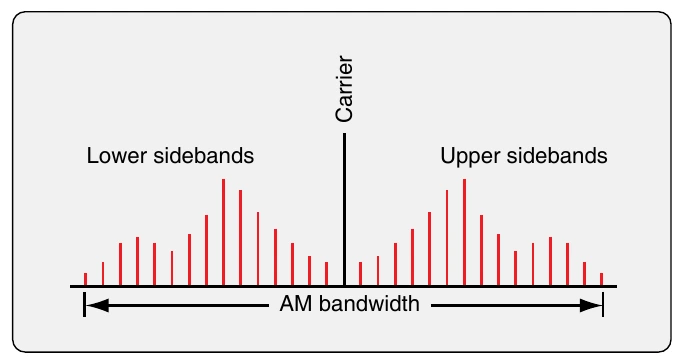
Due to the fluctuating nature of the information signal, the modulating frequency varies from the carrier wave up or down to the maximum amplitude of the modulating frequency during AM. These additional frequencies on either side of the carrier wave frequency are known as sidebands. Each sideband contains the unique information signal desired to be conveyed. The entire range of the lower and upper sidebands including the center carrier wave frequency is known as bandwidth. [Figure 11-82]
There are a limited number of frequencies within the usable frequency ranges (i.e., LF, HF, and VHF). If different broadcasts are made on frequencies that are too close together, some of the broadcast from one frequency interferes with the adjacent broadcast due to overlapping sidebands. The FCC divides the various frequency bands and issues rules for their use. Much of this allocation is to prevent interference. The spacing between broadcast frequencies is established so that a carrier wave can expand to include the upper and lower sidebands and still not interfere with a signal on an adjacent frequency.
As use of the radio frequencies increases, more efficient allocation of bandwidth is imperative. Sending information via radio waves using the narrowest bandwidth possible is the focus of engineering moving forward. At the same time, fully representing all of the desired information or increasing the amount of information conveyed is also desired. Various methods are employed to keep bandwidth to a minimum, many of which restrict the quality or quantity of information able to be transmitted.
In lower frequency ranges, such as those used for ground wave and some sky wave broadcasts, SSB transmissions are a narrow bandwidth solution. Each sideband represents the initial information signal in its entirety. Therefore, in an SSB broadcast, the carrier wave and either the upper or lower sidebands are filtered out. Only one sideband with its frequencies is broadcast since it contains all of the needed information. This cuts the bandwidth required in half and allows more efficient use of the radio spectrum. SSB transmissions also use less power to transmit the same amount of information over an equal distance. Many HF long-distance aviation communications are SSB. [Figure 11-83]