
Chapter 13
Aircraft Landing Gear Systems
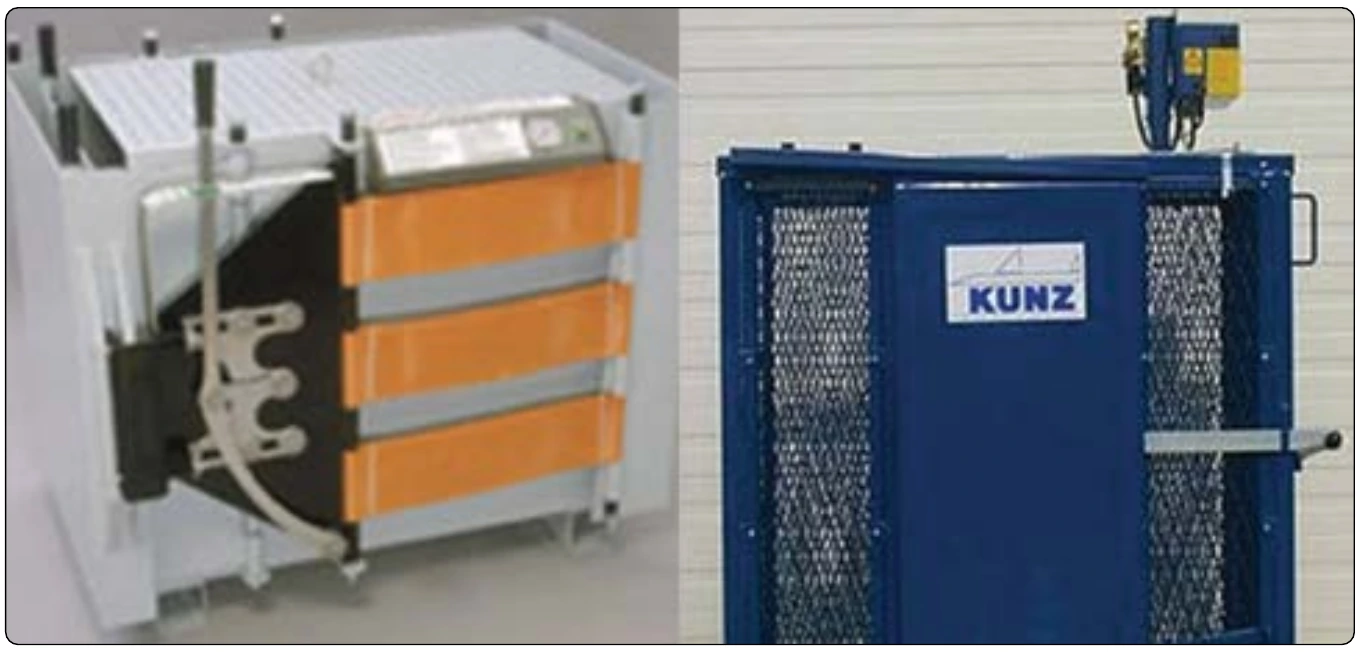
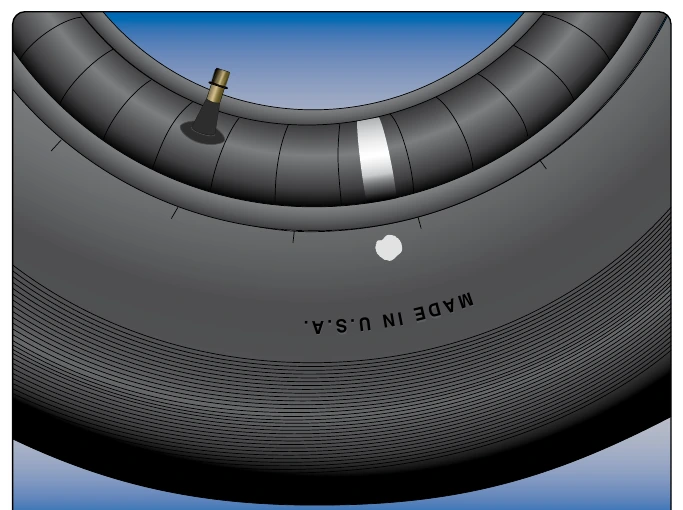
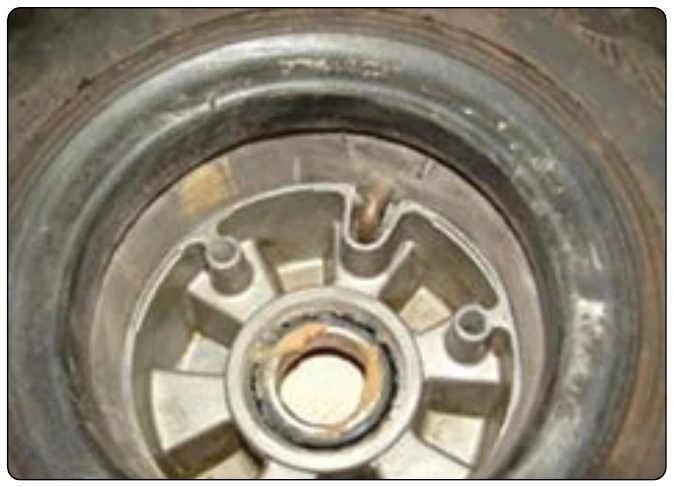
The inflation procedure for a tube-type tire differs slightly from that of a tubeless tire. The assembly is slowly brought up.to full operating pressure. Then, it is completely deflated. Re-inflate the tire/tube assembly a second time to the specified operating pressure and allow it to remain with no load for 12-hours. This allows any wrinkles in the tube to smooth out, helps prevent the tube from being trapped under a bead, and generally evens how the tube lays within the tire to avoid any stretched areas and thinning of the tube. The holding time allows air trapped between the tube and the tire to work its way out of the assembly, typically through the tire sidewall or around the valves stem.
Tire Balancing
Once an aircraft tire is mounted, inflated, and accepted for service, it can be balanced to improve performance. Vibration is the main result of an imbalanced tire and wheel assembly. Nose wheels tend to create the greatest disturbance in the cabin when imbalanced.
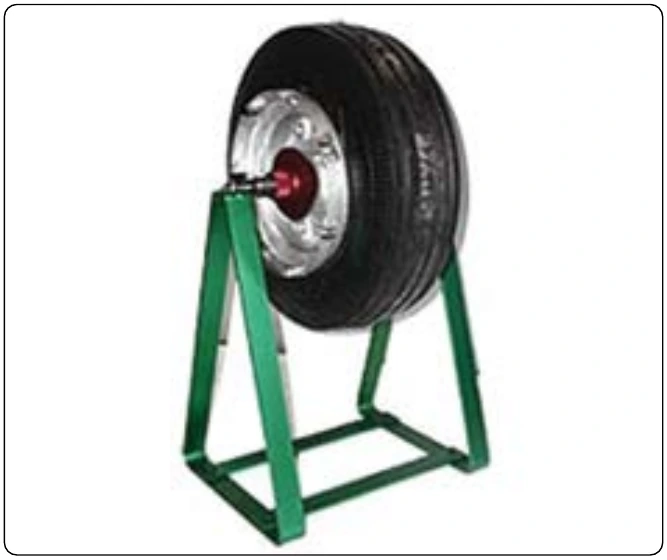
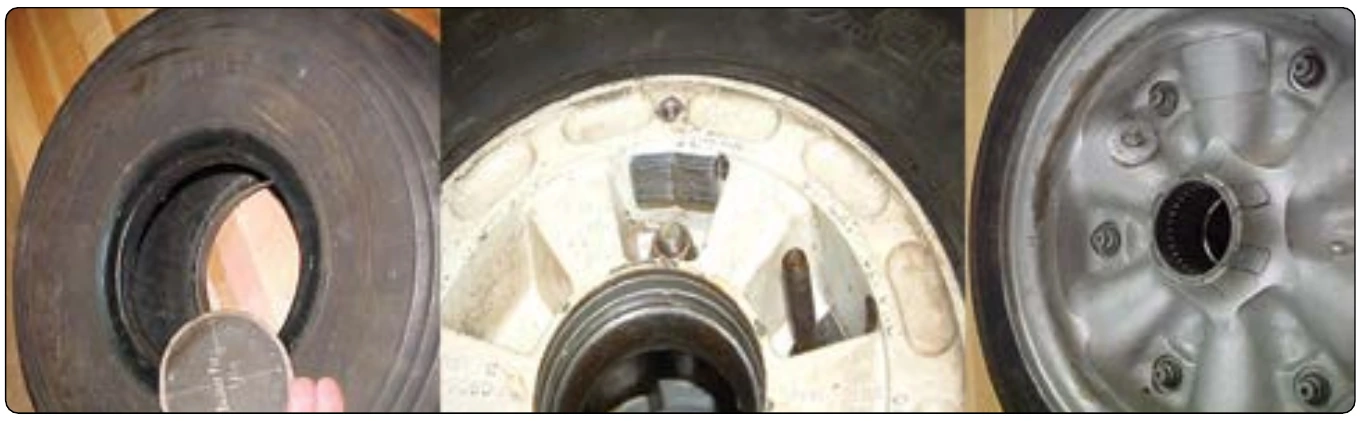
Static balance is all that is required for most aircraft tires and wheels. A balance stand typically accepts the assembly on cones. The wheel is free to rotate. The heavy side moves to the bottom. [Figure 13-159] Temporary weights are added to eliminate the wheel from rotating and dropping the heavy side down. Once balanced, permanent weights are installed. Many aircraft wheels have provisions for securing the permanent weight to the wheel. Weights with adhesive designed to be glued to the wheel rim are also in use. Occasionally, a weight in the form of a patch glued to the inside of the tire is required. Follow all manufacturer’s instructions and use only the weights specified for the wheel assembly. [Figure 13-160]
Some aviation facilities offer dynamic balancing of aircraft tire and wheel assemblies. While this is rarely specified by manufacturers, a well-balanced tire and wheel assembly helps provide shimmy free operation and reduces wear on brake and landing gear components, such as torque links.
Operation & Handling Tips
Aircraft tires experience longer life if operated in a manner to conserve wear and minimize damage. The most important factor impinging on tire performance and wear, as well as resistance to damage is proper inflation. Always inflate tires to the specified level before flight for maximum performance and minimal damage. An improperly inflated tire has increased potential to fail upon landing due to the high impact loads experienced. The following sections include other suggestions that can extend the life and the investment made in aircraft tires.
Taxiing
Needless tire damage and excessive wear can be prevented by proper handling of the aircraft during taxi. Most of the gross weight of an aircraft is on the main landing gear wheels. Aircraft tires are designed and inflated to absorb the shock of landing by deflection of the sidewalls two to three times as much as that found on an automobile tire. While this enables the tire to handle heavy loads, it also causes more working of the tread and produces scuffing action along the outer edges of the tread that results in more rapid wear. It also leaves the tire more prone to damage as the tread compound opens during this flexing.
An aircraft tire that strikes a chuck hole, a stone, or some other foreign object is more likely to sustain a cut, snag, or bruise than an automobile tire due to its more flexible nature. There is also increased risk for internal tire injury when a tire leaves the paved surface of the taxi way. These incidents should be avoided. Dual or multiple wheel main gear should be operated so that all tires remain on the paved surface so the weight of the aircraft is evenly distributed between the tires. When backing an aircraft on a ramp for parking, care should be taken to stop the aircraft before the main wheels roll off of the paved surface.
Taxiing for long distances or at high speeds increase the temperature of aircraft tires. This makes them more susceptible to wear and damage. Short taxi distances at moderate speeds are recommended. Caution should also be used to prevent riding the brakes while taxiing, which adds unnecessary heat to the tires.
Braking & Pivoting
Heavy use of aircraft brakes introduces heat into the tires. Sharp radius turns do the same and increase tread abrasion and side loads on the tire. Plan ahead to allow the aircraft to slow without heavy braking and make large radius turns to avoid these conditions. Objects under a tire are ground into the tread during a pivot. Since many aircraft are primarily maneuvered on the ground via differential braking, efforts should be made to always keep the inside wheel moving during a turn rather than pivoting the aircraft with a locked brake around a fixed main wheel tire.
Landing Field & Hangar Floor Condition
One of the main contributions made to the welfare of aircraft tires is good upkeep of airport runway and taxiway surfaces, as well as all ramp areas and hangar floors. While the technician has little input into runway and taxiway surface upkeep, known defects in the paved surfaces can be avoided and rough surfaces can be negotiated at slower than normal speeds to minimize tire damage. Ramps and hangar floors should be kept free of all foreign objects that may cause tire damage. This requires continuous diligence on the part of all aviation personnel. Do not ignore foreign object damage (FOD). When discovered, action must be taken to remove it. While FOD to engines and propellers gains significant attention, much damage to tires is avoidable if ramp areas and hangar floors are kept clean.